



Spelter Figural Table Lamp
A spelter figural table lamp brings character into a room, blending sculptural form with period lighting.
Spelter Figural Table Lamp
A spelter figural table lamp combines cast metal figures with lighting elements, often depicting human forms or allegorical scenes. These pieces appear frequently from the late nineteenth century through the Art Deco era.
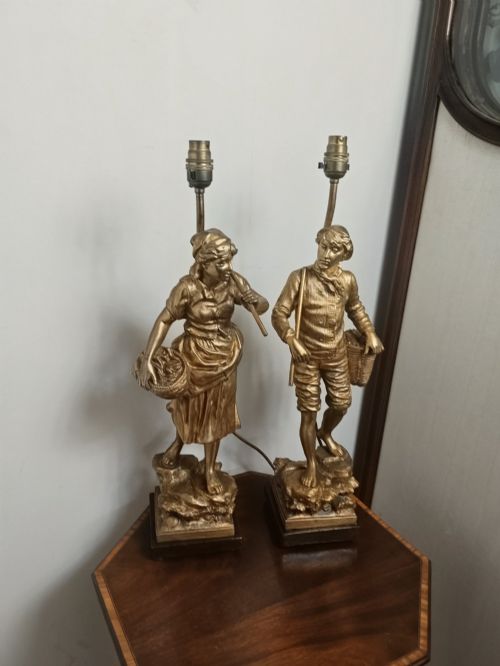
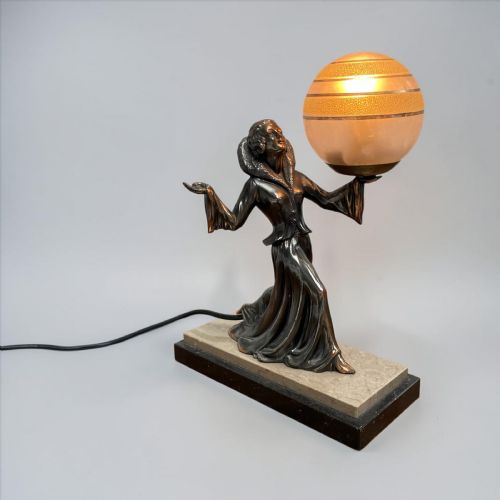
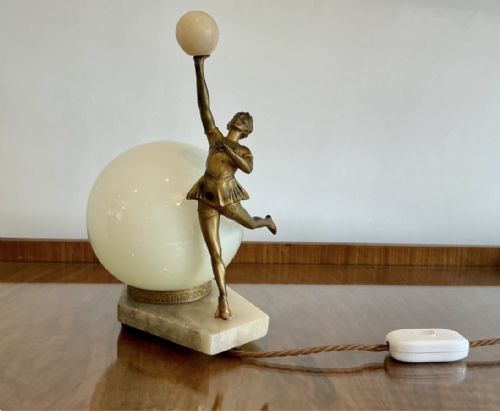
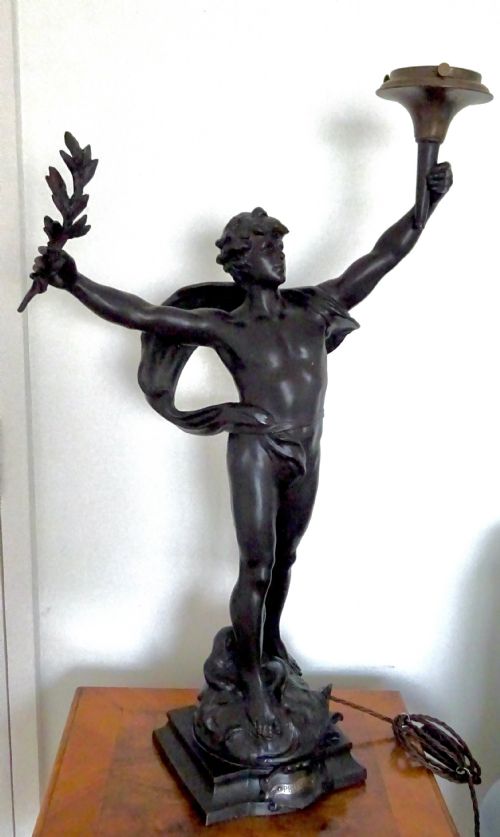
The selections on this page showcase French designs, spanning from French Late Nineteenth Century and Art Nouveau styles to clean Art Deco geometry. Figures range from standing ladies to torchere-holding subjects.
Makers such as L & F Moreau, Auguste Moreau, E Rousseau, and P.Sega appear across the inventory. Collectors encounter these alongside unmarked works from the nineteen-twenties and nineteen-thirties.
Materials and construction
Makers cast the primary figures in spelter, a zinc alloy, before applying patinated metal, gilt, silvered, or painted finishes. This alloy allowed for fine detail in drapery and facial expressions while remaining cost-effective compared to bronze.
Foundations frequently incorporate marble bases to anchor the heavier metal sculptures securely. Glass and fabric components complete the lamps, providing shades and diffusers to soften the light emitted from the structure.
Several ladies spend their entire decorative lives holding aloft electric lightbulbs instead of ancient torches.
Evaluating craftsmanship and condition
Quality rests in the crispness of the casting and the nuance of the hand-applied surface finish, whether patinated, silvered, or painted. Finer examples retain their original surface treatments without heavy overpainting.
The integration of the figure with the base and the presence of original glass or shade elements distinguish superior pieces. Signed works by established sculptors generally demonstrate more ambitious modeling than anonymous factory productions.
E Rousseau·L & F Moreau·P.Sega·Auguste Moreau
The Spelter Figural Table Lamp Glossary
- Spelter
- A zinc-based alloy commonly used as an economical alternative to bronze for decorative sculptures and lamps. It accepts patination and paint readily.
- Patinated metal
- Metal treated with chemicals or heat to produce a coloured surface oxidation. This finish adds depth and protects the underlying material.
- Art Deco
- A design style characterised by streamlined shapes, geometric patterns, and modern motifs popular during the nineteen-twenties and thirties. It succeeded the flowing lines of Art Nouveau.
- Torchere shade
- An uplighter shade designed to direct illumination toward the ceiling. These frequently accompany figural lamps held aloft by the cast subject.
Spelter Figural Table Lamp: Frequently Asked Questions
What is a spelter figural table lamp?
It is a decorative light fixture featuring a human or allegorical cast metal sculpture made from a zinc alloy.
These pieces were produced primarily in France during the late nineteenth and early twentieth centuries.
How do I identify Art Deco examples?
Art Deco pieces typically date from the nineteen-twenties and thirties, featuring geometric lines and stylized figures.
They often incorporate marble bases and contrasting finishes compared to earlier organic styles.
Are these lamps signed by artists?
Some pieces bear signatures on the metal base from prominent sculptors like the Moreau family or P.Sega.
Many other production lamps remain unmarked from factory workshops.
What materials accompany the spelter?
Sculptures are frequently mounted on heavy marble bases to provide stability for the tall forms.
Glass shades and fabric elements are also paired with the metal bodies to diffuse the light.