

Antique Purple Gemstone
Antique purple gemstone pieces bring violet colour and rich gold work from Victorian and Edwardian jewellers straight to modern hands.
Antique Purple Gemstone
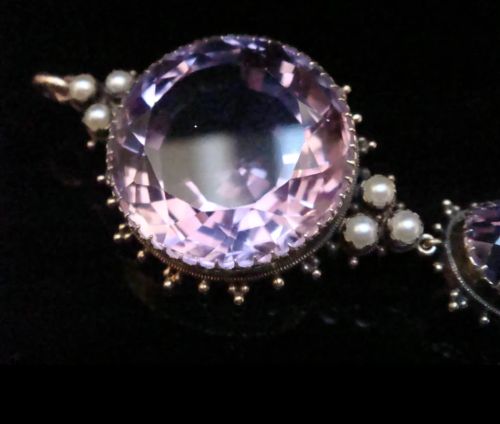
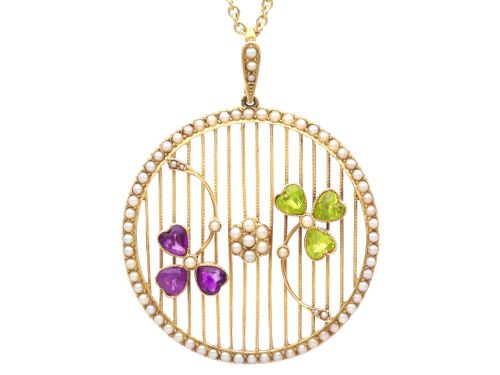
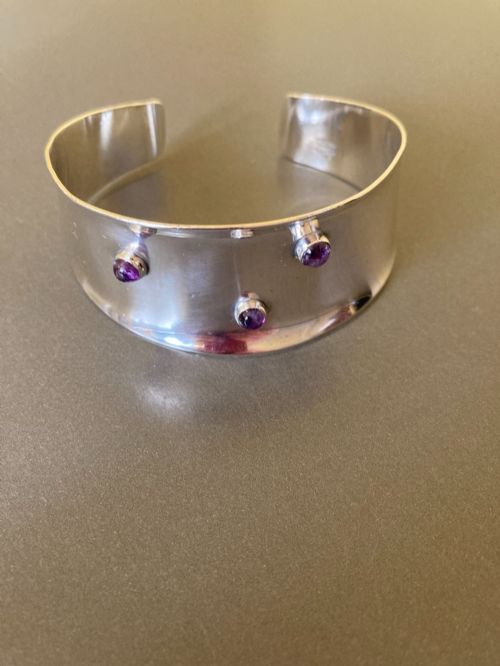
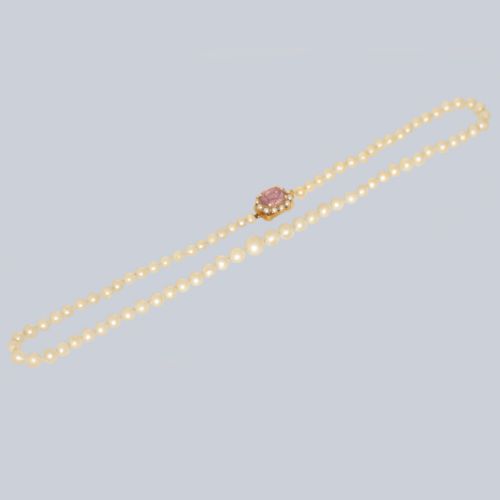
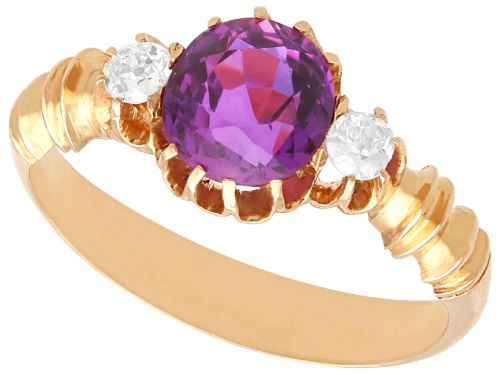
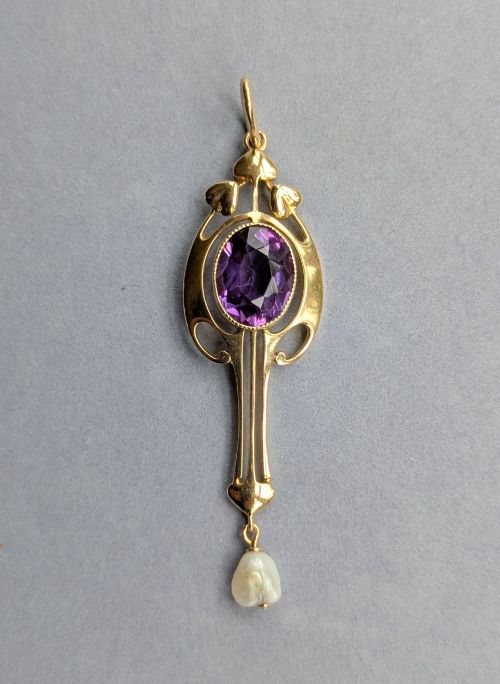
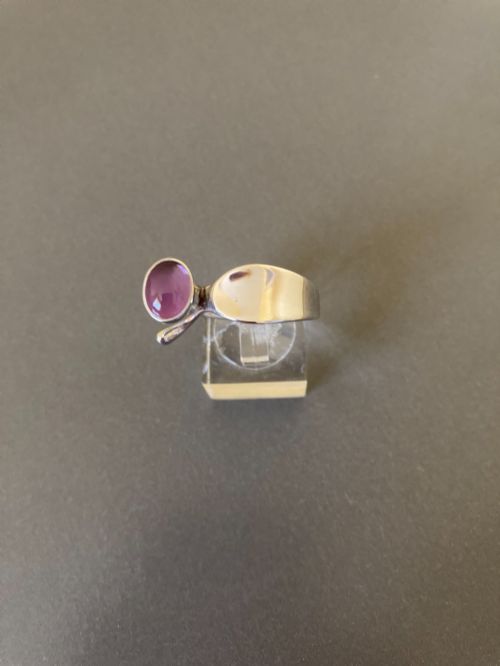
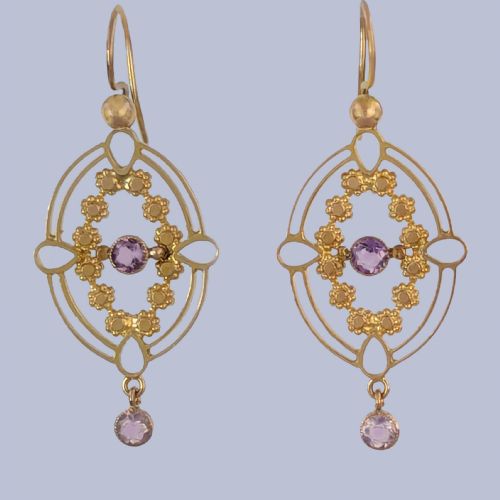
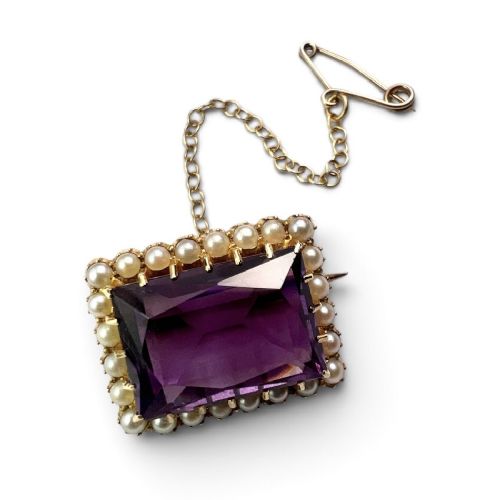
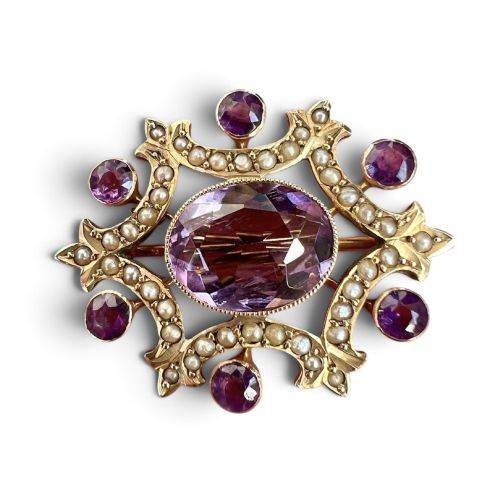
The selection ranges from delicate seed pearl and amethyst pendants to substantial cluster rings and drop earrings. Makers often set these deep purple stones in yellow gold, white gold, or silver.
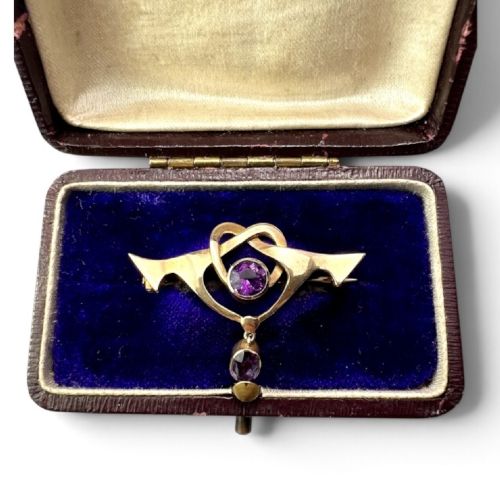
Art Nouveau and Art Deco designs also feature prominently, showing flowing organic lines or geometric frames around the central purple gem. Pieces from the later twentieth century sometimes adopt older Victorian styles using hallmarked gold.
Materials and construction methods
Goldsmiths utilised 9ct, 14ct, and 15ct gold to fabricate settings, chains, and clasps for these coloured stones. Amethyst remains the primary purple material, accompanied occasionally by almandine garnet, lavender jade, and alexandrite.
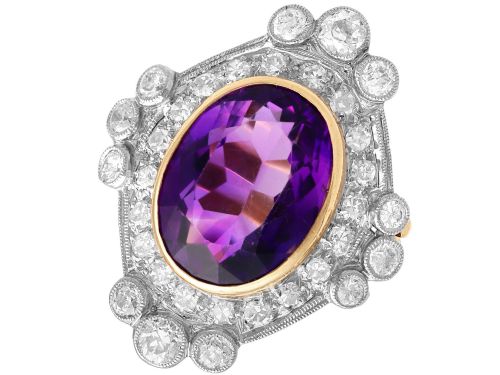
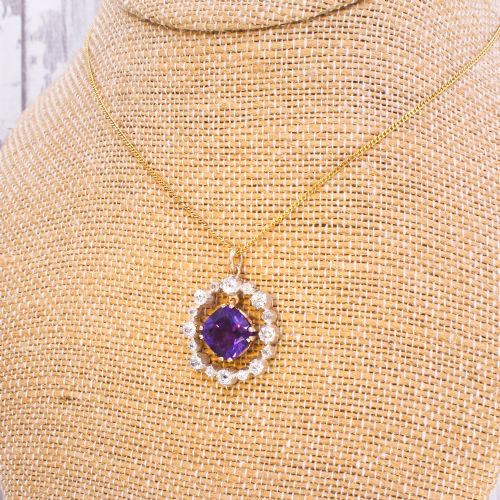
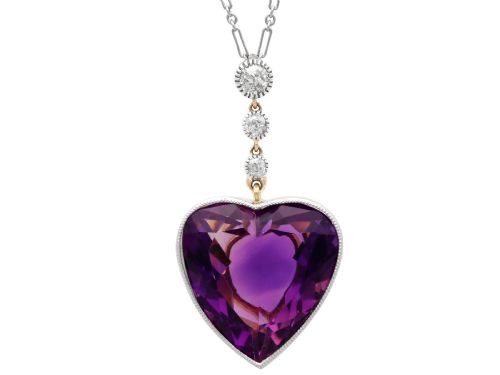
Cluster brooches and lavalier necklaces frequently incorporate seed pearls and old cut diamonds arranged around a central purple quartz. Openwork floral motifs and wirework form the backbone of Edwardian and Victorian pendant construction.
Antique Purple Gemstone Retail Price Guide 2026
Typical asking prices for purple gemstone among the pieces listed under this phrase on Sellingantiques today, from the lower quarter to the upper quarter. They describe what is for sale here now, not the wider market.
Listings feature yellow gold, white gold, and silver settings combined with amethyst, garnet, jade, and alexandrite.
Factors influencing execution and finish
The precision of the stone cutting and the saturation of the purple hue dictate the visual impact of each piece. Deeper, evenly distributed colour in the amethyst or garnet elevates the overall standard.
Workmanship shows in the delicacy of the surrounding seed pearl work and the security of the claw or bezel settings. Maker marks from established firms like Deakin & Francis or Murrle Bennett also separate standard items from documented workshop pieces.
Deakin & Francis·Murrle Bennett·S. Blanckensee & Son
The Antique Purple Gemstone Glossary
- Amethyst
- A purple variety of quartz that serves as the primary gemstone across these listings. Its colour ranges from pale lilac to deep violet.
- Seed Pearl
- Very small natural or cultured pearls, often half-drilled and glued or pegged onto gold pins. They frequently accent Edwardian and Victorian amethyst clusters.
- Lavalier
- A pendant necklace featuring a central stone or drop suspended from a delicate chain. This style gained immense popularity during the Edwardian period.
- Openwork
- Metalwork pierced through to create a lace-like pattern rather than a solid plate. It defines many Edwardian brooch and pendant designs.
- Old Cut
- A diamond faceting style prevalent before the modern brilliant cut was standardised. These stones exhibit smaller tables and higher crowns.
- Almandine
- A deep red-to-purple variety of garnet found in nineteenth-century cluster rings and brooches. It offers a heavier, darker tone than standard quartz.
Antique Purple Gemstone: Frequently Asked Questions
What metals are used in these pieces?
Jewellers predominantly used 9ct, 14ct, and 15ct yellow gold to mount these purple stones. Silver also appears in specific Edwardian and Victorian designs.
Alloy ratios varied by period, with 15ct gold frequently appearing in Victorian and Edwardian work before lower carat regulations shifted standard manufacturing.
How do I date an amethyst ring?
Dating relies on stylistic clues like openwork Edwardian floral mounts or geometric Art Deco lines. Hallmarks stamped inside the band provide precise assay office and year codes.
Stone cuts also offer evidence, as old cut diamonds and specific claw shapes align with particular decades from the nineteenth and twentieth centuries.
What is a lavalier necklace?
A lavalier is a drop necklace featuring a central gemstone suspended on a fine chain, often enhanced by smaller seed pearls. This design style dominated the Edwardian era.
These pieces hang lower on the chest than standard chokers and frequently incorporate organic Art Nouveau curves in the gold metalwork.
Are seed pearls durable?
Seed pearls require careful handling because they are historically set on delicate pins or secured with adhesives that weaken over time. Regular inspection helps prevent loss during daily wear.
Avoiding immersion in water and harsh chemicals preserves the organic nacre of pearls set alongside purple gems.