





Antique Preserved Birds
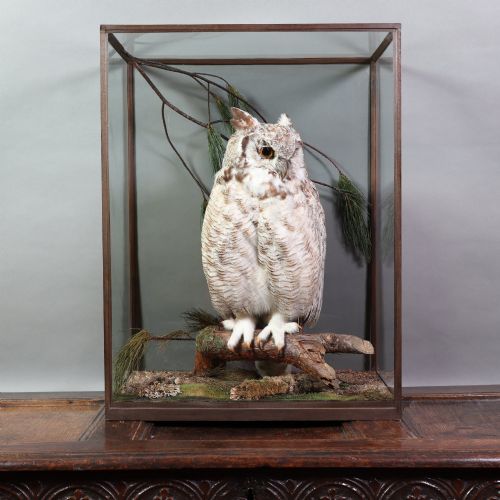
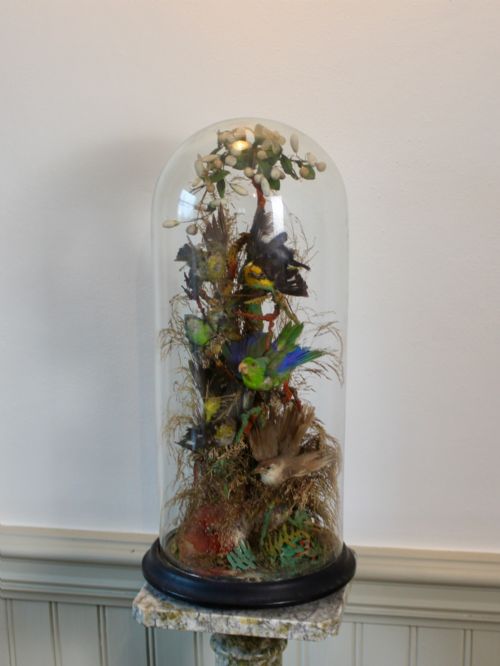
These antique preserved birds bring the natural world indoors within glazed display cases and glass domes.
Antique Preserved Birds
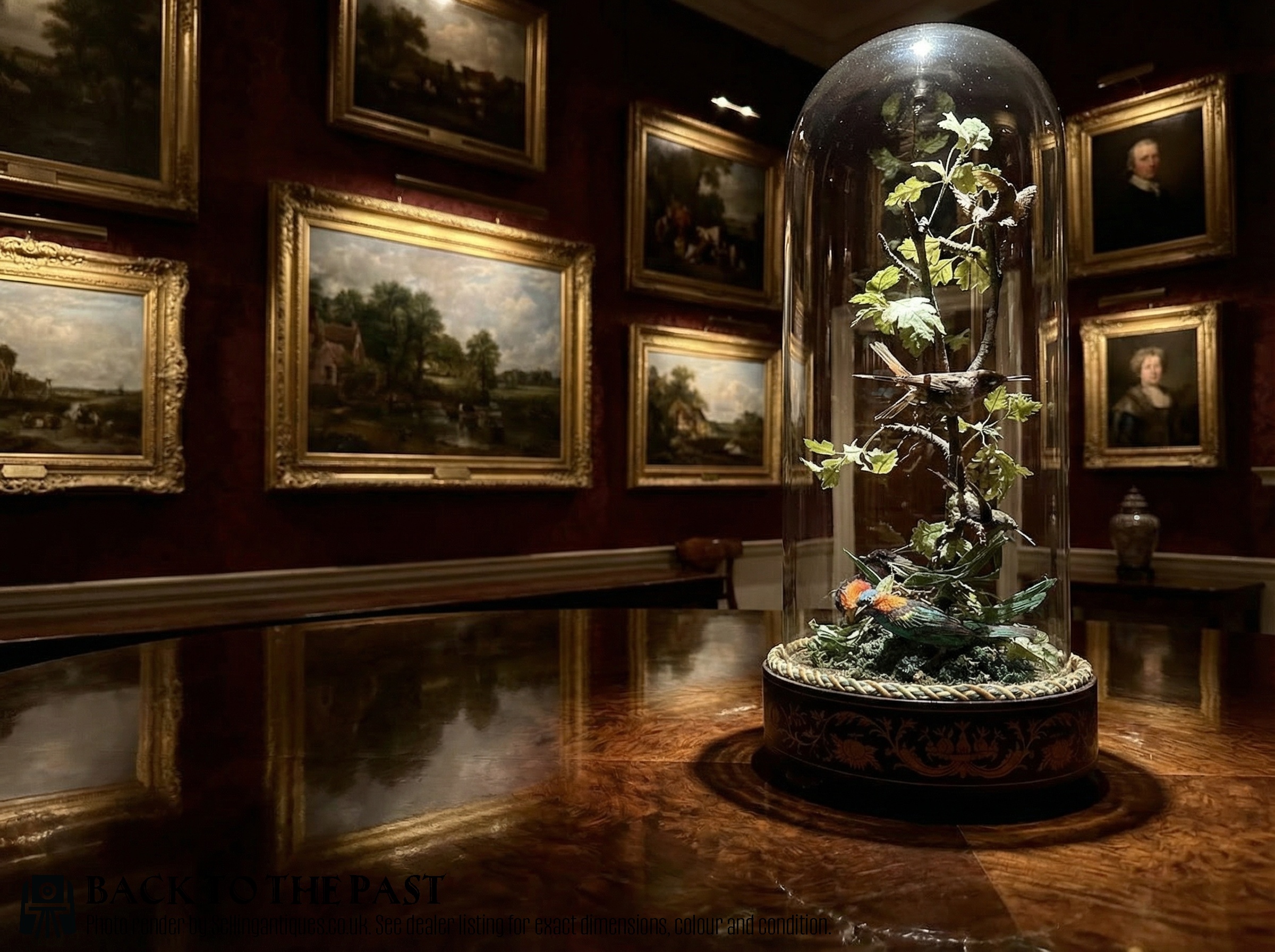
When you search for antique preserved birds, you are looking at nineteenth and early twentieth century taxidermy specimens arranged in glass domes, oak cases, and flat sided domes. These pieces capture Victorian and Edwardian natural history interests, preserving exotic and native species in lifelike compositions.
You are most likely to meet Victorian examples on this page, ranging from single specimens like kingfishers and pheasants to complex multi bird compositions containing mixed species from diverse regions. The forms include tabletop domes and wall or shelf display cases, often retaining their original timber frames and glass enclosures.
How they were made
Makers mounted avian specimens using traditional taxidermy techniques, building internal support structures and arranging the feathers by hand to achieve natural postures. Natural specimens and preserved flora such as moss were added to the interior ground work to recreate realistic habitats.
The enclosures themselves combined timber and glass, utilising wooden bases, oak cases, and blown glass domes to protect the delicate feathers from dust and moisture. Many pieces utilised flat sided glass domes or framed timber boxes to showcase the composition from multiple angles.
Antique Preserved Birds Retail Price Guide 2026
Typical asking prices for preserved birds among the pieces listed under this phrase on Sellingantiques today, from the lower quarter to the upper quarter. They describe what is for sale here now, not the wider market.
Some Victorian taxidermists gave snow buntings tiny cork shoes so they could stand upright in the dome.
What varies in quality
The distinction between standard taxidermy and the finest work lies in the anatomical accuracy of the bird and the complexity of the composition. Master practitioners achieved lifelike postures and convincing expressions that outlast simple stuffed mounts.
Enclosure quality also separates ordinary pieces from exceptional ones, particularly the clarity of the original glass and the joinery of the timber case. Well preserved botanical elements and intact natural specimens inside the dome elevate the piece significantly.
Rowland Ward Ltd·T. E. Gunn
The Antique Preserved Birds Glossary
- Taxidermy
- The art of preparing, stuffing, and mounting the skins of animals for display. This technique forms the foundation of every preserved bird specimen.
- Dome
- A rounded glass cover set upon a timber or porcelain base to protect delicate specimens. These enclosures keep dust away from the fragile feathers.
- Flat sided dome
- A specialised glass cover with flattened viewing panels that reduce optical distortion. This shape provides a clearer view of the taxidermy composition inside.
- Natural history
- The scientific study of animals and plants, popular as a domestic hobby during the nineteenth century. Preserved specimens served as both scientific study aids and interior decoration.
Antique Preserved Birds: Frequently Asked Questions
Where should I place my taxidermy?
Position your preserved birds away from direct sunlight and strong heat sources to prevent the plumage from fading and the timber from drying out. Stable indoor temperatures preserve both the feathers and the original wooden cases.
Choose a location with minimal vibration, such as a sturdy sideboard or bookcase, to protect the fragile internal mounts from repeated shaking.
How do I date these pieces?
Examine the construction of the timber case, the type of glass used in the dome, and any handwritten labels attached to the underside or backing paper. Oak frames and blown glass often point toward specific nineteenth century periods.
Compare the style of the taxidermy composition and the species included with dated examples from known makers of the Victorian and Edwardian eras.
Are the display cases original?
Most pieces retain their original glass domes, timber bases, and oak cases as created by the taxidermist. Original enclosures are prized for maintaining the historical integrity of the specimen.
Look for signs of period craftsmanship, such as old timber patination and hand blown glass imperfections, which confirm the case belongs to the era of the taxidermy.