

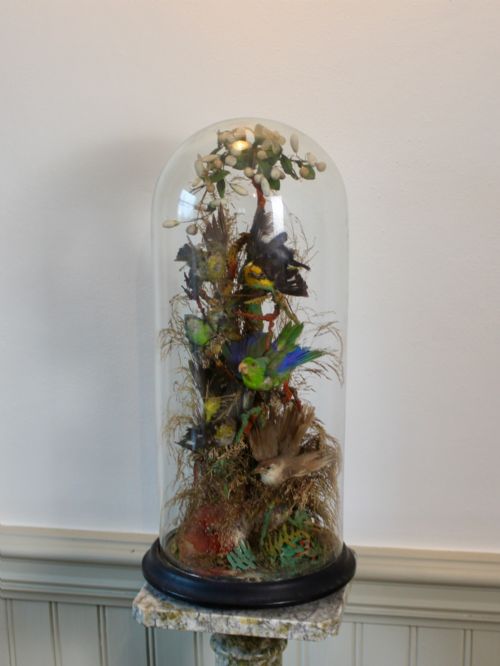


Victorian Cased Taxidermy
Victorian cased taxidermy brings preserved birds, mammals, and fish into domestic interiors inside glazed wooden cabinets and glass domes.
Victorian Cased Taxidermy
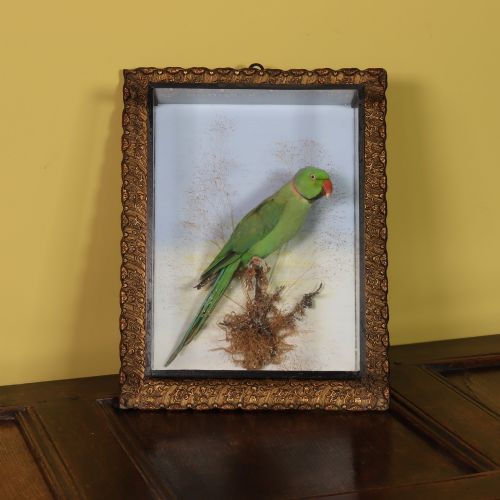
Victorian cased taxidermy comprises preserved specimens mounted within wooden display cases, shadow boxes, or glass domes designed to protect fragile plumage and fur from dust. These pieces reflect the nineteenth-century passion for natural history, presenting domestic and exotic creatures in simulated environments.
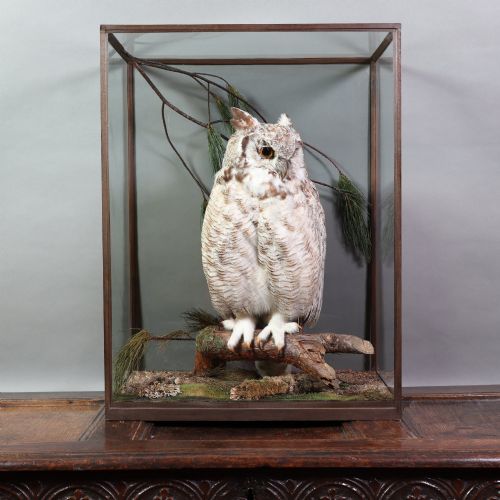
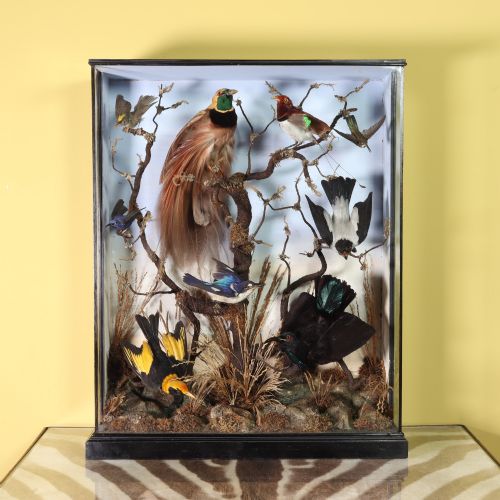
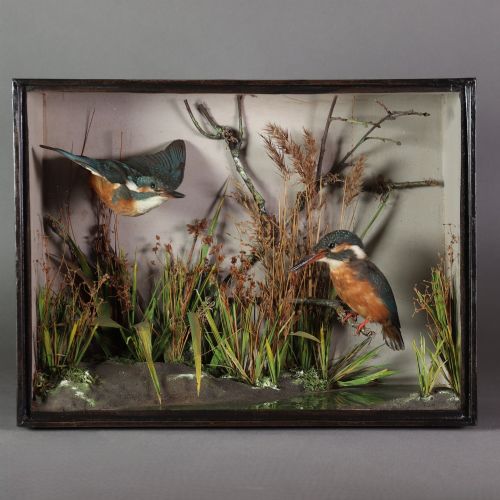
The selections available range from single birds like owls, kingfishers, and jays to complex compositions of mixed tropical species, fish, and small mammals. Many examples on this page date from the Victorian and Edwardian periods, utilising ebonised wood frames and blown glass covers.
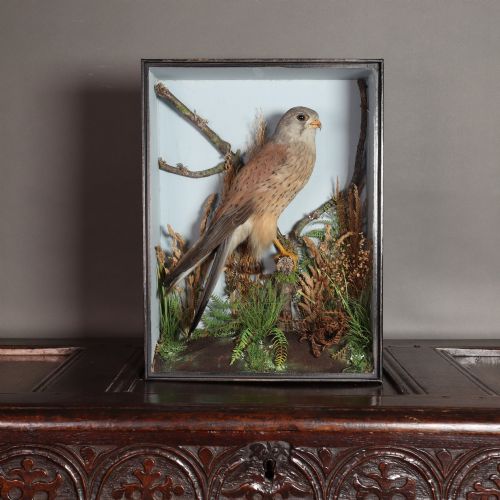
Display formats vary from flat-sided picture frame cases to tall architectural showcases and round glass domes. Each configuration shapes how the preserved specimen interacts with light and the surrounding room.
Materials and construction
Makers constructed display enclosures primarily from clear blown glass and timber, frequently employing ebonised wood or oak for the outer frames and bases. Inside these enclosures, taxidermists arranged preserved specimens alongside painted paper backgrounds, dried moss, fabric, and painted foliage to mimic natural habitats.
Preserved specimens required careful skinning and mounting over wire and straw armatures before taxidermists stitched the pelts or feathered skins into position. The finished creations were then sealed within glass fronted cases or beneath domes to prevent atmospheric degradation.
Rowland Ward once published a style guide advising taxidermists on how to make disgruntled parrots look perpetually cheerful.
Judging quality in preserved specimens
Quality rests upon the lifelike posture of the preserved creature and the botanical accuracy of its interior setting. Skilled practitioners captured anatomical tension and alert expressions, avoiding rigid or stiff bodily contours.
The craftsmanship of the housing itself matters greatly, seen in the joinery of the timber case, the clarity of the blown glass, and the preservation of painted backdrops. Superior examples maintain intact internal compositions where moss, paper, and foliage remain securely positioned after decades.
Little & Co·J Griffiths of Burford·Rowland Ward Ltd·T. E. Gunn·William Bazeley & Sons·Hutchings of Aberystwyth·James Jones·J. Cooper & Sons·James Gardner·W.F. Homer London
The Victorian Cased Taxidermy Glossary
- Dome
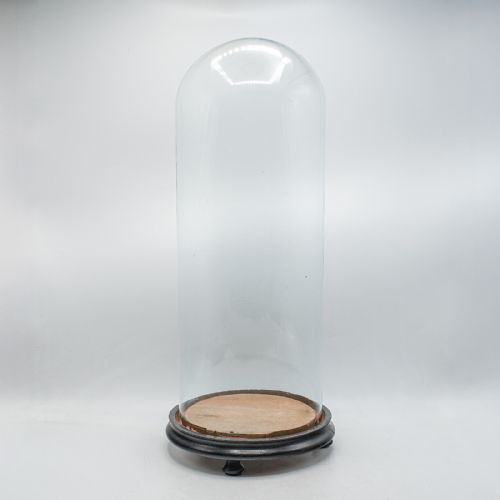
- A blown glass cover shaped like a bell, used to protect delicate mounted specimens. It rests upon a circular wooden base.
- Ebonised
- Timber treated with a dark finish to imitate ebony. This dark surface creates a formal border around natural history displays.
- Naturalistic setting
- An interior arrangement of painted paper, moss, and twigs within a case. It recreates the native habitat of the mounted animal.
- Cloche
- A bell shaped glass cover placed over a specimen. The term derives from the French word for bell.
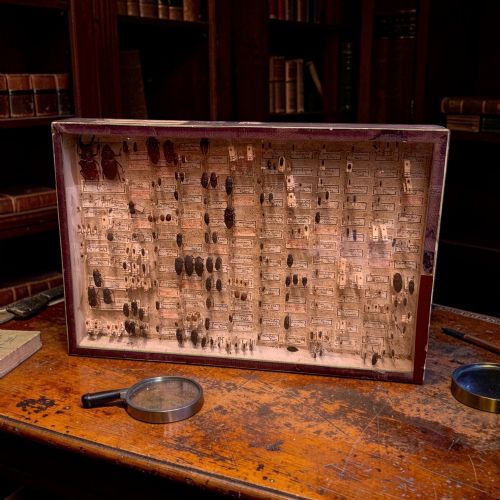
- Entomology case
- A shallow wooden box fitted with glass, used to display preserved insects. These enclosures protect fragile specimens from light damage.
Victorian Cased Taxidermy: Frequently Asked Questions
Where should I place a display case?
Position cases away from direct sunlight and damp environments to protect feathers, fur, and painted paper backgrounds from fading or deterioration. Stable indoor temperatures prevent the timber frames from warping.
Set them on sturdy sideboards or tables where foot traffic will not cause vibrations. Good ambient room light highlights the intricate details of the naturalistic setting.
How do I identify an Edwardian piece?
Edwardian pieces often feature lighter oak frames compared to the darker ebonised wood common in earlier Victorian examples. The interior settings occasionally display simplified foliage arrangements while retaining traditional glass domes.
Examine the construction of the timber backing and any remnant labels for clues to the date of manufacture. Stylistic shifts toward lighter woods help distinguish these later works from nineteenth-century productions.
What animals appear in these cases?
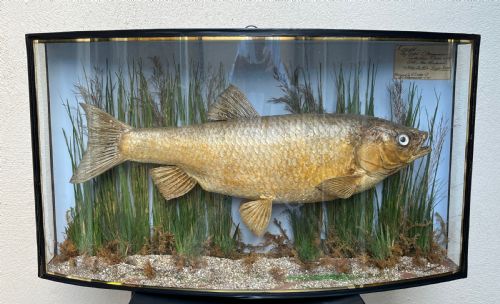
Common subjects include British birds such as owls, kingfishers, jays, and pheasants alongside imported exotic species like parrots and hummingbirds. Fish such as pike, roach, and carp also feature prominently in curved glass exhibition cases.
Small mammals including squirrels, badgers, and foxes occasionally appear mounted in active woodland tableaus. Each species reflects the Victorian fascination with documenting British and global wildlife.