


Antique Pottery Spaniels
These antique pottery spaniels bring hearthside charm to a room, cast in earthenware and modelled as faithful fireside companions.
Antique Pottery Spaniels
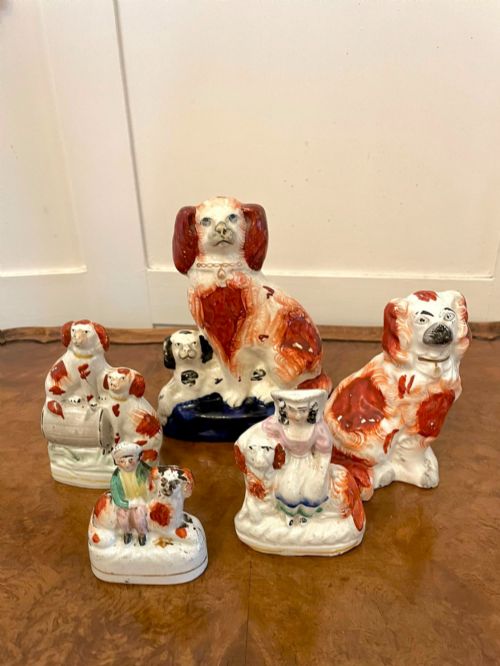
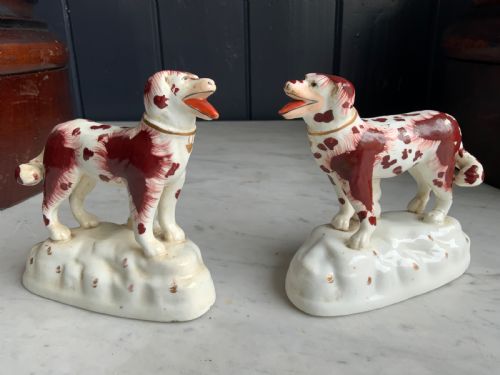
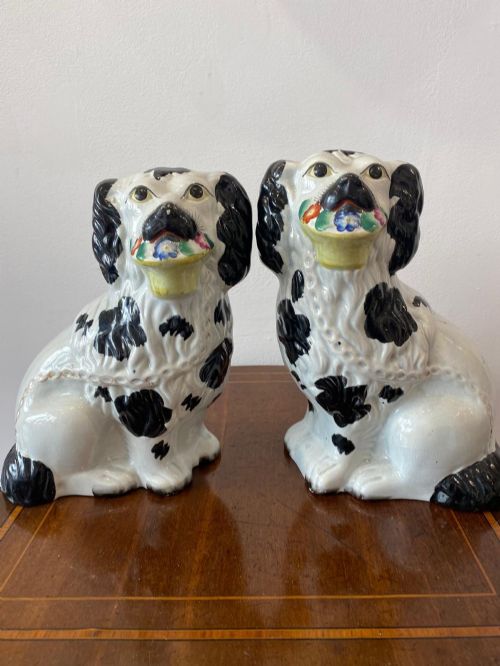
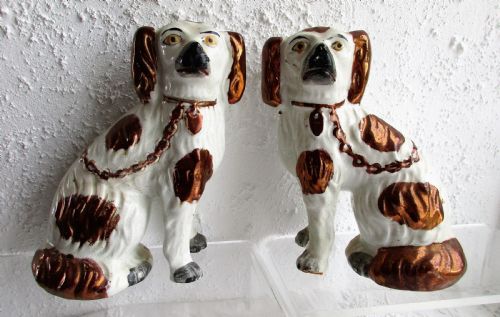
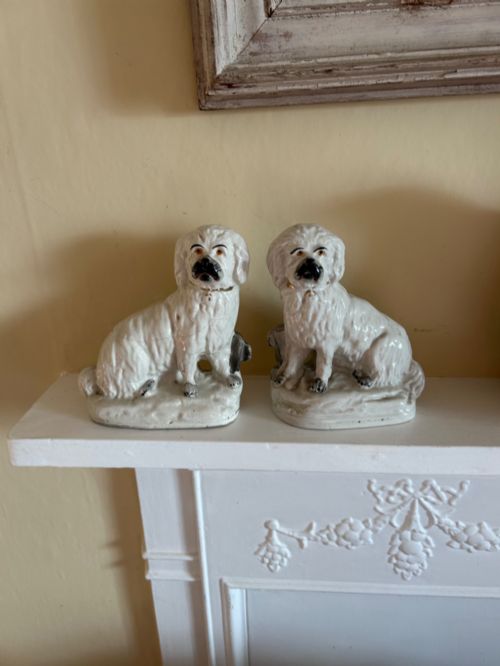
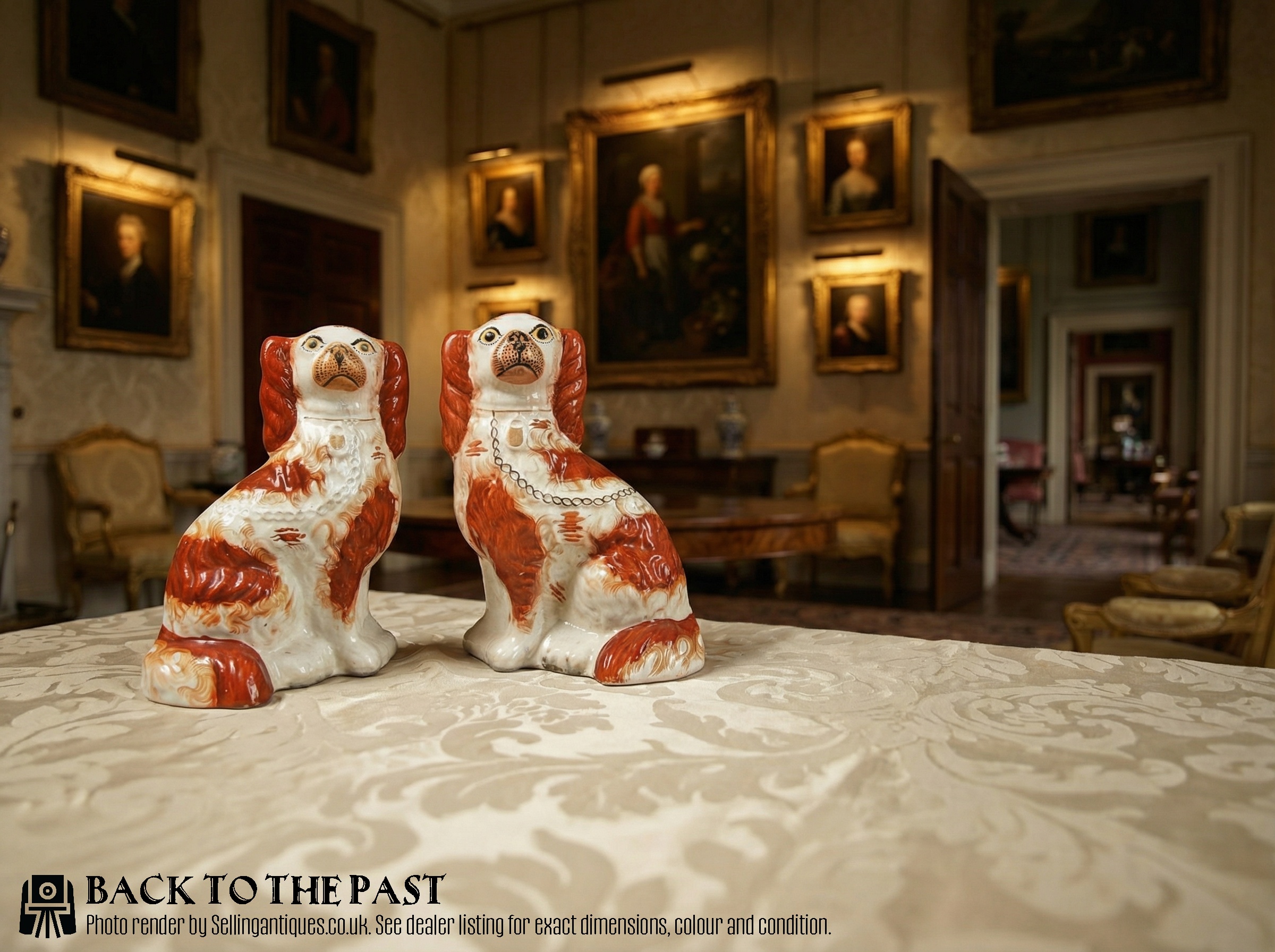
Antique pottery spaniels are traditional ceramic figures modelled after King Charles spaniels, commonly found as pairs designed to sit upon a mantelpiece. These decorative objects emerge predominantly from the nineteenth century, spanning periods from the Regency era through to the Victorian age. The most frequent versions on this page are Staffordshire pottery dogs, often rendered as comforter spaniels facing left and right.
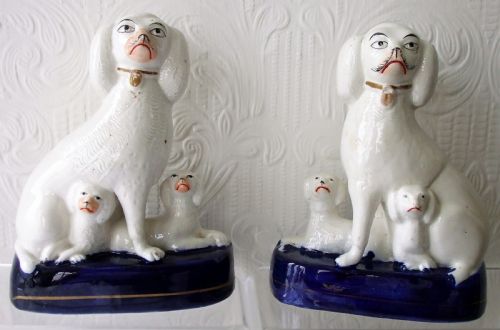
Beyond standard mantel pairs, the selection includes related forms such as money boxes, jugs, quill holders, and clock groups. Certain examples incorporate puppies, cushions, or children alongside the primary canine figure. Most pieces reflect English traditional styles, produced primarily as earthenware ceramics intended for domestic display.

How they were made
Certain specialised finishes appear in the archive, such as Jackfield glaze, which yields a deep black, glossy surface. Surface decoration often includes hand-painted elements combined with moulded textural details like encrusting on cushions.
Many spaniels wear heavy painted lockets and chains, perpetually locked to their fireside duty.
What varies in quality
Quality rests upon the crispness of the moulding and the execution of the hand-painted details. Finer examples display cleanly rendered facial expressions, precise enamel work, and carefully applied gilt or copper lustre without sloppy brushwork. The depth of the glaze and the coherence of the pair also dictate the overall standard of the figures.
Larger scale figures and complex configurations, such as those incorporating clocks, multiple puppies, or specialised forms like money boxes and Toby jugs, generally represent a more ambitious level of ceramic production. Pairs that retain their original matching stance and crisp surface decoration stand apart from heavily worn or indistinct castings.
Beswick
The Antique Pottery Spaniels Glossary
- Comforter spaniels
- Staffordshire pottery figures designed specifically to sit on either end of a mantelpiece facing inward. They represent the quintessential Victorian hearth dog.
- Copper lustre
- A metallic glaze technique producing a warm, reflective copper sheen. It is frequently seen on the collars and lockets of nineteenth-century dogs.
- Jackfield
- A deep, glossy black earthenware glaze used on Staffordshire figures. Pieces finished this way present a dark, uniform surface.
- Quill holder
- A utilitarian ceramic desk accessory incorporating a dog figure alongside an aperture for holding writing quills. These combine decorative modelling with functional deskware.
- Staffordshire
- A broad term for pottery produced in the Staffordshire Potteries district. Most antique spaniels originate from the factories and workshops of this region.
Antique Pottery Spaniels: Frequently Asked Questions
Why were Staffordshire spaniels made in pairs?
Makers designed these ceramic dogs as symmetrical pairs to sit on opposite ends of a mantelpiece, facing inward toward the fireplace. This arrangement suited the formal symmetry popular in Victorian domestic interiors.
Pairs typically mirrored each other, representing a left-facing and a right-facing companion. Collectors generally seek to keep these original pairs together rather than separating them.
How do I date an antique pottery spaniel?
Dating relies upon examining the ceramic body, the style of the enamel painting, and the application of glaze or gilt. Nineteenth-century examples often feature hand-painted facial details and copper lustre highlights characteristic of Victorian production.
Changes in modelling styles from Regency forms through to later Victorian and nineteen-hundreds variations help narrow the period. Archive pieces and marked factory examples also provide firm chronological benchmarks.
What is a comforter spaniel?
A comforter spaniel is a specific type of Staffordshire pottery figure modelled after the King Charles spaniel. These dogs earned their name from their historical role as popular fireside companions in British homes.
As decorative objects, they were placed on mantelpieces to bring warmth and character to a room. They usually feature characteristic padlock collars and painted patches.
Where were these ceramic dogs displayed?
These figures were primarily placed upon mantelpieces in Victorian living rooms and parlours. Their symmetrical design made them ideal for framing the central fireplace.
Some variations served secondary functions on desks or dressing tables as money boxes, quill holders, or jugs. Their cheerful presence suited domestic spaces throughout the house.