
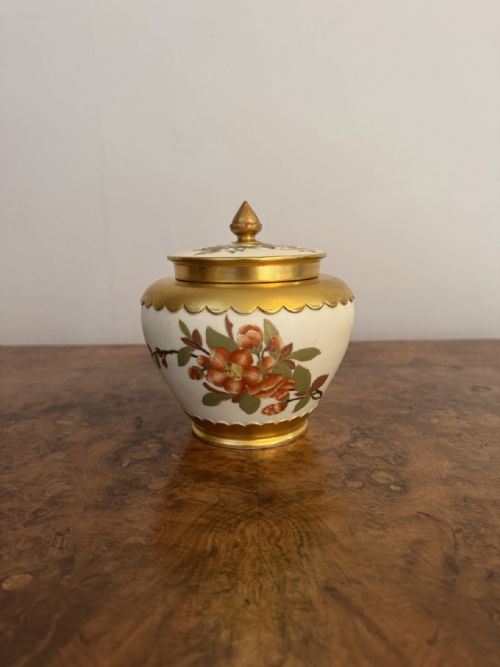


Antique Potpourri Vase
An antique potpourri vase holds dried aromatic petals behind pierced lids designed to release fragrance gently into a room.
Antique Potpourri Vase
When you search for an antique potpourri vase, you encounter decorative vessels made to hold dried herbs and spices for domestic scenting. These pieces range across the eighteenth, nineteenth, and twentieth centuries, appearing in forms such as lidded vases, urns, jars, and pommanders.
The version you are most likely to meet on this page is a nineteenth-century porcelain creation, often featuring pierced covers or crown covers to allow the scent to escape. English factories such as Royal Worcester, Mason's, and Spode dominate the selection, alongside continental porcelain from Meissen-style workshops and Dresden.
Styles vary from Georgian and Regency designs through to Victorian, Edwardian, and Rococo Revival interpretations. You will find items described variously as potpourri pots, ginger jars, and decorative urns, spanning simple ironstone bodies to heavily painted porcelain pieces.
Materials and construction
These vessels rely principally on ceramic bodies, porcelain, and ironstone, shaped into pedestals, urns, and jars with matching covers. Potters utilised earthenware and fine paste porcelain, applying glazes and enamel paints to decorate the surfaces.
Gilding, gold leaf, and gilt bronze mounts frequently accent the porcelain bodies, particularly in French and English examples from the nineteenth century. Pierced ceramic work on the lids required precise cutting before firing to ensure the vents remained clean and functional.
Listings feature porcelain and ironstone vessels spanning the eighteenth to the twentieth centuries, with a strong representation of nineteenth-century English factories.
Factors of quality
Quality in these vessels rests on the crispness of the porcelain moulding and the delicacy of the hand-painted decoration. Pieces bearing named factory marks or signed artist work display superior execution in both the ceramic body and the surface detail.
The survival of the original pierced cover or crown cover dictates the integrity of the piece, as replacements alter the balance and utility of the vessel. Heavier gilding, intricate enamel work, and well-executed transfer printing separate standard production wares from finer cabinet pieces.
Royal Worcester·Chamberlain Worcester·Derby·Spode·Mason s Ironstone·Wolfsohn Dresden·Sitzendorf
The Antique Potpourri Vase Glossary
- Potpourri pot
- A lidded vessel specifically pierced or perforated to diffuse the scent of dried flowers and spices held within.
- Ironstone
- A dense, durable type of heavy earthenware patented in the nineteenth century to imitate Chinese porcelain.
- Gilding
- The application of gold leaf or gold powder to the surface of ceramics or metal mounts for decoration.
- Crown cover
- A raised, openwork lid resembling a crown that permits the escape of fragrance from a potpourri jar.
- Pommander
- A container or perforated ball holding aromatic substances to freshen rooms or personal spaces.
Antique Potpourri Vase: Frequently Asked Questions
What is an antique potpourri vase used for?
These vessels were designed to hold dried flower petals mixed with spices, releasing scent through pierced lids to freshen the air in period sitting rooms.
Today, they serve primarily as decorative mantel or table ornaments, often retained with their original covers intact.
How do I identify a Royal Worcester potpourri vase?
Royal Worcester pieces often feature blush ivory grounds, painted fruit, or rose motifs, frequently accompanied by crown covers or pierced necks.
Factory marks on the underside help date the production period across the nineteenth and twentieth centuries.
What is the difference between ironstone and porcelain?
Ironstone is a heavy, opaque, highly durable earthenware developed in the nineteenth century for everyday utility and decorative wares.
Porcelain is a finer, vitrified ceramic material that rings when struck and allows for more delicate translucency and detailed painting.
Are potpourri lids removable?
Lids on these vessels lift off to allow the filling and emptying of dried botanical materials within the interior chamber.
Many pots feature specialised pierced or reticulated covers designed to stay in place while diffusing scent.