



Hand Painted Potpourri
These hand painted potpourri vessels, spanning from the Georgian era through the mid-twentieth century, bring fragrant botanical displays and fine ceramic artistry into domestic spaces.
Hand Painted Potpourri
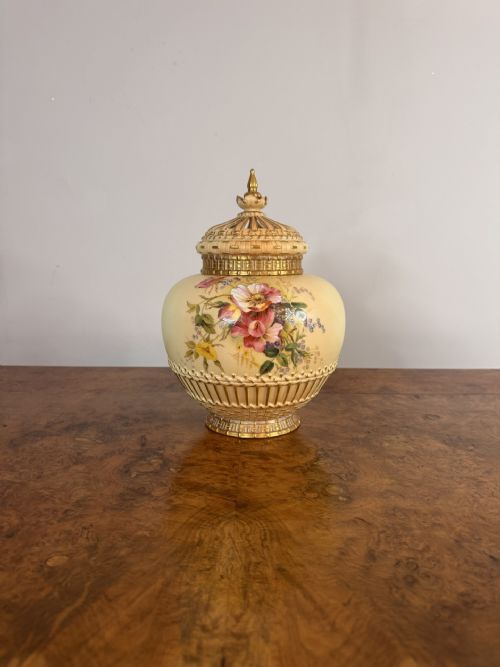
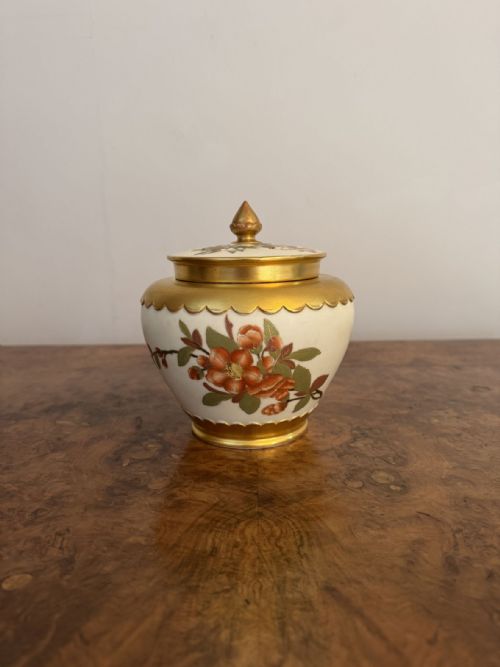
When you search for hand painted potpourri, you are looking at lidded vases, urns, ginger jars, and decorative bowls designed to hold dried flowers and spices. The pieces appearing here predominantly trace back to Royal Worcester, alongside examples from Dresden, Meissen-style workshops, and Mason's.
The forms range from compact lidded pots to substantial pedestal vases and crown-covered jars. Victorian and Edwardian interpretations sit alongside Georgian and mid-century British ceramics.
Blush ivory grounds and painted fruit motifs dominate the physical selection. Buyers encounter both English porcelain and ironstone bodies, often accompanied by pierced covers meant to release scent.
How they were made
Potters shaped these bodies using porcelain, ceramic, and ironstone, frequently mounting them with gilt bronze or finishing them with gold leaf and gilding. Artisans applied enamel paint by hand directly onto the clay bodies, often framing floral or fruit studies within gilded cartouches.
Lids and covers required specialised piercing techniques to ensure fragrance could escape from the potpourri chamber without compromising the structural integrity of the vessel. Kiln firing fixed the underglaze painting, while secondary enamel details and gilding received low-temperature re-firing.
Hand Painted Potpourri Retail Price Guide 2026
Typical asking prices for hand painted potpourri among the pieces listed under this phrase on Sellingantiques today, from the lower quarter to the upper quarter. They describe what is for sale here now, not the wider market.
The selection includes porcelain, ironstone, and enamel materials across Georgian, Victorian, and Edwardian periods.
What varies in quality
Quality rests upon the execution of the hand-painted decoration and the crispness of the porcelain or ironstone moulding. Master painters working for established potteries achieved subtle shading in floral sprays and fruit studies that lesser hands missed.
The survival of original pierced covers and matching inner lids alters the desirability of a vessel. Gilding preservation and the clarity of factory marks further divide standard production from exceptional studio output.
Royal Worcester·Dresden Porcelain·Wolfsohn Dresden·Mason's Ironstone
The Hand Painted Potpourri Glossary
- Blush ivory
- A matte cream-coloured porcelain ground developed by Royal Worcester during the late nineteenth century. It often serves as a soft backdrop for delicate floral painting.
- Ironstone
- A dense, durable type of heavy ceramic patented in the nineteenth century as a tougher alternative to porcelain. It takes enamel decoration and blue transfers exceptionally well.
- Potpourri
- A mixture of dried petals and spices kept in a lidded jar to perfume a room. The vessels made for this purpose feature pierced or perforated covers.
- Gilding
- The application of gold leaf or gold powder to the surface of ceramic or metal mounts. It highlights rims, handles, and painted panels.
Hand Painted Potpourri: Frequently Asked Questions
How do I use a potpourri jar?
Remove the pierced cover and fill the internal chamber with dried scented botanicals, petals, or spices. Replace the lid to let the fragrance diffuse gently through the perforations.
Keep the vessel away from direct sunlight and moisture to preserve both the dried contents and the painted ceramic surface over time.
How do I date a porcelain vessel?
Examine the base for factory ciphers, impressed marks, and printed stamps that changed by decade. Stylistic clues such as blush ivory grounds or Rococo revival handles also point to specific periods.
Compare the paste and glaze characteristics with documented examples from known potteries to narrow down the manufacturing window.
Where were these jars displayed?
Owners traditionally placed these decorative pieces on mantelpieces, side tables, and pedestals within principal rooms. Their dual purpose as ornamental art and air fresheners made them suited for formal parlours.
They sat prominently where airflow could assist the release of scent into the living space.
What is ironstone china?
Ironstone is a heavy, robust ceramic body perfected in the nineteenth century to resist chipping while mimicking oriental porcelain. It provided a stable surface for hand-painted enamel decoration.
Pieces made from this material feel notably heavier than standard porcelain vessels of the same size.