


Royal Worcester Vessel
Royal Worcester vessel examples range from Victorian exhibition pieces to mid-century painted fruit jars, prized for intricate hand-painted naturalist detail.
Royal Worcester Vessel
A royal worcester vessel encompasses porcelain vases, urns, potpourri pots, jardinieres, and loving cups produced across the nineteenth and twentieth centuries. These decorative items reflect changing tastes from Victorian neo-classical and aesthetic movement styles to Edwardian and later painted compositions.
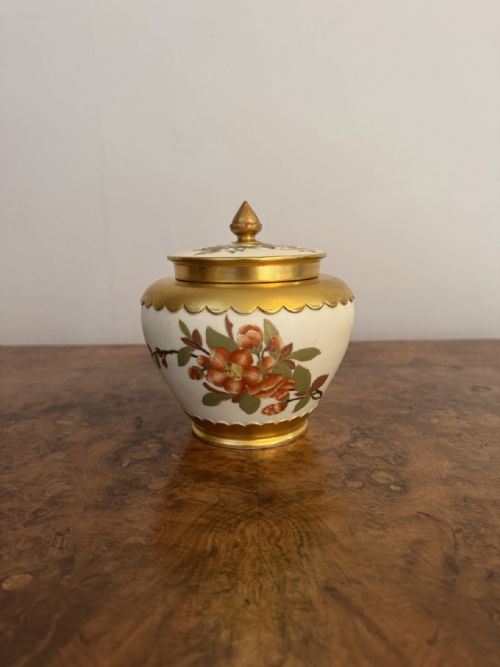
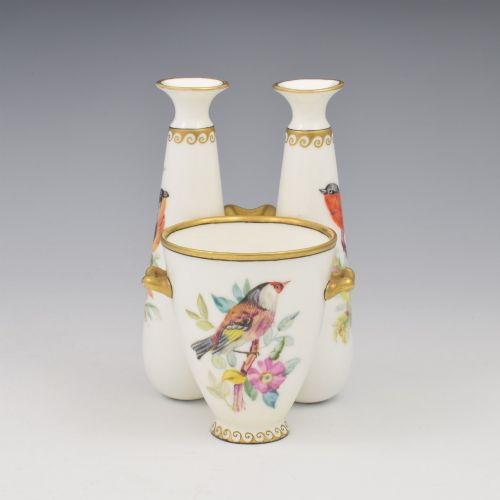
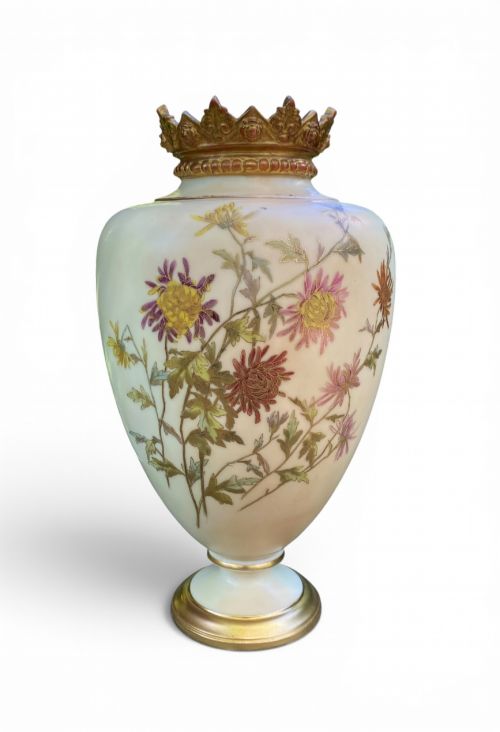
Buyers will most frequently encounter porcelain vases and covered jars decorated with hand-painted birds, sheep, and fruit. Forms extend from boat-shaped bowls and rose ewers to large ovoid jars featuring pierced gilt handles and crown covers.
Production spans the Victorian era through the Edwardian period and into the mid-twentieth century. Pieces often bear the signatures of notable factory artists who specialised in specific natural subjects.
Materials and manufacture
Potters shaped fine bone china and standard porcelain into varied vessel forms, utilising moulds and throwing techniques. Surfaces then received hand-painted decoration in enamel colours before initial firing.
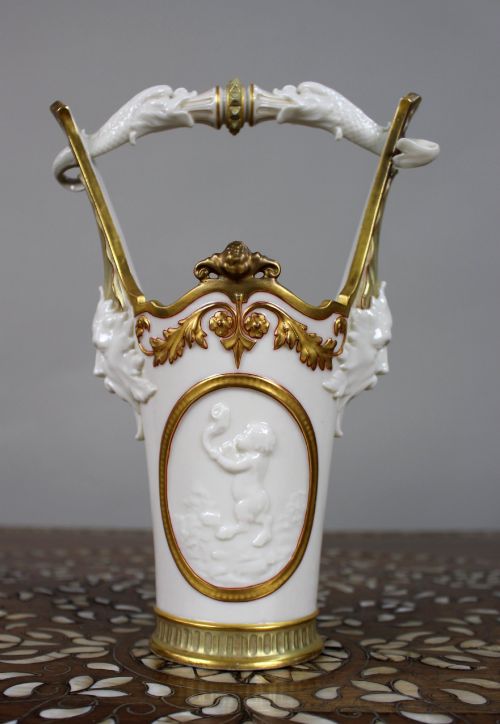
Gilding, gold leaf, and gold gilt accents were applied to handles, rims, and pierced sections, adding rich metallic contrast to the painted porcelain bodies.
Painters specialised so narrowly that certain artists spent decades rendering nothing but feathers, while others devoted entire careers to painted sheep.
Distinctions in quality
Execution of the hand-painted subject matter largely determines the standing of a royal worcester vessel. Detailed naturalist studies of birds, sheep, or fruit by named artists elevate a piece above standard decorative production.
Complexity of form and embellishment also set examples apart. Pierced gilt handles, crown covers, and elaborate mouldings demand advanced technical skill during firing.
John Hopewell·James Hadley·Walter Powell·J Southall·James Stinton·H Ayrton·C Baldwyn·Harry Davis
The Royal Worcester Vessel Glossary
- Blush ivory
- A soft cream-coloured porcelain body used by the factory as a background for floral and bird decoration. This finish creates a warm matte appearance.
- Potpourri pot
- A decorative vessel with a pierced cover designed to hold dried scented plant material. These containers often feature internal lids beneath the main crown cover.
- Ewer
- A large jug with a wide spout and arched handle, historically used for water but adapted here as an ornamental vase shape. Victorian examples often display neo-classical contours.
- Jardiniere
- An ornamental ceramic pot intended to hold live plants or flowers. These vessels usually sit on a flat base without feet.
- Gilding
- The application of gold leaf or powdered gold to ceramic surfaces. It highlights handles, rims, and structural details.
Royal Worcester Vessel: Frequently Asked Questions
How do I identify the date?
Factory marks stamped on the base of the porcelain provide dating codes specific to the year of production. Stylistic shifts from Victorian aesthetic designs to later painted fruit also indicate the era.
Comparing the form and signature styles against recorded factory timelines helps narrow the manufacturing period.
Were these items used functionally?
Most pieces served purely decorative purposes within nineteenth and twentieth-century homes, displayed on mantelpieces, pedestals, and tables. Items like jardinieres and flower holders accommodated plants.
Potpourri pots performed a dual function by perfuming rooms with dried botanical blends while acting as ornamental centrepieces.
What is a lidded potpourri pot?
A lidded potpourri pot is a ceramic container featuring a pierced outer cover that allows scented plant material inside to release fragrance. These vessels range from small desk items to large floor jars.
Crown covers and pierced shoulders characterise the more elaborate examples produced by the factory.