


Antique Portable Desk Box
An antique portable desk box provides a practical travelling writing surface, folding down into a compact case for correspondence on the move.
Antique Portable Desk Box
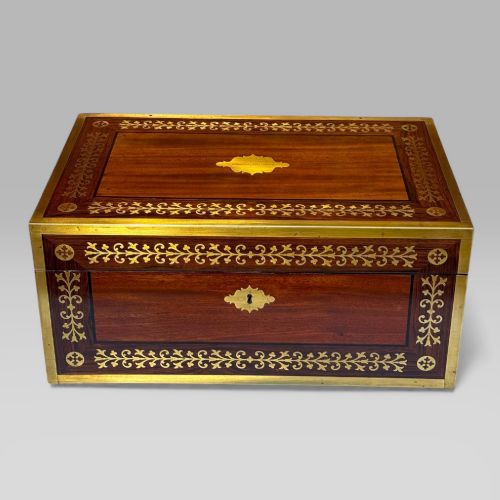
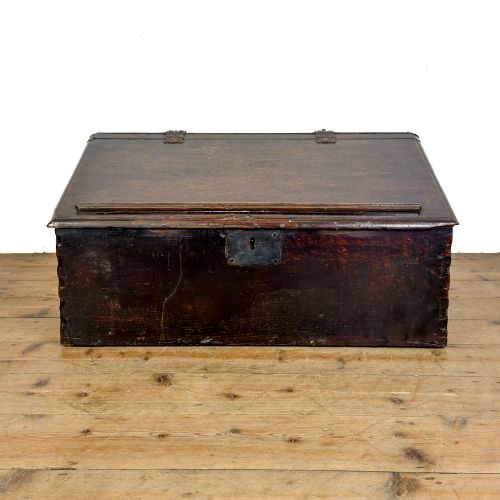
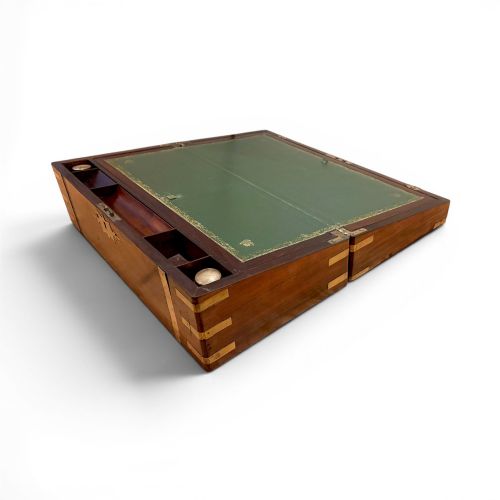
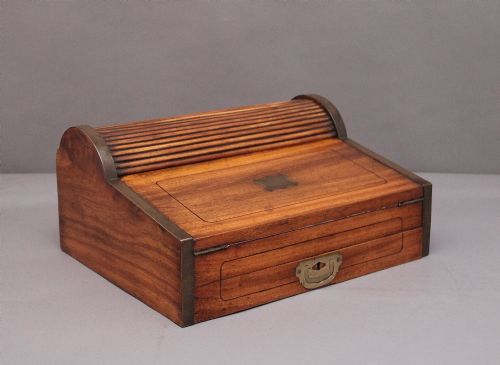
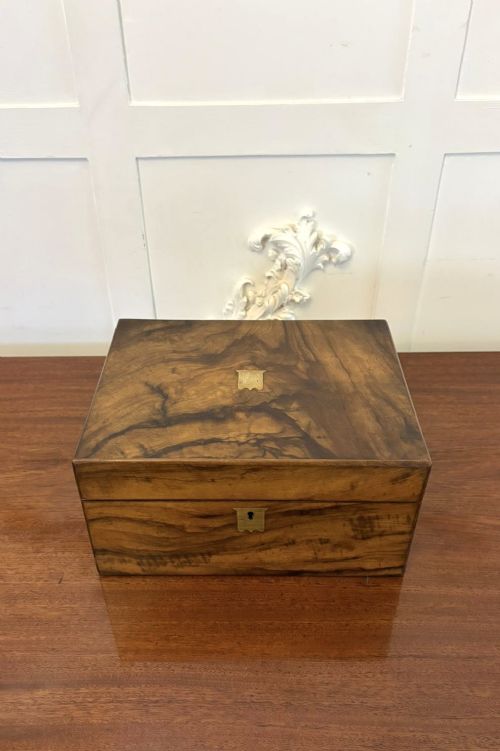
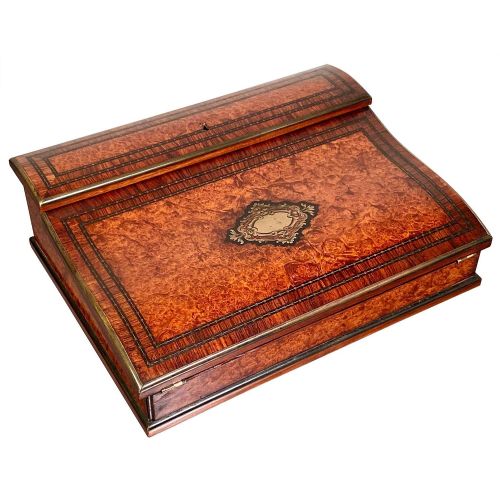
An antique portable desk box comprises folding writing slopes, lap desks, and campaign boxes designed for travel during the Georgian and Victorian periods. These pieces open to reveal angled writing surfaces lined with leather, alongside compartments for inkwells, pens, and paper.
The most common examples on this page are nineteenth-century mahogany, rosewood, and walnut writing slopes fitted with brass corners and strapwork. Many incorporate secret drawers or clever mechanical arrangements intended for officers and travellers.
Materials and Construction
Cabinetmakers utilised dense timbers such as mahogany, walnut, camphor wood, and coromandel to withstand the rigours of travel. These woods were frequently selected for rich figure or grain, then shaped into solid or veneered carcasses.
Brass binding, flush carrying handles, and reinforced corner brackets protected the edges from impact during transit. Specialised locking mechanisms, including Bramah locks, secured the internal compartments and secret drawers.
Some travel boxes include secret spring-loaded panels that pop open only when you poke a hidden wooden peg.
Factors of Quality
Superior examples display precise joinery, finely fitted internal compartments, and high-grade timber veneers such as burr walnut or figured mahogany. The quality of the brass inlay and the presence of signed locks or maker details distinguish finer workshop output.
The complexity of internal mechanics, such as secret drawer release buttons and metamorphic folding arrangements, separates standard desk boxes from more ambitious bespoke pieces.
Mappin & Webb
The Antique Portable Desk Box Glossary
- Writing slope
- A box with a hinged, slanted lid that folds down to form a writing surface. It typically houses inkwells, pen trays, and storage compartments beneath.
- Campaign box
- Furniture designed to dismantle or fold for military travel. These pieces utilise robust brass corners and flush handles for durability.
- Secret drawers
- Concealed compartments hidden behind false partitions or released by spring mechanisms. They were used for storing valuables and confidential letters.
- Bramah lock
- A high-security cylindrical lock patented in the eighteenth century. It was widely utilised on better-quality campaign boxes and writing desks.
- Tunbridgeware
- Small wooden objects decorated with minute mosaic tile patterns made from various naturally coloured woods. This technique originated in Kent.
Antique Portable Desk Box: Frequently Asked Questions
What is an antique portable desk box?
An antique portable desk box is a folding wooden case designed to carry writing materials and provide a stable writing surface while travelling. These pieces typically open into an inclined writing slope.
Inside, users find dedicated spaces for inkwells, stamps, nibs, and stationery, often accompanied by hidden compartments for sensitive letters.
How do you use a writing slope?
To use a writing slope, unlatch the exterior clasps and fold down the hinged lid to create an angled writing plane. The interior compartments remain accessible or reveal further storage beneath the writing surface.
Many boxes include a fitted leather insert on the slope to provide grip for paper while writing with a dip pen.
Where do secret drawers hide?
Secret drawers in writing slopes usually hide behind removable pen trays or false vertical partitions at the back of the stationery well. Releasing them often requires pressing a concealed wooden spring or sliding panel.
Cabinetmakers incorporated these hidden compartments to protect money, jewellery, and private correspondence.