


Antique Porcelain Timepiece
An antique porcelain timepiece brings together decorative ceramic panels and precise movement, offering a striking centrepiece for a mantel or desk.
Antique Porcelain Timepiece
An antique porcelain timepiece combines ceramic craft with mechanical timekeeping, mostly originating from nineteenth-century French workshops. Buyers searching for an antique porcelain timepiece encounter mantel clocks and carriage clocks housed in gilt bronze, ormolu, brass, and marble.
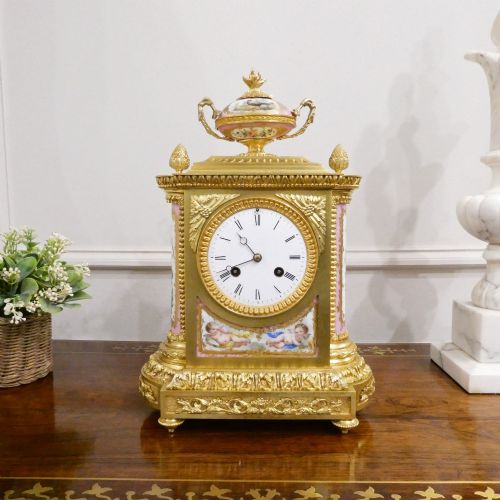
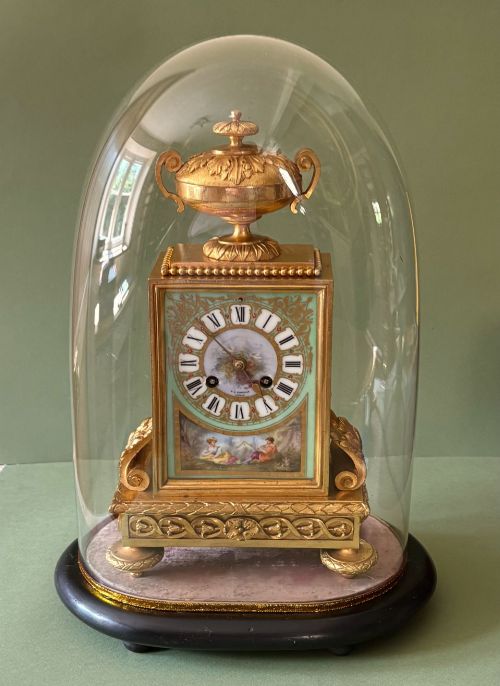
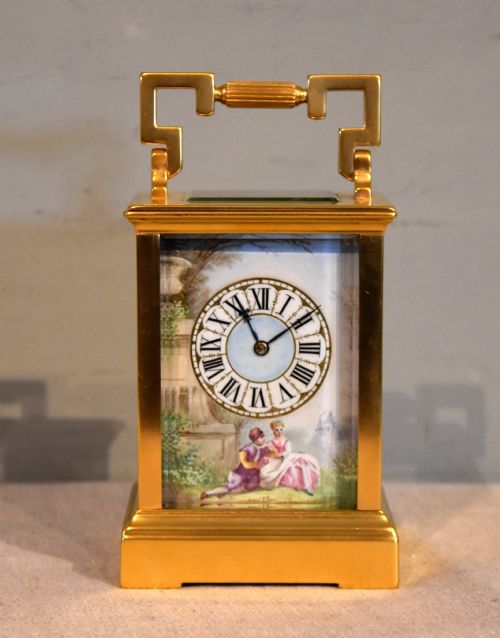
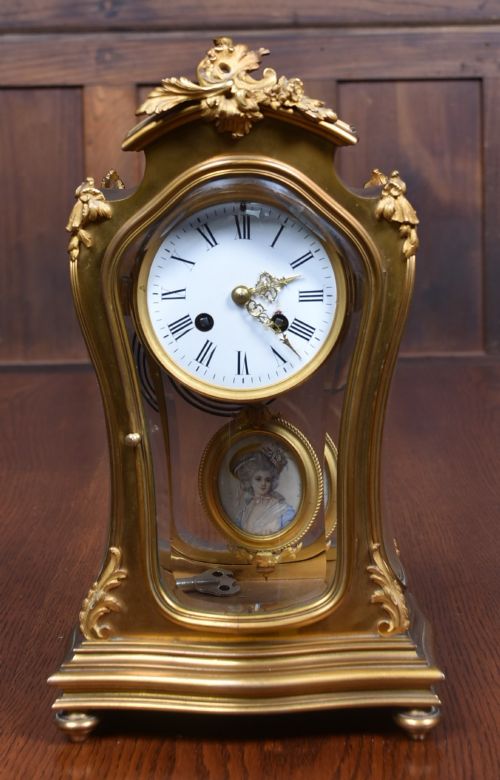
The objects span the Victorian era, utilising Louis XVI Revival, Rococo Revival, and Neoclassical styles. Painted porcelain panels, often in the Sevres manner, depict figures, putti, and natural scenes set within decorative metal mounts.
Mantel clocks form the majority of the selection, accompanied by smaller carriage clocks and occasional figural pieces. Dates range from the early nineteenth century through to nineteen-ten, capturing distinct shifts in domestic interior ornamentation.
What varies in quality
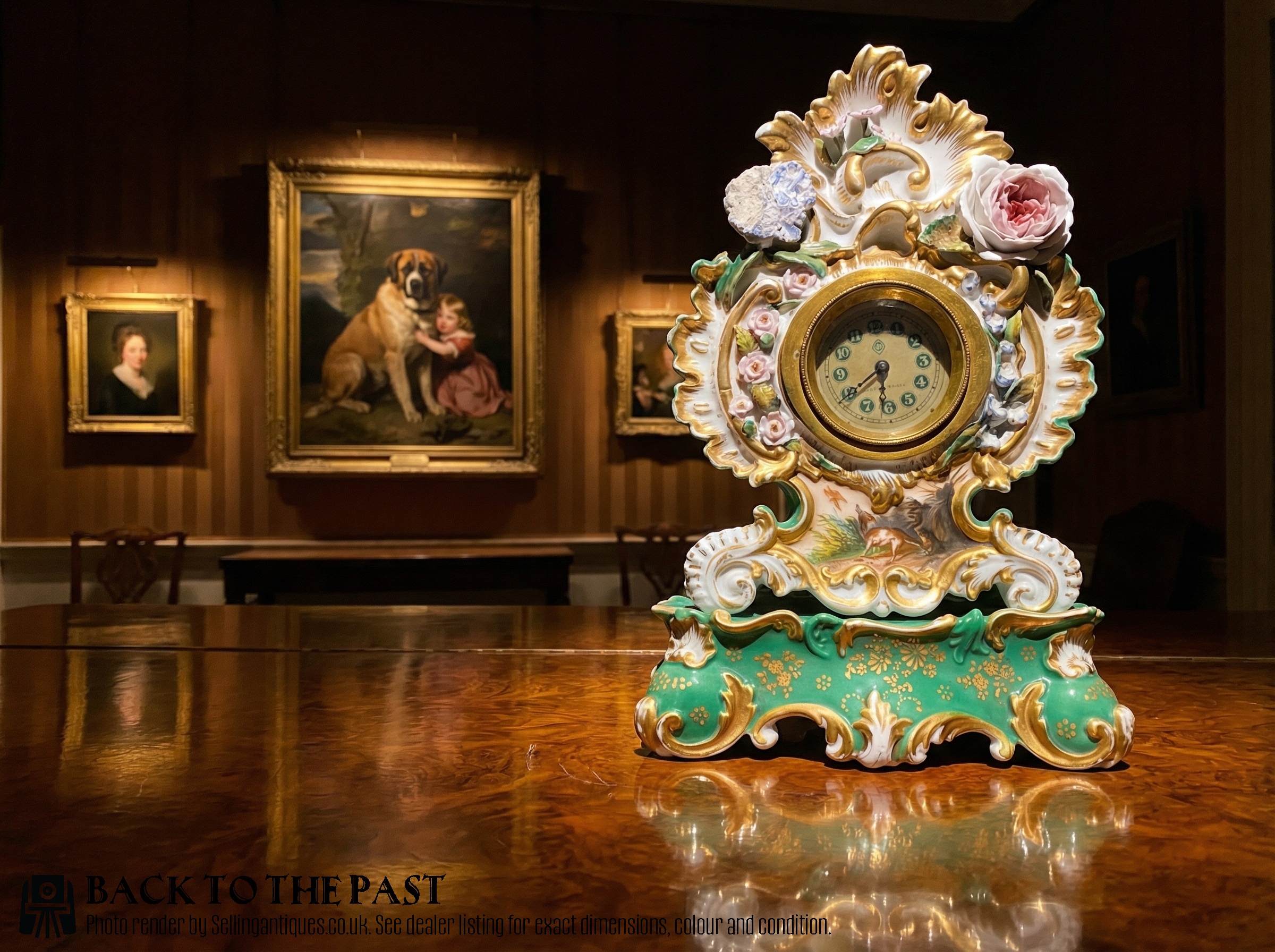
Quality rests in the crispness of the gilt bronze or ormolu casting and the finesse of the hand-painted porcelain panels. Signed miniature paintings and detailed figural work distinguish finer examples from standard production pieces.
The integration of the porcelain components into the metal frame shows the maker's hand, where tight joints and balanced proportions elevate the piece. The complexity of the clock's style, from restrained Louis XVI Revival to exuberant Rococo, dictates the visual weight of the work.
The listings feature nineteenth-century French mantel clocks and carriage timepieces utilising brass, marble, gilt bronze, and hand-painted porcelain.
Jean-Baptiste Delettrez·Japy Frers·Rodier
The Antique Porcelain Timepiece Glossary
- Ormolu
- Gilded bronze used extensively for decorative mounts on nineteenth-century French clocks. The technique involved applying a mercury and gold amalgam to a bronze base before heating.
- Sevres
- A style of fine French porcelain associated with royal factory designs, frequently referenced in decorative clock panels. It denotes soft-paste ceramic bodies decorated with rich colours and hand-painted scenes.
- Carriage clock
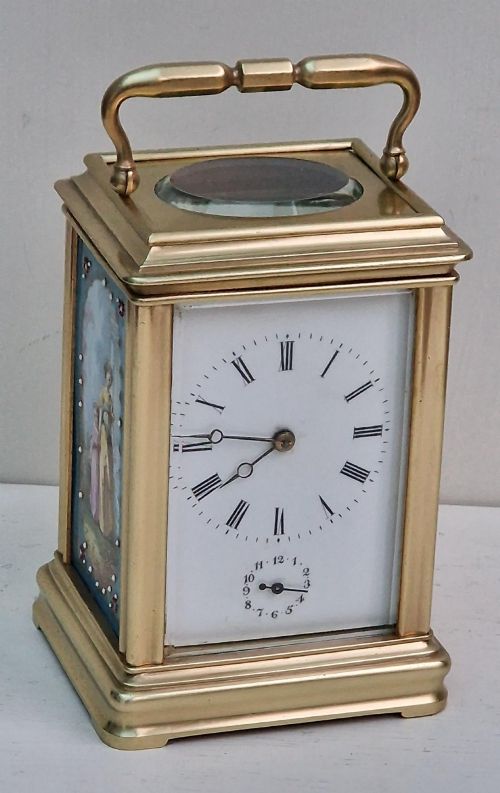
- A portable timepiece originally designed for travel, housed in a brass and glass case with a handle. Examples often incorporate porcelain panels within the fretwork frame.
- Louis XVI Revival
- A nineteenth-century decorative style drawing on classical symmetry, straight lines, and refined motifs. This aesthetic appears frequently in the gilt bronze and porcelain mantel clocks of the period.
- Putti
- Depictions of chubby male infants, often winged, used as figural ornaments in Rococo and nineteenth-century French clock design. They typically recline or interact with decorative elements around the dial.
Antique Porcelain Timepiece: Frequently Asked Questions
How do I date a porcelain timepiece?
Dating relies on the style of the gilt mounts, the marks on the movement, and the character of the painted porcelain panels. Nineteenth-century French pieces often bear foundry stamps or maker signatures on the brass backplate.
Changes in decorative taste from Rococo Revival to Neoclassical styles also help narrow down the decade of production between eighteen-forty and nineteen-ten.
What is the difference between a timepiece and a clock?
In strict horological terms, a timepiece indicates the current hour and minute but lacks a striking mechanism to chime the hours. Many decorative mantle and carriage pieces function purely as timepieces.
Clocks include gear trains dedicated to striking bells or gongs on the hour and half-hour, requiring additional hammers and internal springs.
How should I care for an antique porcelain timepiece?
Keep the clock away from direct sunlight and sudden temperature changes to protect the delicate enamel dials and painted ceramic surfaces. Dust the gilt bronze and glass gently with a soft, dry cloth.
Professional mechanical service every few years ensures the internal brass gears and springs continue to function without excessive wear.
Are carriage clocks and mantel clocks similar?
Carriage clocks are smaller, portable units encased in glass and brass with a swing handle, designed originally for travel. Mantel clocks are heavier, static ornaments built into marble, bronze, or porcelain housings meant to sit permanently on a fireplace shelf.
Both incorporate porcelain elements, but their scale and mechanical layout reflect entirely different domestic uses.