
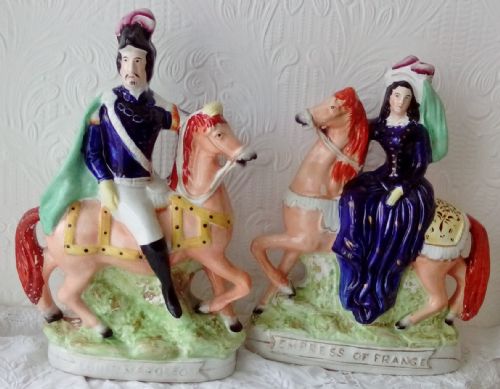


Antique Porcelain Mantel Ornament
An antique porcelain mantel ornament brings character to a room through modelled figures, animals and glazed ceramics designed for display.
Antique Porcelain Mantel Ornament
An antique porcelain mantel ornament encompasses decorative figurines, pottery figures, spill vases and sculptural groups designed to sit upon a fireplace shelf. The selection draws heavily from nineteenth-century English Staffordshire pottery, German factories and French porcelain works.
Buyers encounter matched pairs of dogs, historical figures, pastoral subjects and classical groupings spanning the eighteenth to the early twentieth century. Staffordshire greyhounds, spaniels, lions and poodles appear alongside Continental porcelain figures and vases in Rococo and Neoclassical styles.
How they were made
Gilt highlights and copper lustre finishes were added during secondary firings to catch the light of a room. Bisque porcelain pieces remained unglazed to display a matte, marble-like texture favoured for portrait busts and classical subjects.
Ceramic greyhounds, poodles and wild boars gaze across centuries from their eternal posts on the mantel.
What varies in quality
Preservation of original painted surfaces, glazes and paired configurations influences the integrity of an ornament. Retaining original components such as glass domes enhances the completeness of surviving nineteenth-century displays.
Meissen·Chelsea·Royal Dux·Thomas Parr·La Coutille Factory·Letu & Mauger·Royal Worcester·Sitzendorf·Volkstedt Triebner Ens & Eckert·Samson of Paris·Vion et Baury·Royal Doulton·Beswick·Copeland
The Antique Porcelain Mantel Ornament Glossary
- Bisque
- Unglazed porcelain with a matte, porous surface that resembles marble and was frequently used for portrait busts and classical figures.
- Bocage
- Applied ceramic foliage and leafy backgrounds modelled behind figures, commonly found on eighteenth and nineteenth-century porcelain groups.
- Copper Lustre
- A metallic earthenware glaze containing copper oxides that produces a reflective, coppery sheen across the surface of pottery figures.
- Spill Vase
- A hollow ceramic vessel designed to hold wooden spills used for lighting fires, often incorporated into the backing of animal or human figures.
- Staffordshire
- Pottery made in the English region of Staffordshire, widely known for moulded earthenware figures, dogs and historical groups.
Antique Porcelain Mantel Ornament: Frequently Asked Questions
Where should I place these ornaments?
These pieces suit fireplace mantels, sideboards and console tables where their modelled forms and painted surfaces can be viewed closely. Paired figures work well arranged symmetrically to frame a central mirror or clock.
Keep them away from direct heat sources and strong sunlight to protect delicate enamel colours and gold leaf accents over time.
How do I clean antique porcelain?
Dust figures gently with a soft, dry brush to prevent dirt settling into crevices, modelled foliage or unglazed bisque surfaces. Avoid using water, detergents or abrasive cloths on antique enamel and gilt decoration.
If washing is essential for glazed items, use lukewarm water without soaking, and dry immediately with a lint-free cloth.
Are these figures always sold in pairs?
Many nineteenth-century mantel ornaments were manufactured as matching pairs to balance symmetrical fireplace displays. Staffordshire dogs, seated spaniels and Continental figures frequently survive as pairs.
Single figures and sculptural groups also appear across various factories and periods, designed to stand alone as individual decorative objects.