

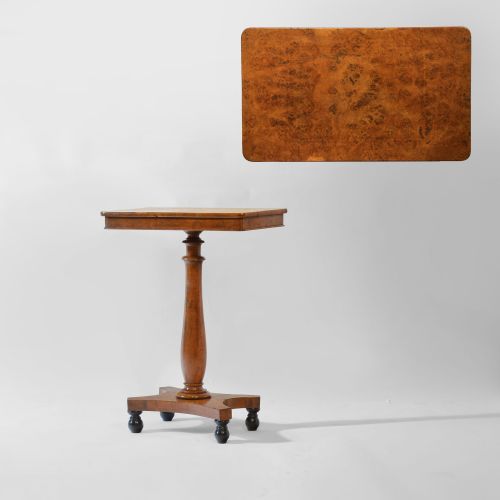


Antique Pollard Oak
Antique pollard oak brings a dense, clustered grain and deep honey warmth to furniture ranging from grand Victorian sideboards to small Regency writing desks.
Antique Pollard Oak
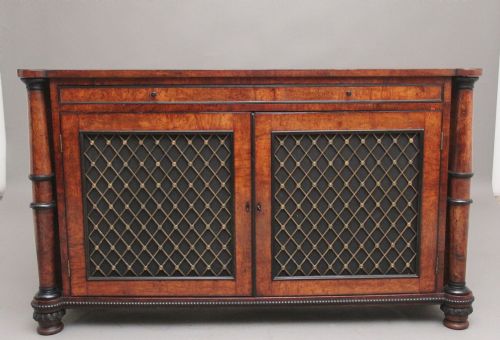
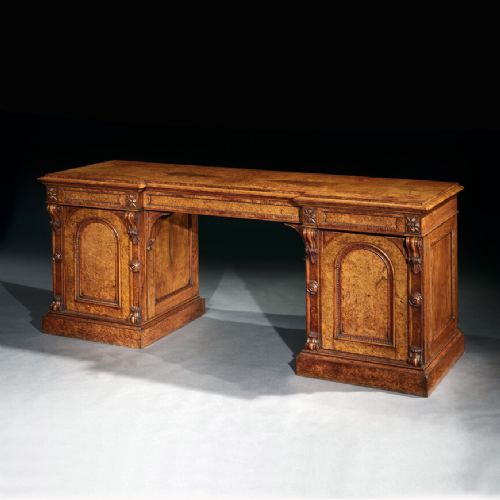
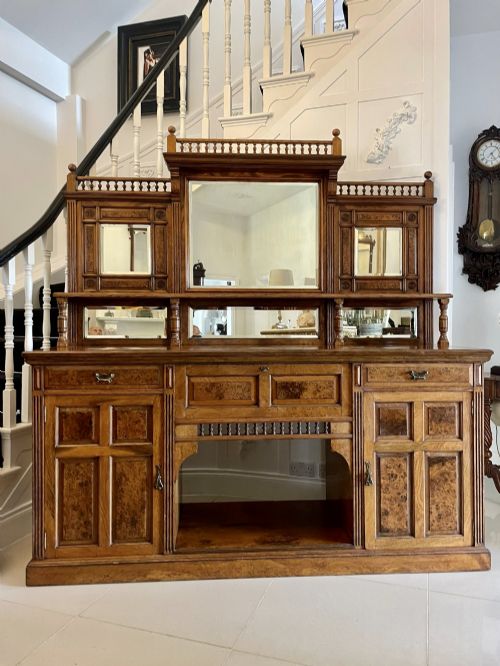
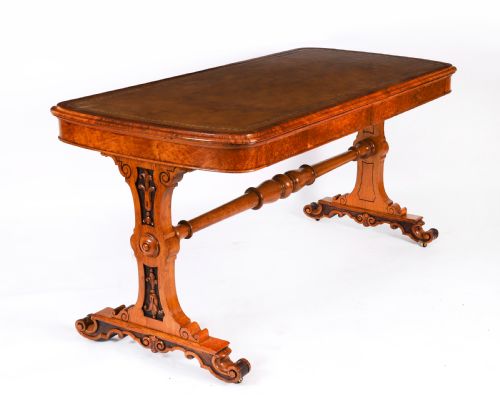
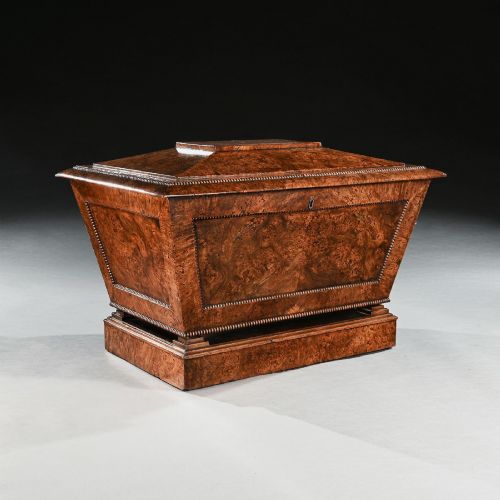
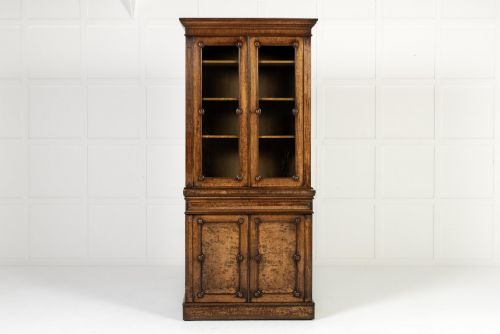
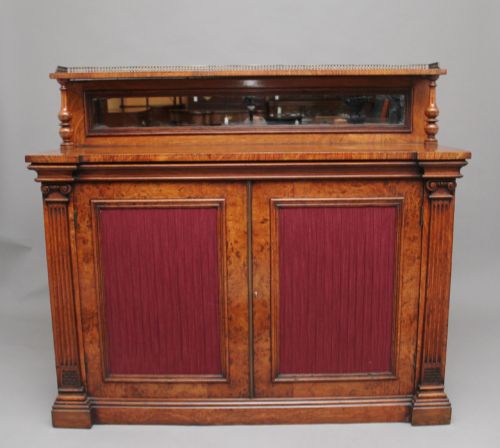
When searching for antique pollard oak, buyers encounter furniture displaying the distinctive clustered knotting and speckled figuring produced when oak trees are pollarded. Sideboards, library bookcases, and writing desks dominate the available selection, often dating from the nineteenth century during the Regency and Victorian periods. Smaller accessories such as writing slopes, cellarettes, and tea caddies also appear frequently alongside larger dining tables and cabinets.
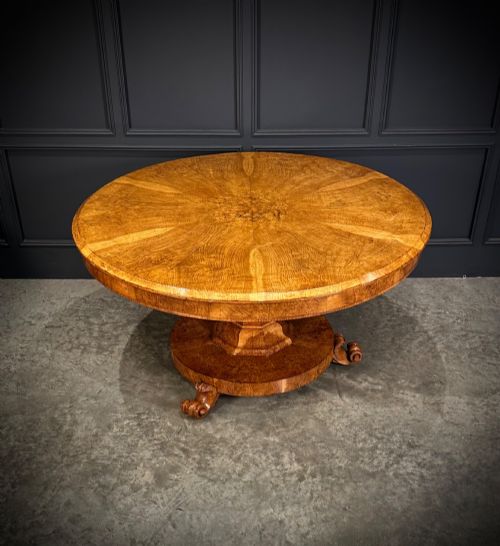
The material's rich pattern suits formal and display pieces where timber selection signals status. Victorian mirror-back sideboards and Georgian or Regency centre tables showcase the swirling figure across broad surfaces. Makers also paired the timber with brass mounts, ebony stringing, or burr oak to frame the complex grain.
How pollard oak pieces were made
Cabinet makers sliced the timber into veneers to maximise the decorative potential of the knotted grain, laying the figured sections onto solid oak or secondary carcases. This technique required precise matching along seams to create symmetrical patterns across drawer fronts and table tops.
Workshops combined the distinct timber with contrasting materials such as brass handles, glass doors, leather writing inserts, and giltwood mouldings. French polishing built up a smooth, reflective surface that deepened the amber and brown tones of the wood.
Nineteenth-century pieces dominate the selection, spanning Regency, William IV, and Victorian periods alongside occasional Georgian and Edwardian examples.
What varies in quality
The density and uniformity of the clustered grain pattern dictate the visual impact of each piece. Superior examples display tightly packed knots across every visible surface without excessive patching or mismatched veneer panels.
Structural integrity and the retention of original mounts, locks, and polished finishes separate high-end cabinet work from standard production. Pieces bearing the signatures or stamps of established workshops command greater attention through refined proportions and meticulous joinery.
Gillows·James Winter and Sons·Edwards and Roberts
The Antique Pollard Oak Glossary
- Pollarding
- A method of pruning a tree close to the trunk to encourage a dense flush of branch growth, which creates clustered knots in the timber. This growth habit generates the speckled figuring characteristic of the wood.
- Cellarette
- A lockable container or cabinet designed to hold bottles of wine and spirits near the dining table. Regency and Georgian examples in pollard oak often feature lead linings and fitted interior dividers.
- Partners desk
- A large writing table designed for two people to work opposite one another, featuring drawers on both sides. These heavy pieces frequently utilise figured timbers like pollard oak for formal libraries.
- Credenza
- A low cabinet or sideboard without legs, used for display and storage in Victorian dining rooms. These forms provide expansive flat surfaces to showcase decorative wood figuring.
Antique Pollard Oak: Frequently Asked Questions
What is pollard oak?
Pollard oak comes from trees that were periodically cut back above livestock height to encourage dense branching. This pruning creates tight clusters of knots and swirling patterns in the grain.
Cabinet makers valued this figured timber for high-status furniture throughout the nineteenth century, using it as veneer on fine tables and sideboards.
How do I care for pollard oak furniture?
Keep these pieces away from direct sunlight and heat sources to prevent the veneer from drying or cracking. Maintain a stable indoor humidity level.
Dust gently with a soft cloth and apply traditional beeswax occasionally to nourish the polish and preserve the depth of the wood figure.
Are these pieces solid pollard oak?
Most items use pollard oak as a decorative veneer applied over solid oak or secondary carcases. The complex grain makes solid construction impractical and prone to warping.
Using veneers allowed craftsmen to cover large surfaces like sideboard doors and table tops with symmetrical patterns while maintaining structural stability.
How do I date a pollard oak piece?
Examine the construction methods, hardware, and secondary timbers used inside drawers and carcases. Regency and Georgian pieces often feature hand-cut dovetails and simpler lines.
Victorian items frequently display heavier proportions, elaborate carving, and maker stamps from prominent firms operating during the nineteenth century.