


Antique Polished Dining Table
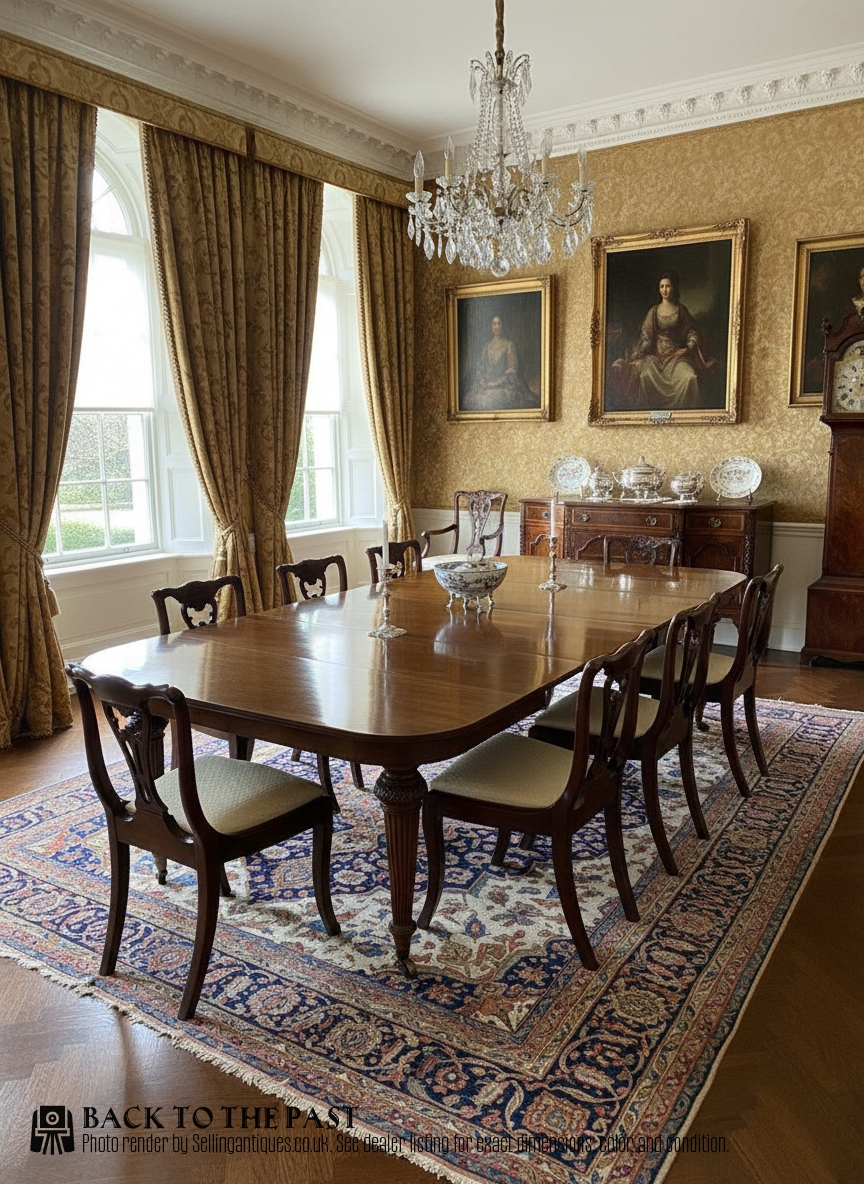
An antique polished dining table brings substantial timber and period proportion to a room, offering the surface needed for large gatherings.
Antique Polished Dining Table
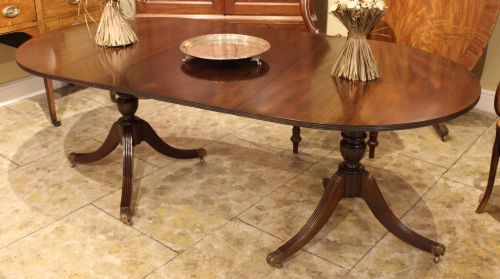
An antique polished dining table principally spans the Georgian, Victorian, and William IV eras, appearing in formats from drop-leaf drop tables to multi-pillar extending suites.
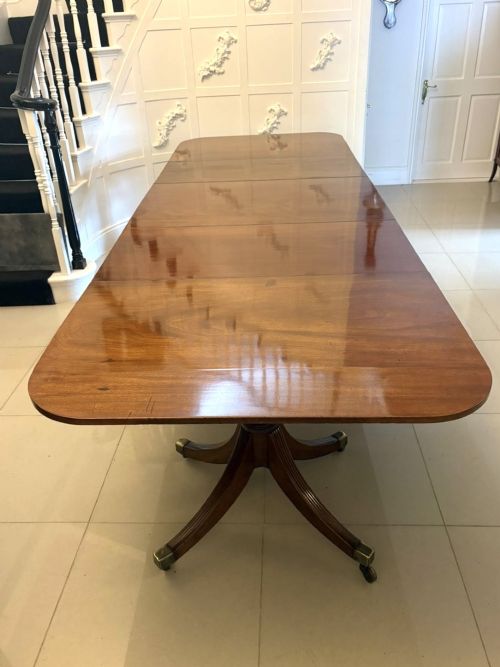
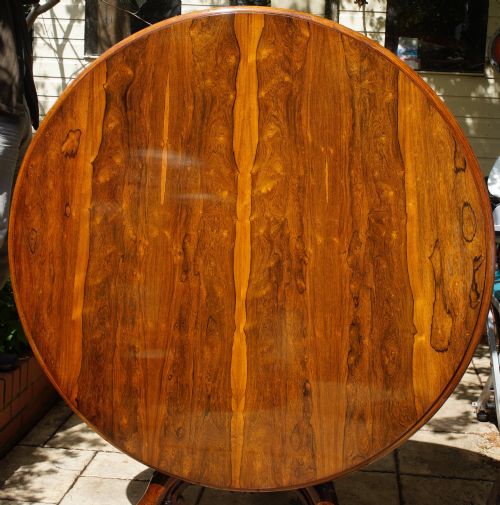
The material record is dominated by mahogany, walnut, and rosewood, often paired with veneer or figured timber to create a polished top.
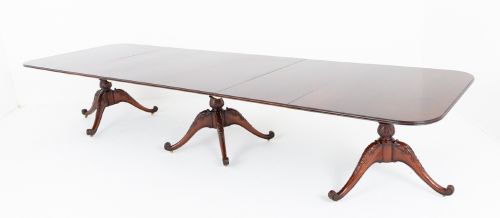
Buyers encounter twin-pillar, triple-pillar, and D-end configurations designed to accommodate multiple leaves for extended seating.
Materials and Techniques
Cabinet makers utilised dense hardwoods like mahogany and walnut, frequently applying veneer or plum pudding mahogany to prominent surfaces.
Extending mechanisms relied on sturdy timber frames and brass fittings, allowing tables to expand securely with the addition of leaves.
The listings include 18th Century, 19th Century, and Victorian periods alongside Edwardian and 1920 examples.
Design and Execution
The standard of timber selection and figuration on the top surface separates standard pieces from exceptional examples.
The sophistication of the pedestal carving, leg profile, and the seamless integration of extending leaves dictate the standing of a table.
Gillows
The Antique Polished Dining Table Glossary
- Extending dining table
- A table designed with a mechanism and removable leaves to adjust its overall length for varying numbers of guests.
- Figured mahogany
- Timber exhibiting distinctive grain patterns such as flame or plum pudding, prized for its decorative appearance on table tops.
- D-end
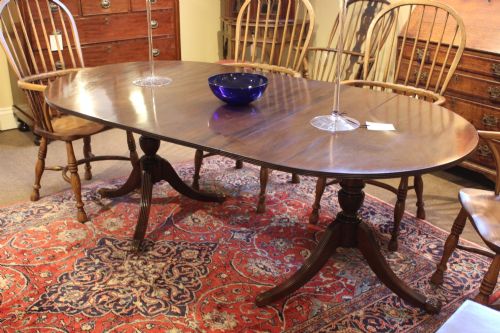
- A table form featuring semi-circular ends that can be separated or joined, common in Regency and Georgian dining furniture.
- Pad foot
- A simple rounded foot found on the bottom of cabriole or straight legs, typical of earlier 18th-century tables.
Antique Polished Dining Table: Frequently Asked Questions
How do I care for a polished mahogany table?
Maintain the polished finish by dusting with a soft cloth and avoiding direct sunlight or excessive heat sources that dry out the timber.
Use coasters and placemats to protect the surface from moisture and heat damage during daily use.
How do extending mechanisms work on these tables?
Tables use wooden runners or telescopic frames that pull apart to insert separate leaves into the centre.
Brass clips or alignment pins often secure the leaves in place to maintain a flat, stable surface.
What is a D-end dining table?
A D-end table consists of sections with curved ends shaped like the letter D, which can form a standalone console or join together.
When combined with a central leaf, these sections create a long dining surface suitable for larger rooms.
How can I tell a Georgian table from a Victorian one?
Georgian tables typically display restrained elegance with simpler pillar turns and fine mahogany timber, dating from the 18th and early 19th centuries.
Victorian examples often feature heavier proportions, bolder pedestal carvings, and more complex mechanical extension systems.