


Antique Play Table
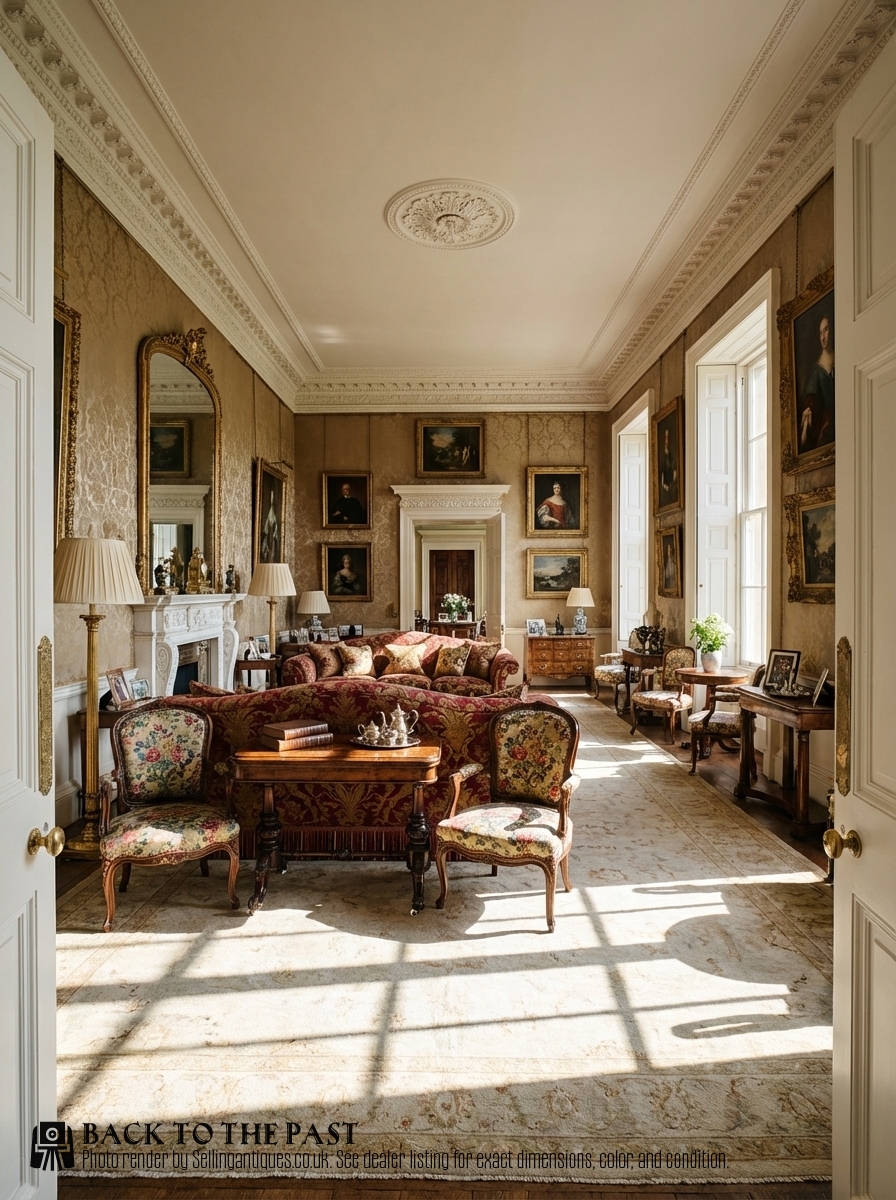
An antique play table brings the social rituals of nineteenth-century drawing rooms into a modern interior through folding surfaces designed for cards and board games.
Antique Play Table
An antique play table serves primarily as a versatile piece of furniture, often featuring a fold-over top that reveals a baize-lined surface for cards, chess, or backgammon. Buyers investigating this category encounter Victorian walnut and mahogany pieces alongside Edwardian iterations and occasional specialised boxes or smaller gaming accessories.
The forms range from substantial console tables that swivel and expand to accommodate players to compact occasional tables and tabletop boxes meant for cards and counters. Early Victorian and Regency examples dominate the available selection, displaying clever hinging mechanisms and dedicated compartments for gaming pieces.
Materials and Construction
Cabinetmakers relied heavily on rich timbers such as mahogany, walnut, and burr walnut, frequently applying intricate inlay or serpentine shapes to elevate the visual appeal of the playing surface. Brass hinges, swivelling pivot mechanisms, and Ormolu mounts provide the structural support needed for tops that double in size when unfolded.
Interiors often incorporate contrasting woods, leather inserts, or traditional green baize to create a tactile surface suited for handling cards and counters without sliding. Secondary woods like oak or pine appear in the hidden framing of drawers and under-framing.
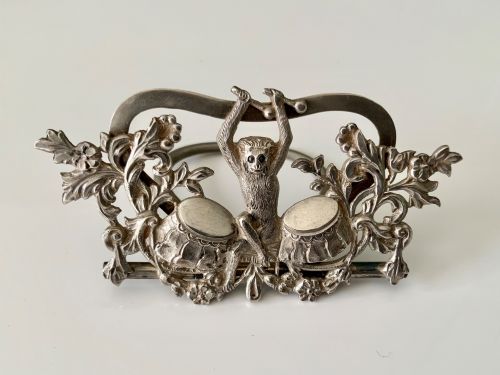
The surviving forms span from grand card and console tables down to miniature playing card boxes, cribbage boards, and menu holders.
Markers of Distinction
The distinction between ordinary and exceptional examples rests upon the crispness of the cabinetwork, the choice of timber figurations such as burr walnut or figured mahogany, and the smoothness of the folding mechanism. Superior pieces integrate the folded top seamlessly into the frieze so the table reads as a console when closed rather than a double-layered box.
Finer iterations display thoughtful detailing in internal storage wells for counters and cards, precise marquetry or stringing, and well-proportioned turned or carved legs that remain sturdy under lateral pressure during play.
The Antique Play Table Glossary
- Baize
- A coarse woolen fabric, typically green, used to line the playing surfaces of card tables to cushion cards and reduce noise. It provides a tactile grip that prevents pieces from sliding.
- Fold-over top
- A hinged wooden surface that doubles the area of a table when opened, revealing a concealed gaming well or lined playing bed underneath. This mechanism allows a console to function as a compact side table when not in use.
- Marquetry
- Decorative veneer work arranged in intricate patterns or pictorial scenes using various coloured woods. Artisans applied this technique to the outer tops of games tables to signal status and taste.
- Ormolu
- Gilded bronze mounts applied to the corners, legs, and aprons of fine furniture, particularly popular during the Regency and Victorian periods. These metallic ornaments highlight the architectural lines of the piece.
- Serpentine
- A gently undulating curved shape resembling a snake's path, often applied to the edge of table tops and aprons. This contour softens the rectangular rigidity common in earlier furniture.
Antique Play Table: Frequently Asked Questions
How do I use a play table today?
These tables function brilliantly as console or side tables against a wall, expanding easily into the centre of a room when you host card nights or dinner parties.
The durable baize or wood surfaces make them practical for serving drinks or displaying objects when not deployed for actual gaming.
Were these tables only used for cards?
While most feature surfaces adapted for card games like whist or bridge, many include compartments specifically shaped for chess pieces, backgammon boards, or cribbage pegs.
Some incorporate reversible tops or pull-out drawers designed to accommodate multiple pastimes within a single piece of furniture.
How do I tell a Regency table from a Victorian one?
Regency play tables often exhibit cleaner neoclassical lines, rosewood timbers, brass inlay, and pedestal bases with saber legs ending in brass paw casters.
Victorian iterations tend toward heavier burr walnut veneers, serpentine edges, more elaborate turned pillar supports, and richer, darker patination.
How do I care for the baize surface?
Keep the wool baize out of direct sunlight to prevent fading, and use a soft brush or low-suction vacuum attachment to remove dust gently.
Avoid placing damp glasses directly on the fabric to prevent water marks and shrinkage in the underlying wool.