



Antique Plank Coffer
An antique plank coffer offers rugged utility and ancient joinery, bringing raw timber character and centuries of domestic history straight into a room.
Antique Plank Coffer
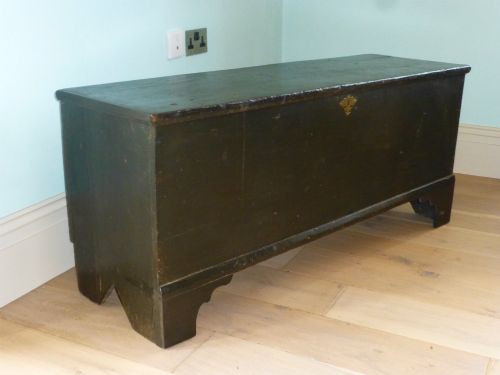
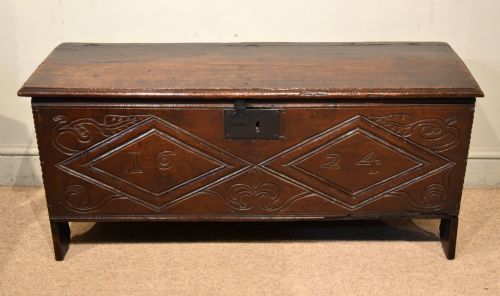
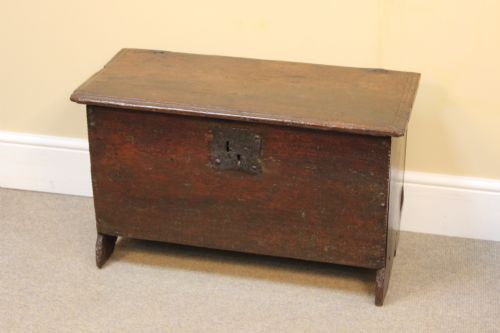
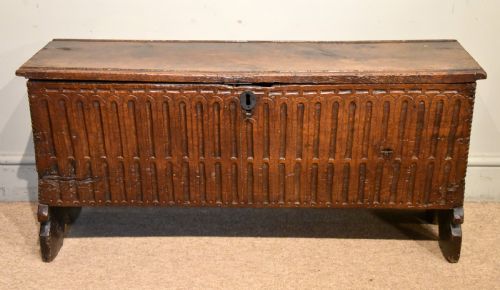
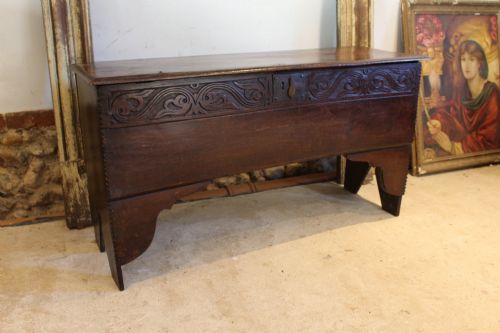
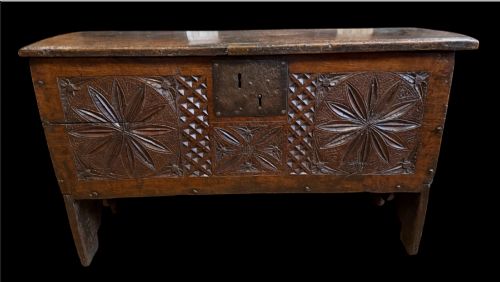
When you search for an antique plank coffer, you encounter heavy storage chests constructed from thick vertical boards rather than complex framed panels. These utilitarian pieces range from sixteenth-century examples to later country adaptations, often built with straightforward board-and-peg construction.
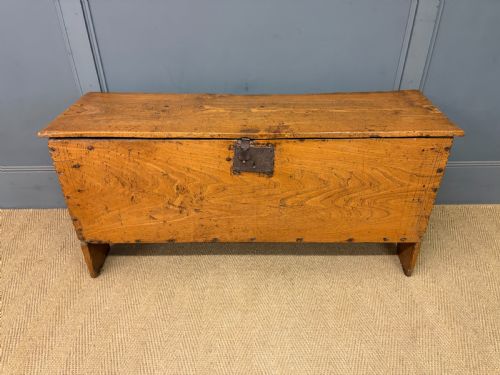
The version you are most likely to meet on this page is an oak or elm six-plank chest dating from the seventeenth century. These sturdy repositories served households for storing linen, documents, or blades, and they survive today with the honest tool marks of their makers intact.
How they were made
Joiners built these chests using heavy solid oak or elm planks, joined at the edges by pegged tongue-and-groove or overlapping edge-halving joints. The ends often served as feet, cut with simple shaped profiles to keep the timber clear of damp floors.
Blacksmiths supplied the hardware, fastening lids and corners with hand-beaten iron hinges, strap work, and sometimes heavy wrought iron locks. The wood was left bare or finished simply, allowing the natural grain and adze marks to define the surface.
Antique Plank Coffer Retail Price Guide 2026
Typical asking prices for plank coffer among the pieces listed under this phrase on Sellingantiques today, from the lower quarter to the upper quarter. They describe what is for sale here now, not the wider market.
Some seventeenth-century chests still bear the chalk tally marks left by joiners counting their boards.
What varies in quality
The timber selection dictates much of the stature, with quarter-sawn oak displaying deep medullary rays and old elm showing wild, rippling grain patterns. Thicker stock and original forged ironwork elevate an example far above standard utility work.
Proportion and restraint separate vernacular pieces from overly altered ones. The survival of an untouched base, original lid boards, and authentic surface patination determine the true character of a survivor.
Jack Grimble
The Antique Plank Coffer Glossary
- Six-plank coffer
- A chest formed from six primary boards making up the front, back, bottom, lid, and two ends. This construction represents the simplest and most direct form of boarded chest.
- Sword chest
- A long, narrow coffer designed to accommodate medieval or seventeenth-century military blades. These pieces are typically deeper and more elongated than standard blanket chests.
- Boarded construction
- A method of building using flat planks joined directly at their edges rather than fitted into a floating frame. It is the defining structural trait of early utilitarian furniture.
- Wrought iron
- Iron shaped and beaten by hand over an anvil, showing subtle surface irregularities. This material provides the hinges and straps on early boarded chests.
- Vernacular country
- Domestic furniture made by local regional craftsmen using regional materials without court influence. These pieces prioritize function and local tradition over fashionable ornament.
Antique Plank Coffer: Frequently Asked Questions
What is an antique plank coffer?
An antique plank coffer is a heavy wooden storage chest built from thick vertical boards joined at the edges. These pieces rely on simple board construction rather than complex framed panels.
They date primarily from the sixteenth and seventeenth centuries, serving early households for secure storage before specialised wardrobes became common.
How were these chests used originally?
Households utilised these chests to secure valuable textiles, church plate, documents, and personal belongings. Their robust construction and heavy locks offered protection against theft and fire in early homes.
Elongated versions specifically accommodated military swords and long firearms, functioning as secure armouries in domestic spaces.
How do I live with one?
These chests function well as coffee tables, hallway benches, or blanket storage at the foot of a bed. Their flat lids and sturdy tops support everyday objects while keeping contents concealed.
Keep them away from direct heat sources and sudden humidity changes to protect the aged timber and historic ironwork from movement.
How do I date a plank coffer?
Dating relies on observing construction methods, timber species, and iron hardware details. Sixteenth and seventeenth-century examples typically feature hand-riven oak with V-notch or overlapping edge joints and forged strap hinges.
Later eighteenth and nineteenth-century pieces often utilise elm or pine, showing machine-sawn timber marks and lighter fastening methods.