


Antique Place Card Stands
Antique place card stands bring miniature sculpture to the dining table, holding names and menus with considerable charm.
Antique Place Card Stands
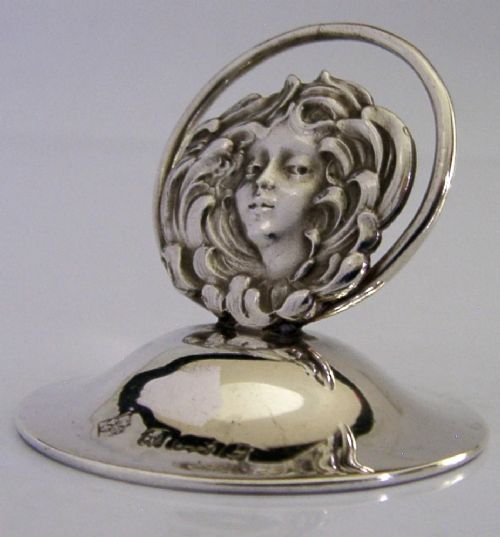
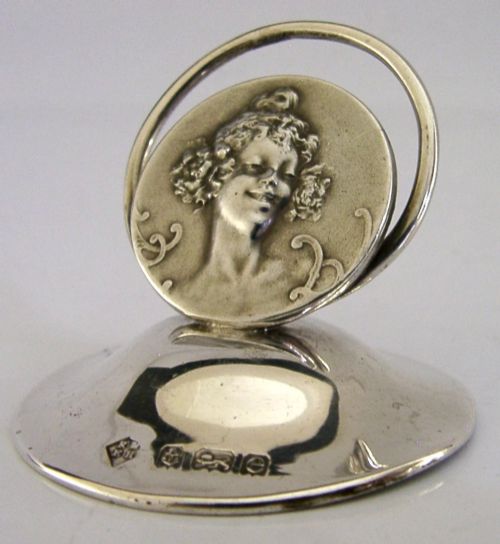
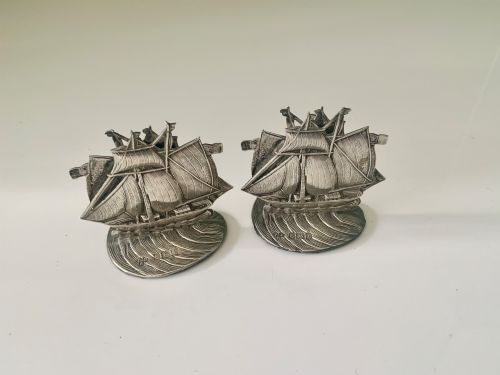
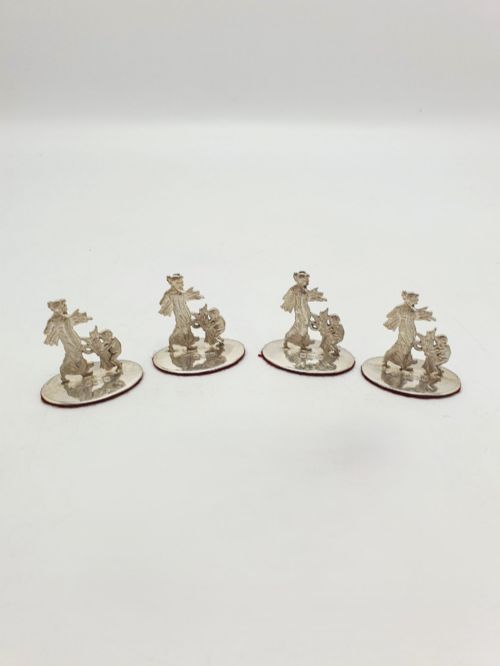
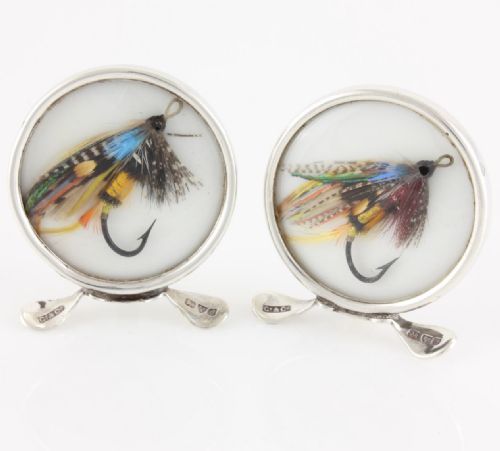
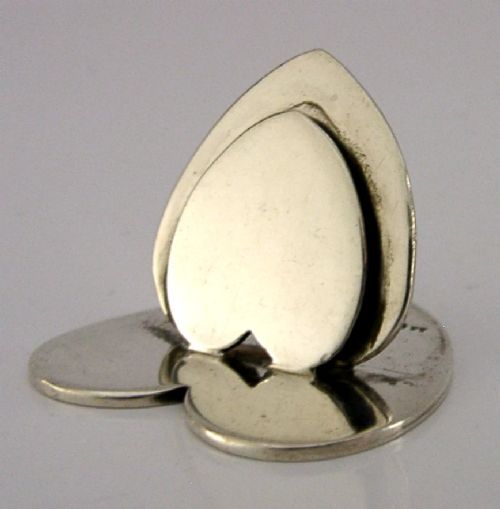
When you search for antique place card stands, you encounter small tabletop accessories designed to hold name cards or menus for formal dinners. These pieces appear in varied forms such as individual place card holders, paired menu stands, and larger sets modelled after animals, figures, and military subjects.
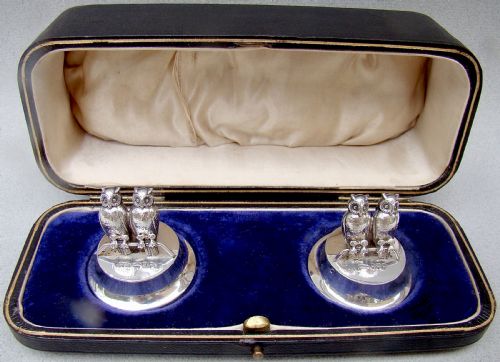
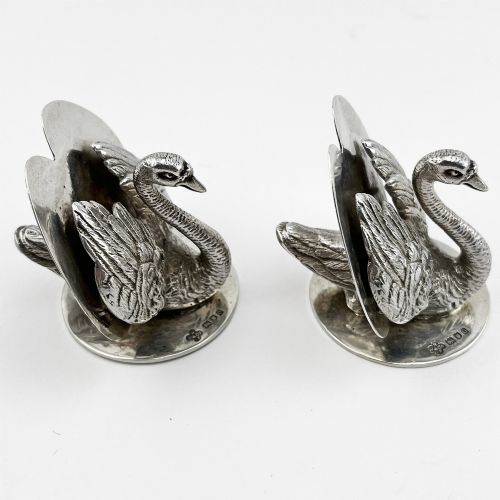
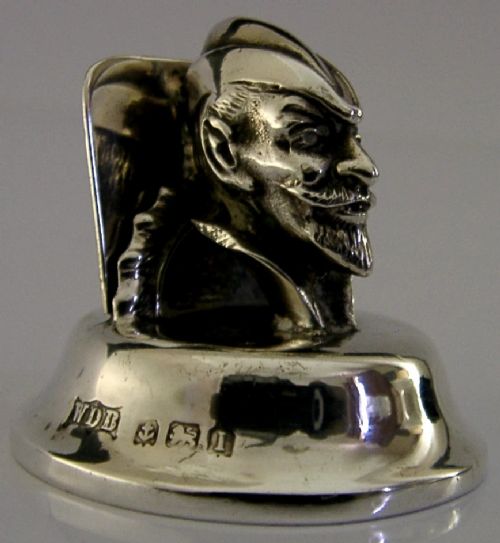
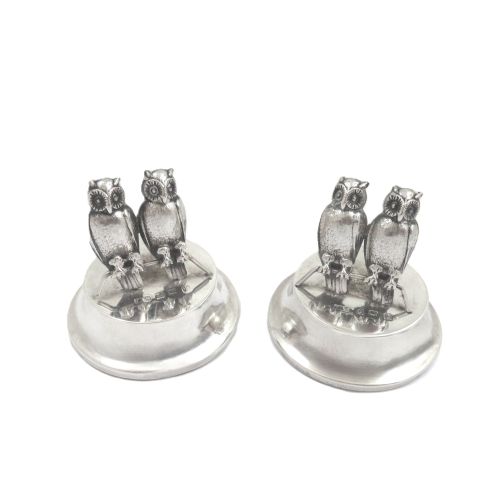
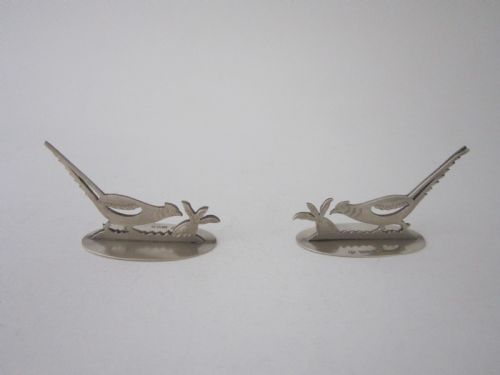
The selection on this page relies heavily on Edwardian and later pieces spanning the nineteenth to the mid-twentieth century. Figural designs dominate, including owls, foxes, swans, and literary characters like Alice in Wonderland, alongside heraldic and military subjects.
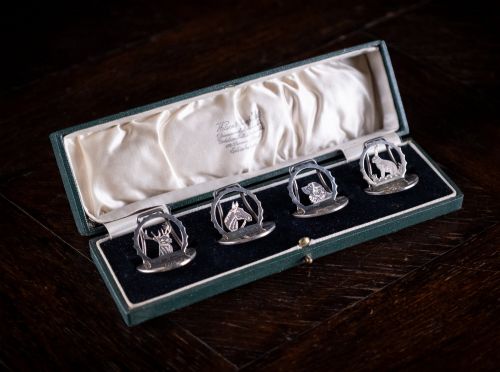
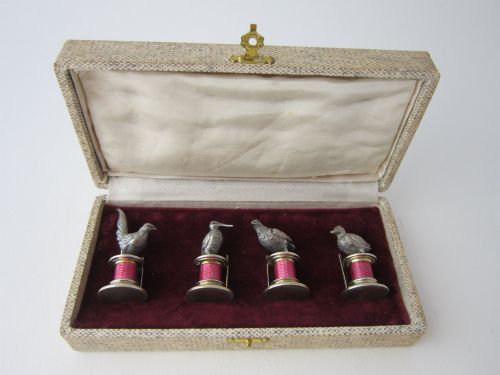
Makers utilised sterling silver predominantly, occasionally turning to silver plate for larger suites. Many examples combine silver with enamel work, while fitted presentation boxes sometimes accompany cased pairs and sets.
Materials and methods of construction
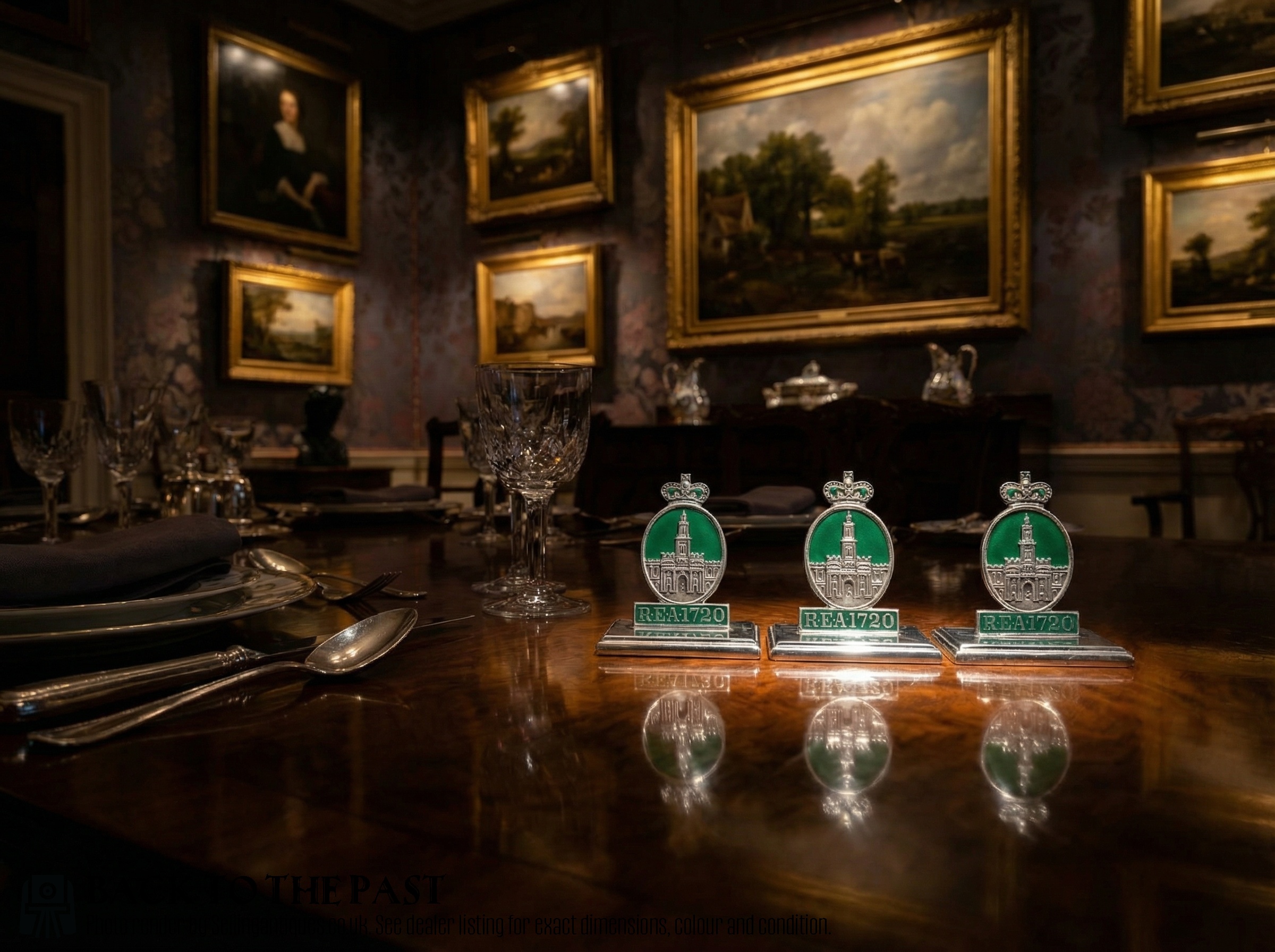
Silversmiths constructed these items using sterling silver and silver plate, frequently shaping them through casting and stamping techniques to achieve detailed figural forms. Enamel decoration appears on specific examples, adding coloured detail to flags, birds, and botanical motifs.
Makers integrated weighted bases or sturdy hinged clips to ensure the small stands supported heavy card stock upright. Protective linings of velvet, silk, and leather inside original presentation boxes point to the careful storage intended for these delicate tabletop accessories.
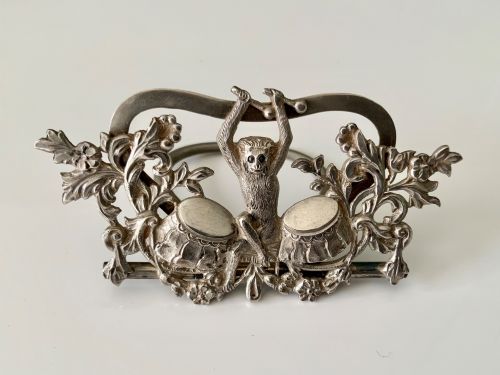
Monkeys playing drums and foxes in hunting attire stand ready to organise your dinner guests.
Distinctions in quality and execution
Quality rests primarily upon the crispness of the casting and the depth of detail in figural subjects such as birds, animals, and human characters. Superior examples demonstrate finely rendered feathers, fur, and facial expressions rather than smooth, generalised metalwork.
The presence of crisp hallmarks from notable makers and assay offices distinguishes standard production from finer workshop output. Additionally, complete matching sets maintain greater desirability than assembled groups of individual stands.
Levi & Salaman·A. Wilcox·Grey & Co·Sampson Mordan·Asprey·Liberty
The Antique Place Card Stands Glossary
- Sterling silver
- A silver alloy containing 92.5 percent pure silver by mass, forming the primary metal for the majority of these tabletop pieces. This standard alloy provides the durability needed for intricate casting.
- Menu holder
- A tabletop stand designed to display the evening bill of fare upright for diners to read. These items frequently share design characteristics with smaller place card stands.
- Assay office
- An organisation charged with testing the purity of precious metals and stamping them with official hallmark symbols. Offices such as Birmingham, Chester, and London feature on many pieces.
- Enamel
- A glassy substance fused to the surface of metal through firing to provide decorative colour. This technique often highlights flags, birds, and decorative borders on select examples.
- Figural
- Art shaped in the likeness of a human, animal, or recognisable subject rather than abstract form. Many stands take the shape of owls, foxes, sentry boxes, and literary characters.
Antique Place Card Stands: Frequently Asked Questions
How were place card stands used?
Hosts placed them on formal dining tables to indicate seating arrangements for guests or to display the evening menu.
They sat beside each place setting or at intervals along long dining tables.
What materials are common?
Sterling silver is the predominant metal used by silversmiths for these tabletop accessories.
Some examples incorporate enamel for colour, while presentation boxes often feature silk, velvet, or leather linings.
Are they sold as sets?
They appear as individual pieces, pairs, or larger matched sets numbering up to twelve or twenty-four items.
Matched sets originally housed in fitted boxes remain particularly sought after by collectors.
How do I identify the maker?
Maker marks and hallmarks are stamped directly onto the silver surface, usually near the base or edge.
These tiny marks indicate the assay office, the year of production, and the silversmith responsible.