





Silver Place Setting
These silver place setting pieces bring fine detail to a table, from figural card holders to complete flatware services.
Silver Place Setting
A silver place setting covers a range of table items designed to organise guests and dine in style, spanning Edwardian figural card holders and mid-century flatware sets. When you search for a silver place setting, you encounter smaller decorative table accessories alongside large dining canteens.
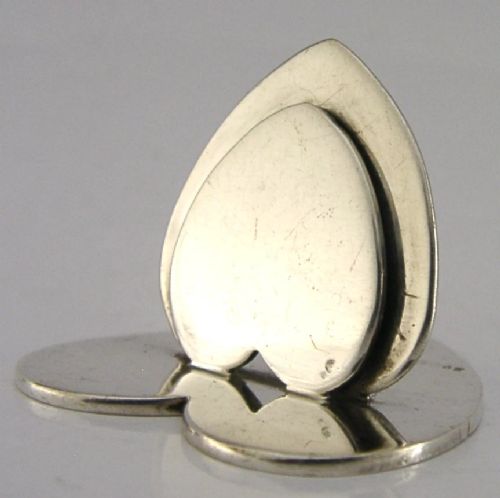
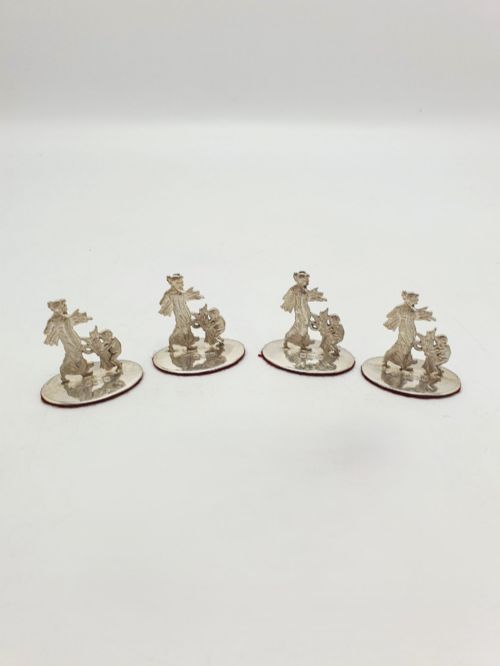
The Edwardian period supplies many figural menu and place card holders, often modelled as animals, military themes, or literary subjects. Later twentieth-century examples include substantial silver-plated cutlery services and matching place card sets.
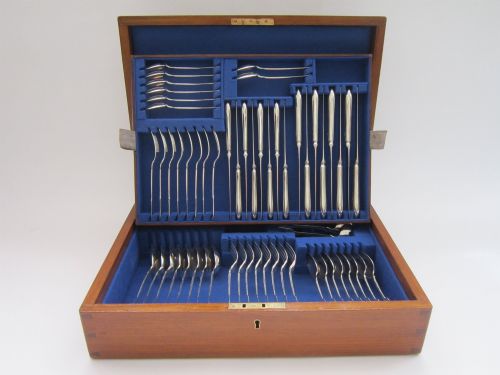
Sets vary from pairs and small groups of four up to extensive twelve-place flatware services housed in fitted cases. These pieces reflect formal dining traditions where individual place names and structured cutlery arrangements formed part of the host's presentation.
Materials and construction
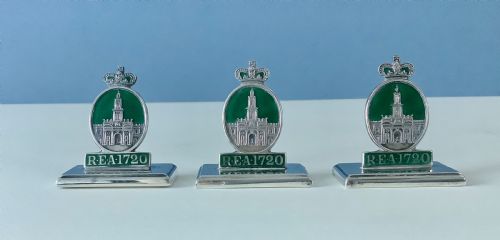
Makers utilised sterling silver and silver plate over base metals, often incorporating detailed casting and hand-finishing techniques. Enamel work appears on military and flag-themed pieces, adding vibrant colour to the metallic surfaces.
Smaller items like menu holders and place card holders frequently involve figural modelling, depicting horses' heads, grouse, or literary characters. Flatware services demonstrate traditional manufacturing methods, utilising stamped patterns and reinforced joints for daily dining use.
Silver Place Setting Retail Price Guide 2026
Typical asking prices for silver place setting among the pieces listed under this phrase on Sellingantiques today, from the lower quarter to the upper quarter. They describe what is for sale here now, not the wider market.
Listings feature items from the Edwardian era through the mid-twentieth century, utilising silver, silver plate, and enamel.
Evaluating quality in table silver
Quality rests in the crispness of the casting and the depth of the hand-finishing, particularly on figural subjects such as animal heads or military insignia. Superior items retain sharp relief without softening on the edges.
Complete sets maintain uniformity across every piece, whether matching flatware in a fitted case or a matched group of four place card holders. Maker marks and clear silver hallmarks provide evidence of origin and standard.
Asprey·Christofle·Liberty
The Silver Place Setting Glossary
- Sterling silver
- A silver alloy containing 92.5 percent pure silver by mass, standard for high-quality British table items. It carries distinct hallmarks indicating the assay office and date.
- Silver plate
- A layer of silver applied to a base metal core, common in larger flatware and extensive dining services. It offers the visual appearance of solid silver at a different scale.
- Menu holder
- A small upright stand designed to display the menu at a dining table. These pieces often match place card holders in theme and period style.
- Place card holder
- A miniature stand that grips a small card bearing a guest's name. They sit beside each setting to guide guests to their designated seats.
- Flatware
- Table cutlery including knives, forks, and spoons intended for dining use. Sets range from small gatherings to extensive multi-place canteens.
Silver Place Setting: Frequently Asked Questions
What is a silver place setting?
A silver place setting encompasses table accessories and cutlery used to organise and serve a formal meal. This includes individual place card holders, menu stands, and full flatware services.
These items range from small Edwardian figural pieces to extensive twentieth-century canteens for multiple diners.
How do I use menu holders?
Menu holders sit on the dining table to display the evening's food selection to guests. They pair with matching place card holders to coordinate the table arrangement.
Place them near the host or distribute them along larger tables so diners can easily view the course options.
Are these pieces made of solid silver?
Items on offer include both solid sterling silver and silver-plated examples over base metal. Hallmarks on solid pieces indicate the standard and origin.
Plated items, such as large flatware services, provide durable service for dining while maintaining a bright metallic appearance.
How do I care for table silver?
Store silver pieces in dry conditions, using fitted cases or cloth rolls to prevent tarnishing from airborne sulphur. Regular gentle cleaning maintains the surface without wearing down fine details.
Avoid abrasive materials that can damage delicate enamel work or soft figural casting on older pieces.