


Antique Place Card Holders
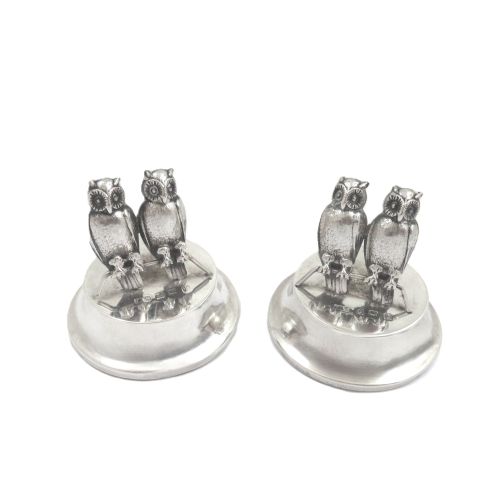
These antique place card holders bring miniature silver sculpture and functional elegance to a formal dining table.
Antique Place Card Holders
When you search for antique place card holders, you encounter small decorative pieces designed to display name cards or menus at formal dinners. The selection commonly includes individual holders and matching sets originating from the Edwardian period through the mid-twentieth century.
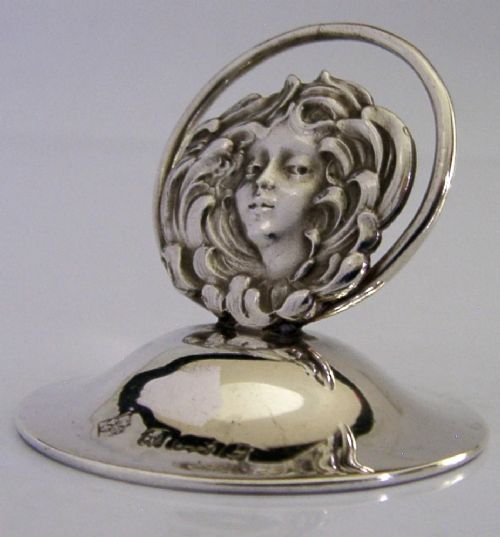
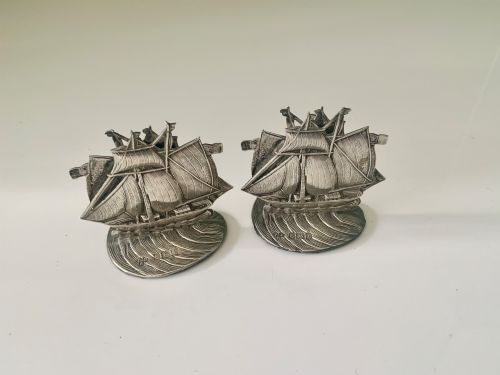
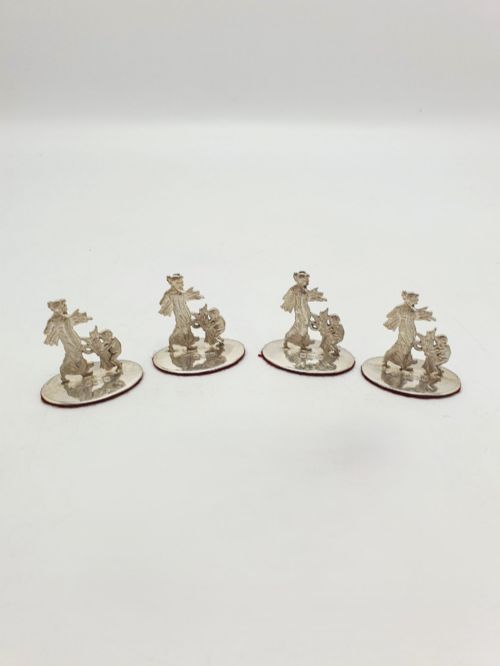
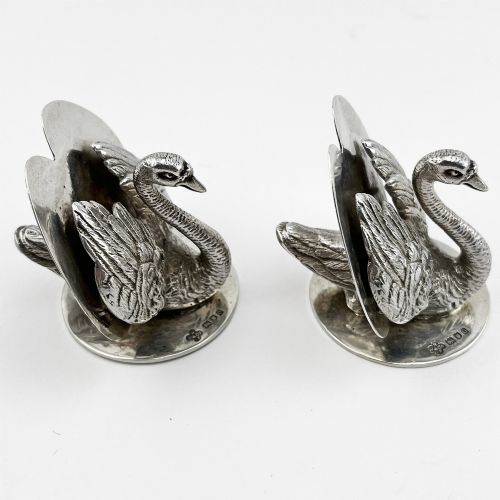
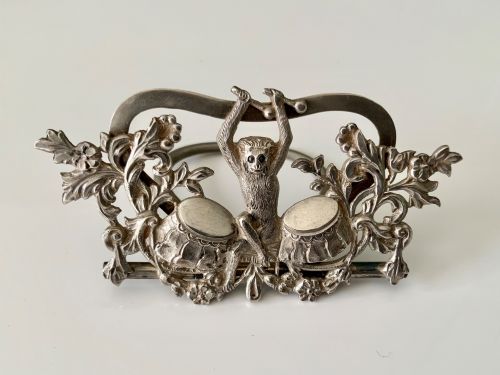
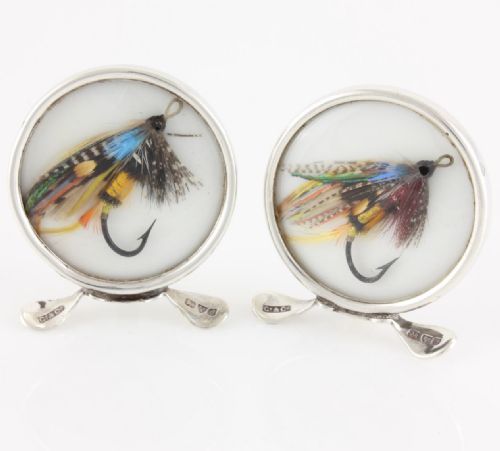
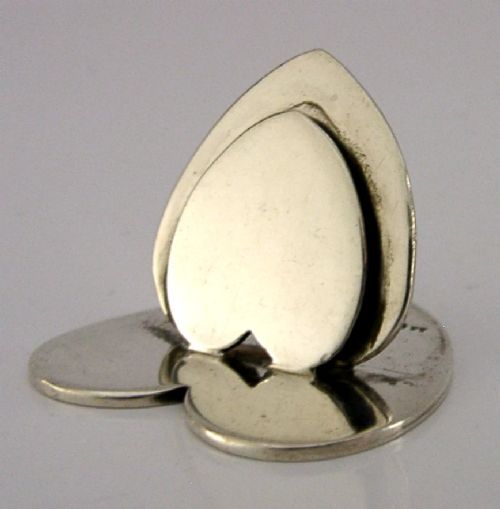
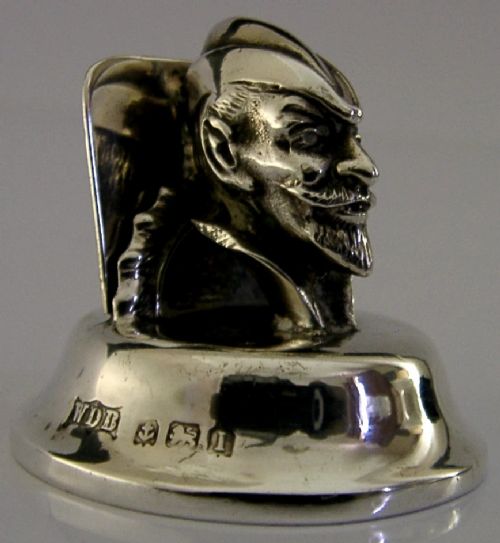
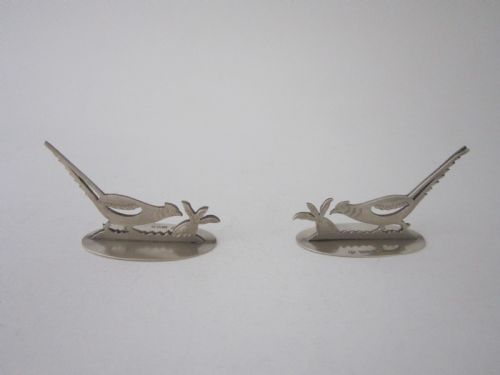
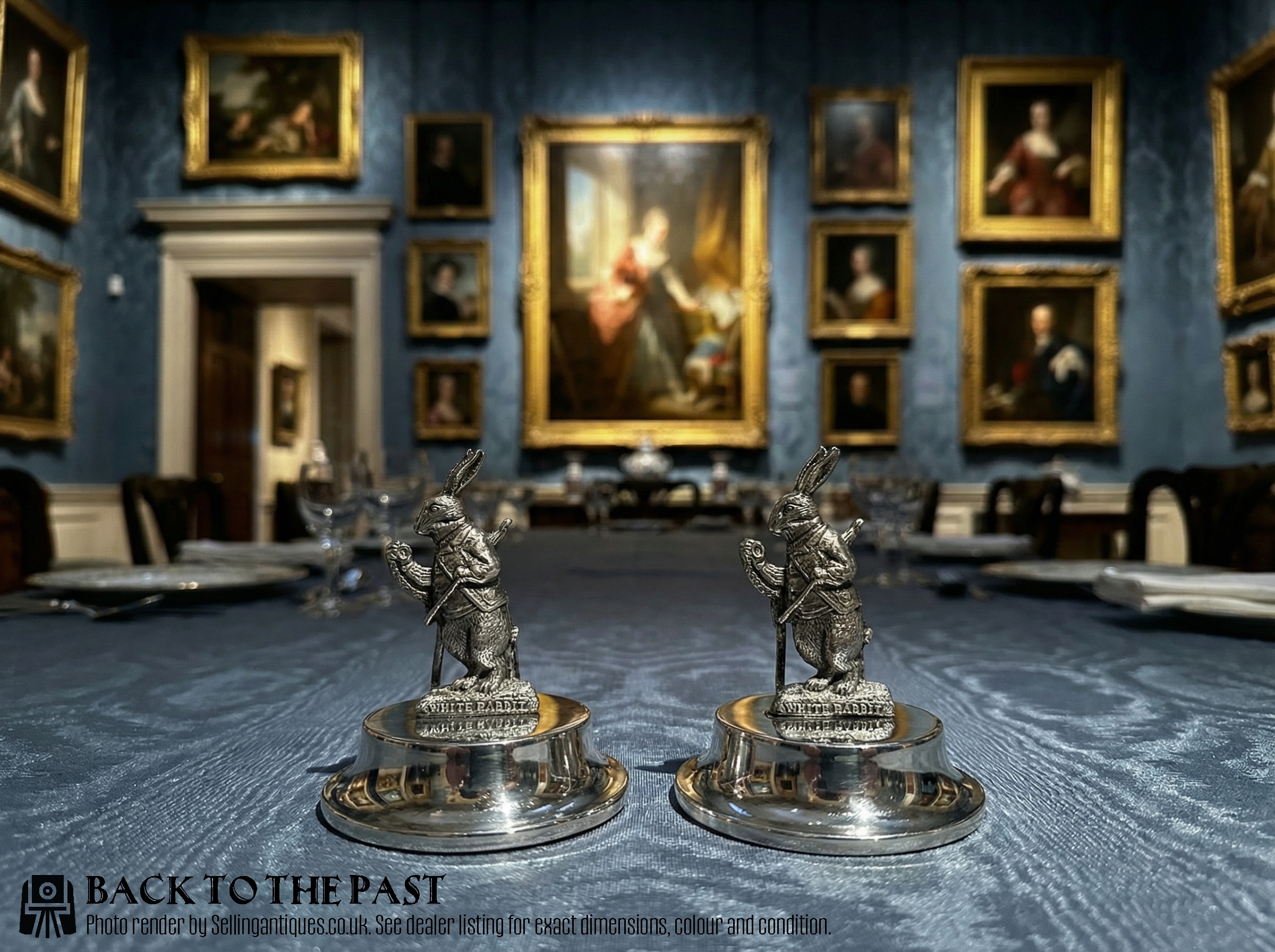
The forms range from simple geometric clips to detailed figural subjects such as animals, birds, and literary characters. Many pieces double as menu holders, combining two functions into a single tabletop accessory.
Most examples originate from British workshops and feature sterling silver construction. You find them singly, in pairs, or in larger matched sets intended for grand dining arrangements.
How they were made
Silversmiths utilised sterling silver and silver plate, shaping the metal through casting, stamping, and hand-chasing to create intricate figural details. Enamel work occasionally provides colour on flags or decorative motifs.
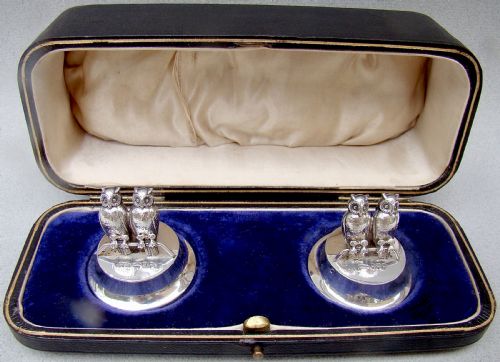
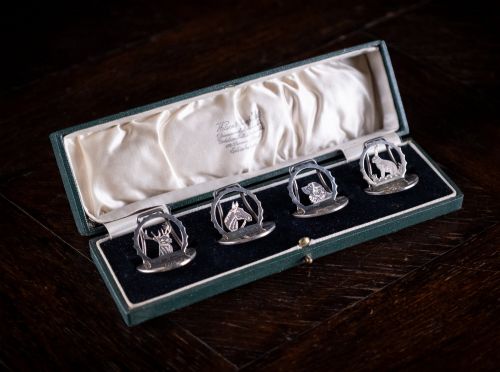
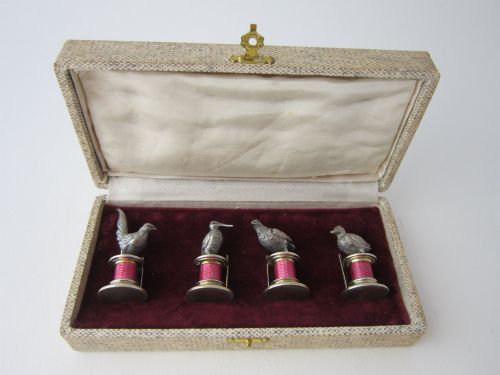
Components such as weighted bases, hinged clips, and supporting struts are soldered to the main body to ensure stability on the dining table. Makers applied velvet and silk linings inside fitted presentation boxes designed to house specific sets of holders.
Antique Place Card Holders Retail Price Guide 2026
Typical asking prices for place card holders among the pieces listed under this phrase on Sellingantiques today, from the lower quarter to the upper quarter. They describe what is for sale here now, not the wider market.
Materials appearing alongside silver include enamel, velvet, silk, leather, and glass.
What varies in quality
Quality rests in the crispness of the casting and the depth of the hand-chased detail on figural subjects like birds, animals, and human figures. Sharp definition in feathers, fur, and facial expressions separates superior items from mass-produced casts.
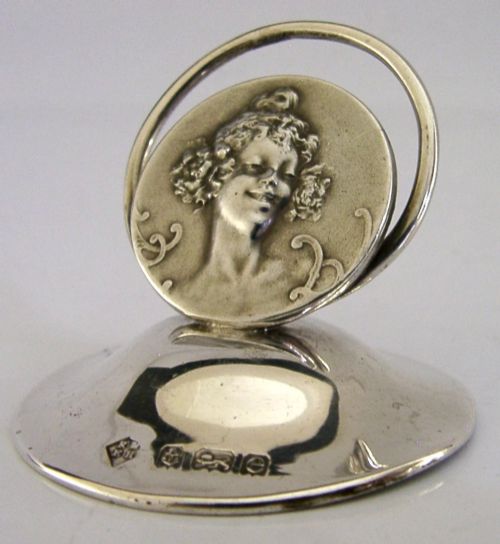
The integrity of the mechanical parts, including the spring tension of the card clips and the stability of the weighted bases, distinguishes better workshops. Maker marks and clear hallmarks provide further distinction regarding the origin and standard of the silver.
Levi & Salaman·A. Wilcox·Grey & Co.·Sampson Mordan·Asprey
The Antique Place Card Holders Glossary
- Sterling silver
- A silver alloy containing 92.5 percent pure silver and 7.5 percent other metals, usually copper, ensuring durability for table wares. This standard appears on the vast majority of British pieces.
- Hallmark
- A series of official marks stamped on precious metals, indicating the maker, assay office, and year of testing. These marks allow collectors to date individual pieces precisely.
- Figural
- A style of decorative object modelled in the form of a human, animal, or recognizable subject rather than abstract shapes. These dominate the whimsical designs of the Edwardian era.
- Chasing
- A metalsmithing technique where the artisan pushes metal from the front using hammer and punches to refine surface details. This method brings texture to feathers, hair, and clothing on silver figures.
- Assay office
- An official body that tests the purity of precious metals and applies the appropriate hallmark. Common locations stamped on these pieces include Birmingham, Chester, and London.
Antique Place Card Holders: Frequently Asked Questions
How were place card holders used?
Hosts placed them beside each setting at formal dinners to guide guests to their designated seats. They held small cardstock nameplates upright for easy reading.
When combined with menu holder functions, the same piece supported the evening's dinner selection card for guests to inspect between courses.
How do I date an antique place card holder?
Dating relies primarily on the silver hallmarks stamped onto the metal. These marks identify the assay office and the specific year letter for the piece.
Stylistic cues also help, as naturalistic animals and whimsical characters frequently point to the Edwardian period, while cleaner geometric lines suggest later decades.
Are these pieces found in sets?
You find them as individual items, in pairs, or in larger matched sets numbering four, six, or twelve pieces. Original fitted presentation boxes occasionally accompany these sets.
Complete sets of matching figural subjects are scarcer than single examples or mismatched groupings collected over time.
How should I clean silver place card holders?
Maintain them with a soft cloth and a reputable silver polish formulated to remove tarnish without harming fine details. Avoid harsh abrasives that wear away hand-chased lines.
Store them away from direct sunlight and damp environments, ideally in lined boxes or cabinets to slow future tarnishing.