
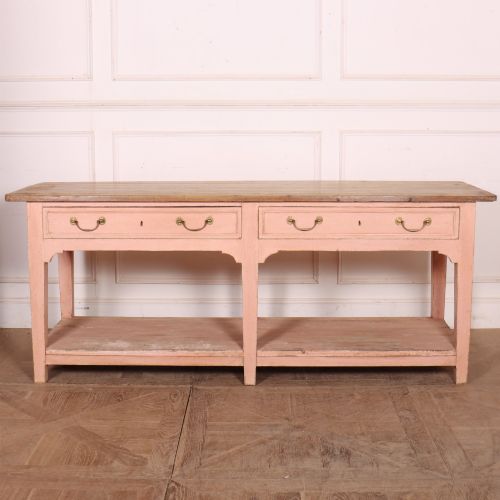
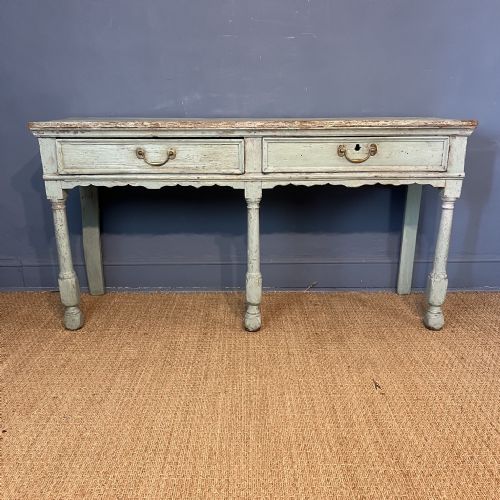
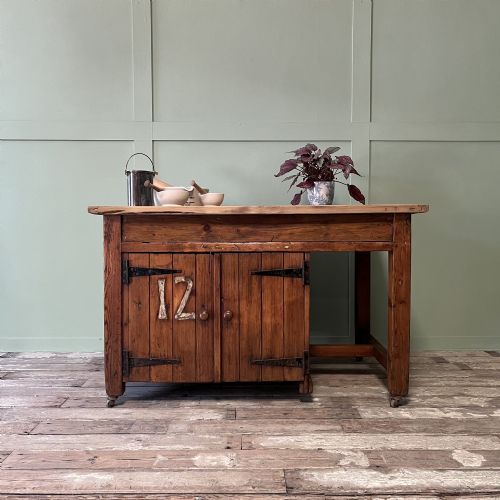
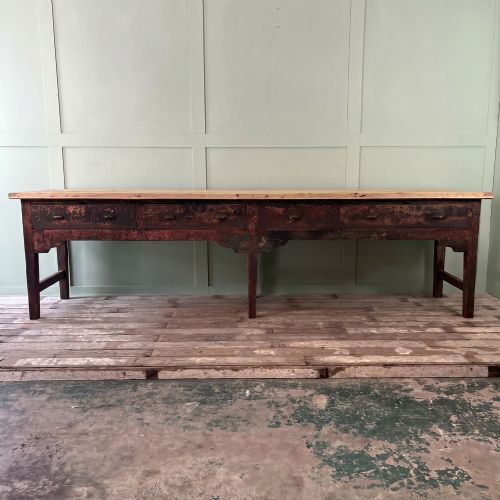
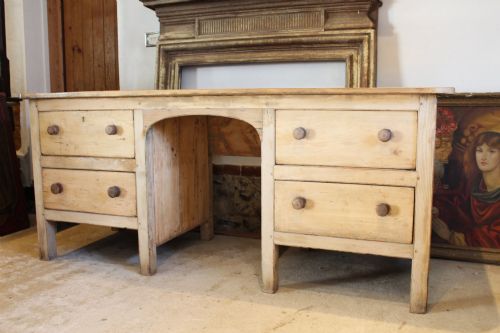
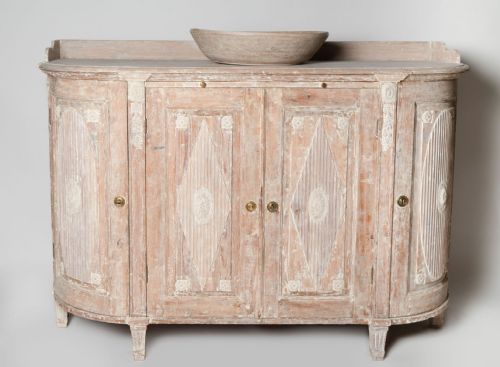
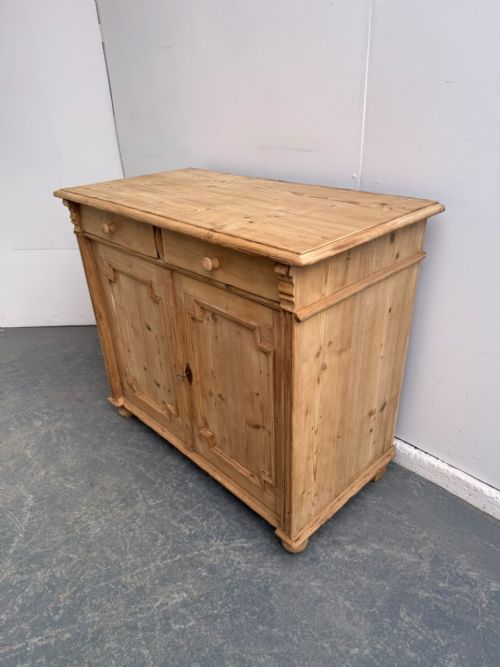
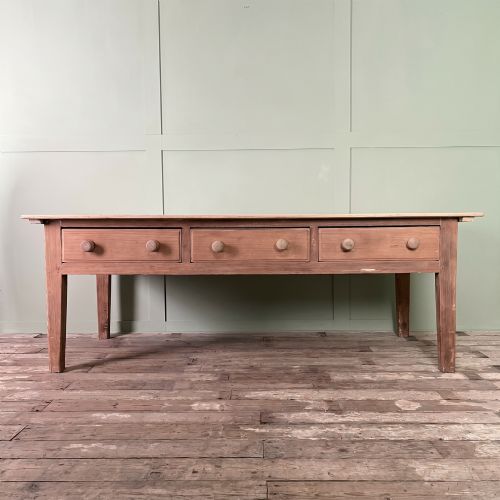
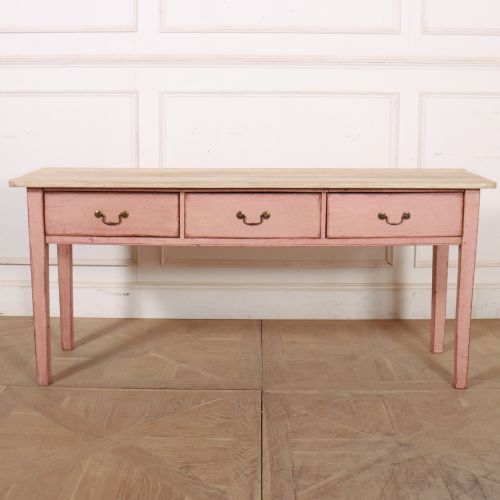
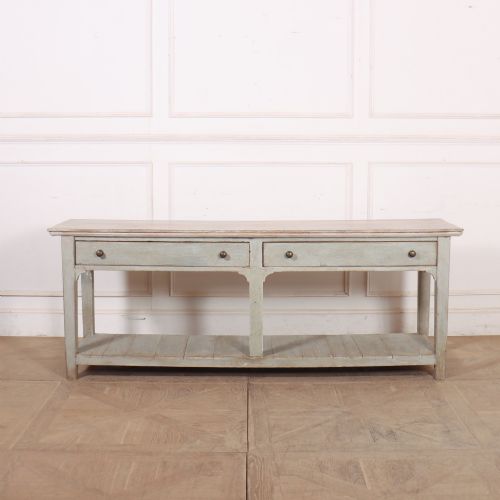


Antique Pine Sideboard Table
An antique pine sideboard table brings practical utility and honest country character to a room, offering sturdy surface space and deep storage.
Antique Pine Sideboard Table
When searching for an antique pine sideboard table, buyers encounter a sturdy utility piece rooted in country houses, farmhouses, and dairies. These items cross over with dresser bases, serving tables, and shop counters, functioning historically as heavy-duty workspace and storage.
The most common versions on this page originate from the eighteenth and nineteenth centuries, taking forms such as potboard bases, multi-drawer servers, and baker prep tables. Pieces span English, Scottish, Welsh, French, and Swedish regional workshops.
Makers built these items for daily use rather than formal display, resulting in honest construction using local timber. They serve well today in kitchens, dining rooms, and hallways as functional furniture with distinct regional traits.
Materials and construction methods
Makers constructed these pieces primarily using solid pine, alongside pitch pine for heavier duties and sycamore for prep surfaces. Iron and brass hardware such as drawer pulls and hinges appear frequently across the periods.
Many examples retain historic painted finishes, ranging from simple country coats to worn layers showing decades of domestic use. Unpainted surfaces reveal the tight grain and natural warmth of aged softwood timbers.
Listings span the eighteenth, nineteenth, and early twentieth centuries, including Georgian and Victorian periods alongside regional English, Scottish, Welsh, French, and Swedish examples.
Judging quality and proportion
Quality rests in the integrity of the original timber and the restraint of subsequent alterations. Superior examples maintain their original working drawers, pot boards, and structural joints without excessive replacement parts.
Proportion and surface patination dictate desirability, where naturally aged wax finishes or honest historic paint hold more appeal than stripped surfaces. The balance between utilitarian strength and refined regional design separates standard workshop items from exceptional survivals.
The Antique Pine Sideboard Table Glossary
- Potboard
- A lower open shelf built into the base of a dresser or sideboard for storing pots and heavy kitchenware. This feature distinguishes many traditional farmhouse and country pieces.
- Dresser base
- The lower section of a kitchen dresser, featuring drawers and cupboards beneath a solid working top. These serve as versatile sideboards in modern interiors.
- Pitch pine
- A dense, resinous variety of pine noted for its durability and prominent grain pattern. Makers utilised this timber for heavy-use serving tables and prep surfaces.
- Bread slide
- A pull-out wooden board integrated into the cabinetry above drawers, historically used for cooling baked goods. It adds a clever functional detail to larger nineteenth-century bases.
Antique Pine Sideboard Table: Frequently Asked Questions
How do I use a pine sideboard in a modern kitchen?
These pieces function ideally as kitchen islands, prep counters, or serving stations during meals. The deep drawers and lower shelves provide ample storage for dishware and cookware.
Their sturdy wooden tops withstand daily kitchen tasks while introducing warmth and historic character to contemporary spaces.
What is the difference between a dresser base and a serving table?
A dresser base typically incorporates banks of drawers and lower cupboard space, often featuring a potboard shelf near the floor. They were designed as heavy workhorses for domestic food preparation.
Serving tables focus more on surface area and legroom, functioning primarily to hold dishes during dining rather than providing enclosed storage.
Should I wax or paint my antique pine table?
Deciding whether to wax or paint depends entirely on the current finish and personal preference. Many pieces survive in bare timber suited to waxing, while others retain historic layers of paint that tell a story.
Preserving original painted surfaces maintains historical integrity, whereas unpainted pine benefits from nourishing beeswax to protect the wood.
How can I tell an eighteenth-century piece from a Victorian one?
Earlier eighteenth-century pieces often display hand-cut joinery, pegged framing, and deeper patination acquired over centuries of use. The proportions tend to be heavier and more rustic.
Victorian examples frequently incorporate machine-sawn timber, standardised hardware, and sometimes pitch pine construction, reflecting the industrial shifts in furniture production.