



Antique Pictorial Rug
An antique pictorial rug brings narrative and portraiture to the floor through woven wool, silk, and cotton.
Antique Pictorial Rug
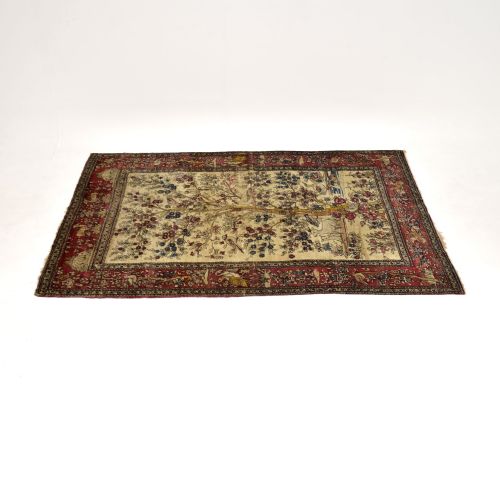
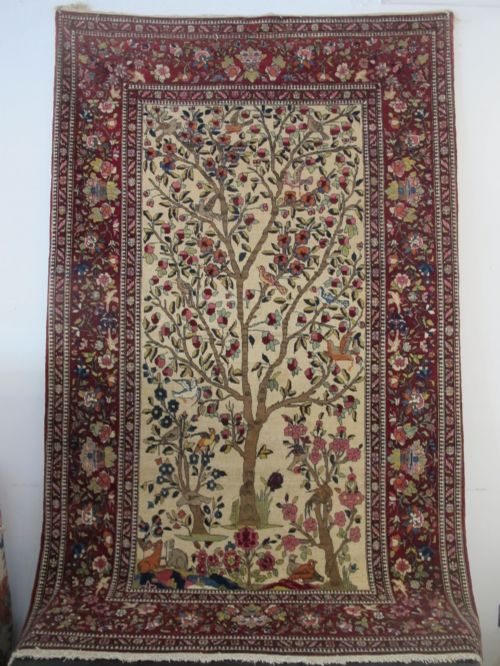
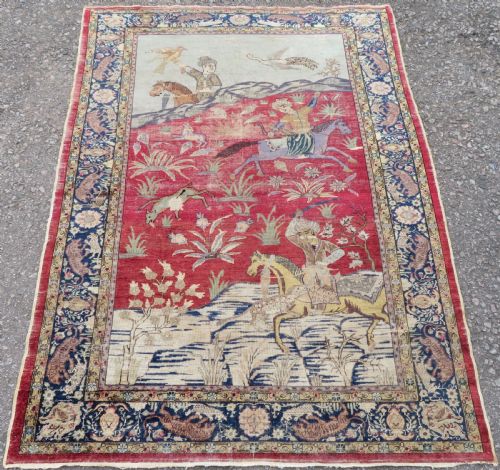
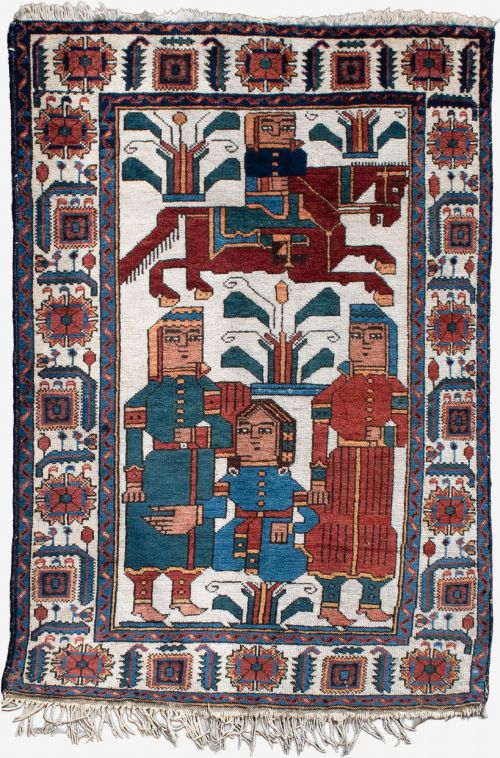
An antique pictorial rug departs from purely geometric or floral repetition to tell a story, display a hunting scene, or render a specific portrait in textile form. When you search for an antique pictorial rug, you encounter floor coverings that function as visual chronicles, recording historical figures, local fauna, and human figures with remarkable textile fidelity.
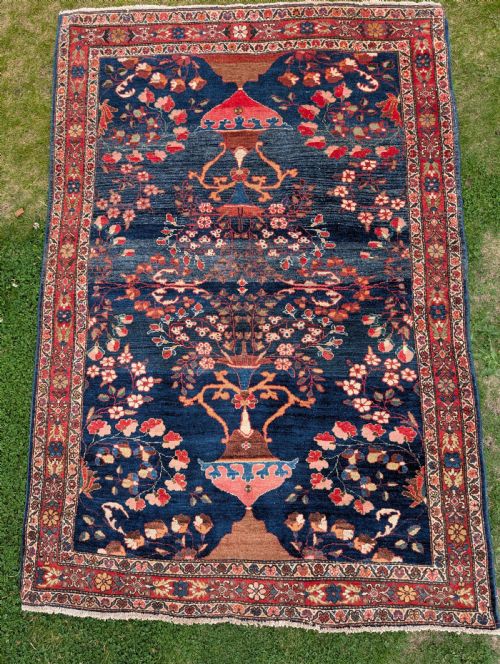
The examples gathered here span workshops and tribal tents across Persia, Turkey, the Caucasus, and India, with pieces dating from the nineteenth century into the early twentieth century. You will find urban weaving centres producing finely detailed silk and wool depictions alongside nomadic or village pieces translating stories through simpler, bolder wool knotting.
How they were made
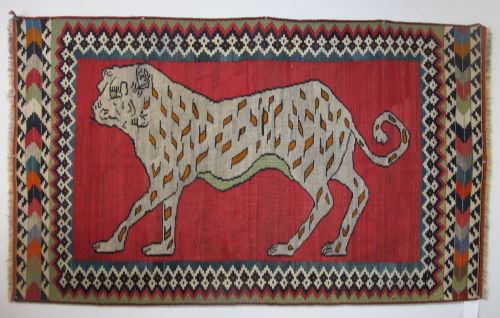
In regional workshops such as Kashan, Isfahan, Tabriz, and Kirman, weavers achieved high knot densities that allowed for precise portraits of leaders or complex hunting sequences. Tribal and village weavers in regions like Baluchistan, the Caucasus, and Anatolia utilised more robust yarns and direct geometric translation to render animals and people with distinct local character.
Antique Pictorial Rug Retail Price Guide 2026
Typical asking prices for pictorial rug among the pieces listed under this phrase on Sellingantiques today, from the lower quarter to the upper quarter. They describe what is for sale here now, not the wider market.
Historical portraiture on these looms occasionally captured unexpected European figures, placing the Kaiser and the last Russian Tsar firmly onto Persian foundations.
What varies in quality
The distinction between an ordinary piece and a masterwork rests in the clarity of the pictorial representation and the fineness of the knotting. When faces, animal proportions, and narrative elements are rendered with anatomical conviction rather than crude abstraction, the weaver demonstrates superior command of the medium.
Material choice and dye consistency further divide the range, as pieces utilising fine silk highlights or deeply saturated natural dyes retain greater visual depth. The complexity of the border design and the overall harmony between the central narrative field and its framing elements complete the assessment of execution.
Mohtasham Kashan·Ahmadi Isfahan
The Antique Pictorial Rug Glossary
- Pictorial rug
- A textile featuring human figures, animals, historical portraits, or narrative scenes rather than standard geometric or floral repeating motifs. These pieces often serve as commemorative or storytelling objects.
- Natural dye
- Colourants sourced from plants, insects, and minerals rather than synthetic compounds. They produce rich, variable hues that mellow harmoniously over time.
- Hand knotted
- A construction technique where individual lengths of yarn are tied by hand onto the warp threads of a loom. This process determines the density and durability of the piece.
- Prayer rug
- A textile design incorporating a mihrab or arch motif, traditionally used to indicate the direction of prayer. Examples often include specific lamp or floral motifs within the niche.
- Warp
- The vertical foundation threads stretched tightly on a loom before knotting begins. The weft threads are passed across these to secure the rows of knots.
Antique Pictorial Rug: Frequently Asked Questions
What is an antique pictorial rug?
An antique pictorial rug is a hand-knotted floor textile that portrays human figures, animals, historical leaders, or narrative scenes instead of standard geometric patterns.
These pieces function as woven canvases, capturing specific portraits or hunting scenes through the careful placement of dyed wool, cotton, or silk yarns.
Where were these rugs made?
These textiles originate primarily from weaving traditions across Persia, Turkey, the Caucasus, and India during the nineteenth and early twentieth centuries.
Urban centres like Kashan, Isfahan, and Tabriz produced fine city pieces, while regional workshops and tribal groups created distinct village and nomadic interpretations.
How do I care for an antique pictorial rug?
Protect these textiles by placing them in areas away from direct, harsh sunlight to prevent the natural dyes from fading over time.
Vacuum them gently without using a rotating brush roll, and consult a specialist textile conservator for professional cleaning when necessary.
Are these rugs meant for the floor?
While originally woven as functional floor coverings, many pictorial examples are now displayed on walls to protect the detailed narrative work from foot traffic.
Lighter silk or wool pieces with fine portraits benefit greatly from wall mounting, though durable area rugs can still handle gentle placement on low-traffic floors.