

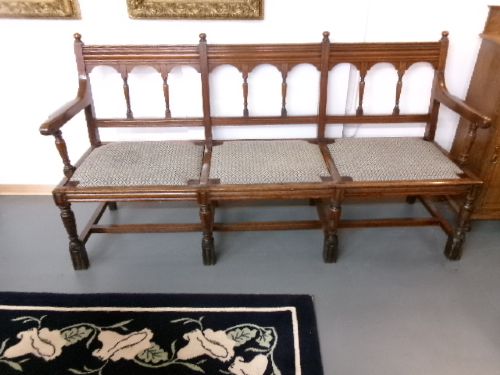
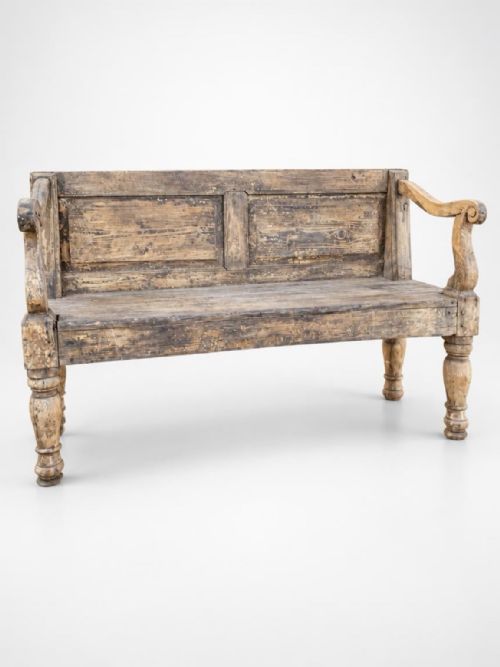
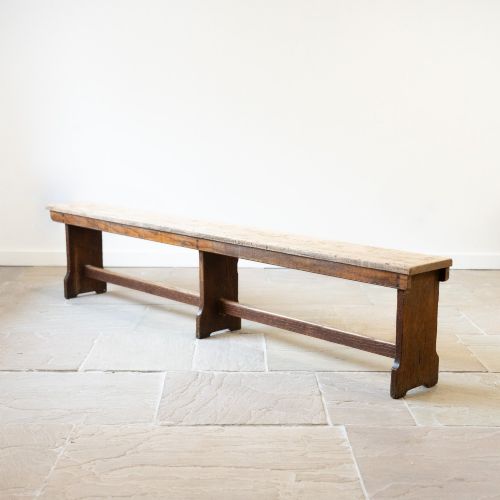
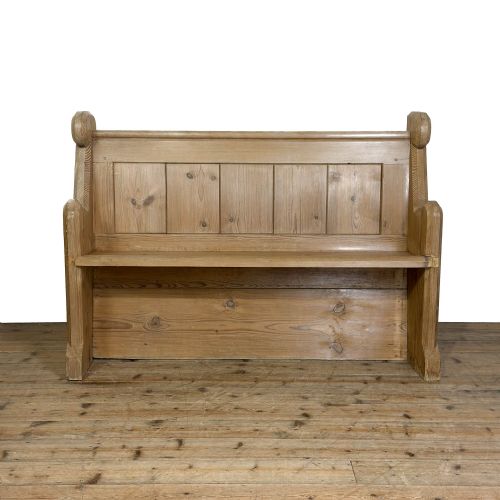

Antique Pew Bench
An antique pew bench brings centuries of communal history into a hallway, kitchen or living space.
Antique Pew Bench
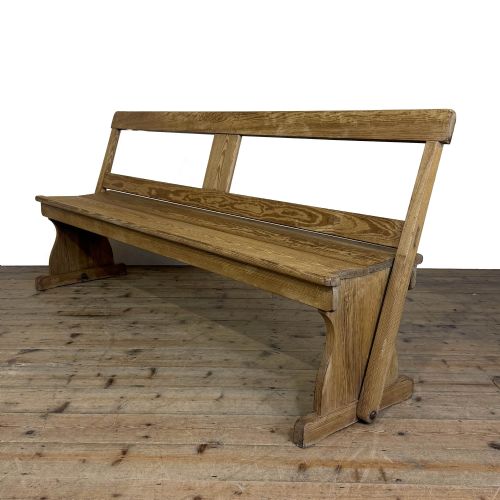
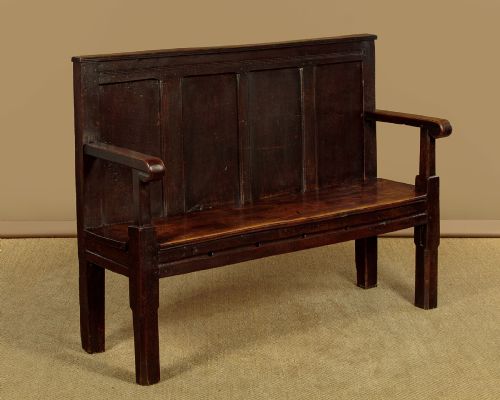
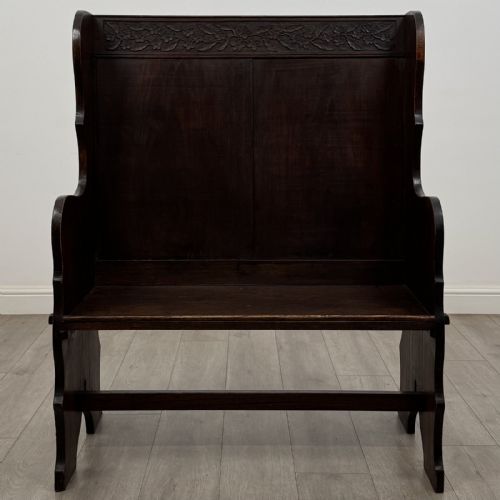
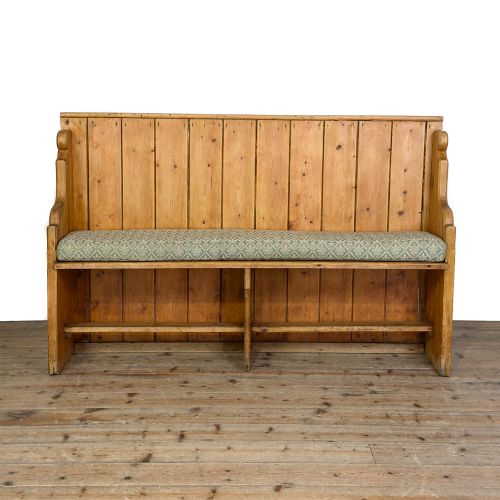
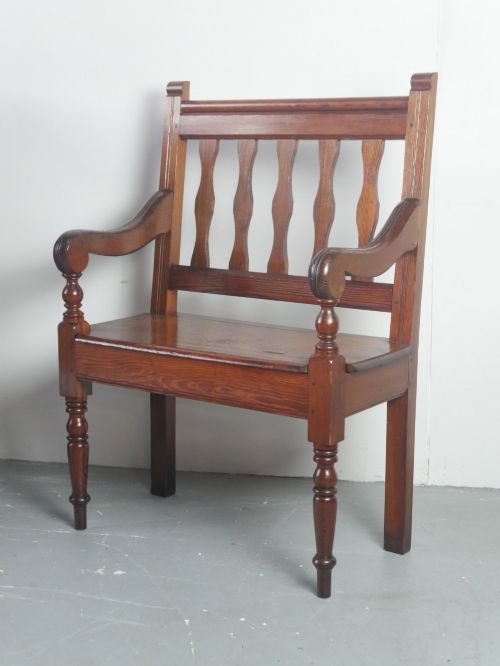
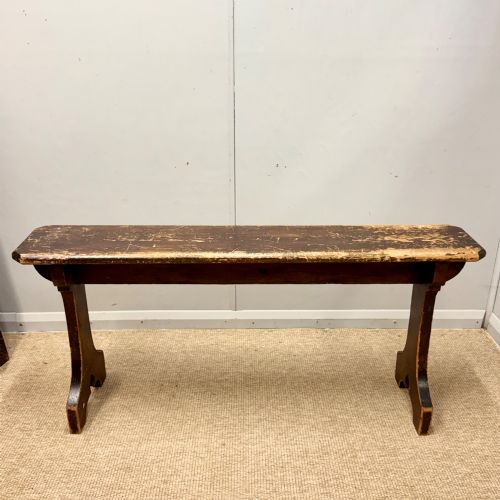
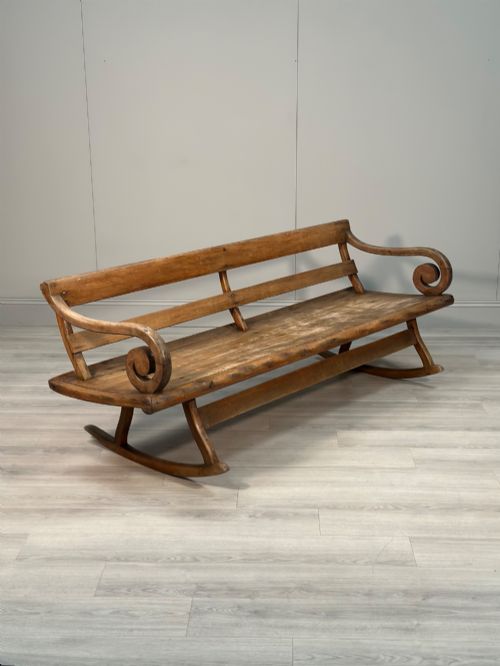
When searching for an antique pew bench, a buyer encounters robust communal seating sourced from churches, chapels, pubs, taverns and domestic halls. These pieces range from high-backed settle designs that blocked cold drafts in farmhouse firesides to long slatted seating built for waiting rooms and public spaces.
The versions most commonly met on this page span the eighteenth, nineteenth and early twentieth centuries. They appear predominantly in pine, oak and elm, carrying the honest marks of daily use in ecclesiastical and rural settings.
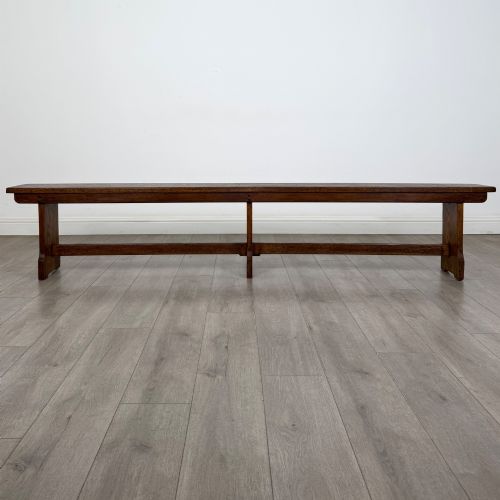
Forms vary from straight chapel and church pews to curved Gothic examples, box settles with storage beneath the seat, and flip-over chapel variants. Each type reflects the specific social or religious architecture for which it was originally carpentered.
How they were made
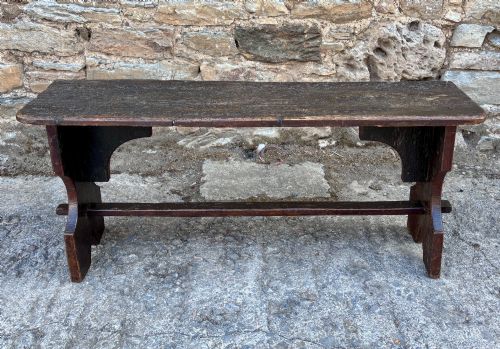
Cabinet makers and local carpenters utilised solid timbers such as oak, pine, pitch pine and elm, often joining boards with pegged mortise and tenon joints to withstand heavy public sitting. Structural integrity relied on thick plank seats, sturdy box compartments or panelled backs that provided rigid support.
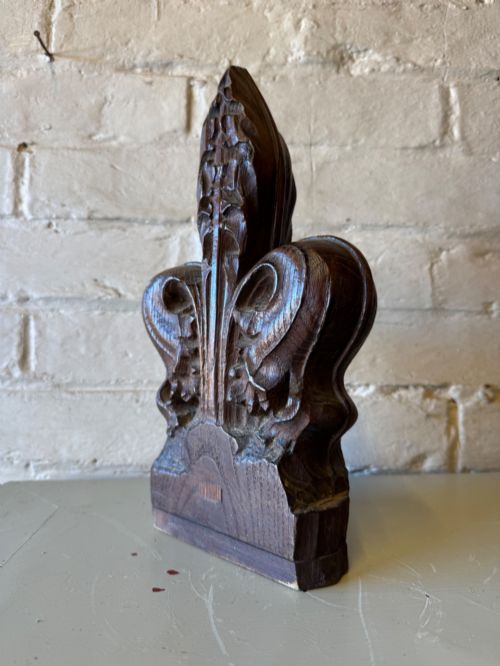
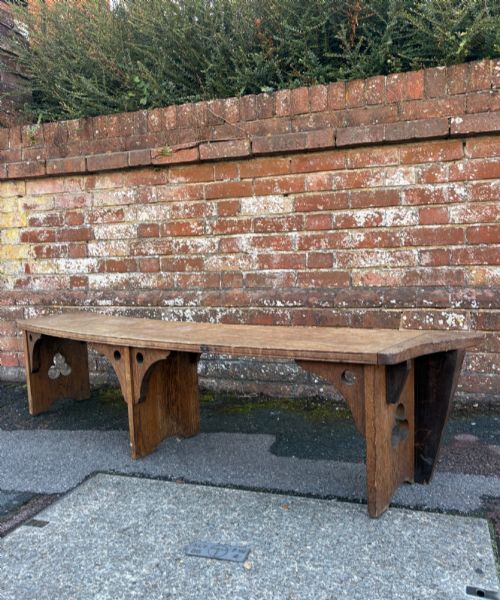
Surface finishes developed naturally through decades of waxing and handling, leaving honey-brown patinas, original paint layers or waxed surfaces. Details like poppy head finials, trefoil carvings and architectural panel work display the hand-chiselled craftsmanship of regional workshops.
Antique Pew Bench Retail Price Guide 2026
Typical asking prices for pew bench among the pieces listed under this phrase on Sellingantiques today, from the lower quarter to the upper quarter. They describe what is for sale here now, not the wider market.
What varies in quality
The standard of an antique pew bench rests upon the integrity of its original timber and the depth of its surface patina. Examples retaining their untouched board seats, original painted finishes or structural box compartments hold greater integrity than heavily altered pieces.
Proportion and architectural detailing distinguish finer commissions from utilitarian workshop output. Sharply carved finials, well-balanced high backs and substantial timber thickness separate provincial seating built to last generations from later utility adaptations.
The Antique Pew Bench Glossary
- Settle
- A wooden bench with a high back, solid arms and often a closed base or box compartment beneath the seat designed to keep out drafts.
- Poppy head
- An ornamental carved finial topping the end of a bench standard, frequently shaped like a stylised leaf or bud in Gothic design.
- Pitch pine
- A resinous North American pine species utilised for nineteenth-century ecclesiastical seating due to its durability and distinct grain pattern.
- Box settle
- A form of seating featuring a hinged seat opening to reveal a storage chest underneath for blankets or household goods.
- Patina
- The surface sheen and colour acquired by wood through age, handling and regular waxing over many decades.
Antique Pew Bench: Frequently Asked Questions
Where did these benches come from?
Many originate from churches, chapels, Victorian waiting rooms, and country pubs where sturdy communal seating was essential.
Others were built for domestic hallways and farmhouses to accommodate large households around firesides.
How do I fit an antique pew bench into a modern home?
Their narrow profiles make them natural choices for narrow hallways, narrow dining tables, or against kitchen walls.
Shorter single-seater or three-seater variants work well in boot rooms and smaller living spaces.
How can I tell the age of a wooden bench?
Age is indicated by the construction methods, such as hand-cut pegged joints, timber shrinkage, and tool marks left by early carpenters.
Surfaces displaying deep patination and historic wax layers also point to eighteenth or nineteenth-century origins.