


Antique Pet Art Portrait
These antique pet art portraits capture domestic animals with individual character, offering a direct link to historical homes through oil and pastel.
Antique Pet Art Portrait
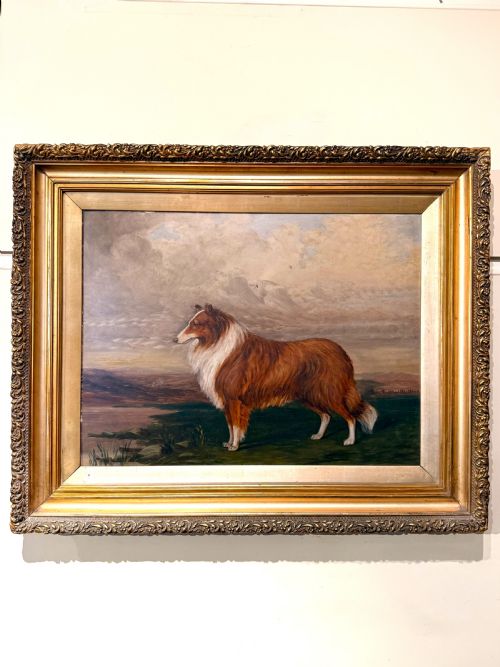
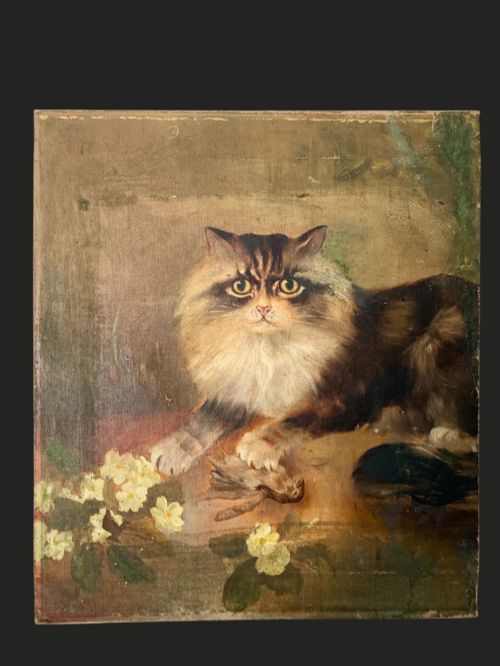
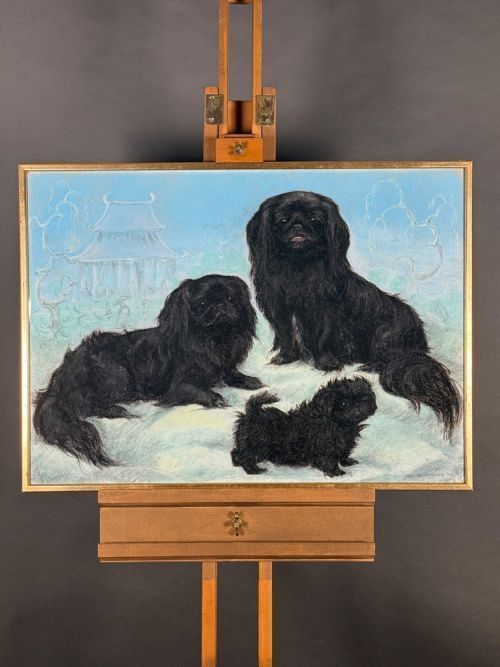
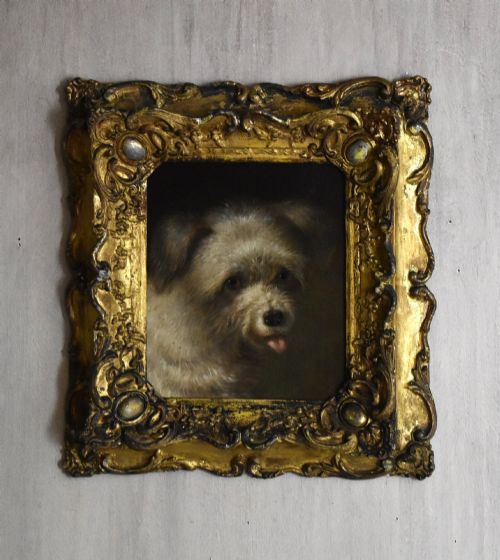
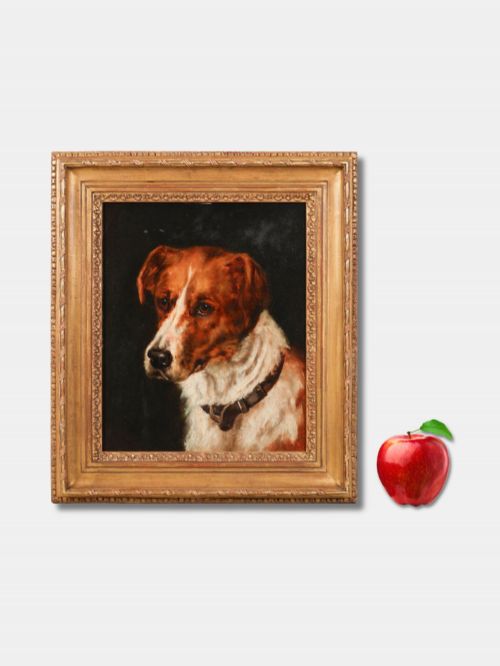
An antique pet art portrait records a cherished animal, usually a dog or cat, through traditional painting and drawing techniques. The examples gathered here span from the Regency period through to the mid-20th century, capturing domestic companions in oils and pastels.
Canvases and boards dominate the selection, featuring subjects ranging from singular terrier studies to groups of Persian kittens. Works originate from various schools, including provincial British artists and continental European painters.
The most frequent form on this page is the oil painting on board or canvas, framed to preserve the original presentation. Buyers encounter everything from naive school depictions to detailed academic studies of prize-winning dogs.
Materials and Techniques
Artists relied primarily on oil paint applied to canvas, wooden panel, or board, building up textures to render fur and light accurately. Some works employ pastel on paper, requiring delicate handling to preserve the chalk medium.
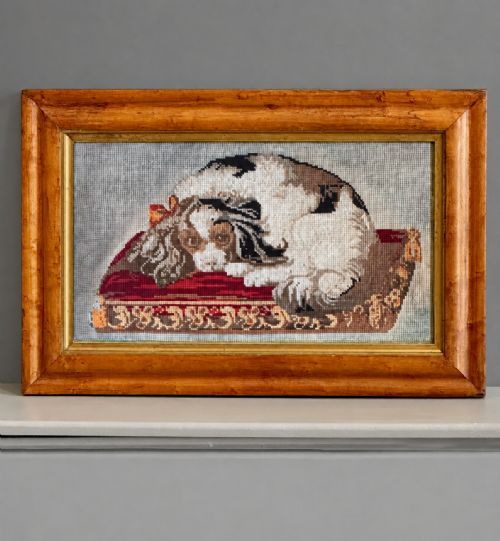
Frames often utilise gesso and gold leaf over wood, including burr maple variants that complement the warmth of the central imagery. Ground pigments mixed with oil mediums allowed painters to achieve deep tones and subtle shading in interiors and outdoor courtyards.
Canine subjects range from working terriers to prized greyhound racing champions and King Charles spaniels.
Evaluating the Work
Quality rests on the artist's ability to render anatomical structure and capture the distinct expression of the subject. Skilled hands define the texture of a coat and the alert quality of the eye with economy and precision.
The handling of the background environment also separates casual domestic records from accomplished fine art. Surviving original frames in matching period materials add integrity to the piece.
Martin Theodore Ward·William Barraud·Agnes Augusta Talboys·Christian Lindner·John Henry Dell·Valentine Thomas Garland·Florence Mabel Hollams·Philip Eustace Stretton·Charles Burton Barber·Francisco Jose Domingo y Marques·Samuel John Carter·Frank Owen Salisbury·Benedict Angell Hyland·Jules Le Roy·Robert Surtees Snr
The Antique Pet Art Portrait Glossary
- Board
- A rigid flat backing material used as a stable surface for oil paintings instead of woven fabric. It frequently appears in 19th and 20th-century studies.
- Gesso
- A plaster-like mixture applied to wooden frames as a base for gilding or painting. It provides a smooth surface for decorative mouldings.
- Naive school
- A term for art produced by self-taught painters working outside academic traditions. These pieces prioritise direct observation and charm over strict perspective.
- Chromolithograph
- A multicoloured print produced through lithographic stones. This technique allowed faithful reproduction of popular paintings in the Victorian era.
Antique Pet Art Portrait: Frequently Asked Questions
How do I care for an oil painting?
Keep the artwork away from direct sunlight and dramatic changes in temperature or humidity. Dust the surface gently with a dry, soft brush without applying pressure.
Avoid using any water or cleaning solutions on the paint or the surrounding gilded frame. Professional conservators should handle any deeper cleaning or structural repairs.
What periods do these portraits cover?
The selection ranges from the 18th century through the Regency and Victorian eras, extending into the mid-20th century. Most pieces date from the 19th century and the Edwardian period.
Stylistic shifts reflect changing artistic approaches, moving from formal academic commissions towards looser, more intimate domestic studies.
Are original frames important?
Original frames provide historical context and often match the aesthetic period of the painting itself. Burr maple and gilded wooden surrounds contribute to the overall presentation and integrity of the piece.
Checking the fit and backing helps confirm whether the artwork has remained in its initial mount since its creation.
How can I identify naive school art?
Naive school works often display simplified perspective and a straightforward approach to proportion. They possess an honest charm that prioritises the character of the subject over academic rules.
These pieces were typically painted by regional artists outside the major metropolitan academies, capturing local pets with distinct personality.