


Antique Persia Kilim
These woven flatweaves are antique persia kilim textiles, prized by collectors for their rich tribal patterns and historic village craftsmanship.
Antique Persia Kilim
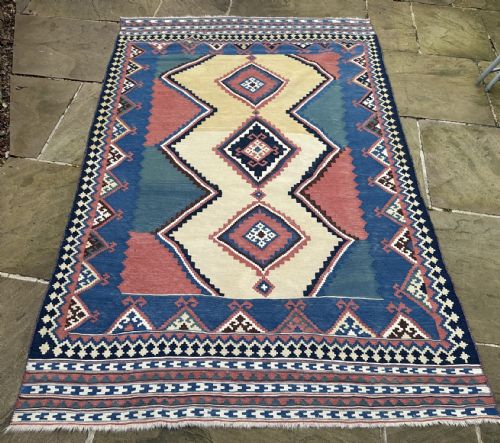
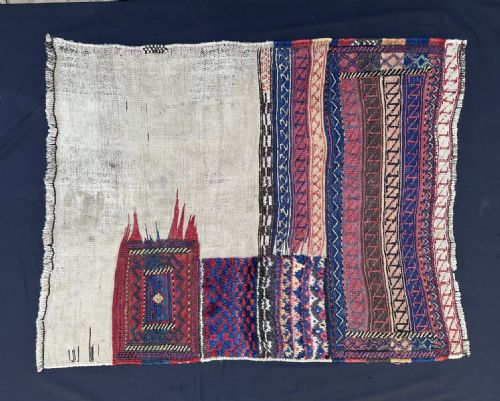
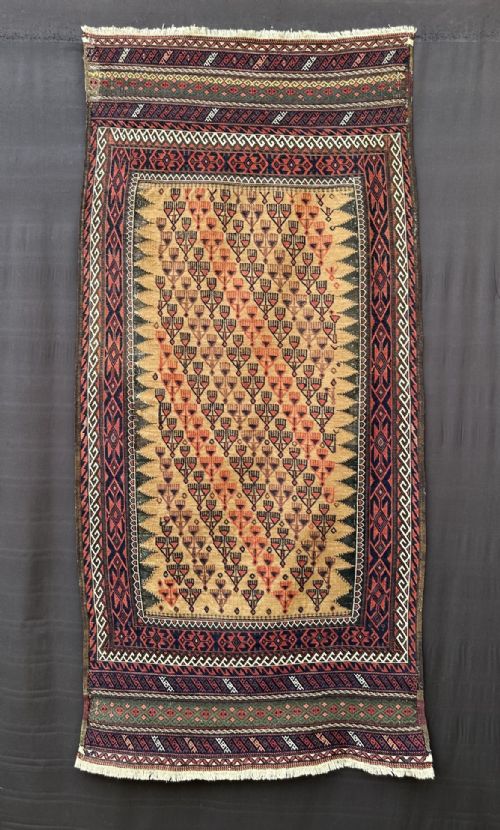
When searching for an antique persia kilim, a buyer encounters flatwoven textiles produced by nomadic and tribal groups across the region. The selection includes utility pieces like bread sofrehs, grain sacks, and saddle bags alongside traditional rugs.
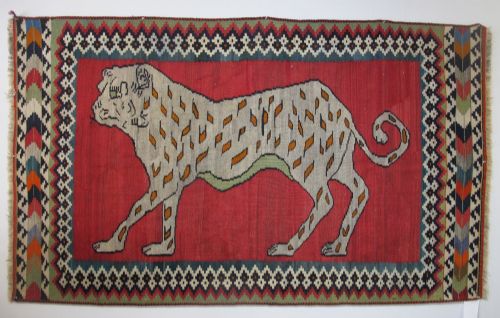
Tribal makers from regions such as Fars, Luristan, and Kurdistan created these flatweaves for daily domestic use. Qashqa'i and Afshar examples appear frequently, reflecting specific regional weaving traditions and geometric design vocabularies.
How they were made
Weavers utilised hand-spun wool and cotton foundations, often incorporating goat hair or camel hair for structural durability in utilitarian items. Natural dyes provided the palette, derived from local plants and minerals to produce deep, lasting shades.
The slit-weave technique defined the production, creating sharp geometric motifs where different colour blocks met. Nomadic women worked on portable horizontal looms, passing weft threads tightly over warps to form dense, flat textiles.
Listings feature items originating between 1870 and 1920, utilising wool, cotton, goat hair, and natural dyes across various tribal regions.
What varies in quality
The finesse of the weave sets superior examples apart, showing tighter weft packing and finer yarn preparation. Skilled spinners produced uniform wool that absorbed natural dyes evenly across the field.
Design clarity and the complexity of the tribal iconography distinguish exceptional pieces from ordinary utility goods. Balanced proportions and harmonious palettes indicate the hand of an experienced weaver working within a mature tradition.
The Antique Persia Kilim Glossary
- Sofreh
- A spreading cloth used for dining or kneading bread dough in nomadic households. These flatweaves often display striking minimalist or geometric layouts.
- Tacheh
- A grain or wheat sack woven by tribal groups for storage and transport. They frequently feature robust slit-weave construction and bold patterning.
- Soumak
- A brocading technique where coloured weft threads are wrapped over and under warp threads. This method creates a textured surface resembling embroidery on the reverse.
- Slit-weave
- A flatweaving method where different weft colours turn back at their respective border warps. This produces a small vertical slit between adjacent colour areas.
- Medallion
- A central decorative motif placed in the field of the textile. Weavers arranged secondary ornaments around this focal point.
Antique Persia Kilim: Frequently Asked Questions
What is a sofreh used for?
Sofrehs served practical daily purposes in nomadic life, primarily functioning as floor coverings for communal meals or as wrappers for bread dough during preparation. Families folded and stored them when not in use.
These textiles combined utility with traditional tribal symbolism. Weavers applied geometric patterns that held specific meaning for the maker and her kin.
How do I identify a Qashqa'i kilim?
Qashqa'i flatweaves originate from the Fars province in south-west Persia and typically exhibit rich indigo blues, madder reds, and balanced geometric layouts. Animal and plant motifs often appear integrated into the field.
The handle of the wool and the specific arrangement of hooked diamonds help attribute pieces to this confederation. Older examples display saturated natural dye colours.
Are these flatweaves suitable for floors?
These historical textiles withstand normal foot traffic when placed in low-impact areas or secured with a quality underlay. Many collectors prefer positioning them on walls or tables to protect the structure from wear.
The flat construction lacks a pile, making them lighter and easier to move than knotted carpets. Regular gentle shaking helps remove trapped dust from the weave.
How can I tell the age of a piece?
Age assessment relies on examining the wool quality, the presence of natural dyes, and the structural wear patterns consistent with nineteenth or early twentieth-century production. Synthetic dyes introduced later change the palette evaluation.
Tribal attributions and specific regional structures also provide clues to the era of manufacture. Archivists compare known village styles to date individual flatweaves accurately.