
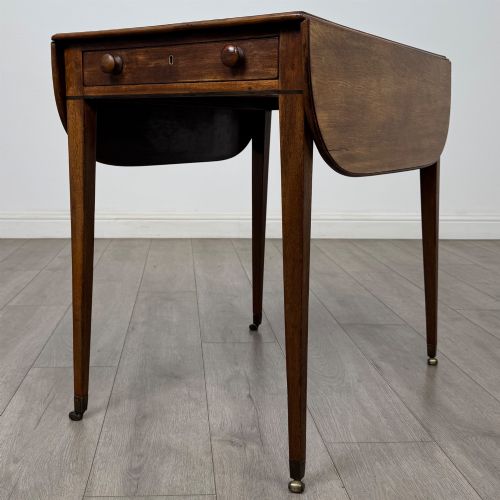
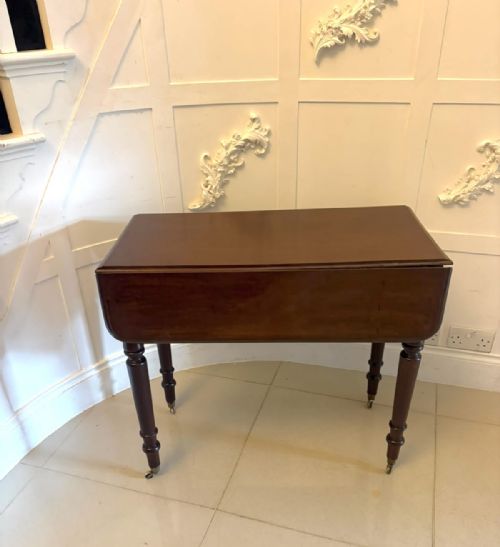
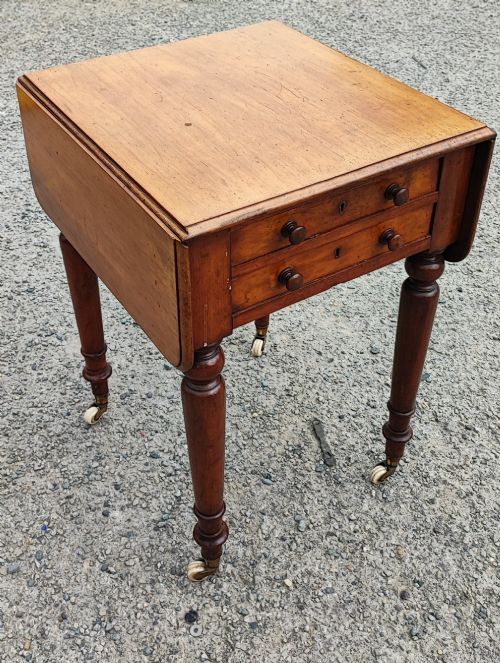
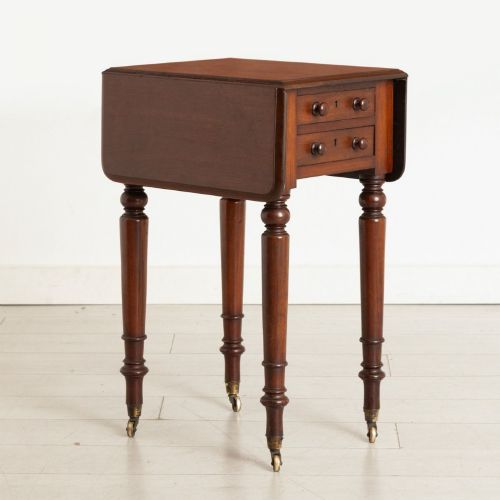


Antique Pembroke Table Castors
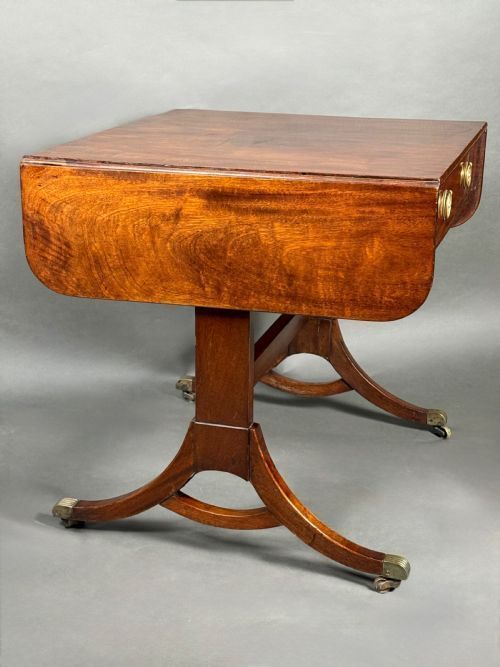
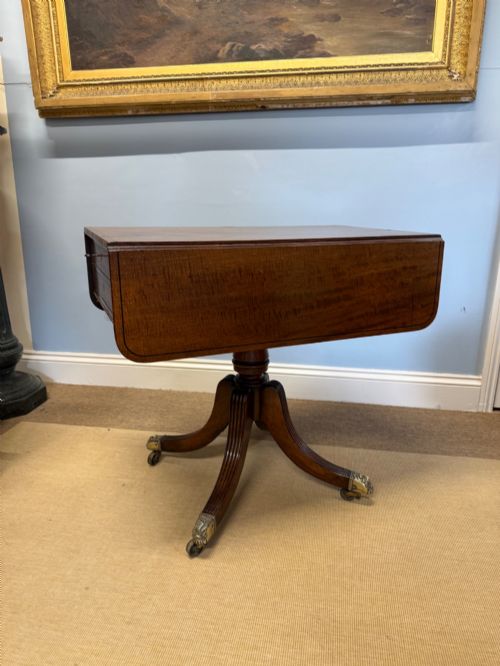
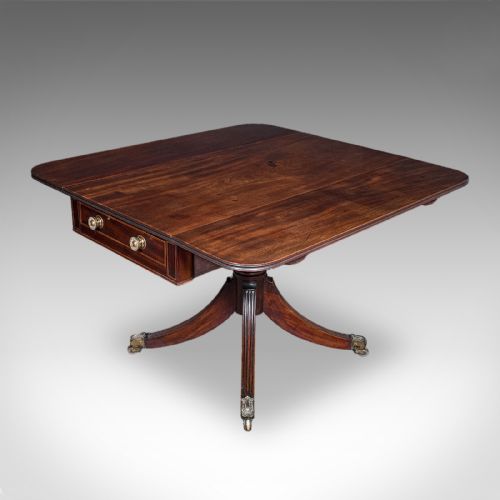
Antique pembroke table castors are small metal or ceramic wheels fitted to drop-leaf tables, prized for ease of movement.
Antique Pembroke Table Castors
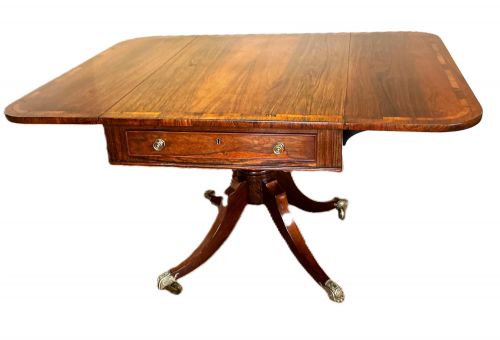
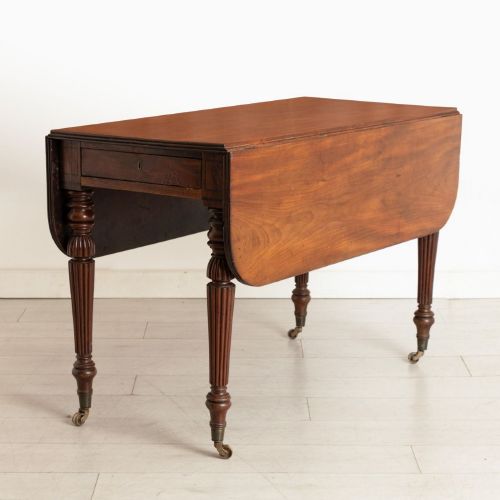
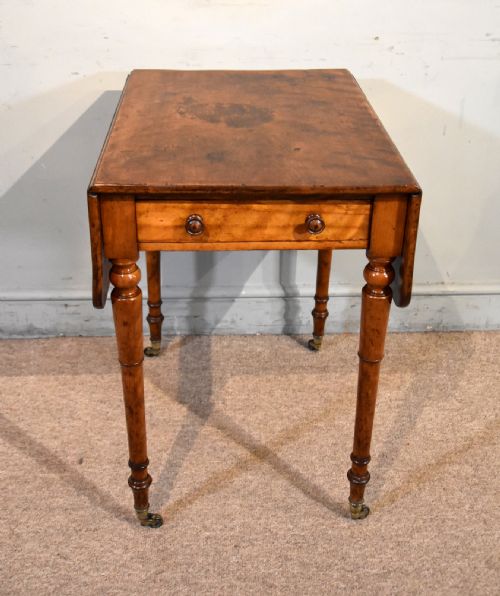
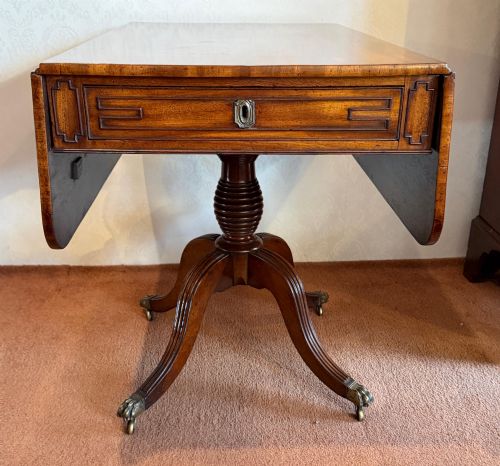
These components belong to drop-leaf tables designed for versatility in Georgian, Regency, and Victorian rooms. You are most likely to meet them fitted to mahogany, satinwood, or rosewood tables featuring drop leaves and slender legs.
The hardware under examination supports mobility on drop-leaf side, occasional, and dining tables. Such fittings allow heavy timber furniture to glide smoothly across carpets and floorboards without catching.
Materials and construction
Makers utilised cast brass for durability, mounting small wheels into sockets attached to table legs. Fine examples combine solid mahogany frames with boxwood stringing and functional metal fittings.
Ceramic components also appear within the evidence alongside brass and timber elements. These materials provide the weight and structural integrity required for moving drop-leaf furniture.
Listings span the eighteenth, nineteenth, and early twentieth centuries, incorporating Georgian, Regency, Victorian, and Edwardian periods.
Judging quality in castors and tables
Superior examples show crisp metal casting and secure housing within the timber leg without looseness. The integration between the brass fitting and the mahogany or satinwood structure indicates the original maker's standard of work.
Finer pieces maintain matching hardware across all four legs, demonstrating original factory assembly rather than later replacement. The precision of inlay work and timber grain choice, such as flame mahogany, parallels the quality of the hardware.
Johnstone and Jeanes·Andrew Thomson and Sons
The Antique Pembroke Table Castors Glossary
- Castor
- A small wheel on a swivel, attached to the bottom of furniture legs to permit smooth rolling. These fittings enable tables to shift position easily.
- Pembroke table
- A small drop-leaf table with hinged flaps on two opposite sides. This form became popular during the Georgian and Regency periods.
- Flame mahogany
- A wood veneer cut to display a distinctive wavy, flame-like grain pattern. Cabinet makers reserved this timber for prominent surfaces.
- Boxwood
- A dense, pale wood utilised for fine inlay and stringing lines on tables. It contrasts sharply with darker timbers like mahogany.
Antique Pembroke Table Castors: Frequently Asked Questions
What is a pembroke table?
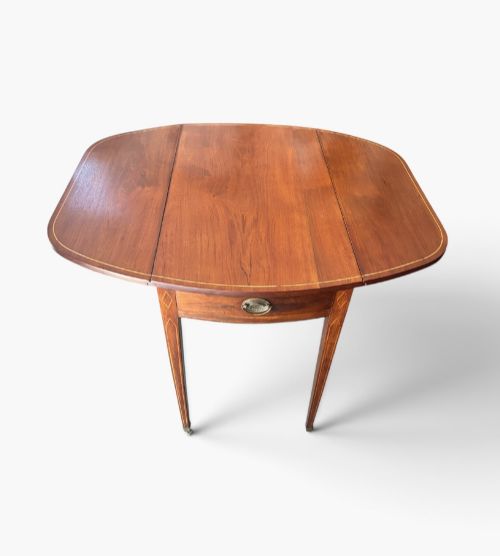
A pembroke table is a compact drop-leaf table featuring two hinged flaps supported by pivoting brackets.
These pieces typically include a small drawer and sit on four legs fitted with castors for mobility.
How do I identify a Regency table?
Regency tables display classical proportions, dark mahogany timbers, and occasionally brass stringing or inlay.
They often rest on pedestal bases or slender legs equipped with brass castors for easy movement.
What woods were used?
Makers primarily used mahogany, flame mahogany, and rosewood for the main structure of these tables.
Satinwood and boxwood frequently appear as contrasting veneers and decorative inlay details.
Were castors original?
Original castors are usually made of brass or ceramic and match the age and wear of the table legs.
Replacements are common due to the heavy friction placed on these small moving parts over the centuries.