

Antique Pembroke Desk
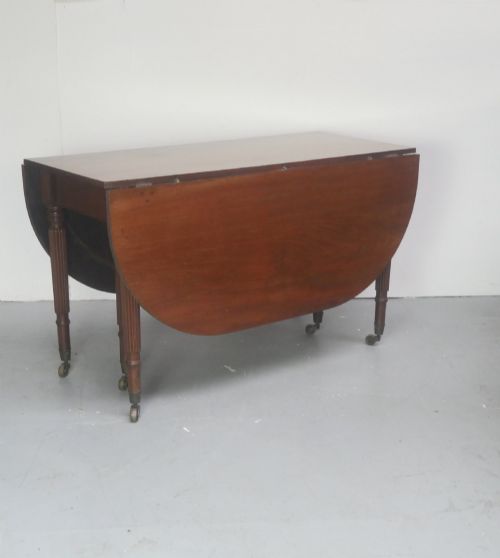
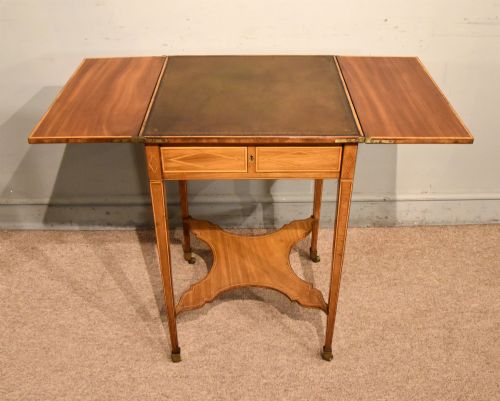
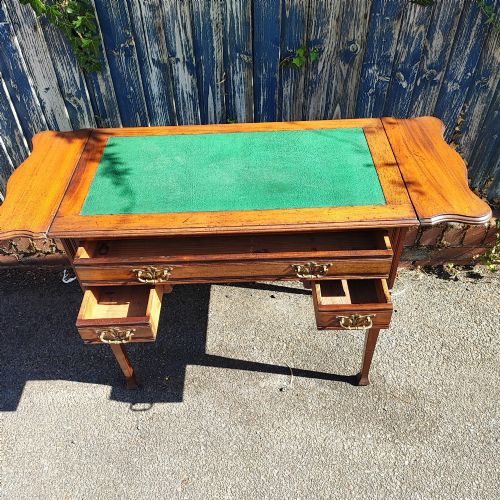
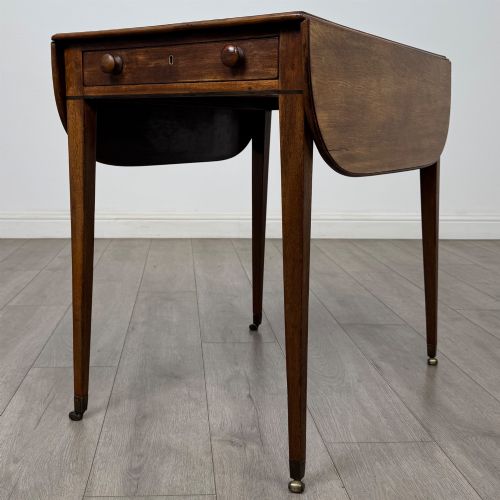
An antique pembroke desk is a compact drop-leaf writing table designed for flexible placement, combining utility with refined period timberwork.
Antique Pembroke Desk
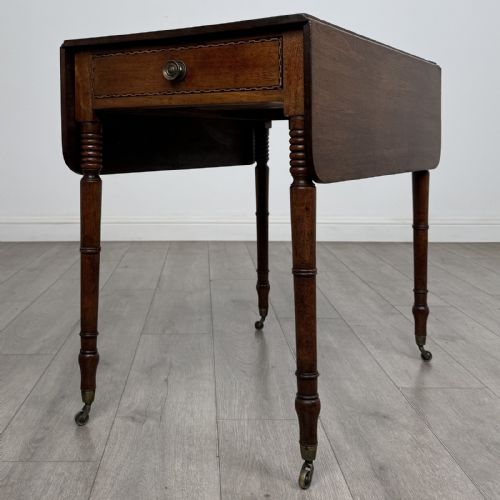
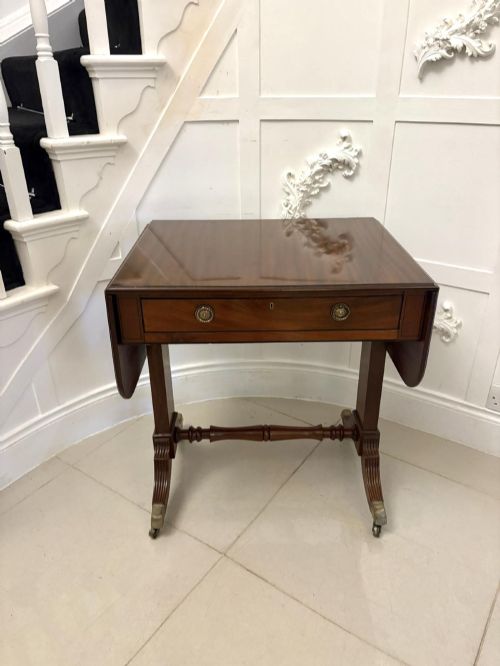
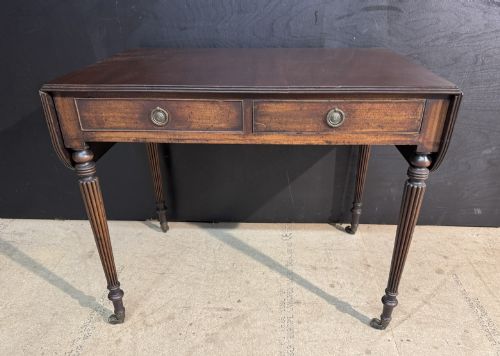
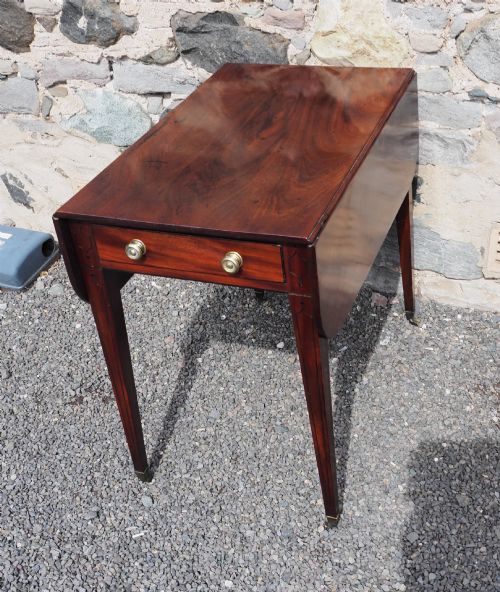
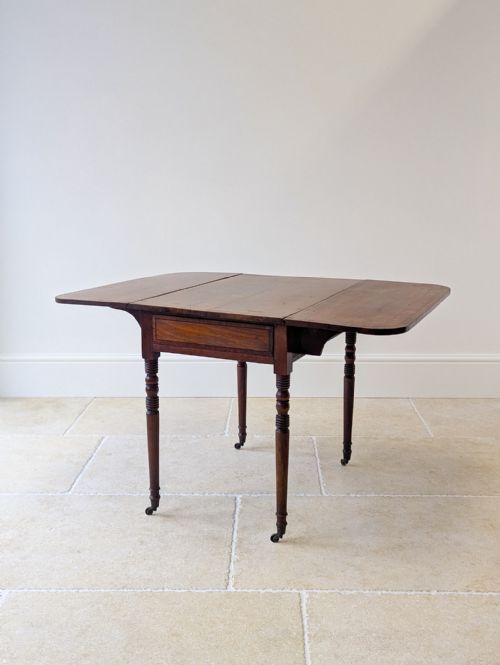
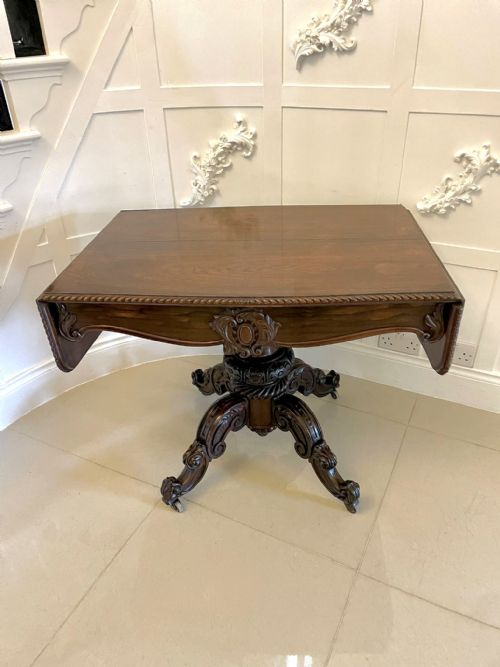
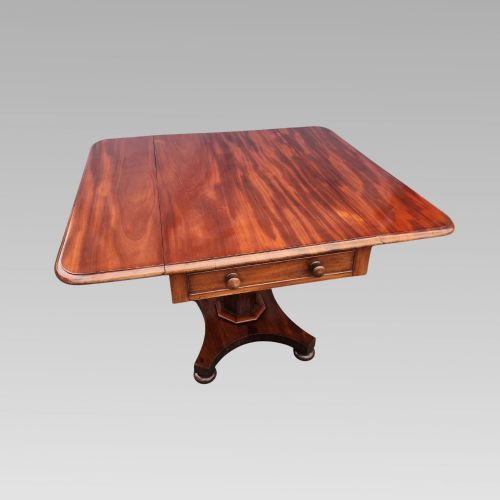
When you search for an antique pembroke desk, you encounter adaptable drop-leaf tables spanning the Georgian, Regency and Victorian eras alongside later Edwardian interpretations. The form commonly appears as a writing table or occasional piece fitted with drop-flaps supported by hinged brackets.
The pieces listed on this page originate predominantly from the Georgian and Regency periods, stretching through the nineteenth century into the early twentieth century. Most examples function as writing tables, sofa tables or work tables equipped with fitted drawers.
Makers and workshops of the eighteenth and nineteenth centuries adapted the drop-leaf format for domestic writing and needlework, resulting in tables that sit comfortably in modern studies or sitting rooms.
Materials and Construction
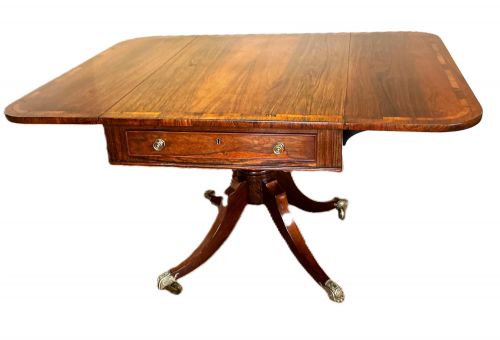
Cabinetmakers constructed these pieces primarily in solid mahogany, frequently utilising rosewood, satinwood and oak for contrast or structural support. Inlays of boxwood and satinwood provide linear detail along tabletops and drawer fronts.
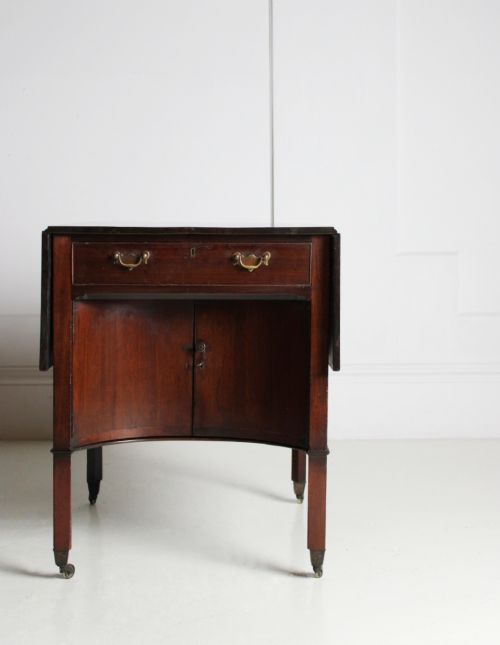
Drop-leaf mechanisms rely on hinged wooden flaps supported by pivoting wooden brackets or fly-brackets. Brass handles, castors and leather writing inserts complete the functional hardware of the period.
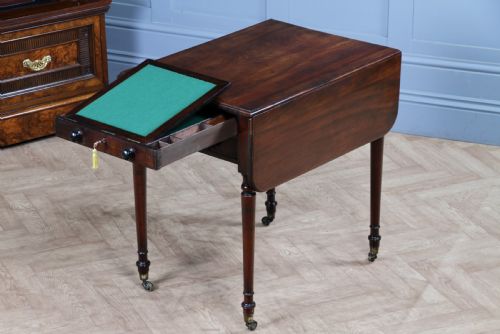
Some nineteenth-century versions served as work tables, keeping sewing threads and thimbles hidden away in dedicated compartments.
Craftsmanship and Proportion
Quality rests upon the selection of timber, such as figured mahogany or burr walnut, and the precision of the cross-banding and inlay work. Finer examples display cleanly cut dovetails on the drawer linings and original brass hardware.
Proportion and stability separate standard production from superior cabinet work. Well-balanced leg turnings and smoothly operating drop-leaf supports indicate higher workshop standards.
Andrew Thomson & Sons·Gillows
The Antique Pembroke Desk Glossary
- Pembroke table
- A small, rectangular table with hinged drop leaves on two opposing sides. It often includes one or two small drawers and stands on four legs.
- Drop leaf
- A hinged flap attached to the main tabletop that raises to extend the surface area. It drops down when not in use to save space.
- Satinwood
- A durable, yellowish wood used for fine furniture veneers and stringing. It provides a bright contrast against darker timbers such as mahogany.
- Cross-banding
- A border of veneer laid around the edge of a tabletop with the grain running perpendicular to the centre panel. This technique frames the primary wood.
Antique Pembroke Desk: Frequently Asked Questions
How do I use a pembroke desk today?
These tables function well as compact writing desks or occasional tables in smaller rooms. Raising one or both drop leaves provides extra surface space when needed.
Their narrow profile allows them to sit neatly against a wall or behind a sofa when the leaves remain lowered.
How do I identify a Georgian pembroke desk?
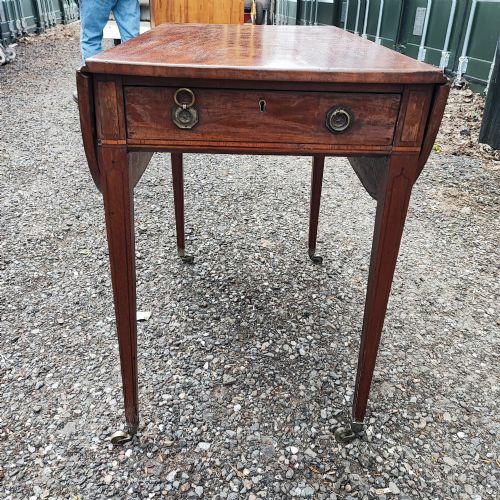
Georgian examples often exhibit straight tapered legs, subtle mahogany graining, and understated brass pull handles. Look for period construction methods such as hand-cut dovetails inside the drawers.
Inlaid satinwood stringing and cross-banded borders also point towards the late eighteenth-century Sheraton influence common in these pieces.
Are these tables sturdy enough for daily writing?
Solid mahogany and oak construction provides the durability required for everyday writing tasks. The hinged drop leaves remain stable when supported by properly adjusted wooden brackets.
Care should be taken not to place excessive weight on the outer edges of the raised leaves.