
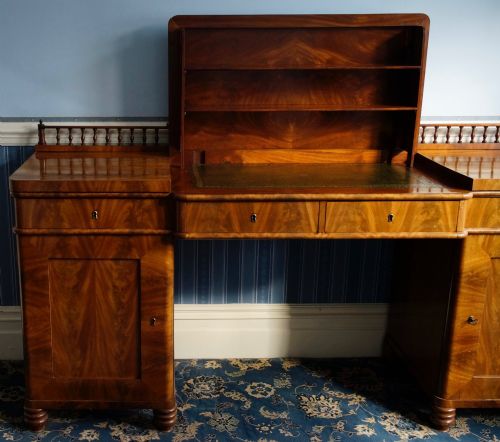
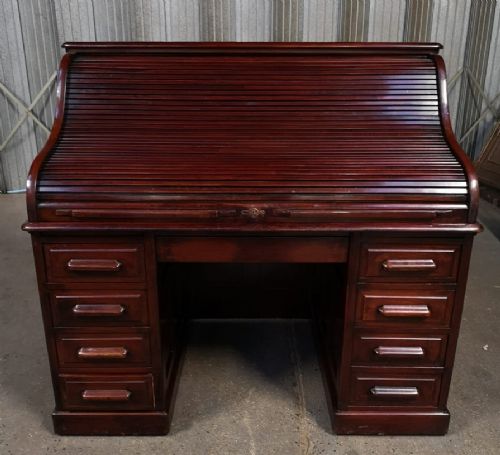
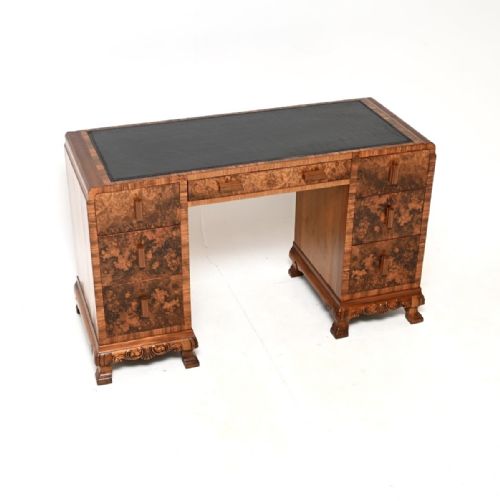
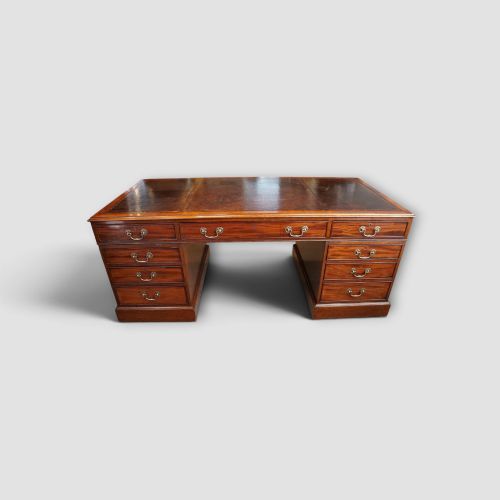


Antique Pedestal Desk Top
When you search for an antique pedestal desk top, you are looking at the hardworking surface of a twin-pedestal writing piece designed for serious correspondence and study.
Antique Pedestal Desk Top
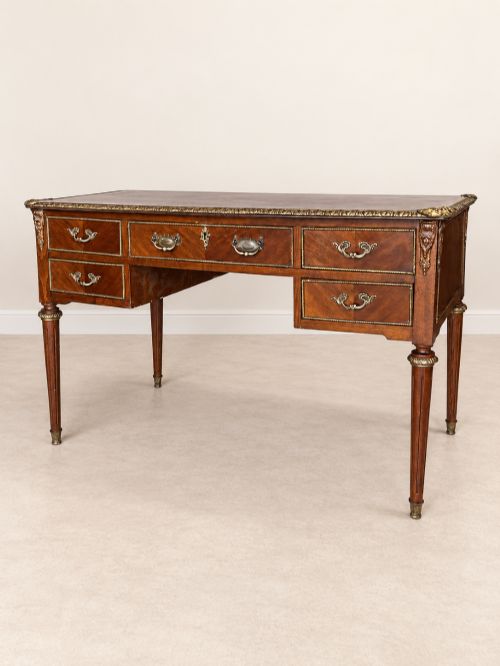
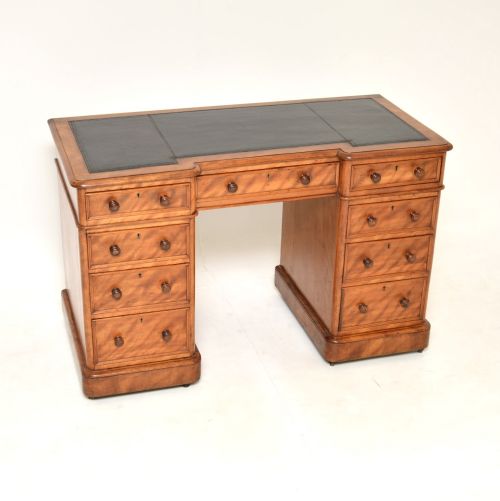
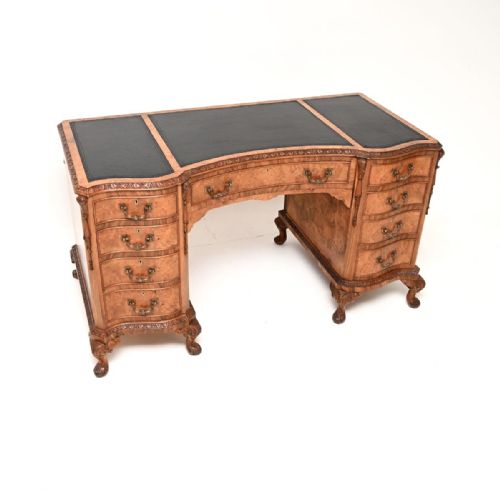
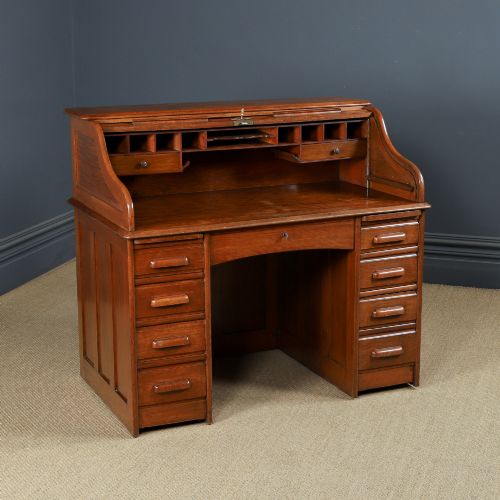
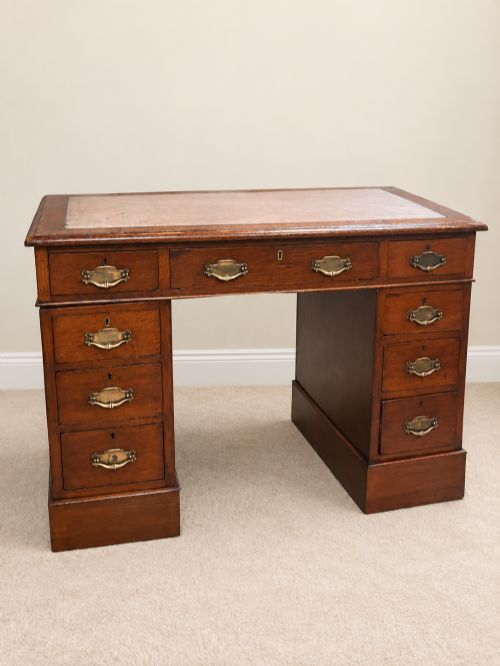
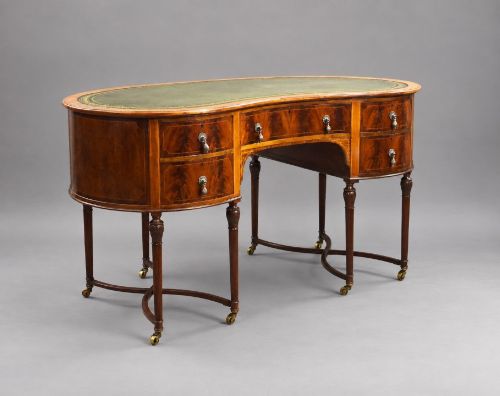
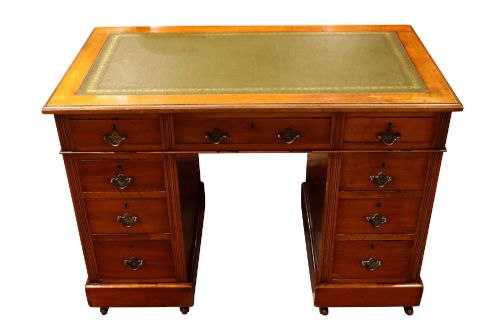
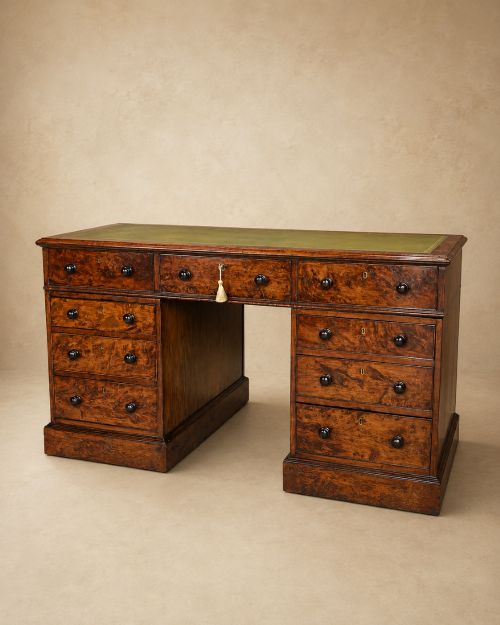
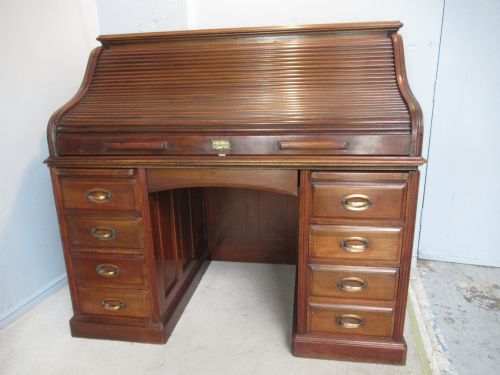
An antique pedestal desk top forms the upper writing surface of a twin-pedestal or partners form, usually comprising a wide writing slab inset with leather above two banks of small drawers. You will frequently encounter Victorian and Edwardian examples finished in deep mahogany, burr walnut, or oak.
While most examples date from the nineteenth and early twentieth centuries, variations span from Georgian-inspired library tables to Art Deco satin birch and burr walnut creations. The selection ranges from compact nine-drawer office writing desks to grand freestanding partners formats.
Materials and construction methods
Cabinet makers utilised dense hardwoods like mahogany, oak, and walnut for the structural carcass and drawer frames, frequently selecting figured burr veneers or flame mahogany for decorative impact on the primary surfaces. Solid timber borders frame the inset leather panels, joined with traditional cabinet-making techniques.
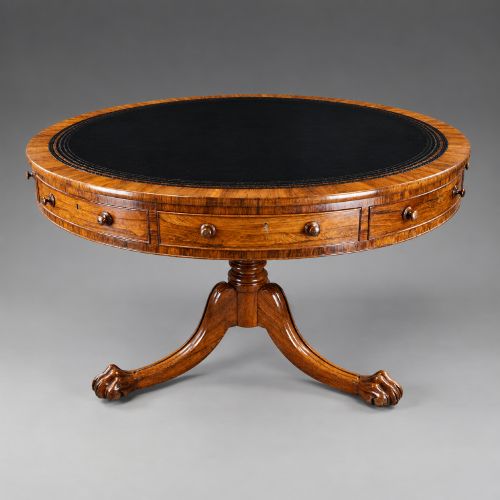
Writing surfaces were traditionally lined with high-grade leather and embellished with blind or gilt tooling around the perimeter. Brass hardware, including drop handles and escutcheons, secures the drawer fronts and complements the darker tones of the wood.
Some desks hide secret stationery compartments designed to keep private correspondence safe from wandering eyes.
Assessing quality and craftsmanship
The standard of timber selection largely dictates the visual hierarchy of these pieces, separating plain utility furniture from high-status library pieces finished in figured burr walnut or flame mahogany. Superior examples display carefully matched veneer grains across the entire writing surface and drawer fronts.
Fine craftsmanship is evident in the precision of the drawer dovetailing, the smooth action of the internal runners, and the survival of original brass fittings and leather inserts. Maker attribution, through stamped drawer linings or cabinet labels, adds a documented layer of provenance.
Trollope and Sons·Maple and Co·Charles Andrea Nosotti·Edwards and Roberts·Angus of London
The Antique Pedestal Desk Top Glossary
- Pedestal desk
- A heavy writing table comprising two separate drawer pedestals supporting a wide top surface.
- Partners desk
- A large format desk designed with drawers and cupboards on both sides to accommodate two users facing each other.
- Tooled leather
- A writing surface decorated with pressed gold leaf or blind tooling around the outer borders.
- Writing slide
- A pull-out wooden board housed beneath the main top to extend the usable surface area.
- Burr walnut
- A decorative timber cut from walnut tree growths, prized for its swirling grain patterns.
Antique Pedestal Desk Top: Frequently Asked Questions
What is an antique pedestal desk top?
It is the upper working surface and drawer assembly of a traditional twin-pedestal office or library writing desk.
These surfaces typically feature inset leather panels surrounded by solid wood framing and integrated stationery storage.
How do I identify Victorian desks?
Victorian examples often employ solid mahogany or walnut with hand-dovetailed nine-drawer configurations and turned wooden knobs.
Many of these nineteenth-century pieces also include royal commemorative leather tooling or secondary locking mechanisms.
Are partners desks double-sided?
Yes, partners desks feature fully finished drawers and cupboards accessible from both the front and the reverse sides.
This symmetrical construction allowed two individuals to work opposite one another in a shared library or study.
What wood types are used?
Cabinet makers predominantly used mahogany, oak, and walnut, frequently enhancing the design with burr walnut or satinwood veneers.
Brass handles and hand-tooled leather writing surfaces complete the construction of these traditional writing pieces.