





Superstructure Pedestal Desk
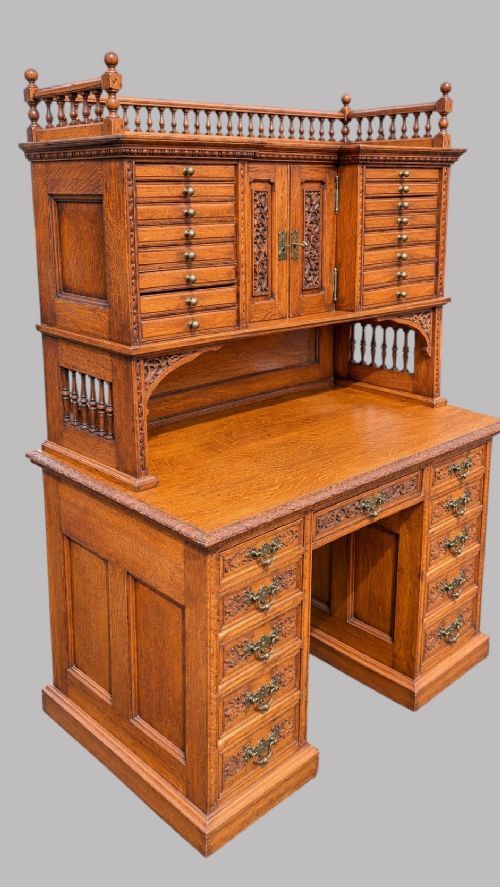
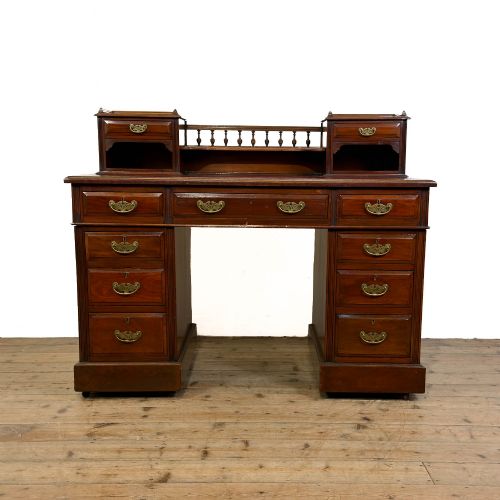
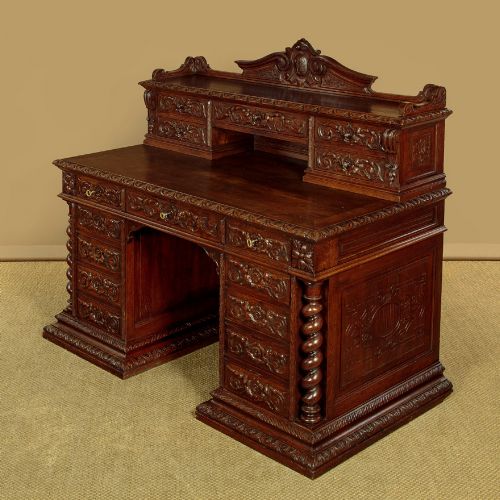
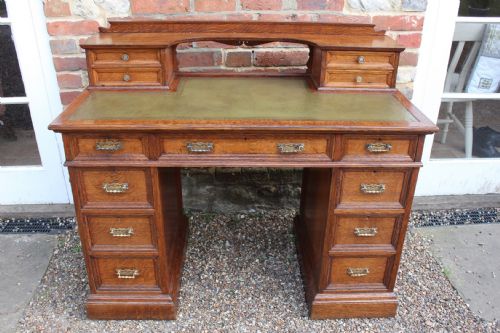
A superstructure pedestal desk provides generous writing space paired with fitted upper compartments, offering an impressive centrepiece for a study.
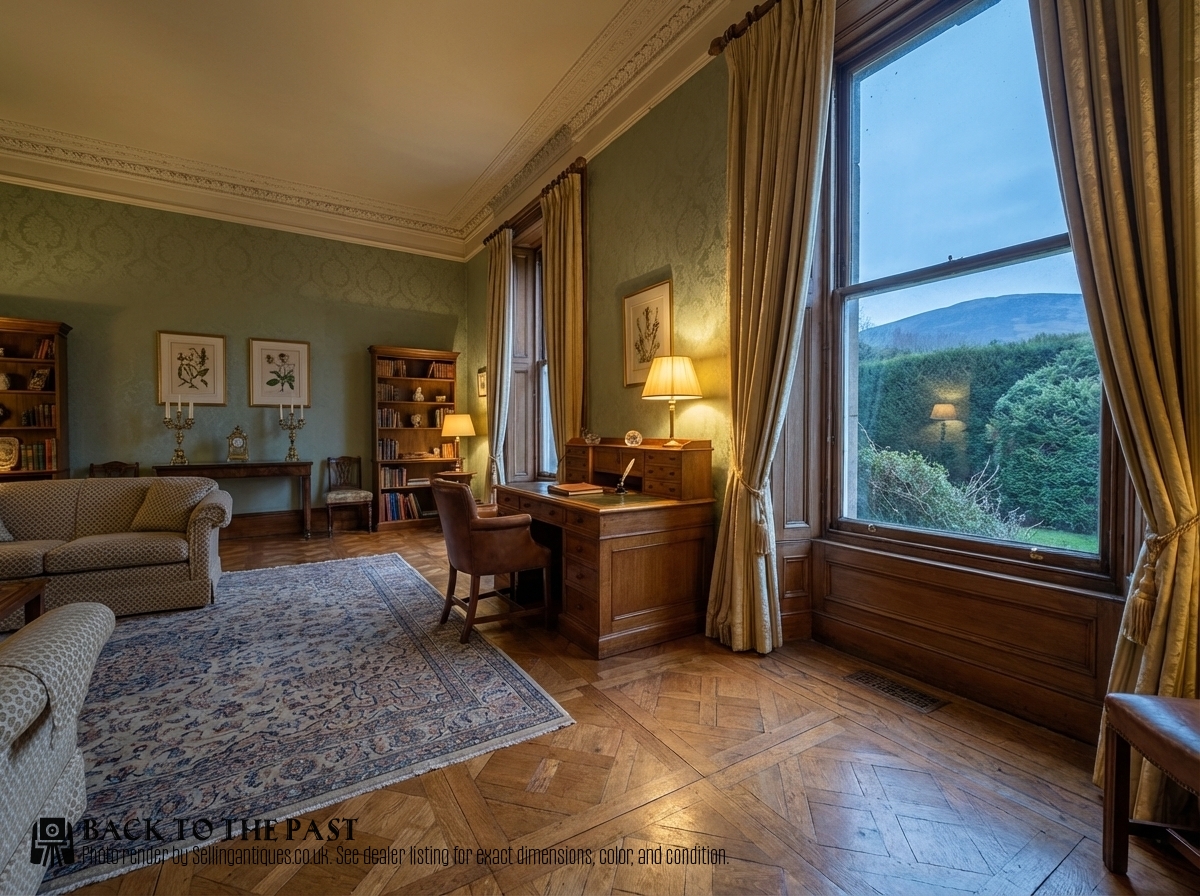
Superstructure Pedestal Desk
The form encompasses specific regional and cabinetmaker variations, from Scottish country house estate desks to exhibition-quality Aesthetic Movement pieces. These tables provide both lower pedestal drawer storage and vertical organisation via the upper cabinet tiers.
Described variously in period terms as Dickens desks, kneehole desks, or Carlton house desks, these pieces reflect the diverse working demands of the nineteenth century. The raised superstructure organises correspondence while the twin pedestals support heavy ledgers and files.
Materials and construction
Makers utilised dense timbers such as oak, mahogany, and burr walnut, frequently mounting them with brass hardware and ormolu details. Secondary woods provided structural stability for the deep pedestals and heavy superstructure attachments.
Surfaces often incorporate inset tooled leather writing panels, while decorative elements rely on carved mouldings, mirror panels, and satinwood crossbanding. Cabinetmakers joined the upper tiers securely to the desk top to bear the weight of enclosed drawers and stationery compartments.
Listings feature Victorian pieces spanning the mid-nineteenth century to the Edwardian era, predominantly constructed in oak and mahogany.
Distinctions in quality
Quality rests upon the selection of timber figures, such as burr walnut or figured mahogany, and the crispness of hand-carved mouldings. Superior examples display thoughtful integration between the lower pedestals and the upper superstructure.
Master workshops distinguished their output through signed locks, secret compartments, and secondary drawer linings in solid mahogany rather than softer pine. The engineering of the writing surface and the stability of the upper cabinet tiers separate standard workshop output from exhibition pieces.
Hobbs & Co.·George Faulkner Armitage·Thomas Turner·Howard & Son·James Lamb
The Superstructure Pedestal Desk Glossary
- Superstructure
- The raised cabinet, tier of small drawers, or pigeonhole assembly fitted to the rear of a desk top. It provides vertical storage for stationery and correspondence.
- Pedestal desk
- A heavy writing table supported by two vertical banks of drawers resting on the floor. The user sits in the central kneehole space between the pedestals.
- Dickens desk
- A vernacular term for a pedestal desk featuring a raised superstructure of drawers and pigeonholes, traditionally associated with upright standing or high-stool seating.
- Ormolu
- Gilded bronze mounts applied for decorative effect on furniture frames and drawer fronts. It adds metallic contrast to dark woods like walnut and mahogany.
- Kneehole
- The central recess beneath the desk top situated between the two flanking pedestals. It allows the user comfortable legroom while seated.
Superstructure Pedestal Desk: Frequently Asked Questions
What is a superstructure pedestal desk?
A superstructure pedestal desk is a heavy nineteenth-century writing table featuring two banks of drawers supporting a desk top, which in turn carries a raised cabinet or tier of pigeonholes at the rear.
This design offers both flat working space and vertical compartment storage, making it suited to managing extensive paperwork and correspondence.
How do I date a Victorian desk?
Dating relies on examining construction methods, secondary timbers, hardware styles, and any maker stamps or retailer paper labels found inside the drawer linings.
Cabinetmakers of the Victorian period shifted from hand-cut dovetails to machine-assisted joints by the late nineteenth century, while timber preferences moved from early mahogany to oak and burr walnut.
How were these desks used originally?
These pieces served as executive writing furniture in country houses, estate offices, and urban studies, where occupants managed large volumes of letters and accounts.
The upper superstructure held stationery and current files, while the pedestal drawers secured ledgers, seals, and personal valuables.
Where should I place a heavy desk?
These substantial pieces require adequate floor space away from direct heat sources to prevent timber shrinkage and veneer lifting. Because many examples finished the back of the superstructure as carefully as the front, they can stand proudly in the centre of a room.