



Antique Pedestal Davenport
An antique pedestal davenport is a compact writing desk with a sloped top, built to fit neatly into a Victorian or Regency study.
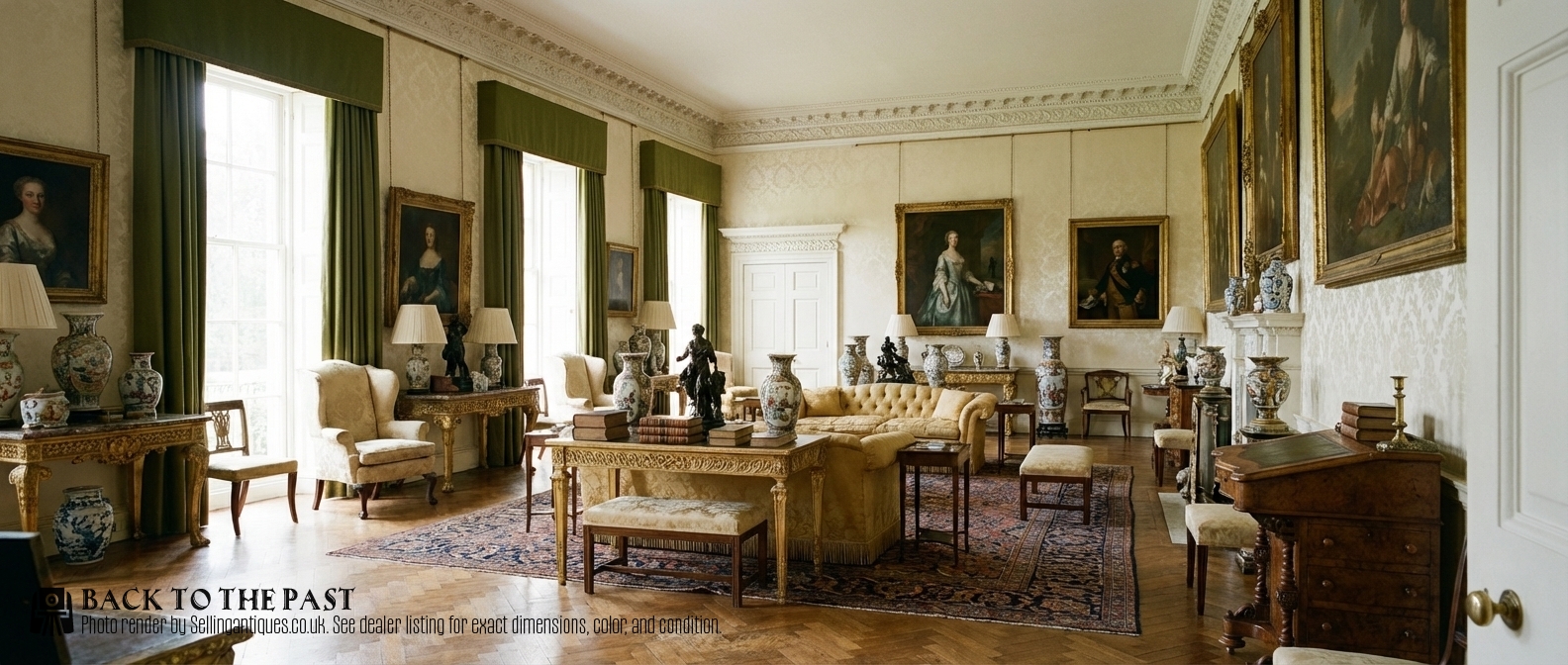
Antique Pedestal Davenport
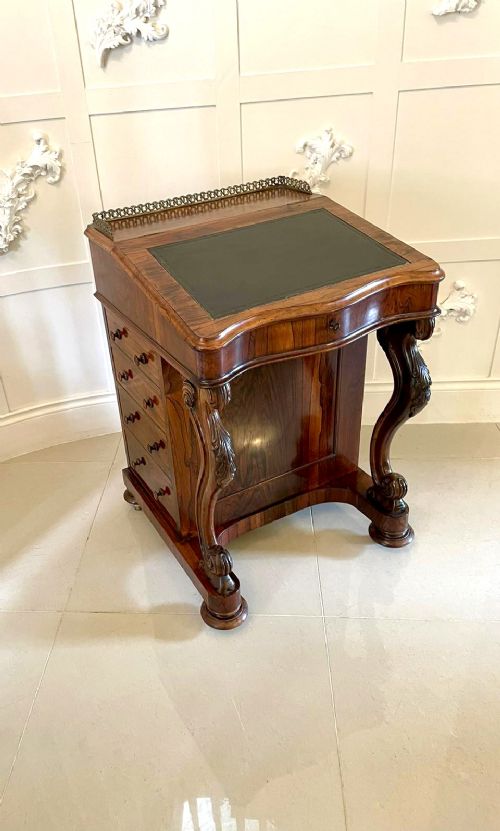
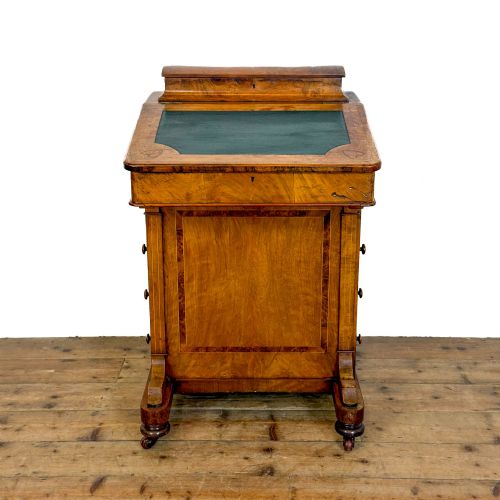
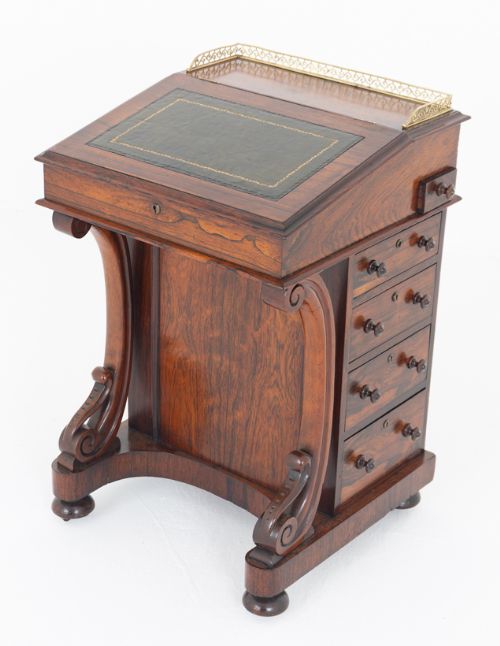
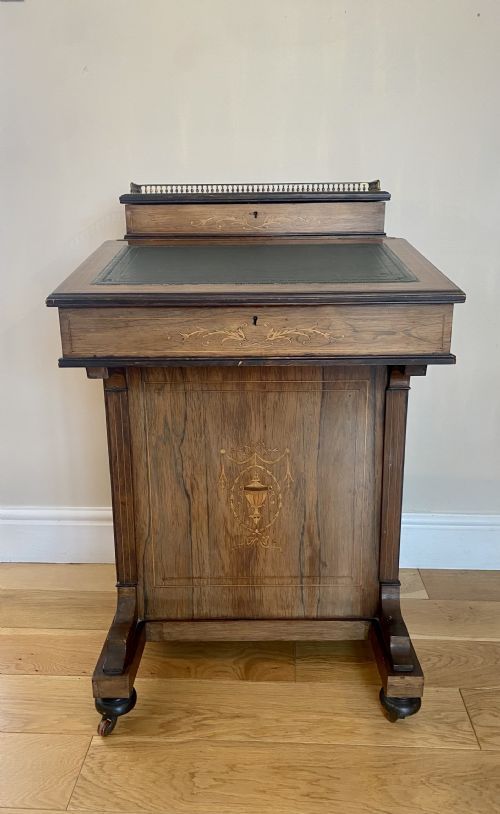
When you search for an antique pedestal davenport, you encounter a specialised writing desk defined by a sloping desk box mounted above a pedestal cabinet. Most pieces on this page stem from the Victorian and Regency periods, spanning the nineteenth century.
The form typically combines a writing slope with a set of side drawers enclosed within a single pedestal base. Variations range from standard freestanding walnut examples to specialised piano top desks and Anglo-Indian variants.
Makers utilised rich timbers like rosewood, mahogany, and burr walnut, often framing the writing surface in leather. The listings also include related forms such as porcelain dessert tureens, though desks remain the primary focus.
Materials and Construction
Cabinet makers built these desks using dense foundational hardwoods like mahogany, oak, and walnut, frequently applying highly figured burr walnut or rosewood veneers to the exterior surfaces. Boxwood inlay and brass hardware provided contrast and structural reinforcement.
Leather inserts lined the sloping writing surfaces to offer a smooth substrate for pen and paper. Internal mechanisms allowed for slide tops, pop-up compartments, and side-opening drawers that kept stationery secure.
Among the wood and leather desks, a ceramic dessert tureen with lid and stand occasionally joins the lineup.
Judging Quality in the Range
Quality rests heavily on the choice of timber and the precision of its application, particularly where burr walnut or figured rosewood veneers show intricate grain patterns. Exhibition pieces display superior carving, such as green man motifs or elaborate boxwood inlay.
The integrity of the internal mechanism distinguishes standard production from superior workshop output. Desks designed by known makers or executed with freestanding finished backs demonstrate a higher tier of original craftsmanship.
Gillows of Lancaster·James Winter and Son·Thomas Turner·James Shoolbred
The Antique Pedestal Davenport Glossary
- Davenport
- A compact pedestal desk featuring a sloping, hinged writing surface above a set of enclosed drawers. This form became popular during the Regency and Victorian eras for writing letters in smaller drawing rooms.
- Burr Walnut
- A timber harvested from the wart-like growths on walnut trees, yielding complex and swirling grain patterns. Cabinet makers prized this wood for veneering the main surfaces of nineteenth-century desks.
- Crossbanded
- A technique where a border of veneer is applied around the main panel with the grain running in a perpendicular direction. This frames the primary timber of the desk lid.
- Ebonised
- Wood treated with a chemical finish or stain to simulate solid ebony. Victorian makers applied this treatment to create stark contrast against inlaid elements.
Antique Pedestal Davenport: Frequently Asked Questions
How were davenports used originally?
These desks served as personal writing stations for correspondence and record-keeping in the home. The sloping top held paper while internal compartments stored ink and pens.
Drawers set into the side of the pedestal held letters and stationery. Their compact footprint made them suitable for smaller reception rooms and parlours.
How do I identify a Victorian davenport?
Victorian models typically feature rich timbers such as burr walnut, mahogany, or rosewood, often complemented by leather writing inserts. Construction details include side-opening drawers and boxwood inlay.
Later Victorian versions may incorporate piano tops or specialised pop-up mechanisms. Earlier Regency examples often display simpler, more rectilinear proportions.
Are davenport desks freestanding?
Many standard davenports have finished backs, allowing them to sit away from a wall in the middle of a room. Others were designed to stand flush against a wall with plain secondary timber at the rear.
Freestanding models generally command higher interest among collectors due to their versatility in room placement.