


Antique Pearlware Platter
An antique pearlware platter brings bold blue transfer-printed scenes to the table, offering a durable and decorative centrepiece for serving.
Antique Pearlware Platter
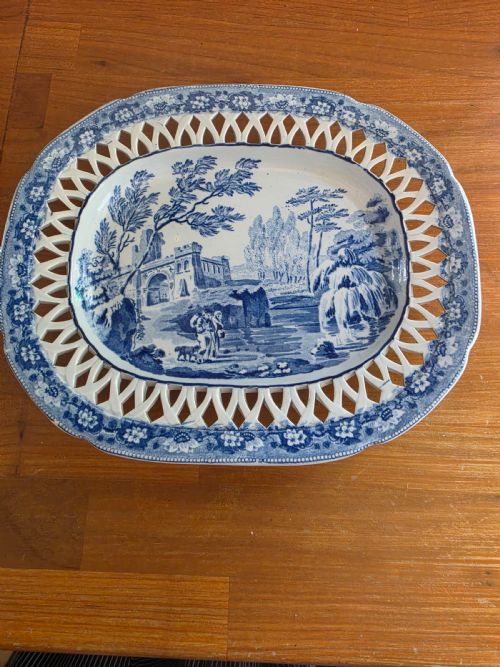
When searching for an antique pearlware platter, buyers encounter large serving dishes shaped for presenting meat or carrying courses to the table. These earthenware items appear primarily in Georgian and Regency styles, alongside later nineteenth-century examples.
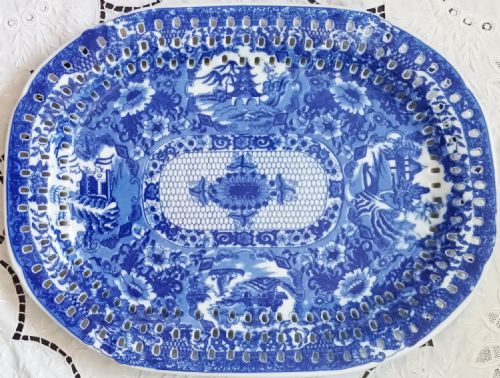
The pieces often feature blue and white transfer printing depicting pictorial motifs, ranging from Willow patterns and Chinoiserie landscapes to topographical views such as the Bridge of Lucano or Fair Mount near Philadelphia. Forms include standard serving platters, pierced net pattern dishes, and carving platters fitted with reservoirs.
Originating largely from English potteries, these ceramics bridge the gap between utilitarian kitchenware and decorative table service. Buyers find examples stamped or associated with makers such as Spode, Davenport, and Thomas Lakin.
Materials and production methods
These items are constructed from earthenware and pearlware, coated in a glaze that tends to pool with a slight bluish tint in crevices. Cobalt pigment is applied under the glaze to create the characteristic blue and white transfer-printed designs.
Potters shape the clay into large platters, chargers, and serving dishes, sometimes incorporating pierced borders or draining wells. Firing in kilns sets the ceramic body and fixes the transfer-printed patterns beneath the glassy surface.
Several platters depict exotic elephants and classical ruins, proving that early nineteenth-century diners enjoyed a heavy side of imagination with their roast beef.
Qualities of distinction
The clarity and registration of the transfer print dictate much of the visual appeal, with crisp cobalt lines outperforming blurred or smudged impressions. The complexity of the moulded form, such as pierced fretwork borders or integrated carving wells, also separates standard service platters from ambitious exhibition pieces.
The presence of clear maker marks or identifiable historical patterns provides greater attribution and interest for collectors. Additionally, the overall smoothness of the glazed ceramic surface and the stability of the earthenware body influence the desirability of each individual piece.
Davenport·Thomas Lakin·Brameld and Co·John Rogers and Son·Spode
The Antique Pearlware Platter Glossary
- Pearlware
- A refined earthenware developed in the late eighteenth century, featuring a thin glaze containing a small amount of cobalt to mask the natural cream colour of the clay. This material serves as the primary canvas for blue and white transfer-printed tableware.
- Transfer printing
- A method of decorating ceramics by engraving a design onto a copper plate, pulling the image with pigment on paper, and transferring it onto the unglazed or bisque ceramic body. This technique allowed for intricate pictorial scenes to be reproduced consistently.
- Chinoiserie
- A European artistic style reflecting Chinese motifs and imaginary landscapes, frequently utilised on early nineteenth-century earthenware. These patterns show pavilions, bridges, and figures within pastoral settings.
- Reservoir
- A well or trough moulded into the surface of a carving platter to collect meat juices during service. It represents a practical design innovation found on larger dining table dishes.
- Earthenware
- A porous ceramic fired at lower temperatures, requiring a vitreous glaze to become watertight. It forms the structural base for both pearlware and ironstone items.
Antique Pearlware Platter: Frequently Asked Questions
What is pearlware?
Pearlware is a refined type of earthenware developed by English potters to rival Chinese porcelain. It uses a clear glaze tinted with cobalt to create a bright, pale appearance.
This material forms the foundation for many blue and white serving dishes produced during the Georgian and Regency periods.
How were these platters used?
These platters served main courses at the dining table, particularly large joints of meat. Some specialised examples included draining wells or reservoirs to catch juices during carving.
Beyond dining, larger chargers and decorated dishes were displayed on sideboards or hung as decorative wall pieces.
How do I care for antique pearlware?
Wash these ceramic pieces gently by hand using mild soap and warm water. Avoid abrasive scrubbers or modern dishwashers to protect the historic glaze and earthenware body.
Display them securely on stable surfaces or use specialist plate hangers if mounting them on a wall.
Are all blue and white dishes pearlware?
Not all blue and white ceramics are pearlware, as later nineteenth-century pieces often utilise ironstone or standard earthenware bodies. The subtle blue pooling in the glaze helps distinguish pearlware from other ceramic types.
Checking the weight, glaze characteristics, and potting style clarifies the specific material used.