



Antique Pastoral Watercolour
When you seek an antique pastoral watercolour, you invite a tranquil slice of nineteenth and early twentieth-century rural life onto your wall.
Antique Pastoral Watercolour
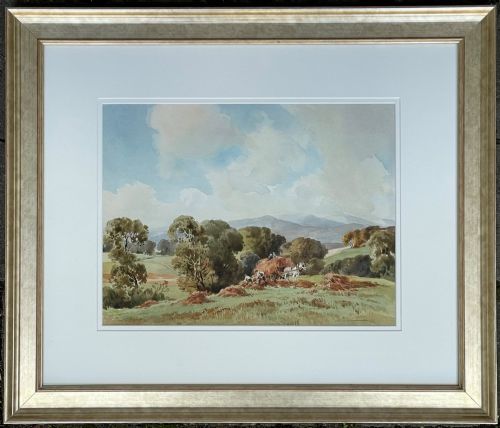
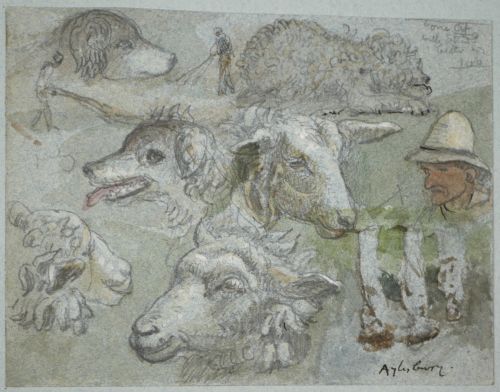
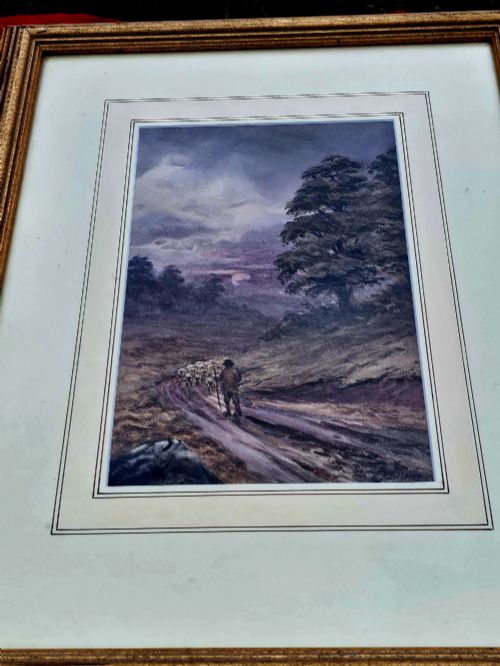
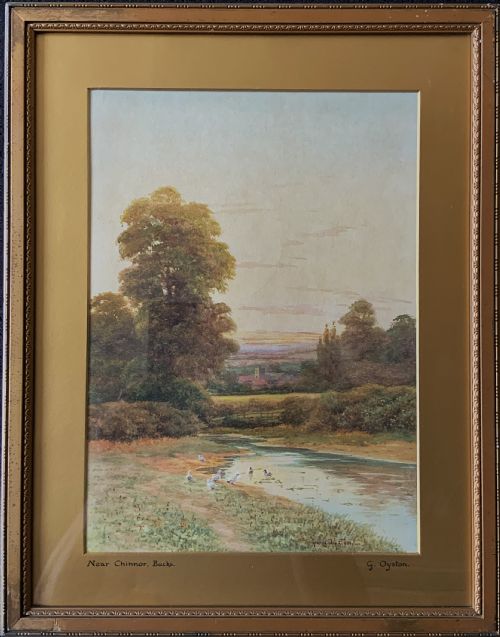
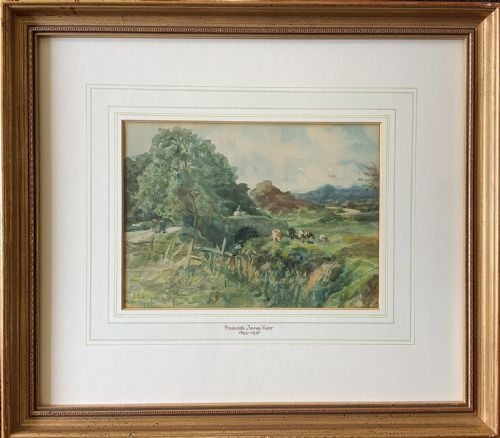
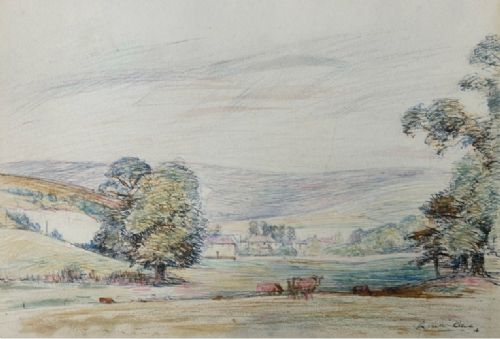
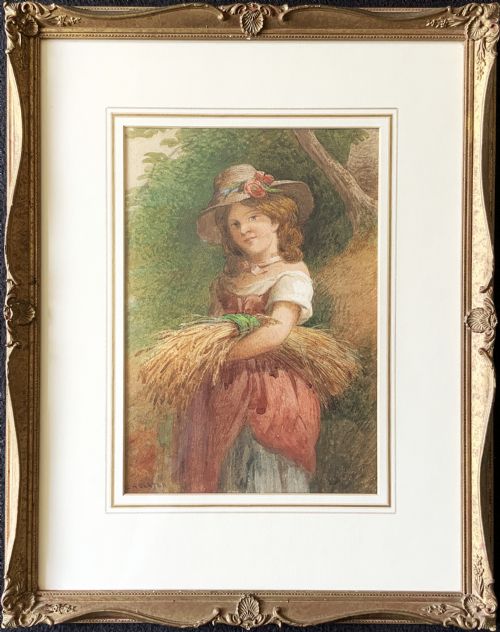
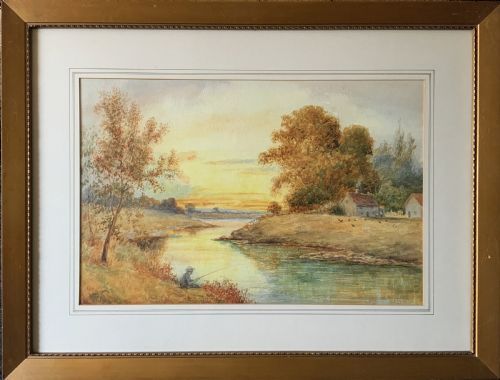
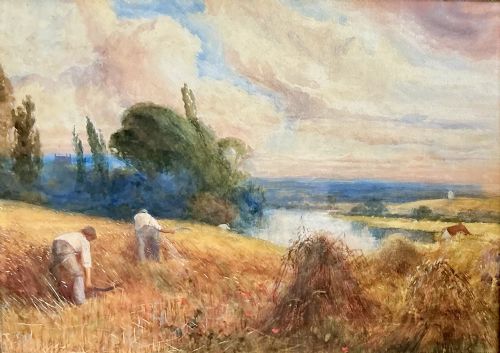
An antique pastoral watercolour captures traditional rural life, river scenes, and farming landscapes across the nineteenth and early twentieth centuries. These artworks depict scenes such as herding sheep to market, harvesting by the river, and cattle watering in the countryside.
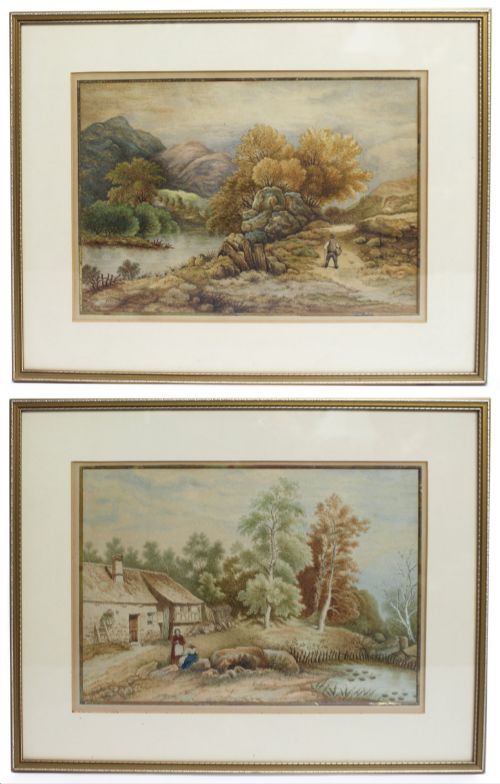
The pieces on this page span several decades, stretching from the Victorian era into the Edwardian period and the early twentieth century. Common subjects include thatched cottages by streams, haymaking, and working animals in fields across English, Welsh, and Scottish locations.
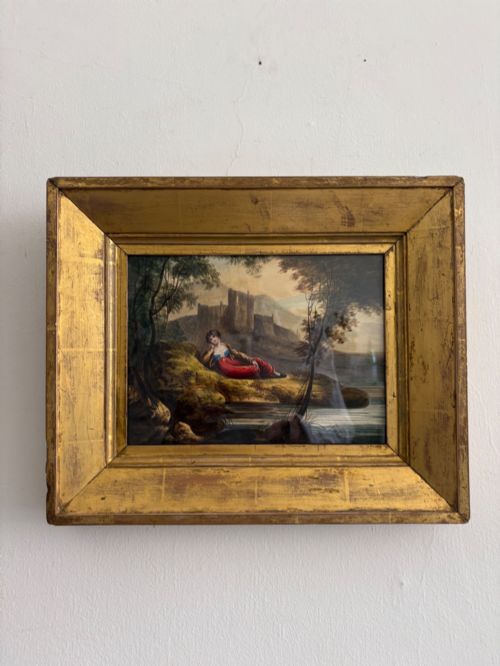
Most examples are framed paintings on paper, often preserved behind glass within wooden frames, occasionally adorned with gold leaf. They range from intimate domestic studies to larger framed landscapes produced by named artists and regional British schools.
How They Were Made
Artists applied watercolour pigment onto paper using fine brushes to build transparent washes and detailed linework. Many works incorporate preparatory graphite drawing beneath the paint layers to define architectural elements, figures, and livestock.
Finished paintings were secured behind glass to protect the delicate pigments from dust and moisture. Framemakers then housed the works in wood frames, frequently applying gold leaf or gilt finishes to complement the tones of the composition.
The inventory records traditional British fine art styles, including the Victorian Idyllic School and the Pre-Raphaelite Movement.
What Varies in Quality
Quality rests in the handling of light, atmospheric depth, and the precision with which the artist renders anatomical forms in figures and animals. Superior works demonstrate confident brushwork that captures movement in water, foliage, and livestock rather than rigid mechanical copying.
The preservation of the paper and the vibrancy of the original pigment also distinguish finer examples from faded or heavily discoloured sheets. Original framing and contemporary documentation or signatures further elevate the standing of an individual piece.
Percy Lancaster·James Smetham·George Oyston·Charles Henry Slater·Philip Richard Morris·Oswald Garside·Cornelius Pearson·Henry Charles Fox·James William Booth·Ernest Pile Bucknall·Thomas Hunn·James Orrock·James Hardy Junior·Robert Thorne Waite·John Atkinson·Helena Maguire·Alfred Grey·George Soper·Harold Lawes·Bernard Walter Evans·Edmund George Warren·William Stephen Coleman·Harry Sylvester Stannard·Will Anderson·Percy Robertson
The Antique Pastoral Watercolour Glossary
- Watercolour pigment
- Finely ground colour particles suspended in a water-soluble binder, applied to paper to create translucent layers of paint.
- Gilt wood
- Timber framing treated with a thin layer of gold leaf or metallic paint to create a decorative golden surface around the artwork.
- Victorian Pastoral
- A nineteenth-century artistic style focusing on idealized rural scenes, agricultural labour, and peaceful countryside vistas during the reign of Queen Victoria.
- Grisaille
- A painting executed entirely in shades of grey, neutral grey, or monochromatic tones to imitate sculpture or create a moody atmospheric effect.
- Wash
- A thin, transparent layer of diluted watercolour pigment spread evenly across the paper to represent skies, water, or distant hills.
Antique Pastoral Watercolour: Frequently Asked Questions
What subjects appear in pastoral watercolours?
These watercolours primarily depict traditional agricultural life, including harvesting crops, herding cattle, and tending sheep near rivers and cottages. Artists also recorded specific rural landmarks across English, Welsh, and Scottish landscapes.
Human figures engaged in daily farm work, such as hay cutting and ploughing, frequently share the composition with domestic animals and pastoral scenery.
How do I care for antique watercolours?
Protect the paper and pigments by hanging the artwork away from direct sunlight and damp environments. Ultraviolet light causes watercolour pigments to fade permanently over time.
Keep the original glass intact and avoid using liquid cleaners on the wooden or gilt frames. Professional framing using acid-free backing materials helps preserve the paper.
How do I identify the period of a painting?
Examine the framing style, the type of paper support, and any inscriptions or signatures recorded on the front or verso of the work. Victorian and Edwardian pieces often reflect the specific dress and agricultural techniques of their decade.
Artists' biographical dates provided in titles or signatures offer a reliable window into when a particular landscape was painted.
Were these paintings always framed?
Most surviving watercolours were framed relatively soon after completion to protect the vulnerable paper surface from environmental damage. Many retain their original period wooden or gilt frames.
Alternative mountings sometimes included card mats behind glass, though decorative timber surrounds remained the standard presentation for domestic display.