


Fine Art Watercolour Picture
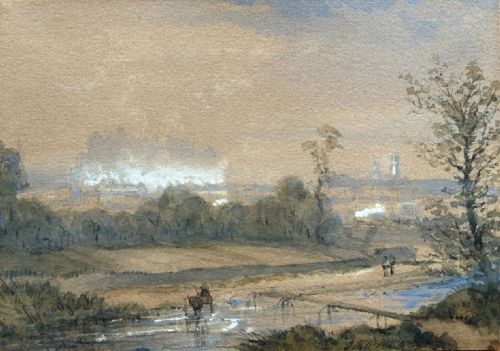
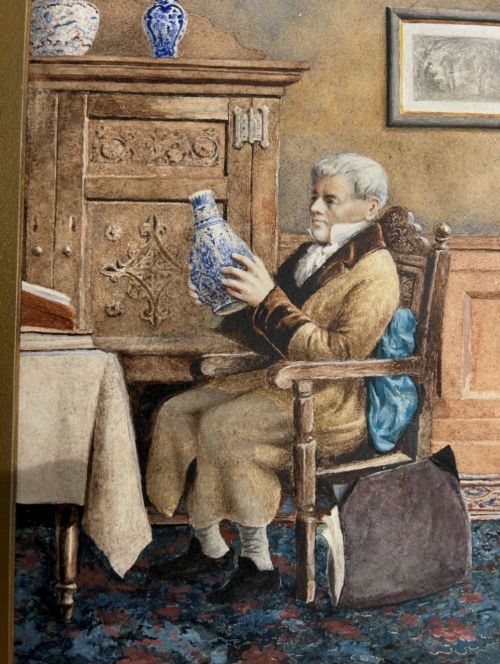
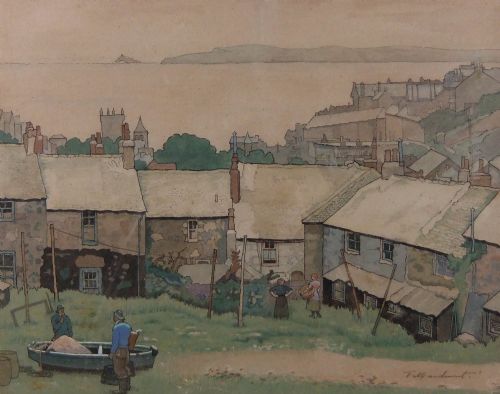
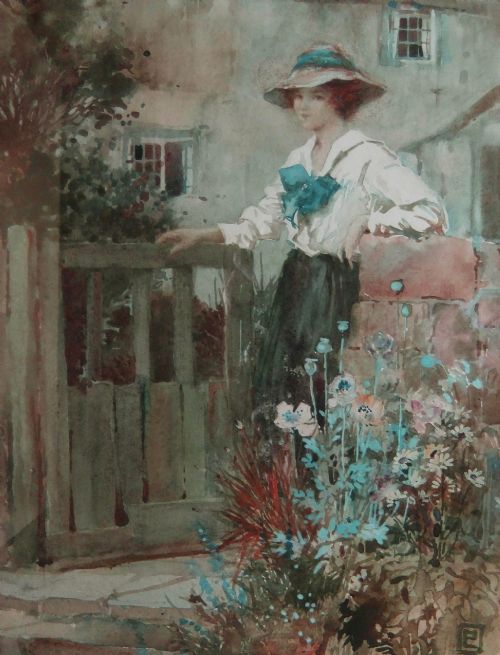
Fine art watercolour picture works span the Victorian, Edwardian, and mid-twentieth-century periods, offering buyers historic landscapes, coastal scenes, and detailed portraits executed on paper.
Fine Art Watercolour Picture
When searching for a fine art watercolour picture, a buyer encounters original works executed on paper, spanning from the Georgian and Victorian eras through the Edwardian period and into the mid-twentieth century. These pieces record landscapes, coastal inlets, marine views, and intimate portrait miniatures painted by named artists and regional practitioners.
The most common examples on this page are nineteenth-century and early twentieth-century British landscapes, topographical scenes of towns and rivers, and maritime watercolours framed in period wood and gilt mouldings. Portrait miniatures and figurative studies also appear, representing both formal sitters and everyday rural life.
How they were made
These works utilise watercolour pigment applied directly to paper supports, sometimes protected behind glass within wooden or gilt frames. Artists built up transparent washes and opaque bodycolour to achieve depth in landscapes, architectural views, and figurative compositions.
Framing materials typically comprise period wood and gilt wood mouldings that secure the paper surface away from the glass. The physical construction relies on traditional paper mounting and framing techniques appropriate to the nineteenth and early twentieth centuries.
Listings feature works created across the nineteenth and twentieth centuries, including Victorian, Edwardian, and Modern British styles.
What varies in quality
Quality in a fine art watercolour picture rests upon the artist's handling of pigment, the preservation of the paper support, and the strength of the composition. Works by established practitioners demonstrate confident brushwork, precise topographical detail, and harmonious tonal balance across the paper.
The sophistication of the framing and the preservation of the original pigments under glass further distinguish the better examples. Stronger pieces retain clear signatures, crisp details in figures or architecture, and minimal fading across the watercolour washes.
John R Prentice·Henry Stacy Marks·Thomas Maidment·Percy Lancaster·Cornelius Pearson·Charles Gregory·Arthur Tucker·Frederick Buck·Robert Winchester Fraser·Robert Buchan Nisbet·Nora Cundell·Emil John Hess·George Kilburne·B Kaufmann·John McDougal·Charles H Poingdestre·William Bradley·Arturo Orselli·Joseph Kirkpatrick·Tom Dudley·Frank W Scarborough·Hirst Walker·David Law·Fernand Toussaint·William Knox
The Fine Art Watercolour Picture Glossary
- Watercolour paint
- A medium consisting of colour pigments suspended in a water-soluble vehicle, applied to paper to create translucent washes or opaque passages.
- Portrait miniature
- A small, highly detailed painting, often executed on paper or ivory during the Georgian and Victorian periods, depicting an individual sitter.
- Gilt wood
- Wood framing treated with gold leaf or a metallic gilt finish, commonly used to house nineteenth-century and Edwardian paintings.
- Topographical landscape
- A specific view depicting a recognisable real place, town, or river, executed with attention to geographical and architectural accuracy.
- Bodycolour
- Watercolour paint mixed with a white pigment to make it opaque, allowing artists to add highlights and solid passages to a picture.
Fine Art Watercolour Picture: Frequently Asked Questions
How old are these watercolours?
The pieces span from the Georgian and Victorian eras through the Edwardian period up to the mid-twentieth century.
Most examples date from the late nineteenth and early twentieth centuries, reflecting the popular periods for British watercolour painting.
Are the frames original?
Many watercolours are presented in period wooden or gilt wood frames that match the era of the artwork.
These frames protect the paper behind glass and help anchor the piece within its historical context.
What subjects are most common?
Landscapes, coastal views, river scenes, and architectural subjects dominate the available works.
Portrait miniatures and figurative studies of people also appear frequently across the selection.
How should I care for a watercolour?
Keep the framed picture away from direct sunlight to prevent the watercolour pigments from fading on the paper.
Ensure the room maintains stable humidity to protect both the paper support and the wooden frame.