


Victorian Pastoral Livestock Artwork
Victorian pastoral livestock artwork brings rural nineteenth-century farming scenes directly into the home through oil paintings and watercolours.
Victorian Pastoral Livestock Artwork
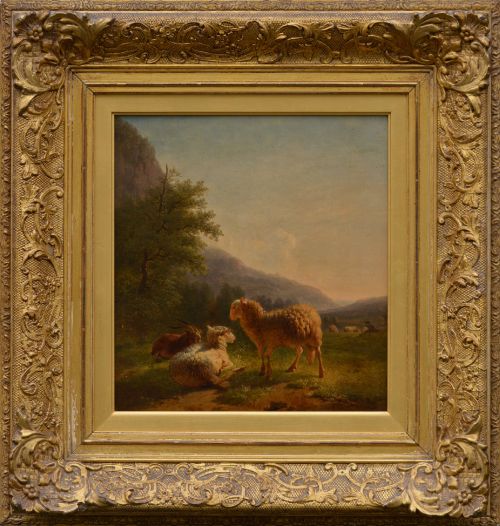
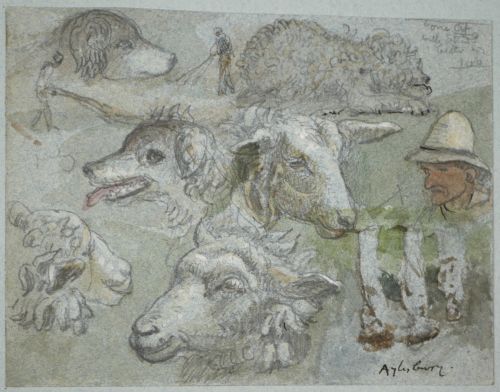
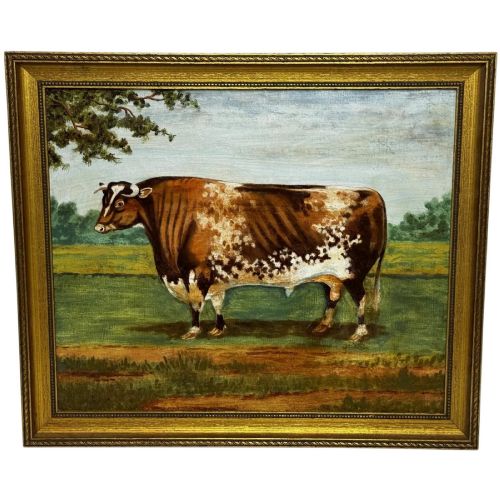
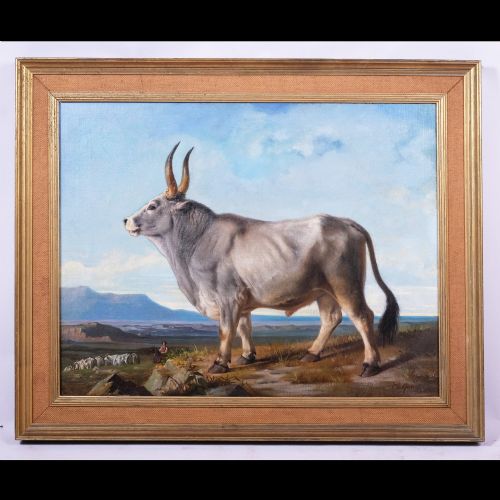
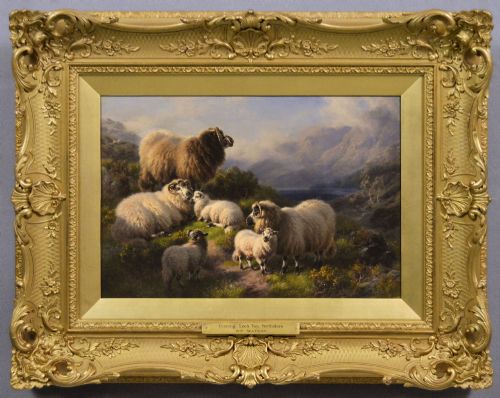
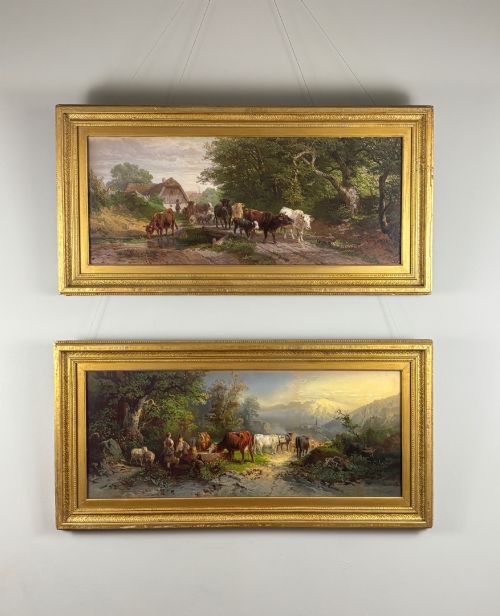
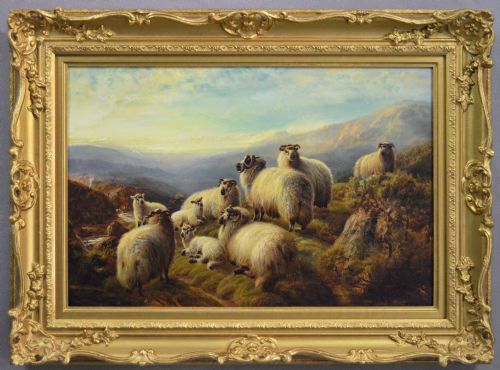
When seeking out Victorian pastoral livestock artwork, buyers encounter framed paintings depicting cattle, sheep and horses in rural landscapes. These works capture nineteenth-century agricultural life, focusing on animals resting in fields, riversides and Highland glens.
The pieces available most frequently take the form of oil paintings on canvas, alongside watercolours on paper. Many are set within period giltwood and gesso frames that match the age of the canvas.
Origins span British and continental European schools, with specific regional settings ranging from Scottish highlands to Kentish coastlines and Welsh valleys.
Materials and methods
Makers built these works using oil paint applied to stretched canvas or watercolour pigments on paper supports. Canvas pieces frequently sit inside heavy wood frames finished with gesso mouldings and gold leaf gilding.
Techniques rely on nineteenth-century realism and romanticism to render animal anatomy and rural light accurately. Artists layered oil paint to create texture in wool, hides and landscape foliage.
Sheep gather on clifftops and bulls survey rivers, proving livestock possessed better views than most Victorians.
Qualities of execution
Distinction across these pieces lies in the precision of animal anatomy and the handling of atmospheric light in the surrounding landscape. Stronger examples display careful observation of posture in cattle and sheep, whereas weaker works rely on rigid repetition.
The integration of livestock into the broader topography separates accomplished pastoral scenes from routine farmyard compositions. Framing also contributes, with original giltwood and gesso surrounds holding greater visual integrity than later replacements.
Eugène Verboeckhoven·James Smetham·William Watson Jnr·Johann Friedrich Voltz·Robert Watson·A M Gauci·William Henry Mander·Thomas Sidney Cooper·Franz van Severdonck·Andre de Moller·Arthur Charles Dodd·Claude Cardon·John W Morris·Frederick Richard Lee·Henry Brittan Willis·Henry Cheadle·William Sidney Cooper·Charles Jones·William Huggins·A Davis·Louis Marie Dominique Robbe·Thomas E Francis
The Victorian Pastoral Livestock Artwork Glossary
- Oil on Canvas
- Pigment bound in drying oil applied to a woven fabric support stretched over a wooden frame. This method allows for rich colour blending and textured brushwork.
- Giltwood
- Wood that has been coated with a thin layer of gold leaf or gold paint. It forms the decorative surface of period frames.
- Gesso
- A paint mixture consisting of a binder mixed with chalk, gypsum, or pigment. It is applied to wooden frames to create a smooth surface for gilding.
- Pastoral
- A genre of art depicting rural life, shepherds, and farm animals in an idealized or natural landscape. These scenes emphasise peaceful country settings.
Victorian Pastoral Livestock Artwork: Frequently Asked Questions
What subjects appear in these pastoral works?
Paintings show cattle, sheep and horses situated in fields, riversides, barns and mountainous terrain. Human figures such as shepherds and farm workers occasionally accompany the animals.
Settings range from specific named locations in Scotland, Wales and Kent to general rural and farmyard scenes.
How do I identify the period of the artwork?
Dates rely on nineteenth-century stylistic conventions, artist signatures, and framing materials such as gesso and giltwood. Most pieces originate from the Victorian era up to around nineteen-twenty.
Subject matter focusing on idealized rural labour and livestock matches the exhibition tastes of the nineteenth century.
Are these works painted on canvas or paper?
The listings feature both oil on canvas and watercolour on paper. Oil paintings often include textured brushwork on stretched linen.
Watercolours utilise paper supports and are typically displayed beneath glass within framed presentations.
How should I display these frames at home?
Pieces housed in giltwood and gesso frames suit traditional or period interiors where wood furniture predominates. Direct sunlight should be avoided to protect oil paint and paper watercolours.
Wall placement benefits from stable indoor humidity to preserve the wooden stretchers and frames.