



Victorian Livestock Painting
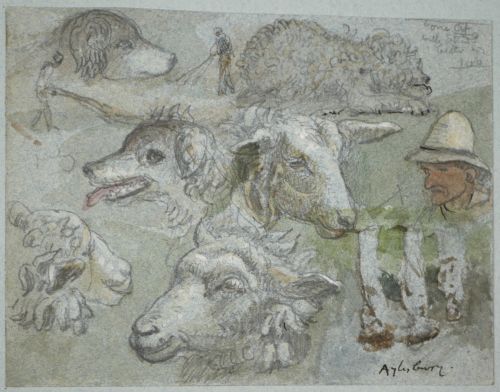
When you search for victorian livestock painting, you encounter agricultural portraiture and pastoral scenes executed in oil and watercolour during the nineteenth century.
Victorian Livestock Painting
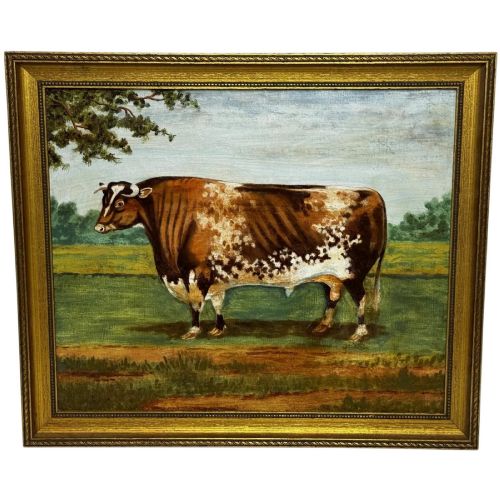
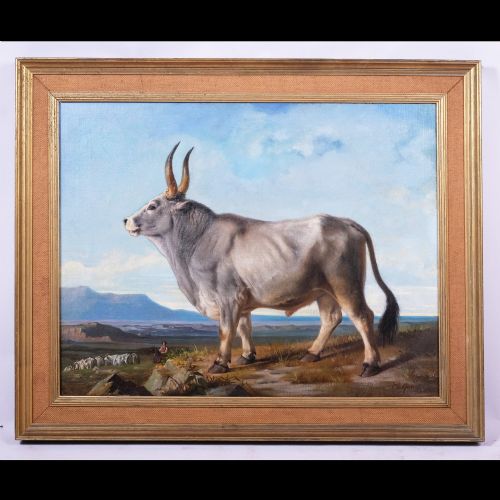
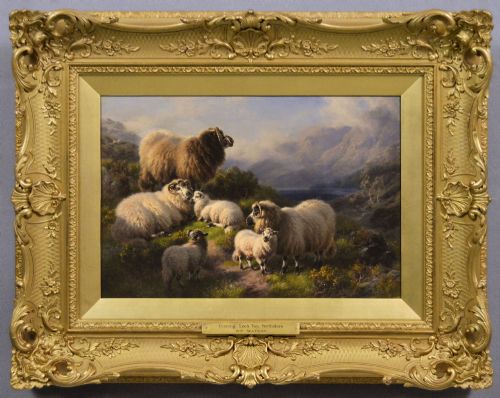
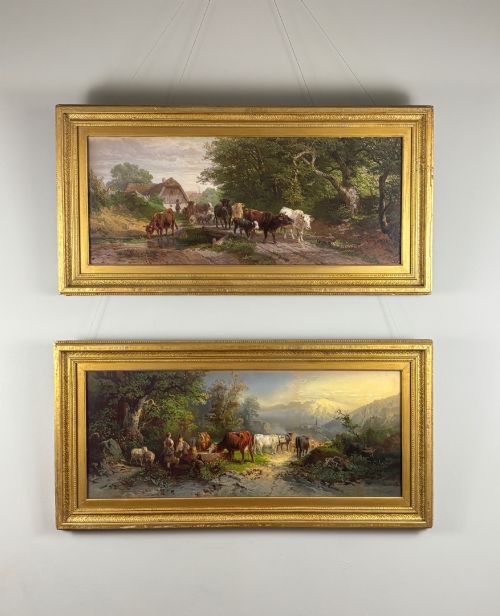
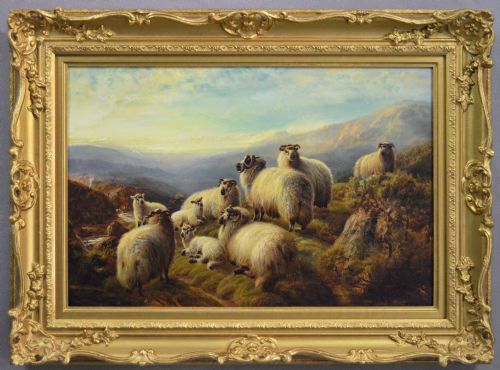
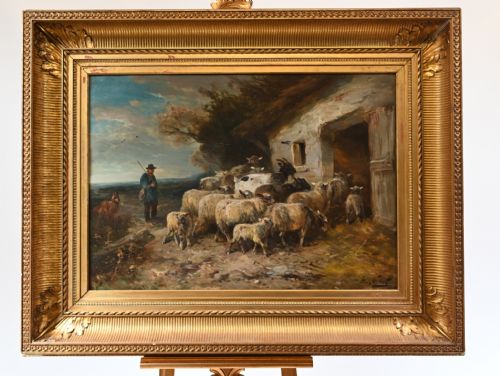
A victorian livestock painting typically depicts prized cattle, sheep, horses, and poultry within pastoral, Scottish Highland, or farmyard landscapes. These works reflect the agricultural ambitions and rural sentiment of the nineteenth century.
You will encounter pieces ranging from detailed studies of shorthorn bulls and highland cattle to tranquil riverbank scenes featuring grazing flocks. The majority utilise oil on canvas or paper-based watercolours, framed in contemporary giltwood moulding.
Materials and technique
The medium relies primarily upon oil paint applied to stretched canvas, alongside watercolour on paper for lighter landscape compositions. Gesso and gold leaf frequently finish the wooden frames enclosing these artworks.
Artists built depth through layered brushwork, rendering animal anatomy and rural textures with close observation. Canvas supports were occasionally prepared with gesso before the application of pigments.
Listings feature works spanning the nineteenth century alongside pieces dated into the early twentieth century, utilising oil on canvas and watercolour.
Judging execution and finish
Quality rests upon the artist's command of animal anatomy, lighting, and textural realism in the fleece or hide. Stronger examples capture the individual character of the beast within a coherent landscape rather than relying on formulaic repetition.
The integrity of the canvas, the subtlety of the oil paint layers, and the preservation of the original giltwood frame influence the overall standing of a piece. Finer works display confident handling of pastoral light, whereas weaker output appears stiff and perfunctory.
Eugène Verboeckhoven·James Smetham·William Watson Jnr·Johann Friedrich Voltz·Robert Watson·Henry Schouten·A M Gauci·William Henry Mander·Thomas Sidney Cooper·Franz van Severdonck·Andre de Moller·Charles Jones·Arthur Charles Dodd·Claude Cardon·John W Morris·Frederick Richard Lee·Henry Brittan Willis·Edgar Hunt·Henry Cheadle·William Sidney Cooper·W A Clark·William Huggins·A Davis·Aster Richard Chilton Corbould
The Victorian Livestock Painting Glossary
- Animalier
- A term describing artists who specialised in the realistic portrayal of animals. Such works frequently focus on livestock or working beasts set within rural environments.
- Giltwood
- Timber carved and surfaced with a thin layer of gold leaf. It forms the decorative framing commonly found around nineteenth-century paintings.
- Gesso
- A plaster-like preparation mixture used to coat wood or canvas before painting or gilding. It provides a smooth surface for subsequent layers.
- Pastoral
- Pertaining to the countryside, rural life, and domestic farm animals. These scenes romanticise agricultural pursuits and pastoral landscapes.
Victorian Livestock Painting: Frequently Asked Questions
What defines a victorian livestock painting?
These artworks depict domesticated farm animals such as cattle, sheep, and poultry within nineteenth-century rural or Highland settings. They combine animal portraiture with landscape traditions.
Created primarily in oil on canvas or watercolour, the style ranges from precise anatomical studies of prize bulls to atmospheric pastoral scenes.
Where were these paintings displayed originally?
Landowners, farmers, and urban collectors hung these works in country houses and town residences to signal agricultural success and an appreciation of rural life.
Large canvases often occupied prominent positions in reception rooms, while smaller watercolours suited intimate drawing rooms.
How do I date a nineteenth century painting?
Dating relies upon artist signatures, exhibition records, framing materials, and the canvas stubs or stamps on the reverse. Costume and agricultural breeds depicted also offer clues.
Stylistic shifts between mid-century realism and later romanticism help narrow the execution period further.
How do I care for an oil on canvas?
Keep the artwork away from direct sunlight, damp environments, and rapid temperature fluctuations to protect the canvas and oil paint layers. Maintain stable indoor conditions.
Dust the surface gently with a soft, dry brush and avoid liquid cleaners on both the canvas and the giltwood frame.