
Antique Paraffin Lighting
Antique paraffin lighting brings nineteenth-century warmth into modern rooms through heavy brass columns, painted porcelain fonts, and coloured glass shades.
Antique Paraffin Lighting
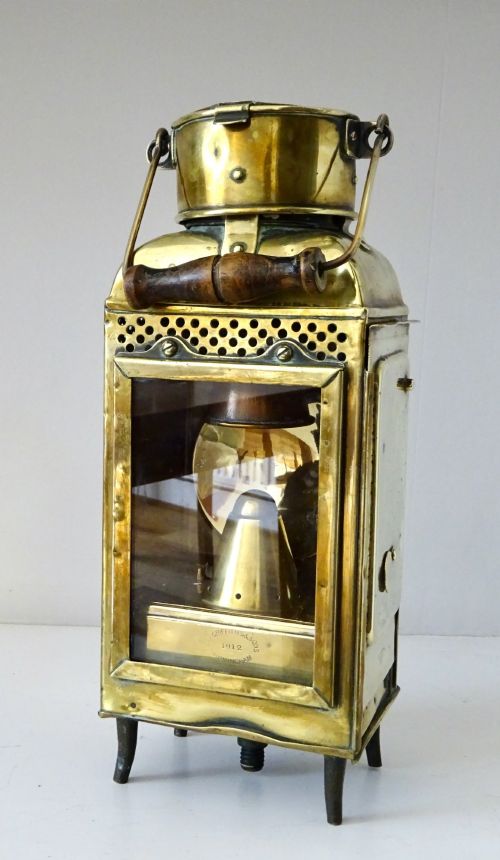
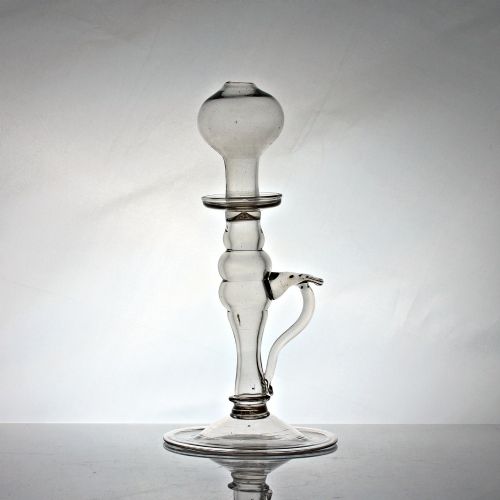
Collectors seeking antique paraffin lighting encounter oil lamps, table lamps, ceiling lights, and replacement lamp shades spanning the Victorian and Edwardian eras. These pieces range from simple glass vessels to large column lamps designed to illuminate nineteenth-century interiors.
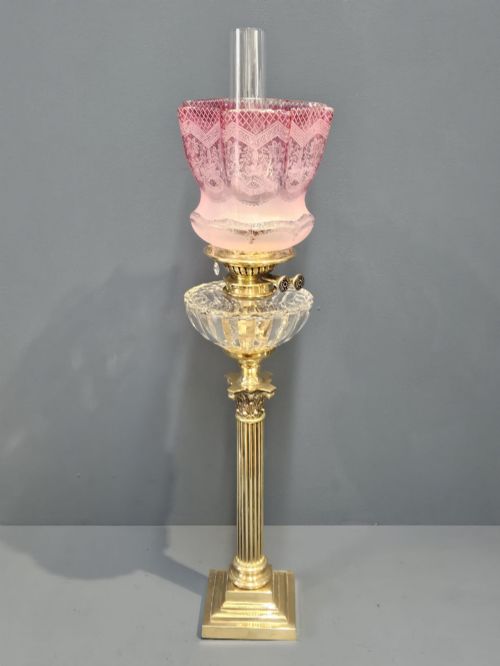
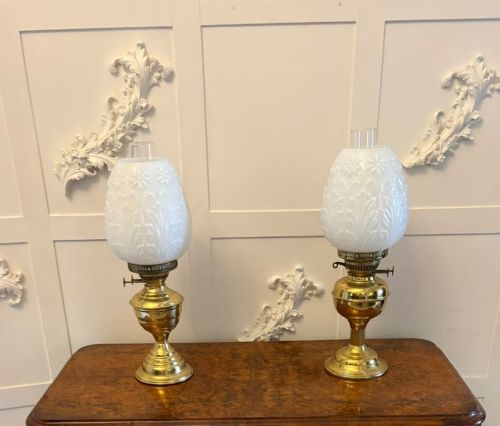
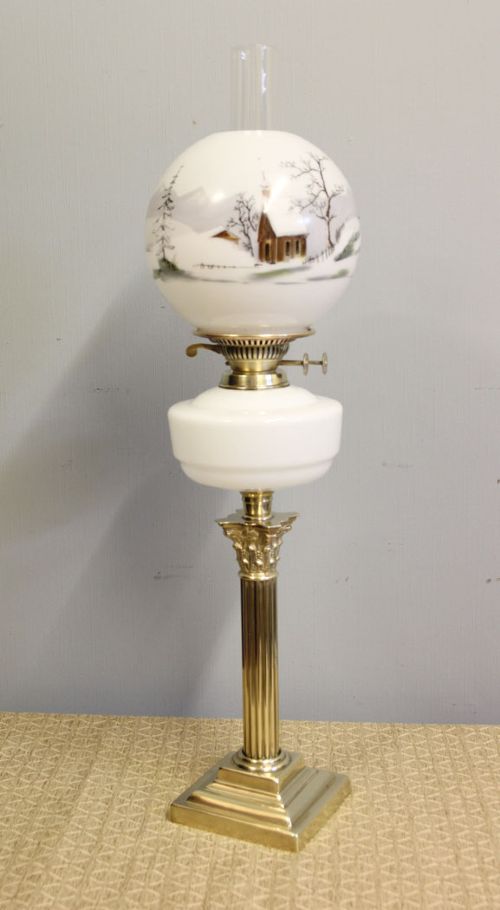
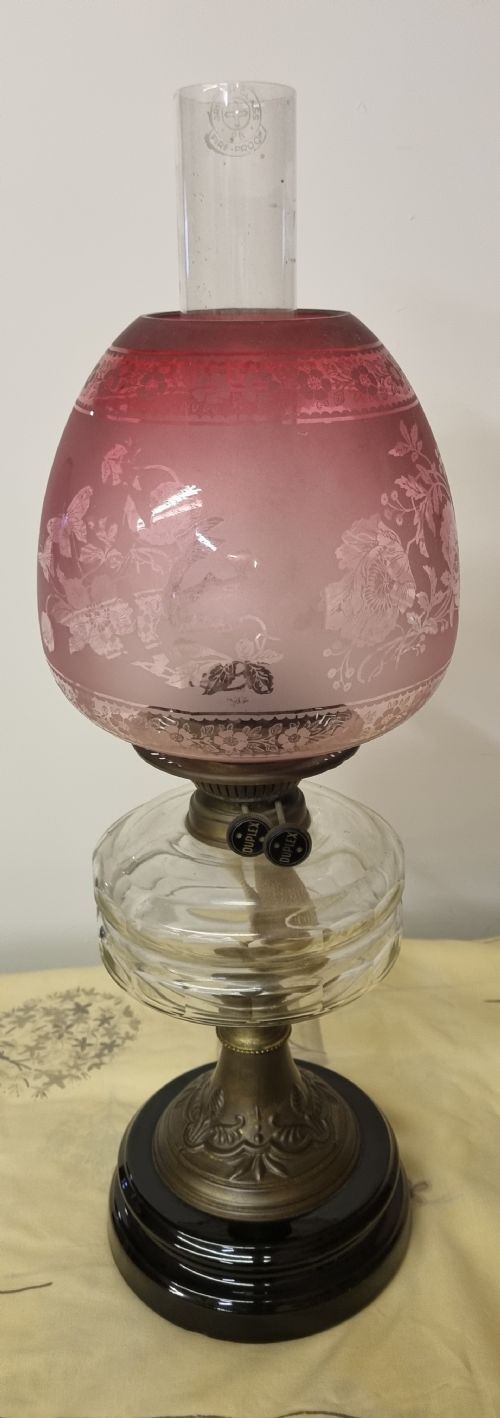
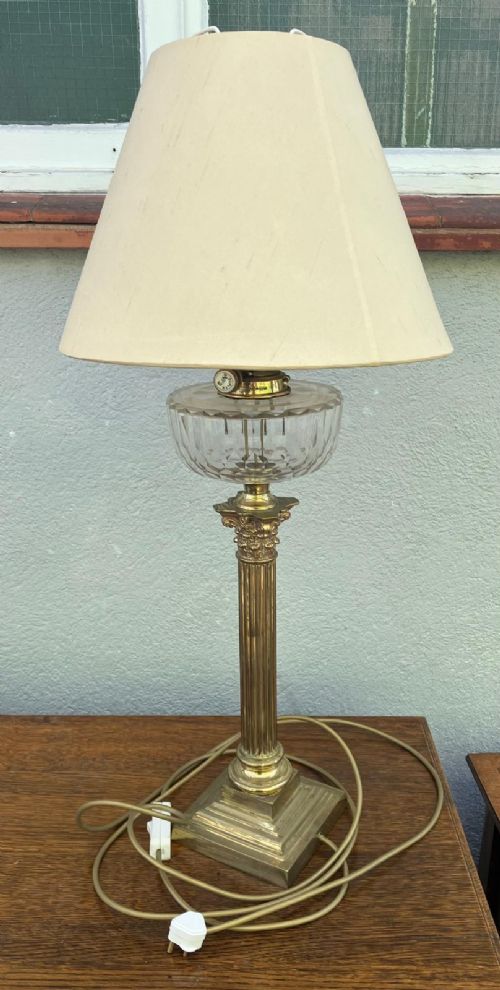
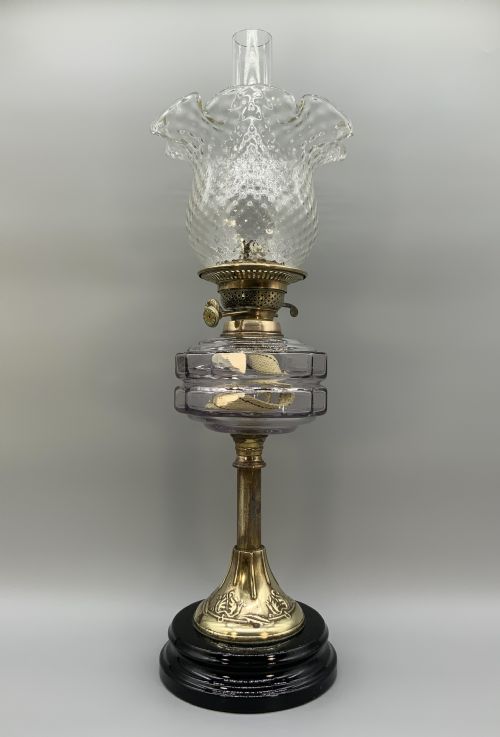
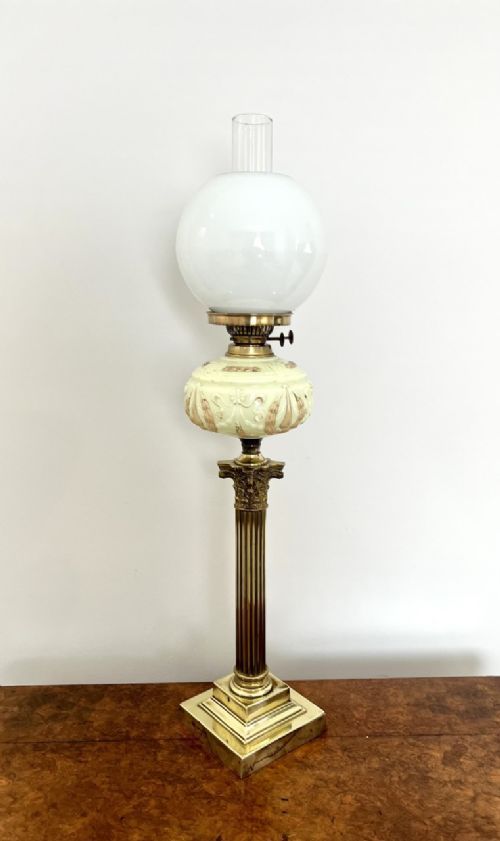
The most common examples on this page are Victorian and Edwardian brass table lamps fitted with glass fonts and matching shades. Pieces from the eighteen-eighties and eighteen-nineties frequently feature Corinthian columns and double burners.
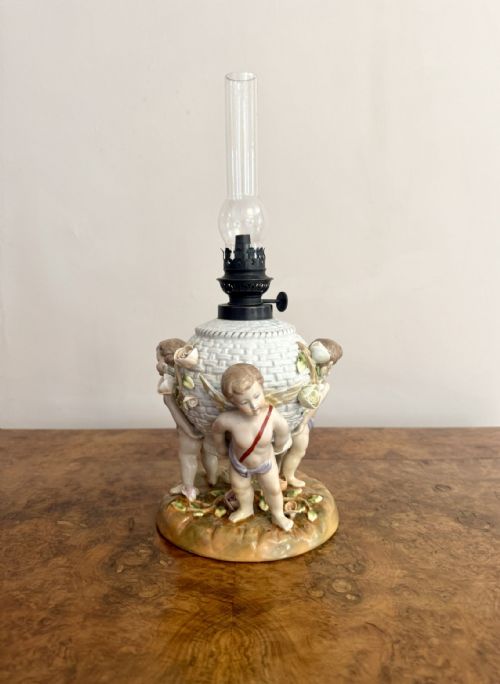
Beyond standard table lamps, the selection includes hanging ceiling lights with opaline shades, figural porcelain bases, and specialised designs such as duplex and twin-burning models.
Materials and construction
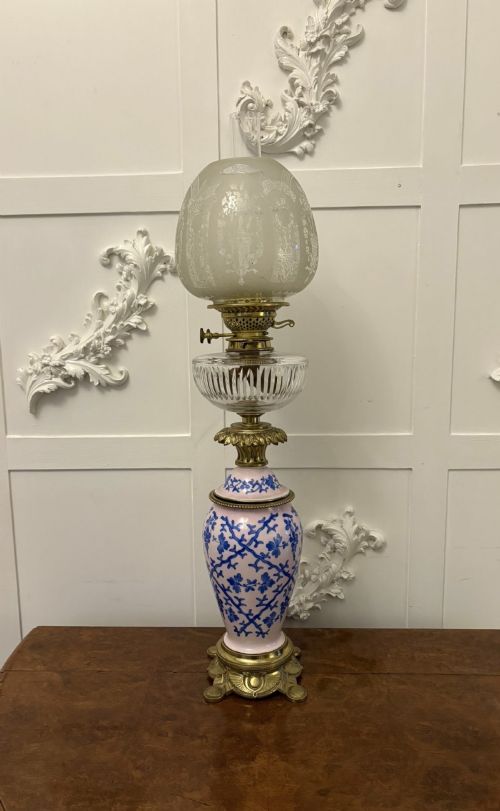
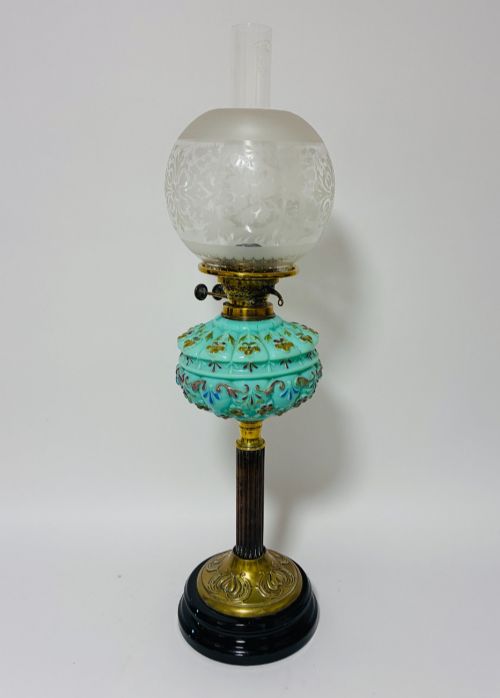
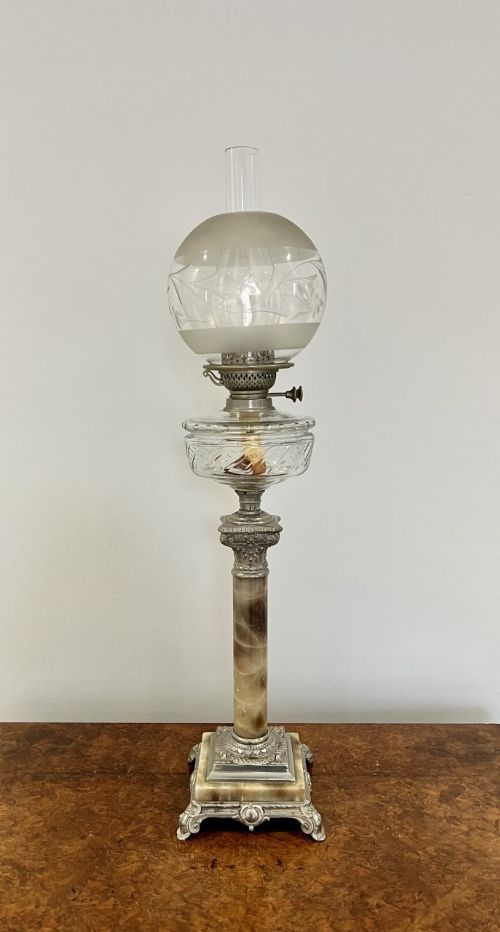
Makers built these lamps using heavy cast brass for columns and bases, paired with hand-blown or etched glass for fonts and shades. Ceramic and porcelain bodies, including glazed figures and painted font reservoirs, added colour and weight to the metal structures.
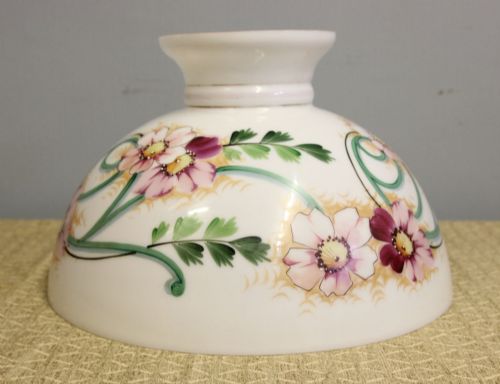
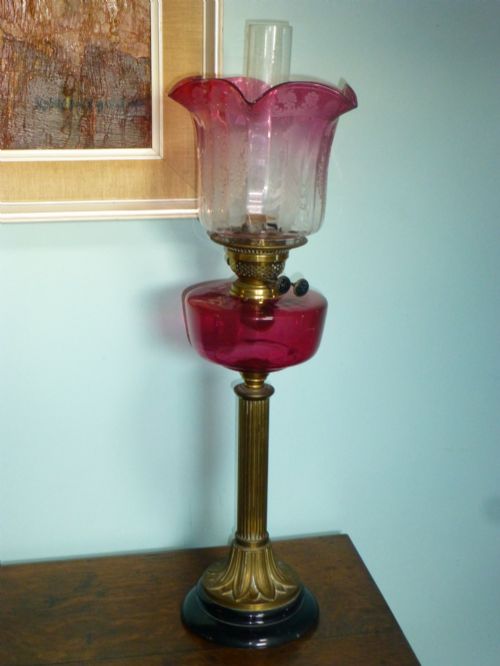
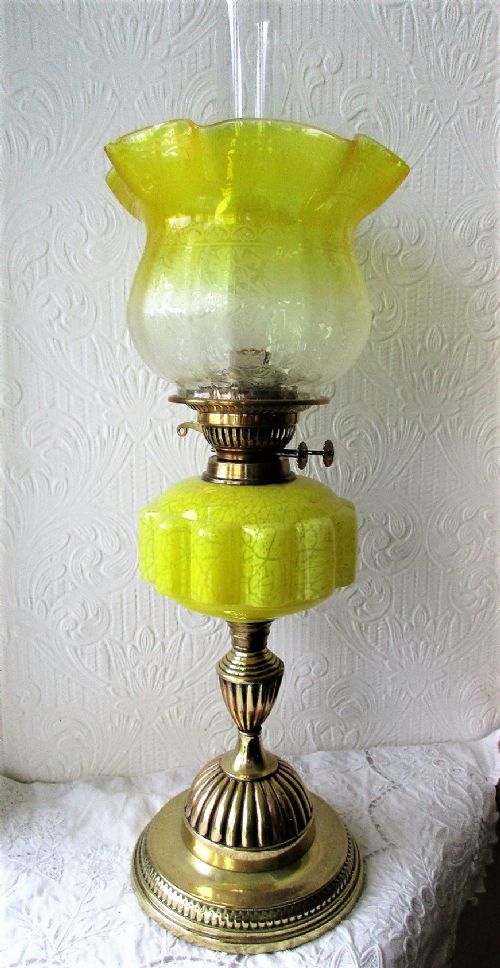
Shades display significant variety in glass techniques, spanning opaline glass, cranberry glass, and hand-painted floral or winter scenes. Metal components often incorporate specialised burner mechanisms developed by period manufacturers.
Listings span periods from Georgian to Edwardian, encompassing materials such as brass, opaline glass, cranberry glass, porcelain, and enamel.
Distinctions in quality
Quality in these lamps rests on the weight of the cast brass, the crispness of column details like Corinthian capitals, and the integrity of the porcelain figures. Heavier metals and substantial ceramic bodies distinguish sturdier examples from lighter, plain counterparts.
The artistry of the glass components determines the upper tier of the range. Hand-painted decoration on fonts, paired with coloured opaline or cranberry glass shades, marks the distinction between standard utility lighting and decorative salon pieces.
Eli Griffiths & Sons·Gustave Serrurier Bovy·Taylor Tunnicliff·Wild and Wessel·Sitzendorf
The Antique Paraffin Lighting Glossary
- Duplex burner
- A double-wick burner system designed to provide increased illumination from a single paraffin reservoir. This mechanism appears on larger table lamps.
- Font
- The oil reservoir of the lamp, typically formed from coloured glass, porcelain, or brass. It sits directly above the base and below the burner.
- Opaline glass
- An opaque, milky-white glass used extensively for nineteenth-century lamp shades. It diffuses light softly across a room.
- Corinthian column
- A classical architectural column style adapted for lamp bases, featuring ornate acanthus-leaf capitals. It remains a defining motif of late Victorian brass lighting.
- Hinks burner
- A patented nineteenth-century burner assembly produced by a prominent Birmingham firm. Collectors often look for maker stamps on the metal thumbwheels.
Antique Paraffin Lighting: Frequently Asked Questions
How do I operate an antique paraffin lamp safely?
Most antique lamps are sold for decorative display rather than daily domestic use. If you plan to burn paraffin, inspect the interior reservoir for cracks and ensure the wick mechanism moves freely.
Modern fuel should be handled with care, and many collectors choose to wire these pieces for electricity or use them strictly unlit as ornamental centerpieces.
What is the difference between Victorian and Edwardian oil lamps?
Victorian lamps often lean towards ornate brass Corinthian columns, heavy porcelain figures, and richly coloured cranberry or etched glass shades. The ornamentation is typically dense and decorative.
Edwardian lighting tends to streamline these forms slightly while retaining brass and opaline glass materials, sometimes introducing Art Nouveau or Secessionist curves into the metalwork.
Can I replace a missing glass shade?
Finding a period-correct replacement shade requires matching the fitter size, which is the bottom rim diameter that slots into the brass gallery ring. Opaline and cranberry glass shades appear frequently as separate items.
Take precise measurements of your lamp gallery before searching for a replacement shade to ensure a stable and secure fit.
How do I clean brass and glass lamp parts?
Clean brass bases gently with a soft cloth to preserve the aged patina rather than polishing them to a bright modern shine. Abrasive cleaners will strip historic surface character.
Wash glass fonts and shades in warm soapy water, avoiding harsh chemicals on hand-painted enamel or gilt decoration that might lift off the glass surface.