
Paraffin Table Light
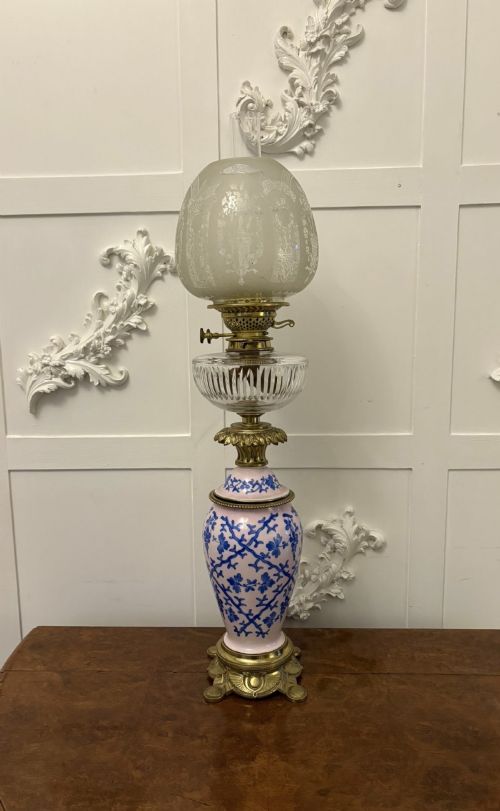
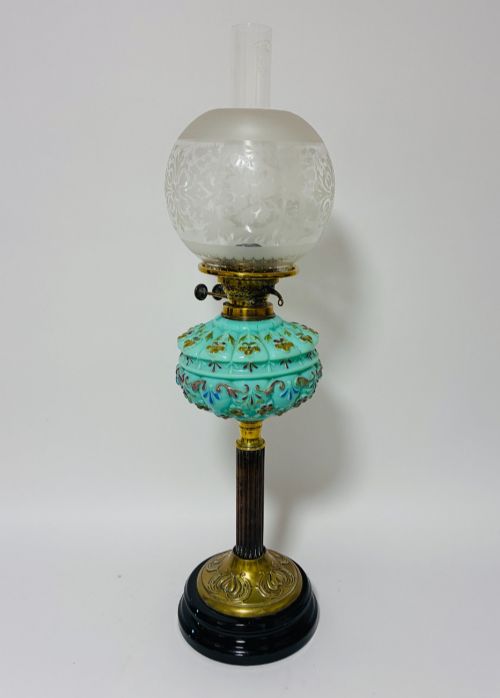
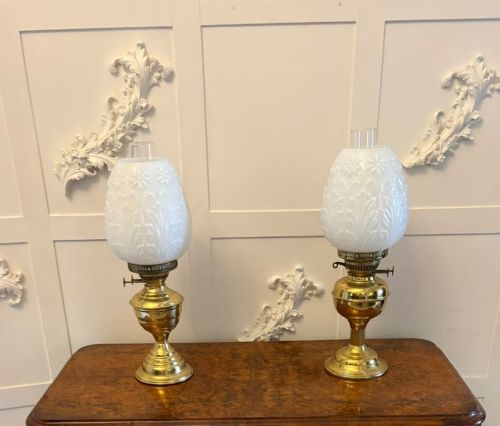
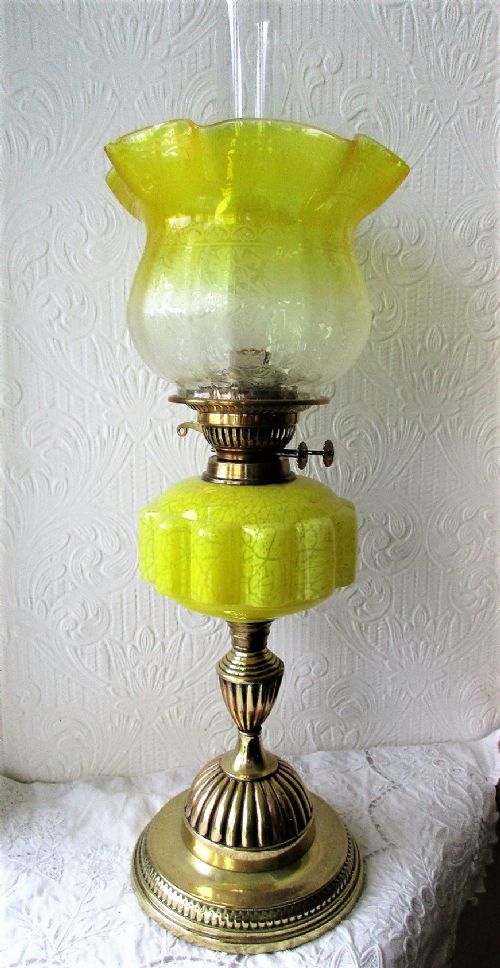
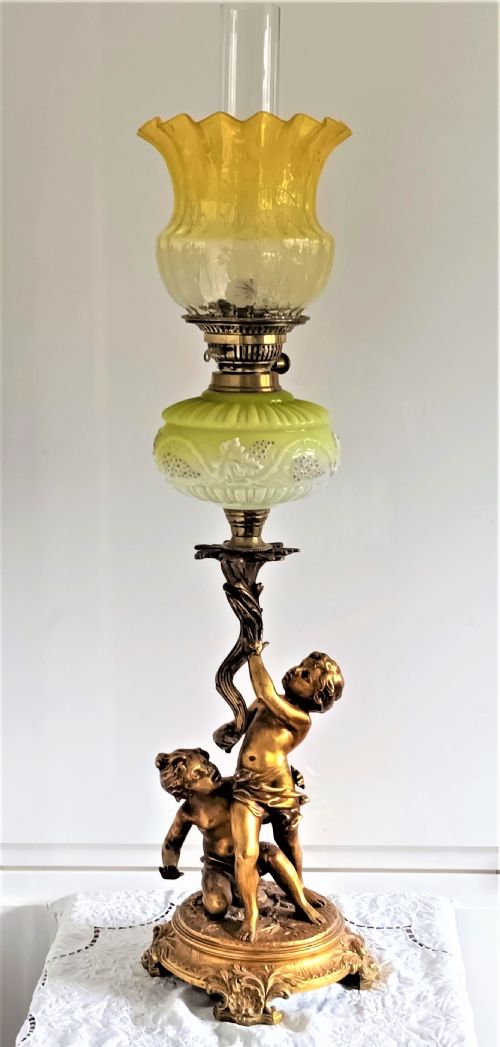
These paraffin table light examples are oil lamps forged in brass, glass and ceramic during the Victorian and Edwardian periods.
Paraffin Table Light
A paraffin table light is a domestic illuminating vessel designed for interior placement, appearing most frequently in Victorian and Edwardian iterations across this selection. These items function via a burner mechanism fitted atop a reservoir or font, which holds the fuel before combustion.
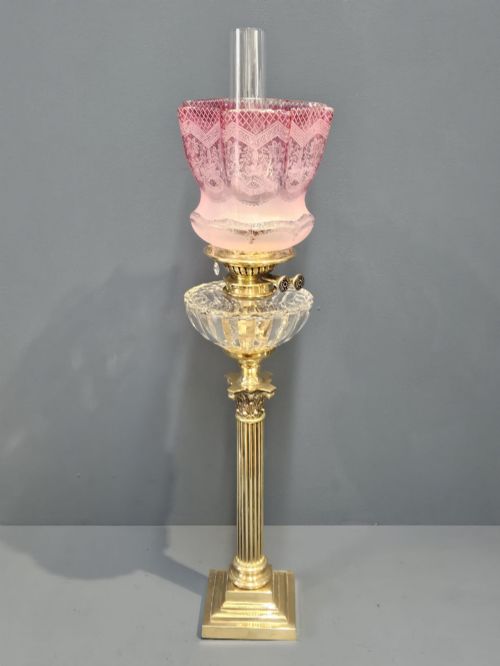
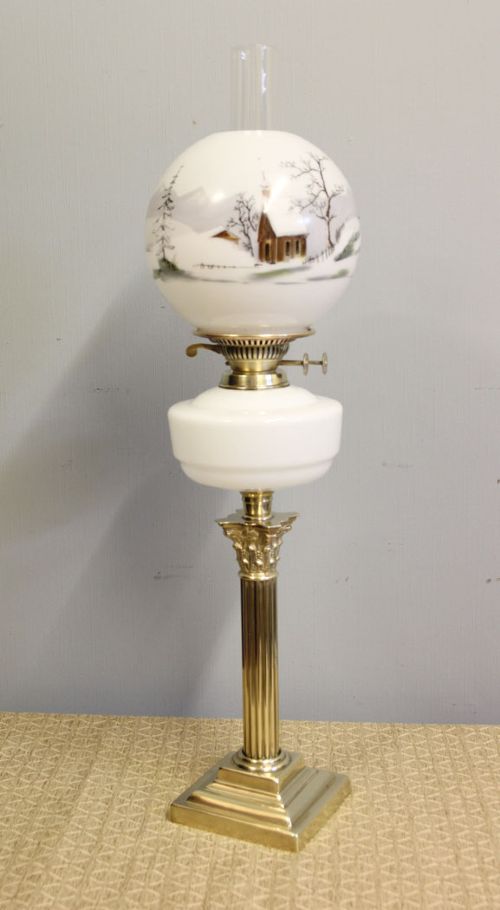
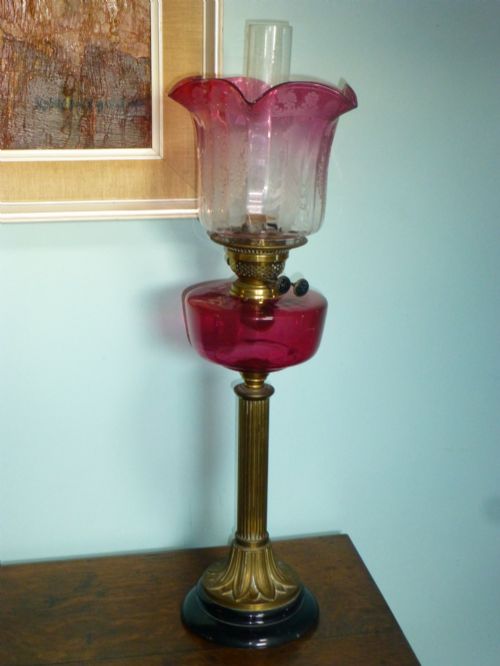
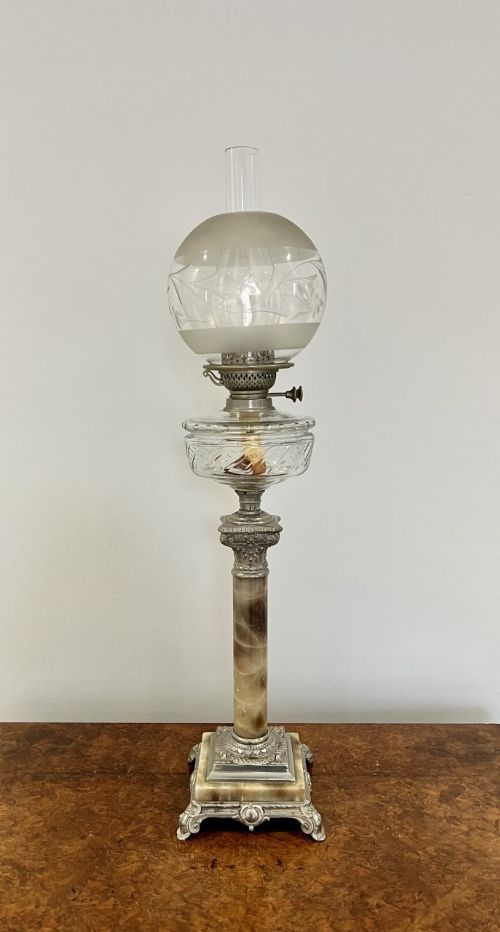
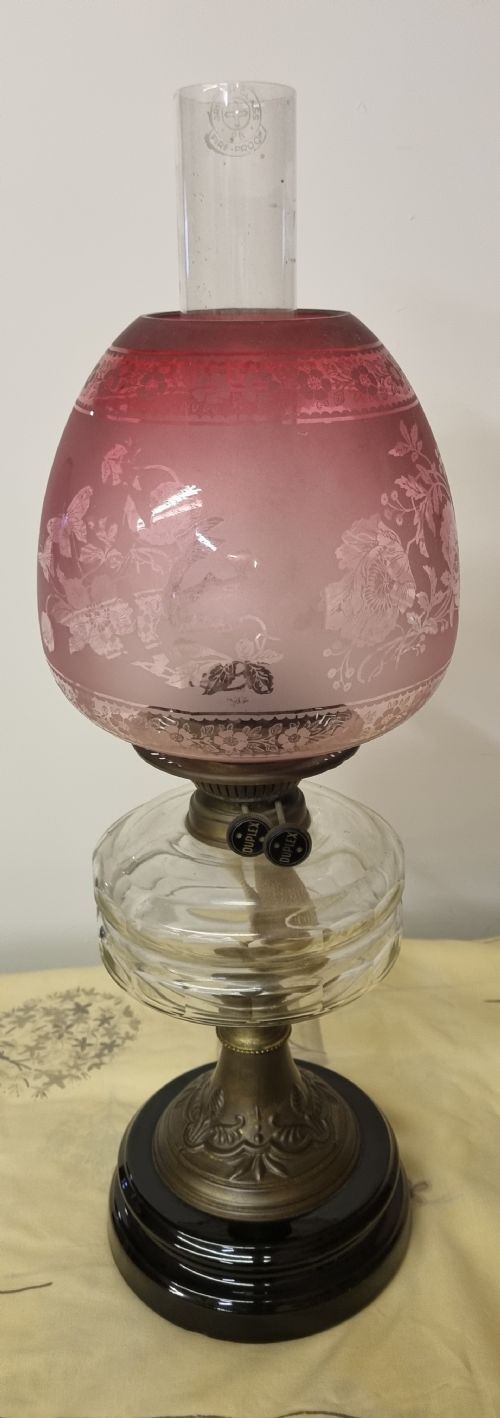
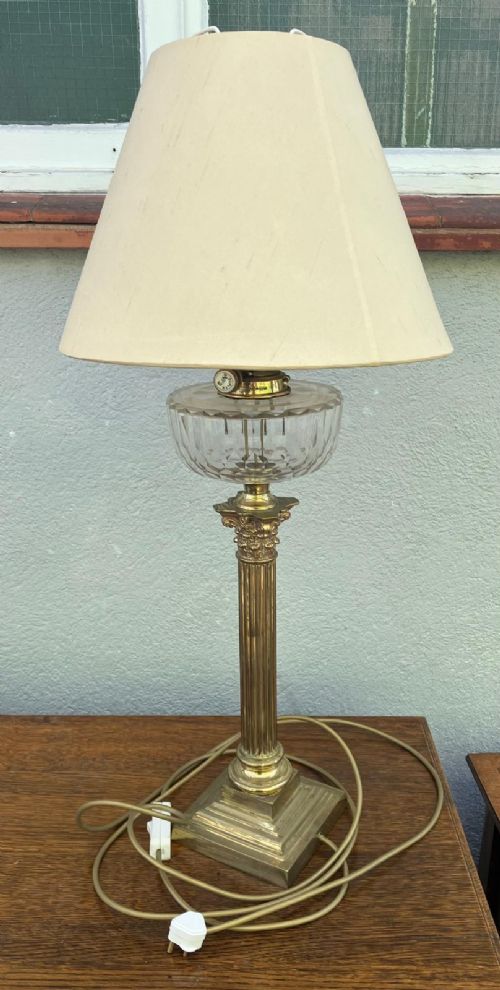
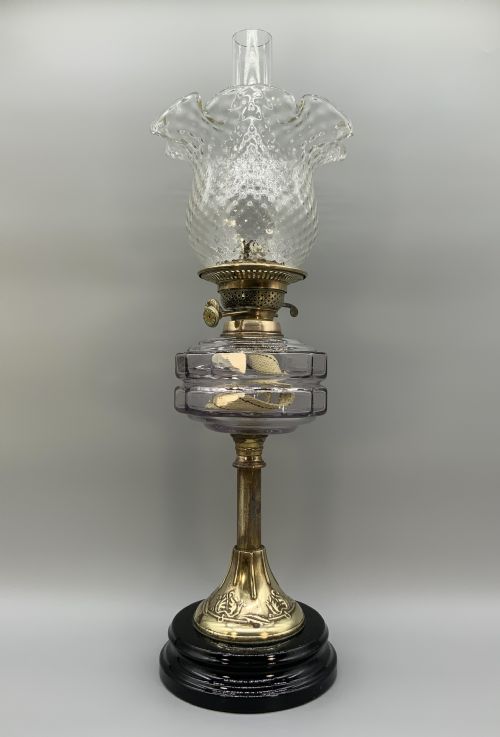
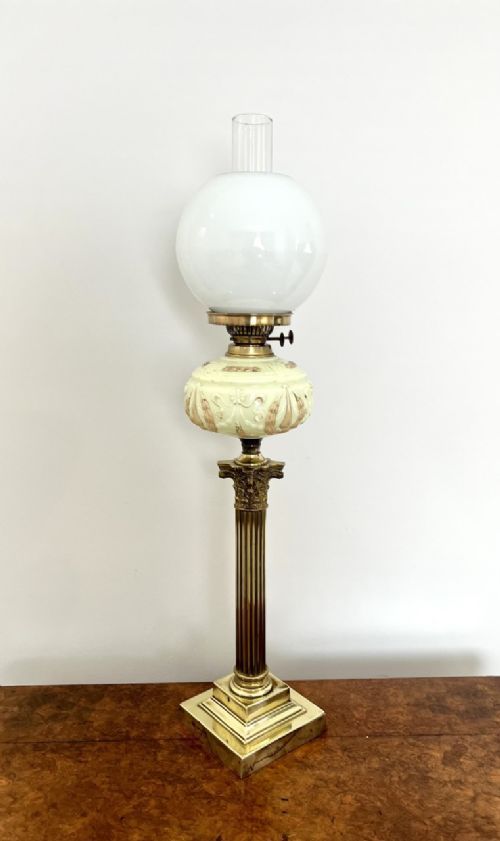
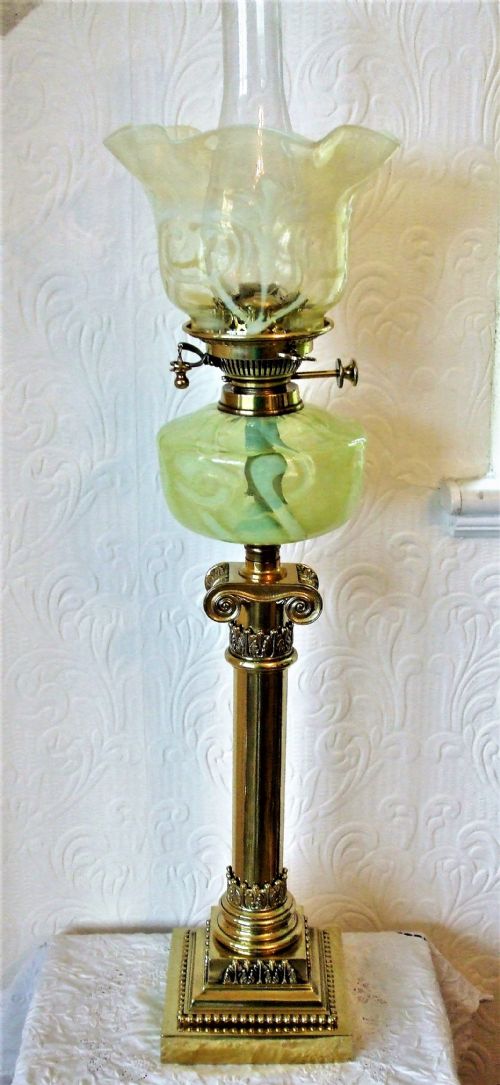
The prevailing form on this page combines a metal column or ceramic body with a contrasting glass shade, often in cranberry or opaline tones. Columnar styles such as the Corinthian or Ionic order dominate the brass subgroup.
Origins stretch from the mid-nineteenth century through the early twentieth century, taking in English workshops alongside continental European centres. Examples range from simple domestic utilities to elaborate figural or botanical compositions.
Materials and construction methods
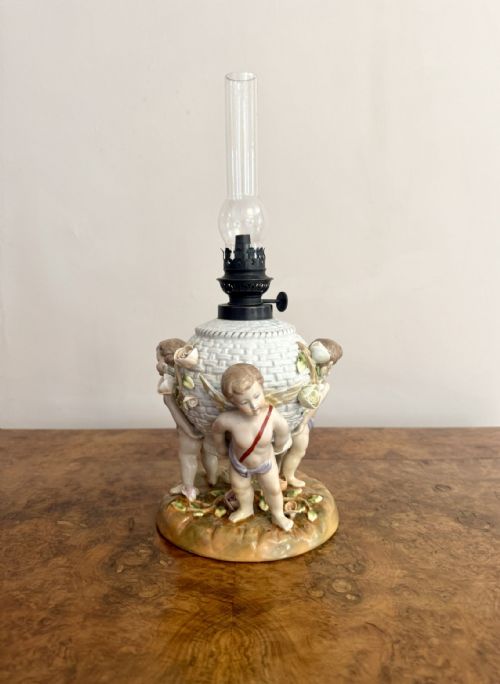
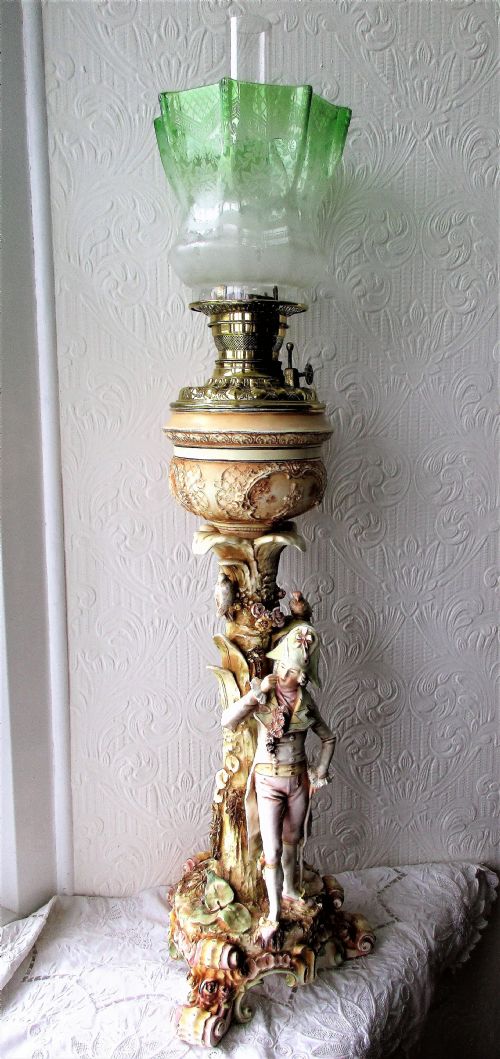
Brass serves as the primary structural metal, utilised for columns, bases and burner assemblies, frequently paired with cast components. Ceramic and porcelain bodies provide alternative column supports, sometimes decorated with hand-painted botanical motifs or figural modeling.
The listings on this page span the Victorian and Edwardian periods, utilising brass, cranberry glass, porcelain and opaline glass.
Distinctions in craftsmanship and design
Quality reveals itself in the weight and crispness of the cast brass elements, where sharper fluting on a Corinthian column indicates superior tooling. Heavier metal gauge and intricate double-burner mechanisms separate standard domestic items from high-end display pieces.
The artistry of the glass shade dictates upper-tier examples, particularly those with hand-painted details or etched floral and winter scenes. Porcelain figures and painted ceramic fonts demonstrate variance through the finesse of the brushwork and the complexity of the kiln-fired glaze.
Hinks·Taylor Tunnicliff·Wild and Wessel·Sitzendorf·Gustave Serrurier Bovy
The Paraffin Table Light Glossary
- Font
- The reservoir container that holds the paraffin oil beneath the burner. It is typically manufactured from pressed glass, ceramics or polished brass.
- Duplex burner
- A double-wick mechanism designed to produce a brighter flame than single-wick variants. This system requires two matched wicks adjusted simultaneously.
- Corinthian column
- An architectural column style featuring an ornate capital decorated with acanthus leaves. It is frequently adapted as the vertical pillar for brass table lamps.
- Opaline glass
- A semi-translucent white glass variant popular for lamp shades during the Victorian era. It diffuses the flame's glow into a soft ambient illumination.
Paraffin Table Light: Frequently Asked Questions
How do I operate a paraffin table light?
Fill the lower reservoir with refined paraffin oil and allow the cotton wick to absorb the liquid thoroughly before ignition. Adjust the thumb-wheel to expose a small section of wick above the metal burner gallery before lighting.
Extinguish the flame by turning the wick down until it snuffs out, or by utilising a dedicated extinguisher cap if fitted. Ensure the glass chimney remains clean to maintain proper airflow and prevent soot accumulation during use.
Where were these lamps placed historically?
These lamps stood on central parlour tables, sideboards and desks to provide localized illumination before widespread household electricity. Their height made them suitable for casting light downward over seating areas used for reading or needlework.
Bedchambers also utilised smaller versions for nighttime navigation along corridors. Dining rooms occasionally employed matched pairs to illuminate the evening table.
How do I date an antique oil lamp?
Examine the burner mechanism for maker's stamps, patent dates and trade names, which provide a reliable baseline for manufacture. Stylistic markers such as Art Nouveau curves or Victorian classical revival columns also narrow down the production era.
Material composition offers further clues, as certain glass colours and ceramic bodies align with specific decades between eighteen-sixty and nineteen-thirty. Construction methods, including machine-threading versus hand-finishing, help distinguish earlier nineteenth-century items from later Edwardian pieces.
Can I still burn oil in these lamps?
Many surviving examples remain structurally sound enough to burn modern lamp oil, provided the wick and burner are clean and undamaged. The seals and ceramic fonts require careful inspection for hairline fractures before introducing any liquid fuel.
Collectors often choose to wire them for electricity or display them unlit as decorative objects to preserve their original components. If utilised with fuel, burning must occur away from drafts and flammable materials.