
Antique Paraffin Burner
An antique paraffin burner brings practical Victorian engineering and warm light into a room, fashioned from heavy metals and coloured glass.
Antique Paraffin Burner
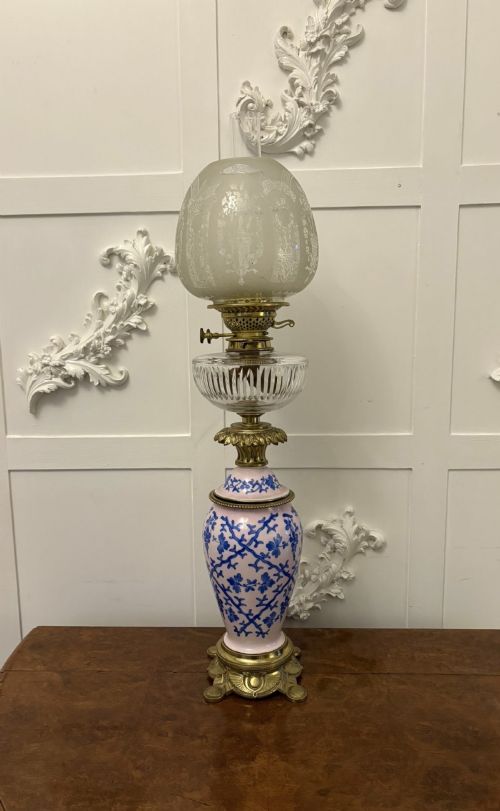
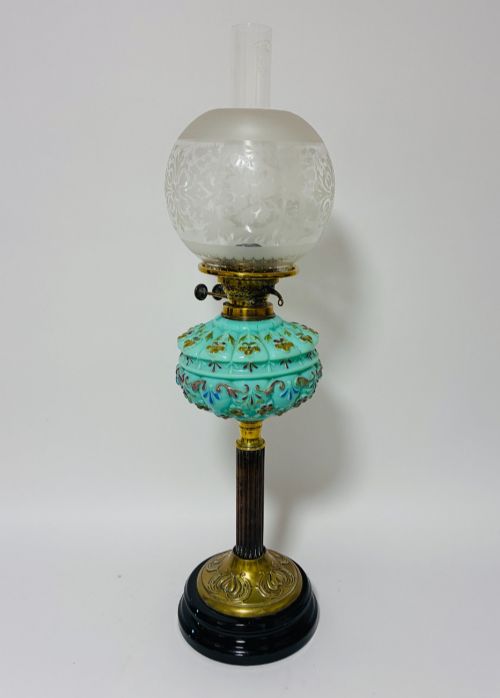
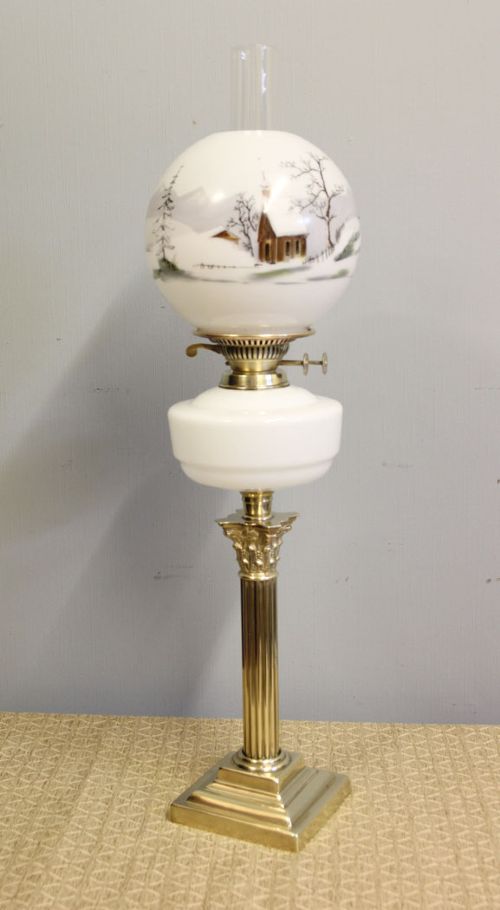
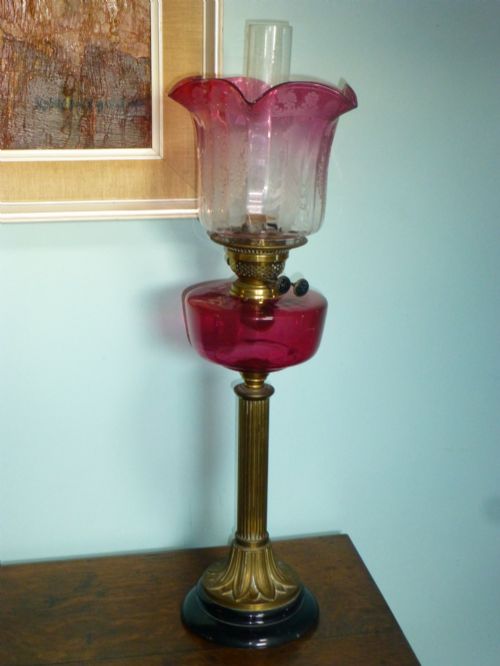
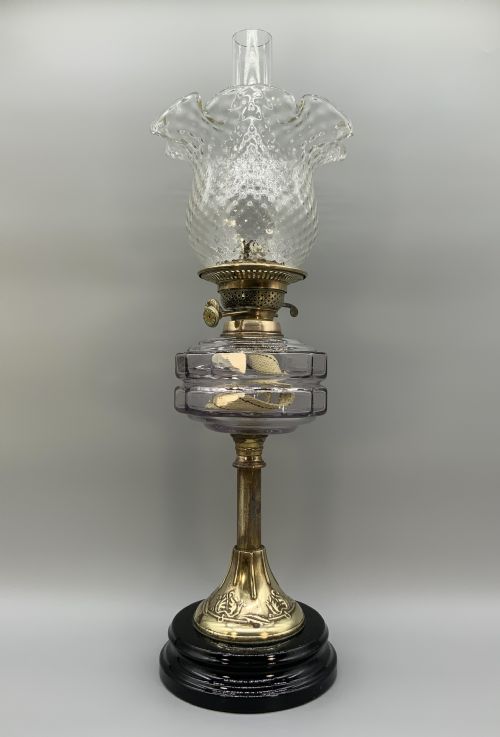
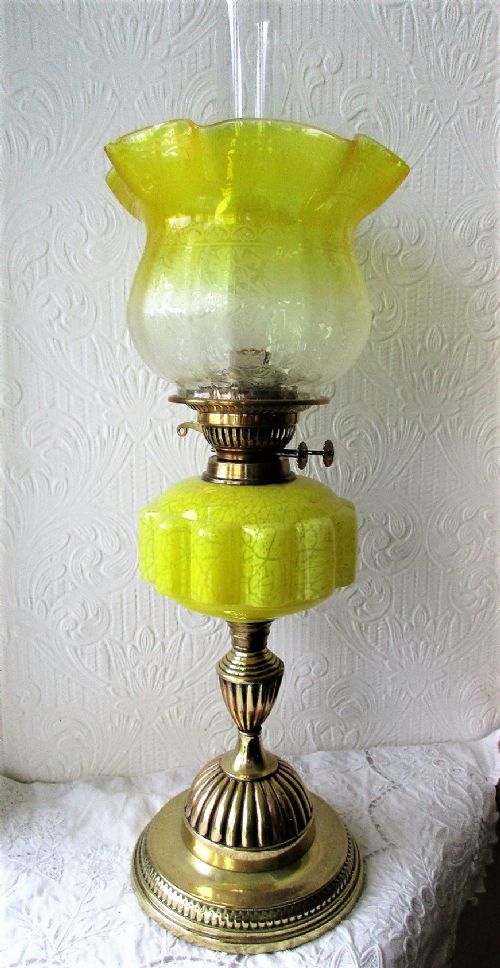
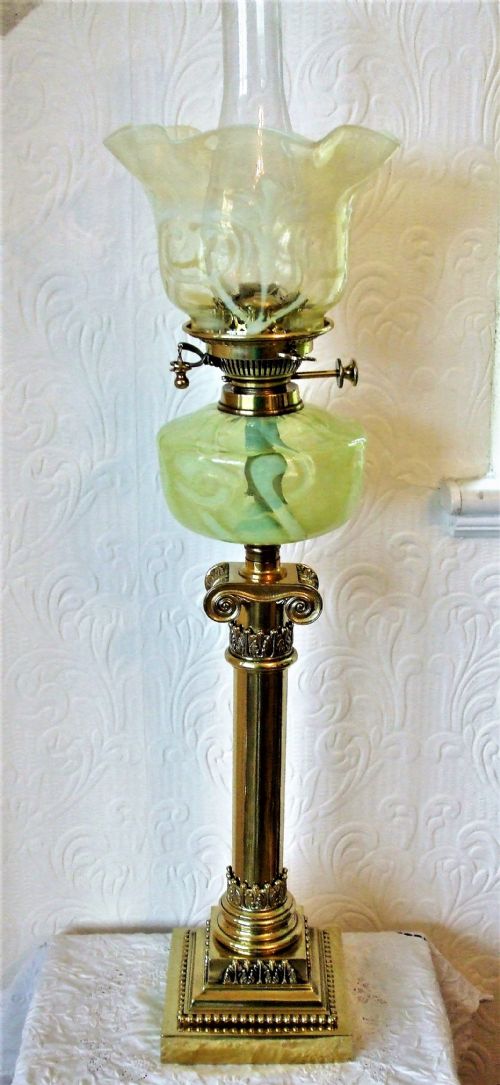
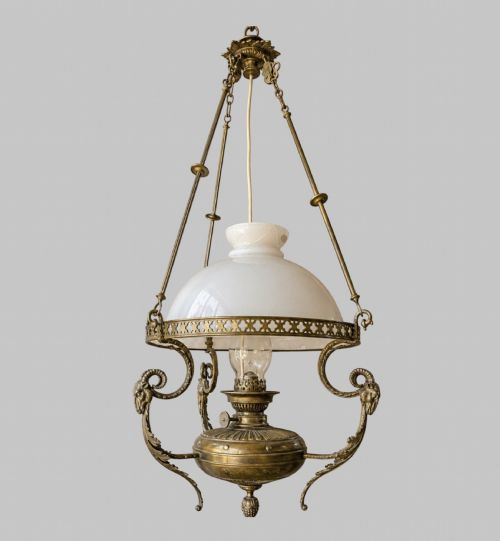
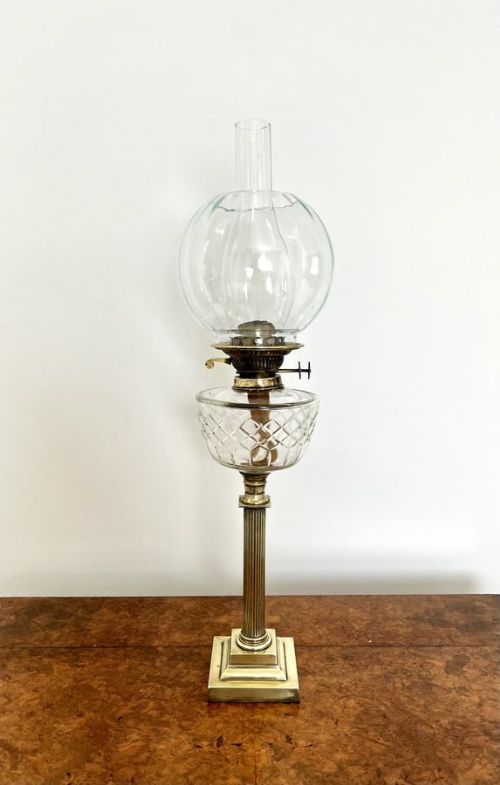
An antique paraffin burner is a domestic lighting fixture designed to burn lamp oil, commonly encountered here as tall table lamps, Corinthian columns, and ceiling or hanging lights. These pieces date principally from the Victorian and Edwardian eras, spanning the nineteenth and early twentieth centuries.
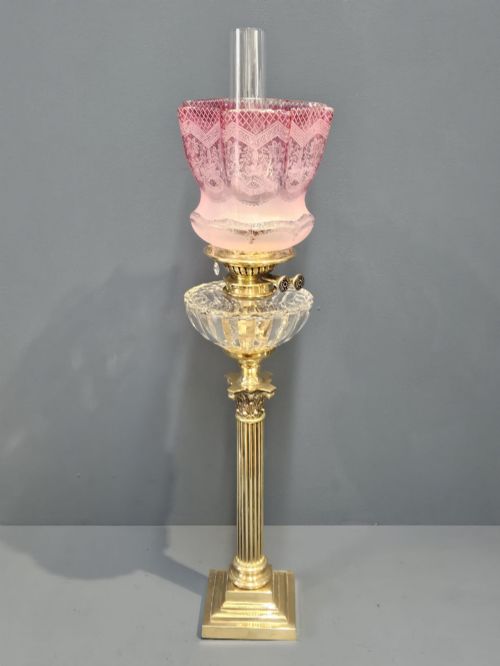
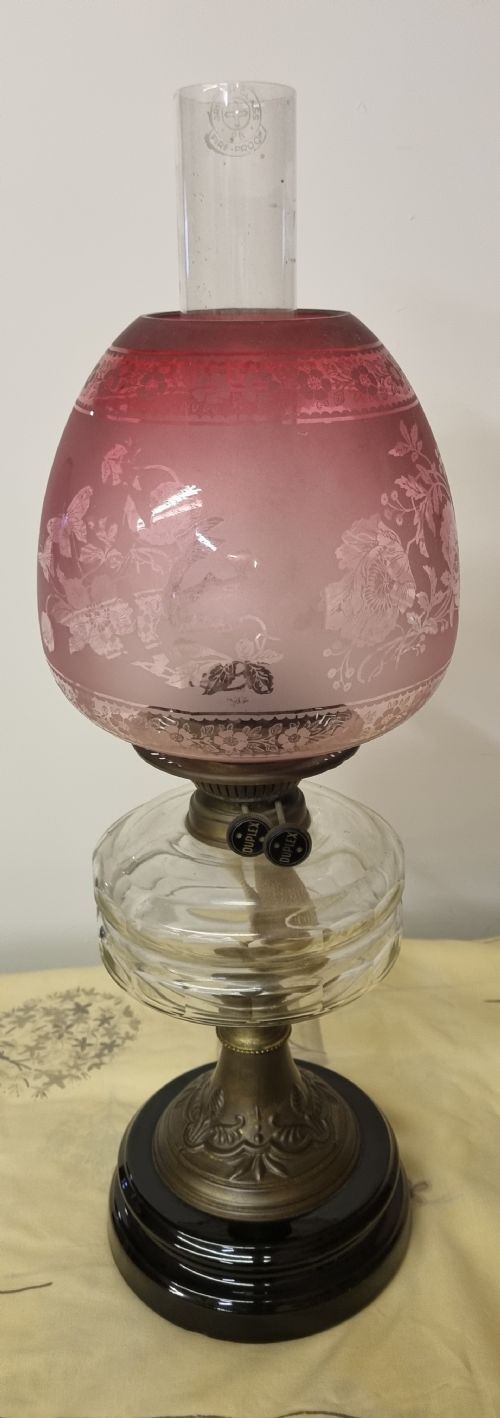
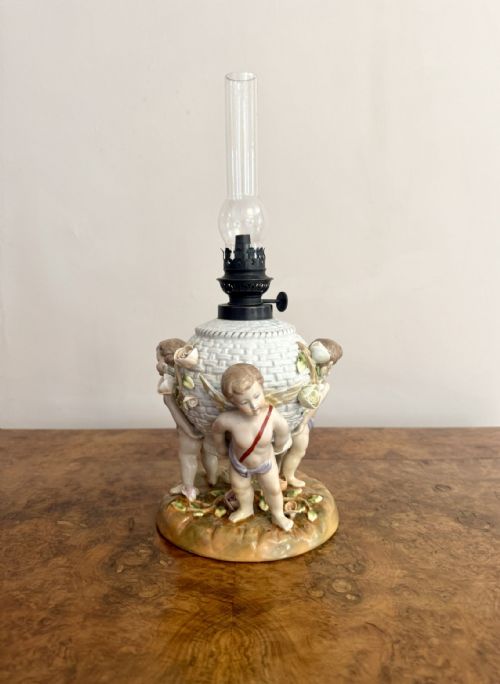
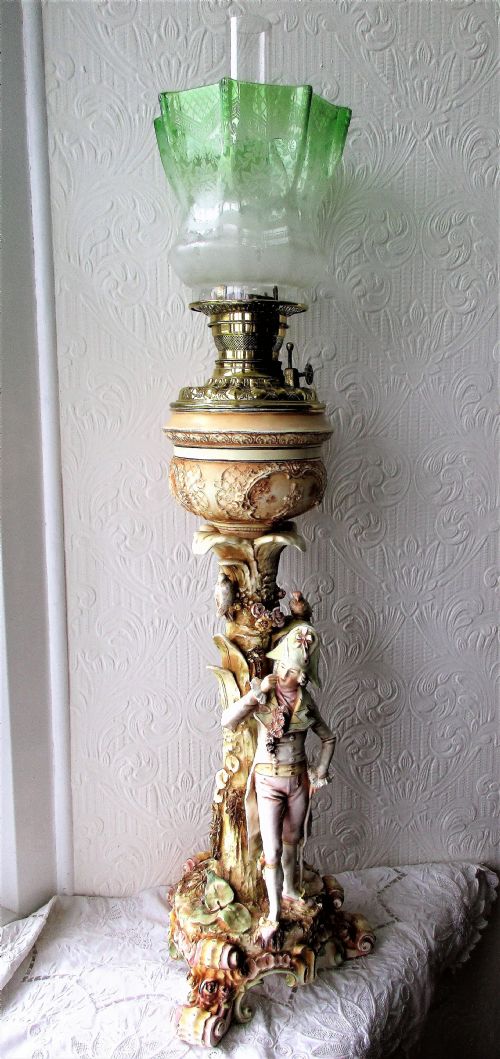
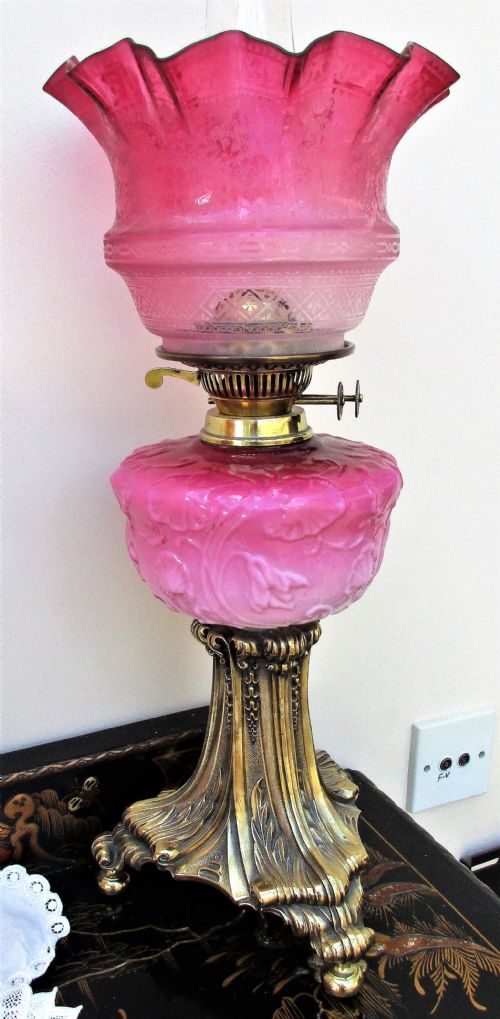
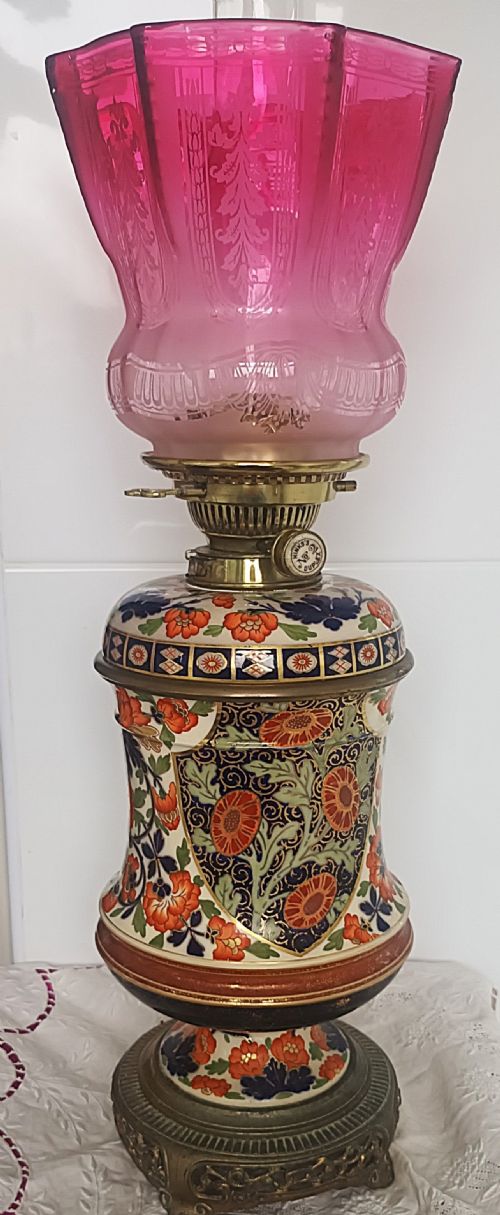
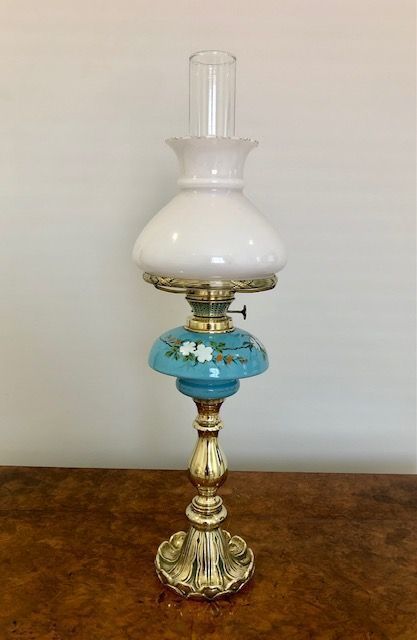
Buyers will frequently find examples combining polished brass stands with decorative glass fonts, while more elaborate models incorporate hand-painted porcelain figures or botanical cranberry glass shades. The selection leans heavily toward British production, featuring standard domestic forms alongside duplex double-burner systems.
Materials and construction
Makers constructed the structural components from cast brass, copper, and ceramic, often utilising classical architectural motifs such as Corinthian or Ionic columns for the main stems. Fonts and shades were formed from blown and pressed glass, including clear, opaline, crystal, and deep cranberry hues.
Mechanical assembly involved specialised metal burners, notably duplex systems and mechanisms by makers like Hinks or Wild and Wessel, fitted to heavy metal bases to ensure stability while holding fuel and glass shades.
Listings feature items dated from eighteen-sixty through nineteen-thirty, spanning late Victorian and Edwardian domestic lighting.
Judging quality and character
The distinction between standard and superior pieces rests on the weight of the metal casting, the crispness of the column fluting, and the presence of hand-blown or etched glass shades rather than plain press-moulded bowls. Elaborate figural porcelain mounts and telescopic mechanisms elevate an example significantly above a basic brass column lamp.
Makers' marks stamped upon the brass burner mechanism provide a clear indicator of refined production, separating mass-market items from workshop-assembled lamps equipped with specialised twin-burning or duplex technology.
Sitzendorf·Hinks·Taylor Tunnicliff·Wild and Wessel
The Antique Paraffin Burner Glossary
- Duplex burner
- A double-wick mechanism designed to produce a significantly brighter flame than single-wick alternatives. These were widely utilised on larger nineteenth-century lamps.
- Cranberry glass
- A rich red-pink transparent glass created by adding gold chloride to the molten mixture. It forms the prominent shades and fonts on many decorative Victorian pieces.
- Opaline glass
- An opaque, milky-white glass often tinted in pale pastel shades. It diffuses the lamplight softly and appears frequently on Edwardian lamp shades.
Antique Paraffin Burner: Frequently Asked Questions
How do I tell a Victorian burner from an Edwardian one?
Victorian examples tend to favour heavy brass Corinthian columns, rich cranberry glass, and elaborate porcelain figural mounts. They project a sense of solid, ornate domestic luxury.
Edwardian pieces often introduce softer colour palettes, including opaline glass shades, alongside lighter Art Nouveau brass and ceramic table lamp designs. The overall lines become slightly more streamlined towards the nineteen-tens.
Can I convert an oil lamp for electricity?
While conversion is physically possible by running a cord through the central column, purists generally avoid altering original mechanical components. Preserving the burner and wick assembly maintains the historic integrity of the object.
Displaying the lamp in its original configuration retains its value and charm as a piece of nineteenth-century metalwork and glass.
What is a duplex burner?
A duplex burner uses two flat wicks placed side by side to draw more fuel and create a broader, brighter flame. This mechanical improvement became standard on larger Victorian table lamps.
Identifying a duplex mechanism usually involves checking the thumb-wheels on the brass collar, which often bear the patent or maker name.