





Antique Painted Work Box
An antique painted work box offers a portable repository for needlework and small treasures, combining functional storage with decorative artistry.
Antique Painted Work Box
An antique painted work box is primarily a desktop or table-standing vessel designed to hold sewing implements, threads, and personal valuables. These pieces emerge across several periods, including the Regency era and the nineteenth century, reflecting varied domestic uses from basic storage to intricate crafting.
The selections available range from compact wooden boxes adorned with delicate penwork or portrait decoration to larger ladies work-tables. Most examples adhere to domestic furniture traditions of the nineteenth century, often utilising satinwood or pine as a structural base.
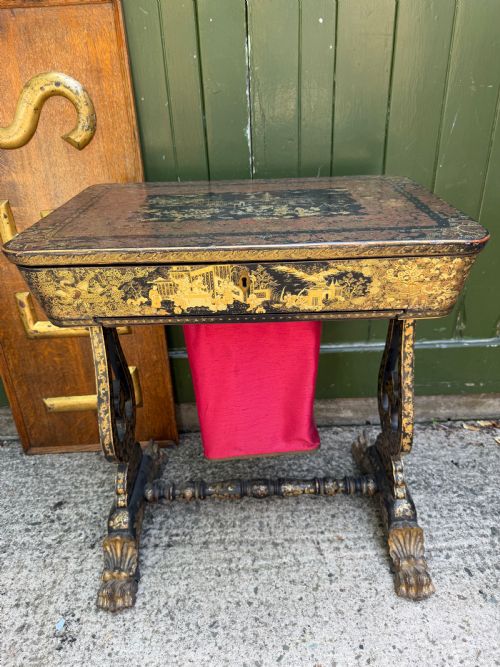
Makers utilised specific regional traditions, evident in Scandinavian folk art pieces and Chinese export lacquer models. Buyers encounter everything from simple lidded boxes to elaborate sewing tables fitted with internal compartments.
Materials and construction
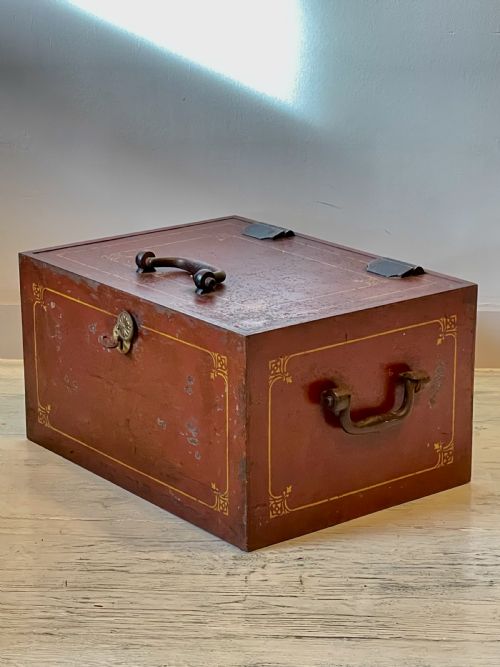
Craftsmen built these boxes from timber substrates such as pine, oak, and satinwood, applying surfaces of paint, pigment, or lacquer. Many incorporate brass hinges, locks, and internal trays to organise sewing equipment and personal effects.
Decorative techniques rely heavily on hand painting, penwork, pokerwork, and inlaid details. Artisans applied pigments directly to prepared wood surfaces, sometimes finishing with protective clear coats to preserve the delicate motifs.
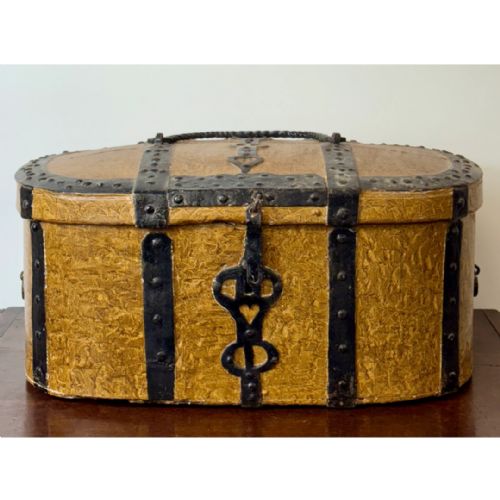
Marriage boxes and labyrinth-decorated chests from eighteenth-century Sweden offer a glimpse into historical folk traditions.
Assessing quality and execution
Quality in these boxes rests on the precision of the woodwork and the finesse of the painted or penwork decoration. Finer examples display meticulous brushwork, sophisticated portrait miniatures, or intricate geometric patterns rather than simple, repetitive motifs.
The integrity of the internal fittings, including original trays, compartments, and working brass locks, distinguishes superior pieces. Well-preserved pigment layers and minimal structural alterations indicate a higher standard of original manufacture and subsequent care.
Jennens & Bettridge
The Antique Painted Work Box Glossary
- Penwork
- A decorative technique using fine ink or pigment applied with a pen to create intricate designs on a light wood background. It mimics the appearance of more expensive inlay work.
- Pokerwork
- A method of decorating wood by burning designs into the surface with heated metal tools. This technique creates shaded, sepia-toned imagery popular on nineteenth-century boxes.
- Satinwood
- A durable, yellowish timber prized for its smooth grain and lustrous finish. It served as a favoured base for high-end Regency and Victorian decorative boxes.
- Lacquer
- A durable resin finish applied in multiple layers and polished to a smooth sheen. Chinese export pieces frequently employed this technique for decorative effect.
- Coffer
- A heavy wooden chest or box with a lid, traditionally used for storage of valuables. These are often reinforced with iron strapwork.
Antique Painted Work Box: Frequently Asked Questions
What is an antique painted work box used for?
These boxes were originally designed to store sewing needles, threads, thimbles, and small personal valuables. They sat on tables in parlours and bedchambers for daily crafting.
Today, they function as decorative storage on desks or dressing tables, holding modern trinkets while retaining their historical character.
How do I date an antique painted work box?
Dating relies on stylistic clues, timber choice, and the type of decorative technique applied. Regency pieces often feature delicate penwork, while Victorian examples may utilise ebonised finishes or elaborate portraits.
Hardware such as brass hinges and lock mechanisms also provide useful indicators of the manufacturing period.
What is the difference between penwork and painting?
Penwork involves drawing fine lines with dark ink or pigment onto a pale wood surface, often creating detailed pictorial scenes or borders. Painting uses broader brush application with coloured pigments.
Both methods frequently appeared on nineteenth-century work boxes to enhance their visual appeal.
How should I care for a painted wooden box?
Keep the box away from direct sunlight and extreme temperature fluctuations to prevent the wood from warping and the painted surface from fading. Dust gently with a dry, soft cloth.
Avoid using liquid cleaners, polishes, or chemical solvents on the painted or penwork exterior.