

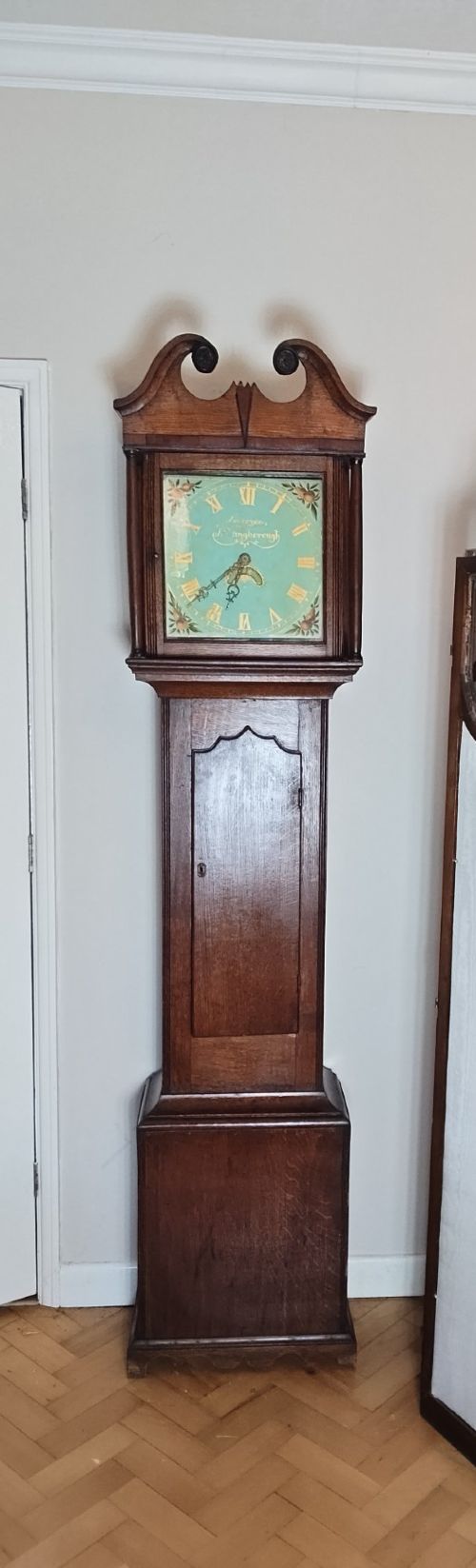
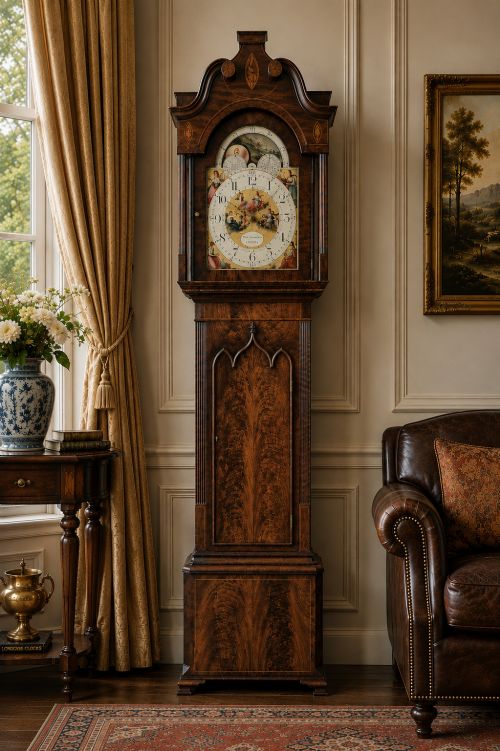
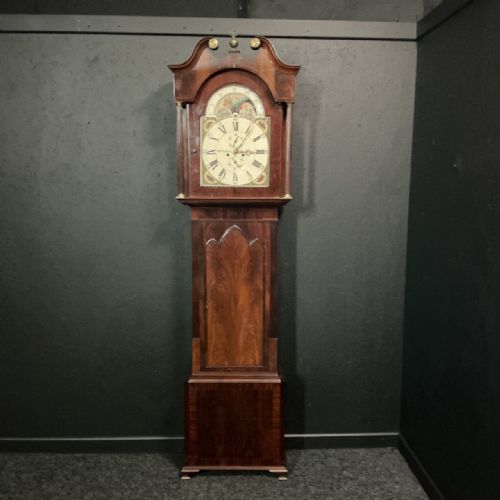
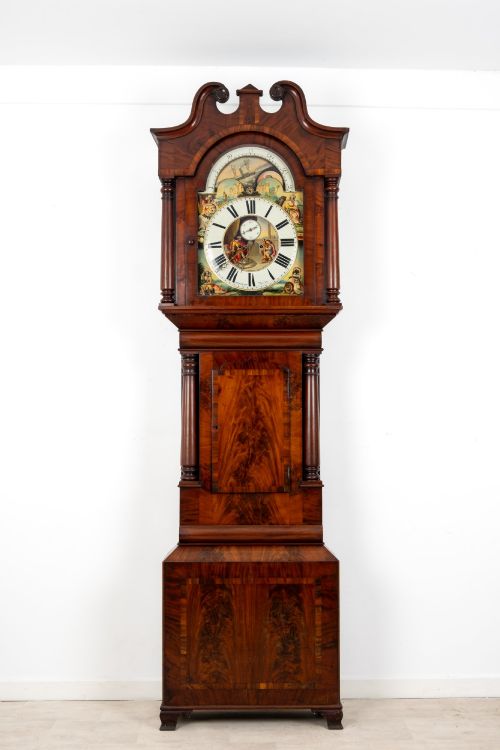
Antique Painted Floor Clock
An antique painted floor clock is a tall timepiece housed in a timber case, bringing mechanical timekeeping and regional craftsmanship into a room.
Antique Painted Floor Clock
When you search for an antique painted floor clock, you encounter tall timepieces designed to stand directly on domestic floorboards. These tall instruments measure time through descending weights housed within a vertical wooden trunk.
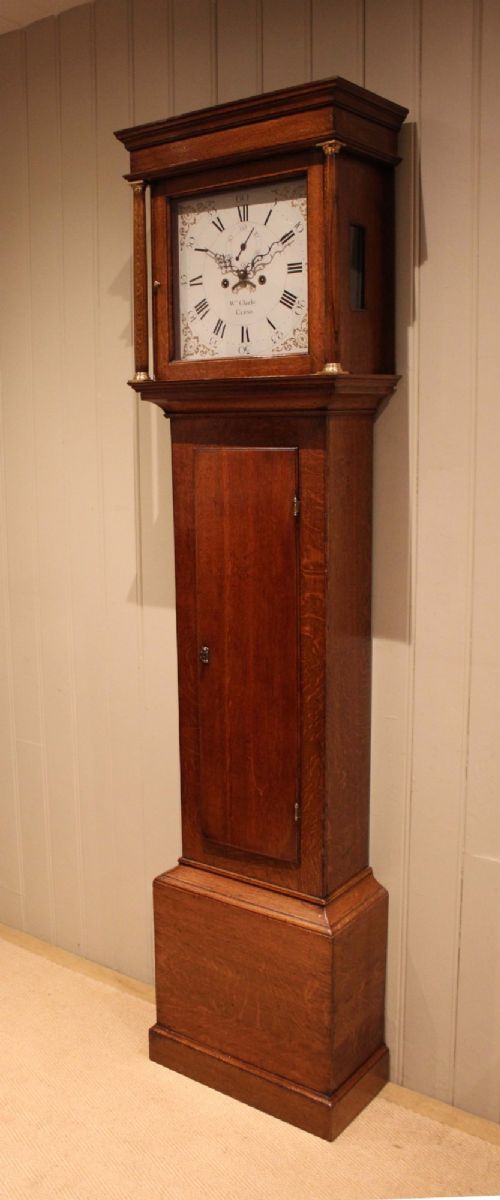
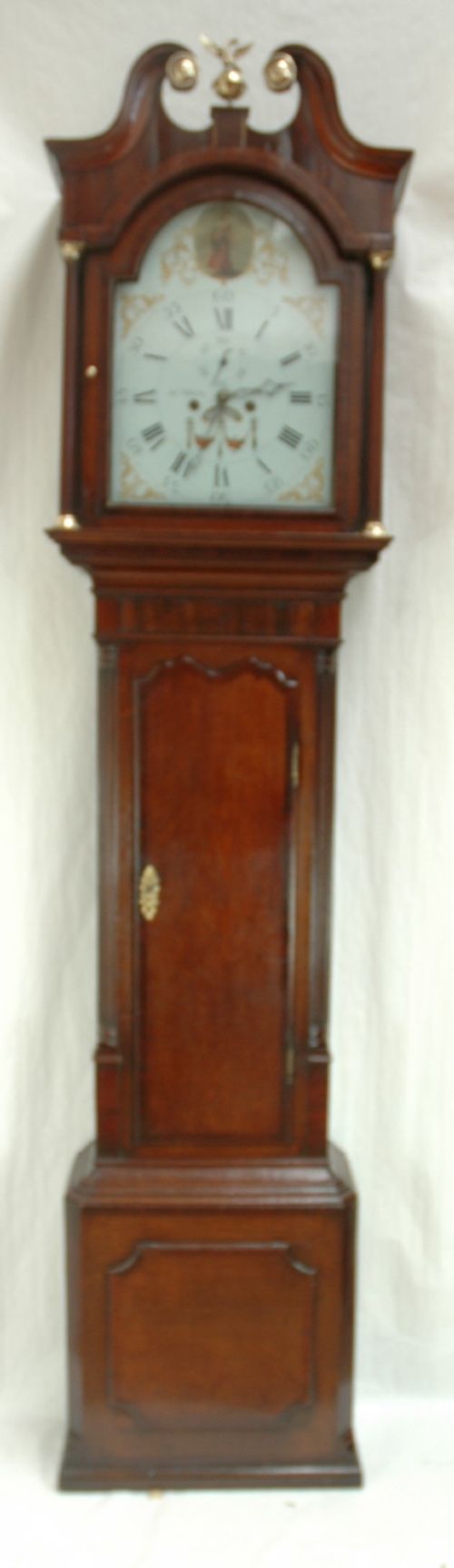
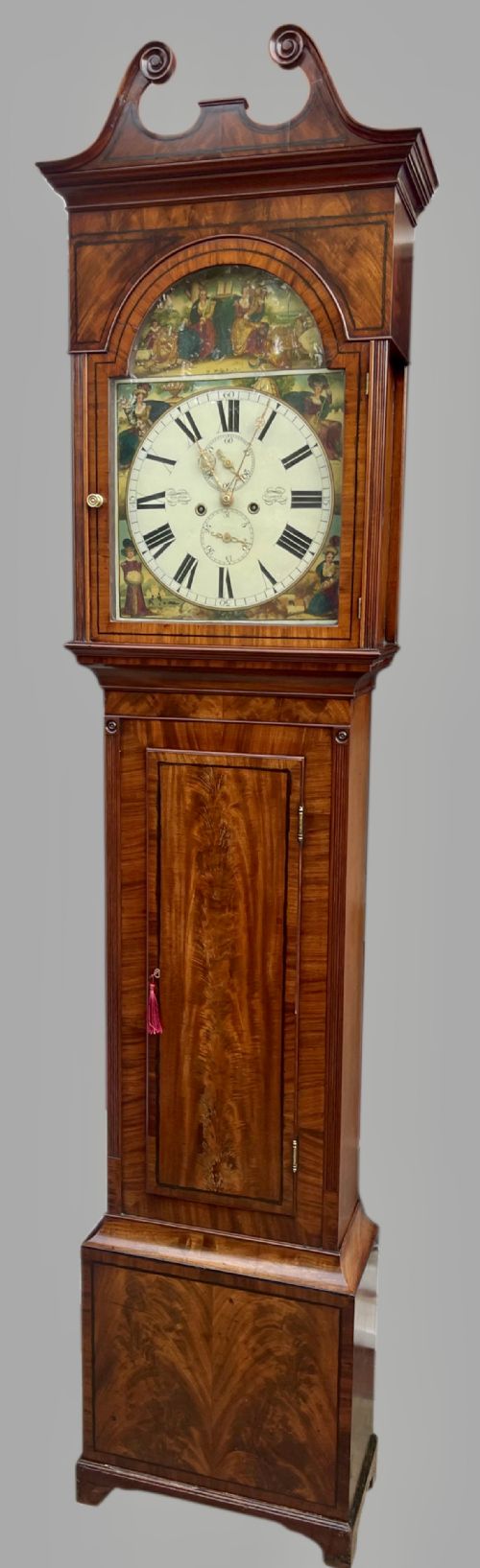
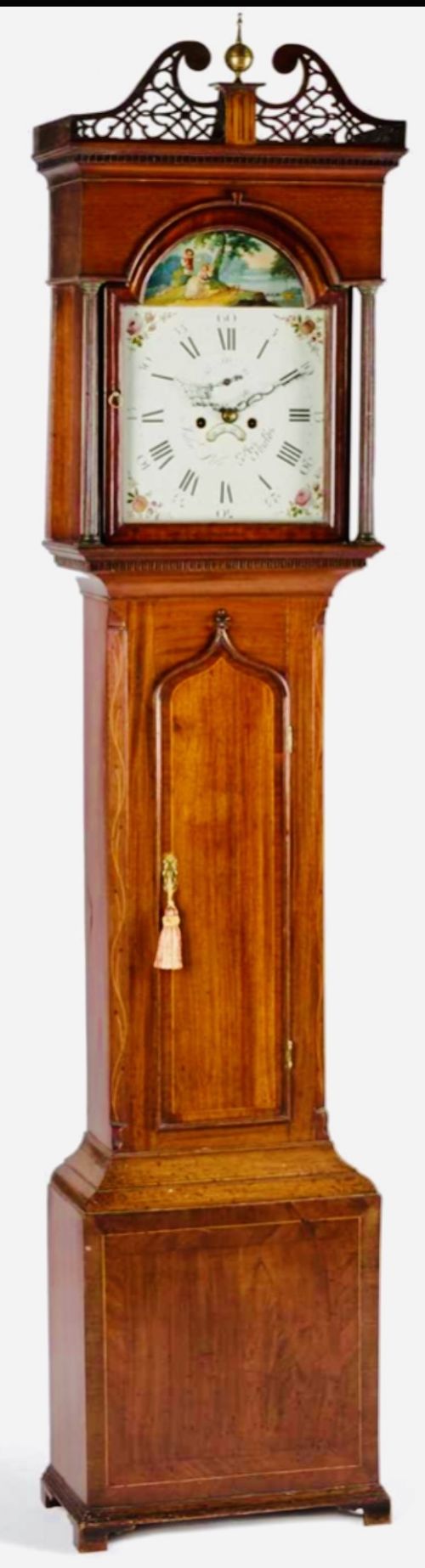
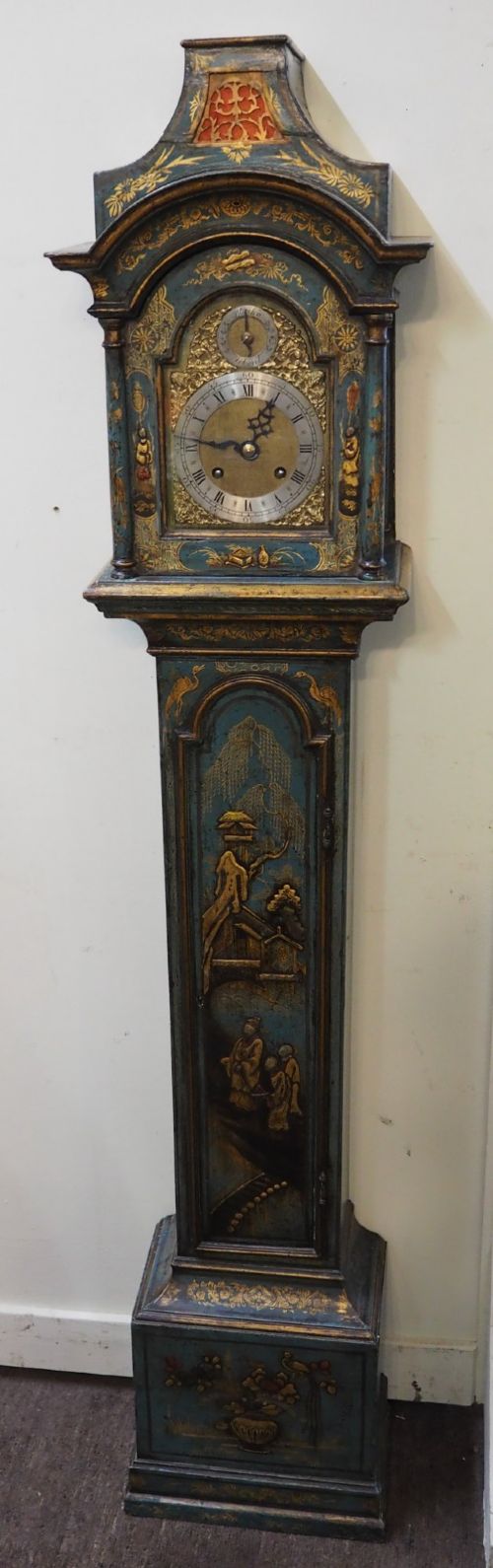
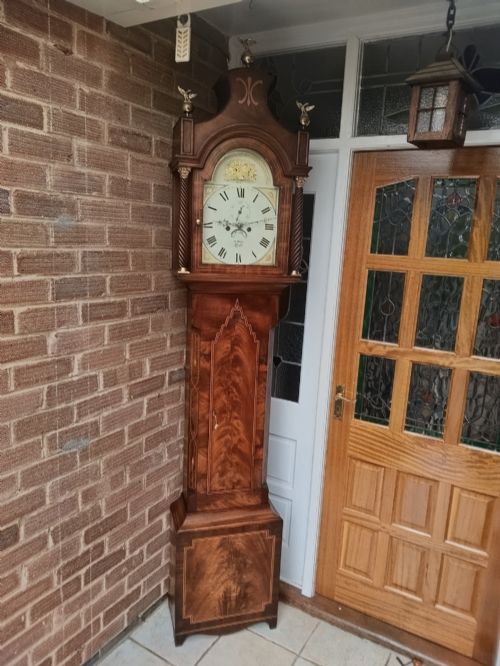
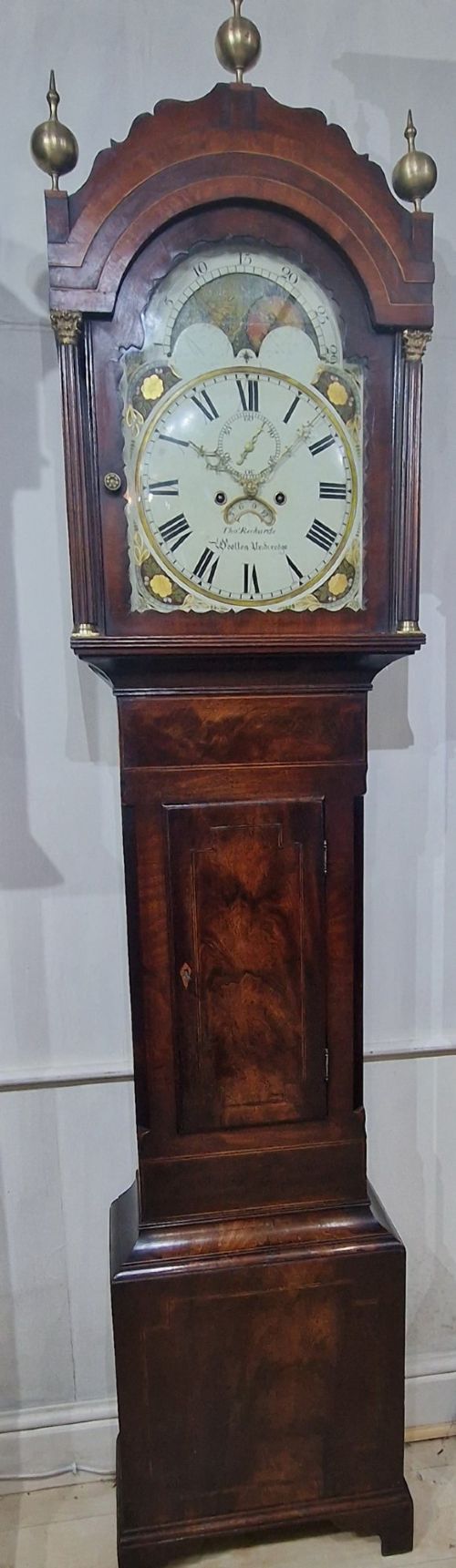
The versions most common on this page date from the Georgian period through the nineteenth century, including regional examples from Scotland, Wales and English towns. Oak and mahogany dominate the timber choices, often accompanied by painted iron dials and glass faces.
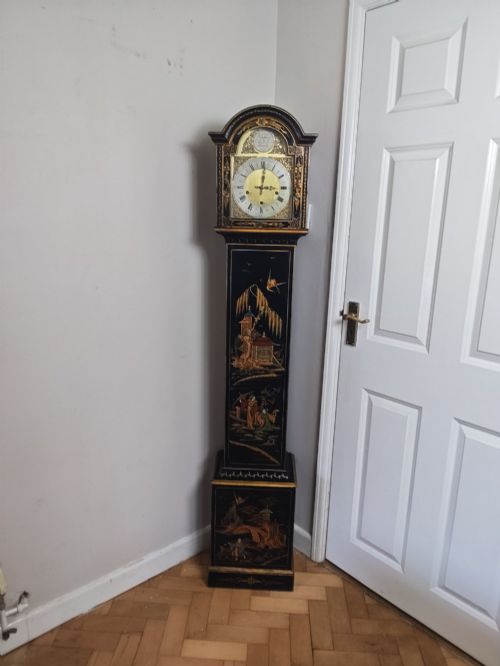
Formations range from standard grandfather clocks to smaller grandmother clocks and specialised musical or moonphase variations. Regional makers signed their work directly onto dials, linking individual pieces to specific towns and workshops.
How They Were Made
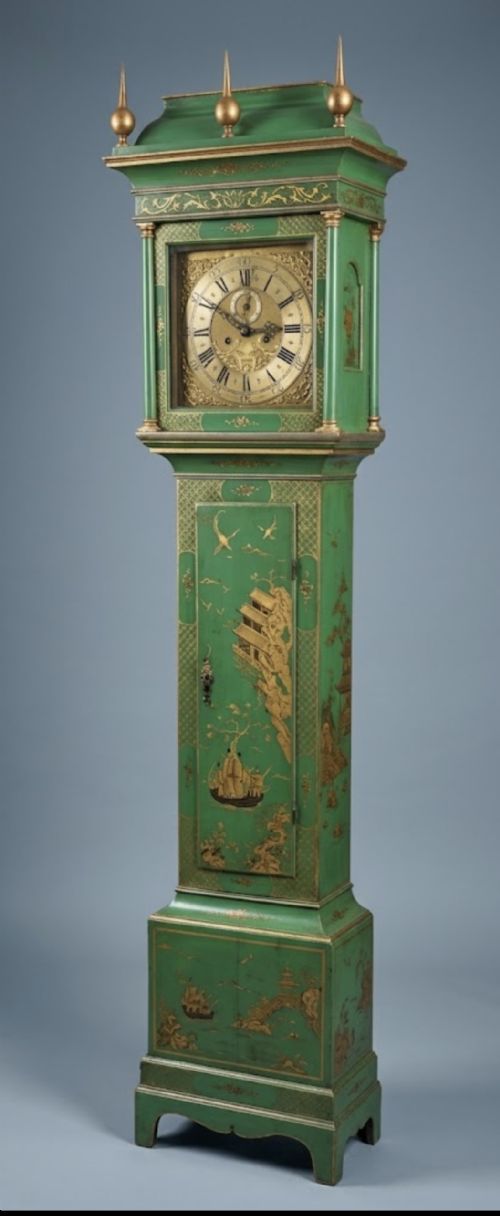
Cabinetmakers constructed the tall cases using native timbers such as oak and mahogany, occasionally applying lacquer or Chinoiserie decoration over the wood surface. Brass movements and painted iron dials were fitted inside the upper hood to drive the gear trains and hands.
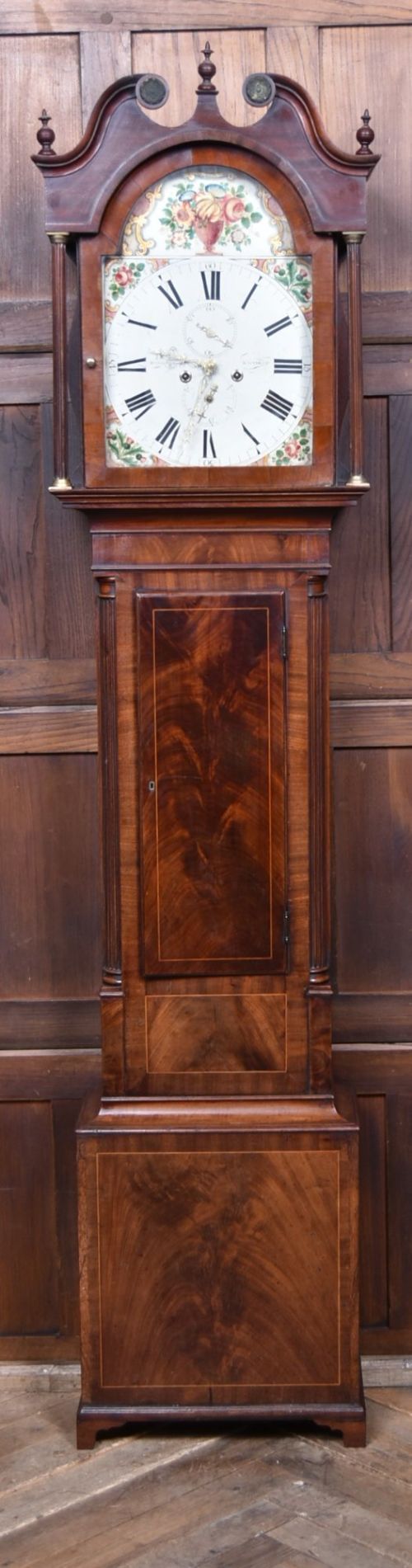
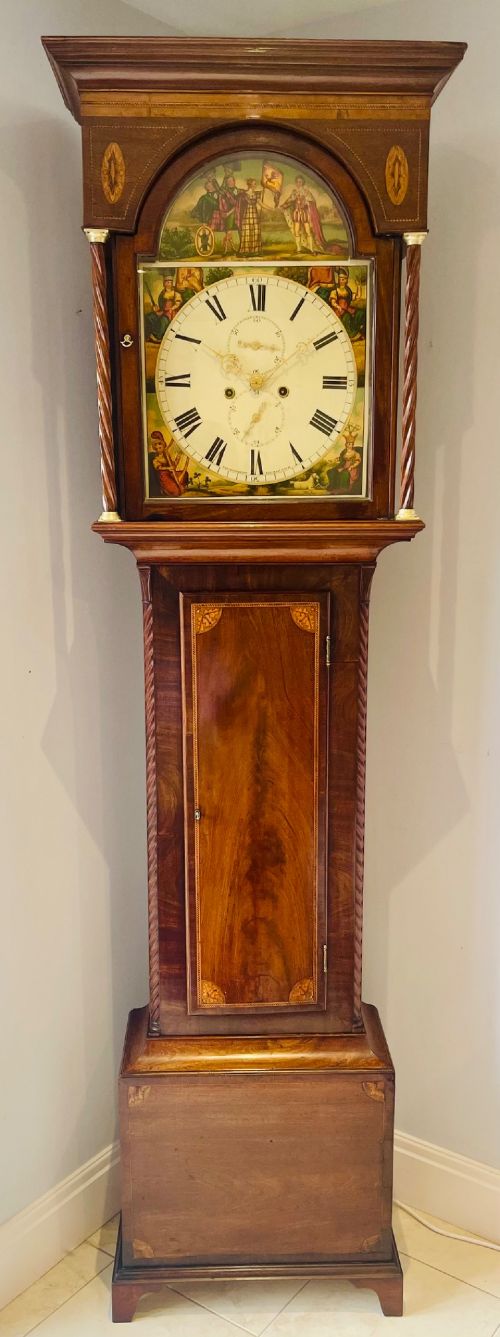
Makers integrated glass panels into the hood doors to protect the dial while allowing visibility of the face and brass hands. Moonphase mechanisms and subsidiary dials required precise gear cutting within the brass works to track lunar cycles alongside standard hours.
One cheerful Scottish example includes a painted horse upon the dial, proving that even strict timekeepers enjoy a touch of rural personality.
What Varies in Quality
The refinement of the cabinetwork and the intricacy of the painted dial separate standard pieces from superior examples. Finely figured flame mahogany veneers and detailed Chinoiserie lacquering indicate higher initial investment by the original buyer.
The reputation of the maker inscribed on the dial also influences standing, as does the complexity of the movement, such as eight-day durations or moonphase complications. Regional cabinet styles reflect local traditions that dictate the overall proportions and decorative carving of the case.
John Fielder of Alton·Hendrie Ogg·Tait Peebles·Samuel Kellett of Bredbury·Parkinson Bros Batley·D Williams of Crickhowell·Thomas Webbe of New Quay·Richard Sharkey Birmingham·Thwaites London·Charles Dowsett Of Canterbury·John Denbigh Merton Park·Edward White Birmingham·David Craig Ford Path head·Edward Shepley of Manchester
The Antique Painted Floor Clock Glossary
- Longcase clock
- A tall pendulum clock enclosed in a wooden case standing directly on the floor. These instruments are frequently referred to as grandfather clocks.
- Moonphase
- A dial mechanism tracking the phases of the lunar month. This display typically sits within an arched opening above the main clock face.
- Chinoiserie
- European decorative style imitating Chinese artistic traditions, often executed in lacquer on furniture. This technique appears on specific tall clock cases.
- Drum head
- A circular clock head design resembling a drum, housing the movement above the long trunk. This form appears on Victorian mahogany examples.
- Grandmother clock
- A smaller version of the traditional longcase clock, built with reduced proportions. These compact timepieces suit rooms with lower ceilings.
Antique Painted Floor Clock: Frequently Asked Questions
How do I wind an antique floor clock?
Most eight-day movements require a key to draw the weights back up the trunk every week. Turn the key steadily while supporting the case to avoid disturbing the pendulum.
Ensure you do not overwind the movement once tension increases on the barrel or line. Keeping the weights balanced ensures the escapement maintains an even beat.
Where should I place a grandfather clock?
Position the clock against an interior wall away from direct sunlight and heating vents to protect the timber case. Fluctuating temperatures and humidity can cause wood to warp and affect the internal mechanism.
Ensure the floor surface is entirely level so the pendulum swings centrally without dragging. A stable foundation keeps the beat regular and prevents excessive wear on the pivot holes.
How do I tell Georgian clocks from Victorian ones?
Georgian examples often feature simpler oak or figured mahogany proportions with architectural hood designs and brass dials. Dial painting became more colourful and detailed as the nineteenth century progressed into the Victorian era.
Victorian pieces frequently utilise drum head designs or heavier mahogany cases with distinct regional signatures. Examining the interior timber construction and backboards helps confirm the period of manufacture.
What is a moonphase dial used for?
The moonphase dial tracks the cycle of the moon across a painted rotating disc behind an arched aperture. Farmers and mariners historically relied on this feature to gauge tides and night illumination.
Today, the complication adds visual depth and colour to the upper portion of the clock face. It requires an independent gear train connected to the primary movement.