
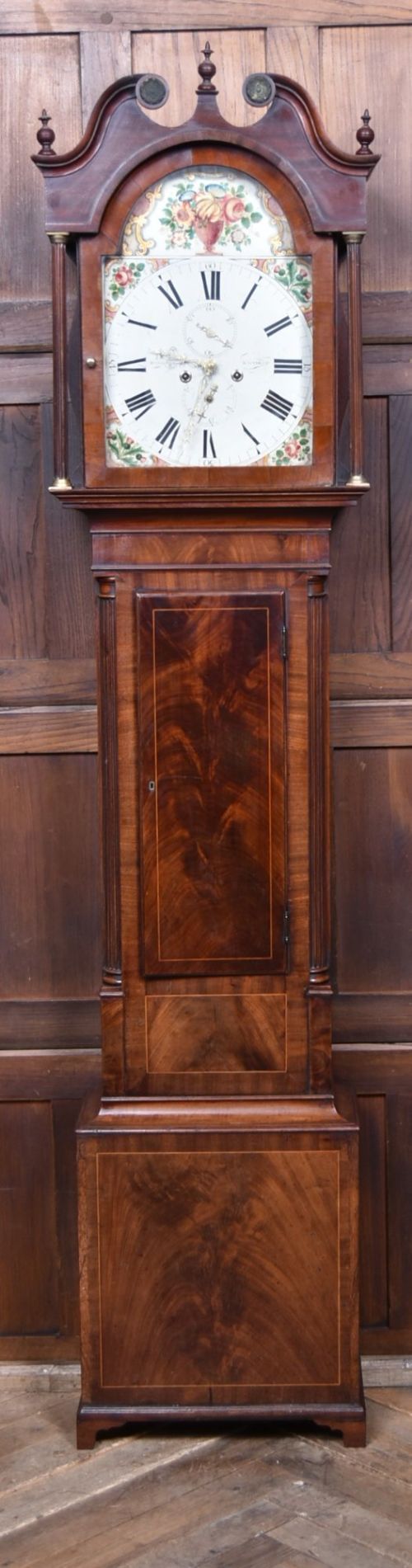
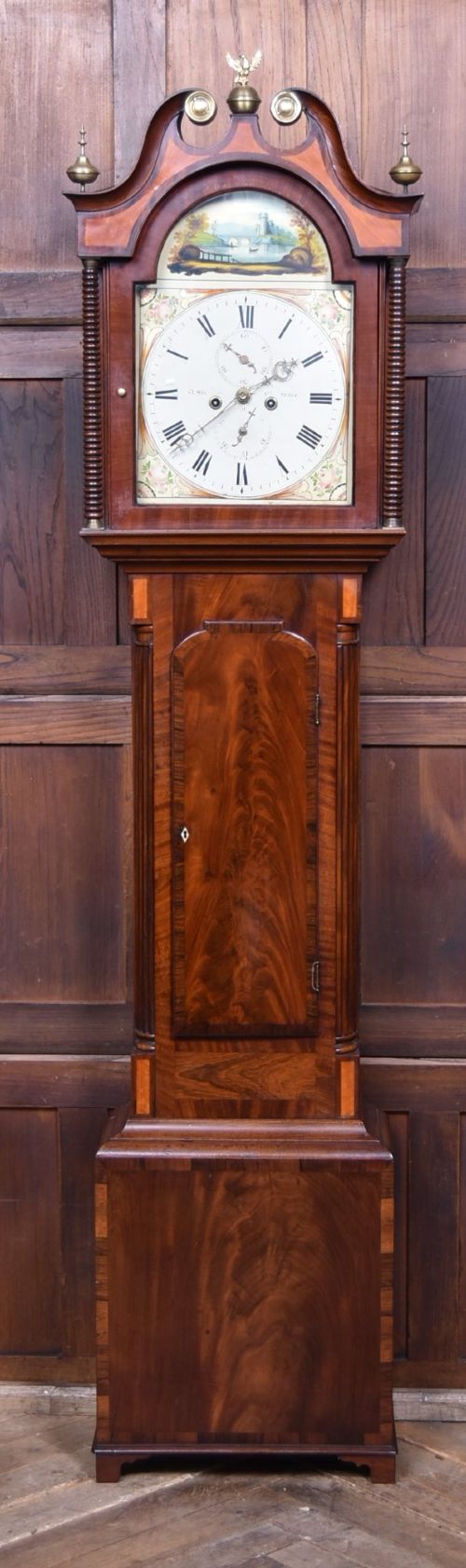
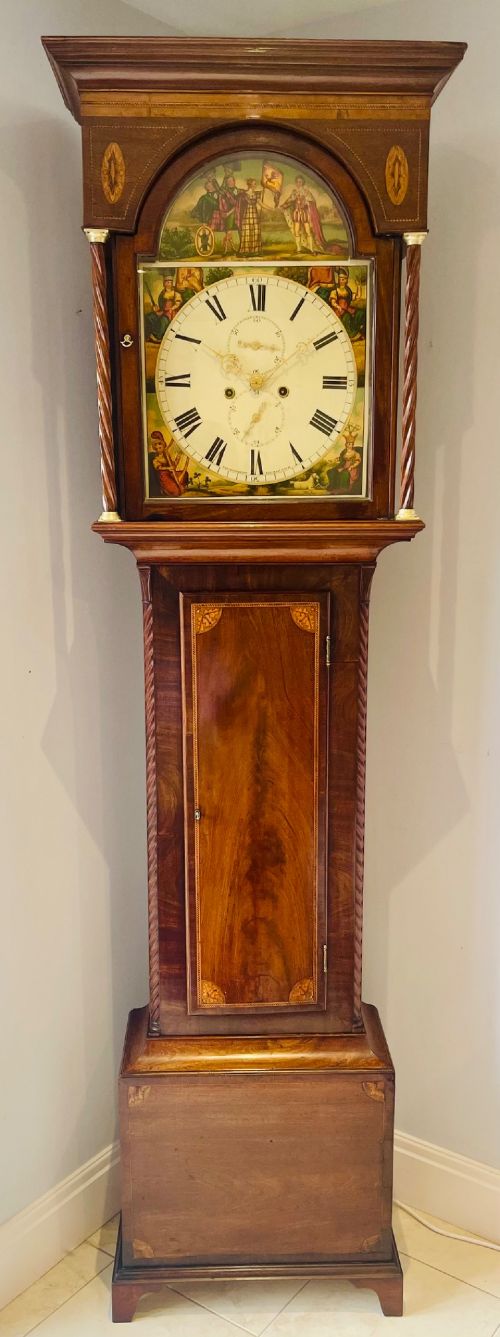
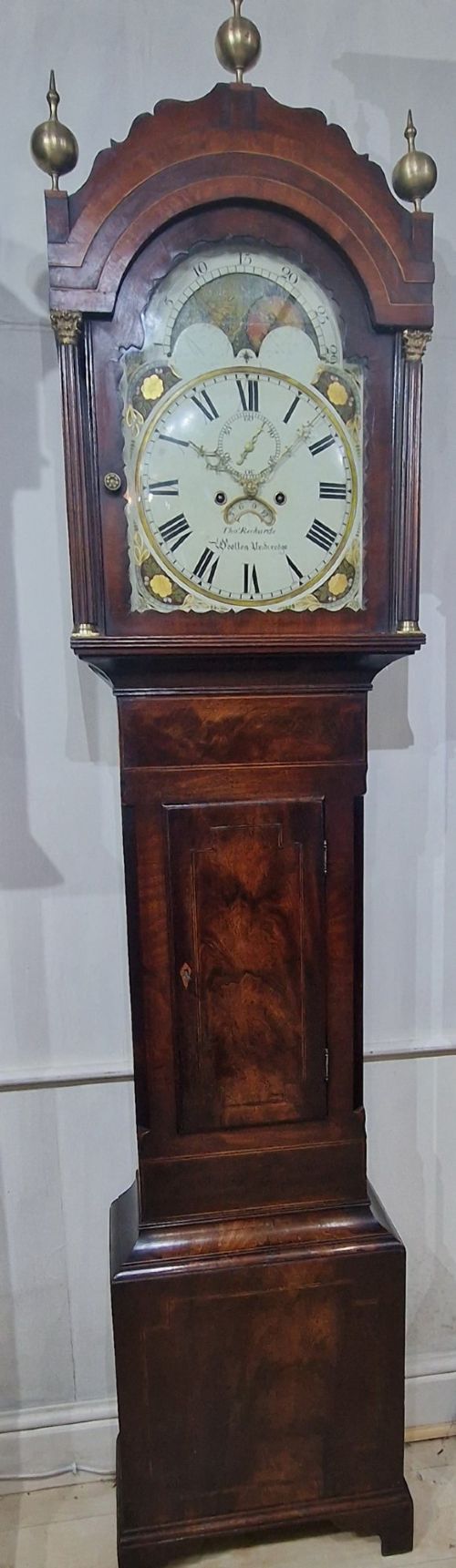


Painted Wooden Standing Clock
A painted wooden standing clock anchors a room with its slow ticking and upright presence, offering both utility and craftsmanship.
Painted Wooden Standing Clock
A painted wooden standing clock, commonly called a longcase or grandfather clock, brings vertical height and timekeeping together in a single floor-standing cabinet. When searching for a painted wooden standing clock, buyers encounter tall timber cases housing painted iron or enamel dials behind protective glass panels. These pieces span periods from the eighteenth century through the nineteenth century, including Georgian, Regency, and Victorian eras.
Most examples found on this page combine wooden casework with painted dials, often featuring local signatures inscribed on the face. Regional British variations appear across the listings, ranging from Scottish workshops in places like Dunfermline, Montrose, and Leith to Welsh, English, and Channel Island origins. The forms vary from straightforward oak housings to grander flame mahogany architectural cases with rolling moon phases and automata details.
Assessing craftsmanship and execution
Quality in these upright timepieces rests on the integration between the cabinetmaker's woodwork and the dial painter's skill. Finer examples display carefully selected flame mahogany grain, balanced proportions, and crisp lettering on the painted iron face by named provincial makers.
Some nineteenth-century clocks feature automata where lions' eyes move in time with the ticking movement.
Hendrie Ogg Dunfermline·D Straiton Montrose·John Banks Oldham·Wm Stanford·W Prior Skipton·Rob Parry Pwllheli·Edward Renouf Jersey·Charles Denham Durham
The Painted Wooden Standing Clock Glossary
- Longcase clock
- A tall, floor-standing pendulum clock enclosed in a wooden case. These tall structures protect the swinging pendulum and driving weights while displaying the dial at eye level.
- Grandfather clock
- A colloquial term for a longcase clock. The expression gained popularity after a nineteenth-century song cemented the nickname.
- Moon phase
- A mechanical display on the clock face tracking the lunar cycle. This feature uses a rotating disk behind the dial to show the phases of the moon.
- Enamel
- A glassy substance fused to metal to create a smooth, glossy clock face. Enamelled dials provide a durable, bright surface for painted numerals.
- Eight day
- A clock movement requiring winding once a week. These mechanisms use longer drops and heavier weights than thirty-hour variants.
Painted Wooden Standing Clock: Frequently Asked Questions
How do I wind a longcase clock?
Winding involves using a small crank key inserted into winding holes on the dial face to pull the internal weights upward. Care must be taken not to overwind the mechanism.
Most eight-day movements require this attention roughly once a week, keeping the pendulum swinging steadily and the striking train functioning.
What is the difference between oak and mahogany cases?
Oak cases generally date from earlier provincial production, offering a sturdy, visible grain pattern with a warm, golden-brown hue. Mahogany variants, particularly those featuring flame grain, often appear in later or grander commissions.
Cabinetmakers selected mahogany for its ability to take a deep polish and hold crisp architectural details on the hood and trunk.
How can I tell the age of a standing clock?
Dating relies on stylistic shifts in the timber case, the shape of the dial arch, and the signature of the maker inscribed on the face. Georgian and eighteenth-century examples tend to feature simpler square dials and heavier oak construction.
Victorian and mid-nineteenth-century pieces frequently incorporate elaborate painted iron arches, rolling moon mechanisms, and rich mahogany veneers.
Where were these clocks originally made?
These timepieces originated in workshops across Britain and the Channel Islands, often bearing the name of the town and maker on the painted dial. Regional centres in Scotland, Wales, and English counties produced distinct local interpretations.
Towns such as Dunfermline, Montrose, Reading, and Durham each contributed unique stylistic flourishes to their regional clockmaking traditions.