
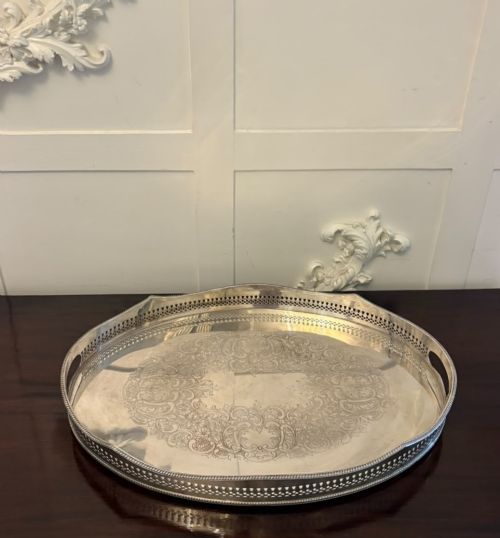
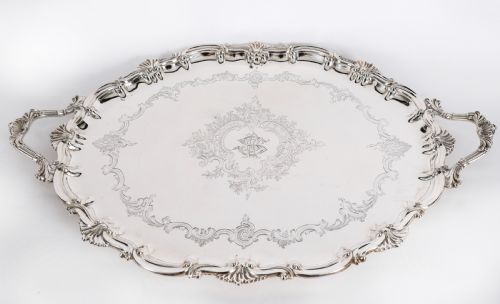


Antique Oval Salver
An antique oval salver is a distinguished serving piece that brings historic elegance to any table, valued for its fine craftsmanship and enduring utility.
Antique Oval Salver
An antique oval salver is a refined serving vessel designed for presentation and hospitality, appearing primarily as serving trays, platters, and centrepieces. When you search for an antique oval salver, you encounter pieces spanning from the Georgian period through the Victorian and Edwardian eras into Art Deco.
The examples available on this page include sterling silver and silver plate, alongside base metal, copper, and EPNS variants. These items serve functional and decorative roles, shaped by the stylistic preferences of nineteenth century European and British makers.
Materials and Construction
The construction of these pieces relies heavily on sterling silver and silver plate over base metals or copper, utilising traditional metalworking techniques. Engraved decoration frequently adorns the surface, displaying intricate patterns executed by skilled hands.
Makers applied heavy plating methods such as EPNS on robust metal foundations to ensure durability while retaining the lustrous appearance of solid silver. Handles and raised borders were often cast separately and attached securely to the main body of the tray.
Listings feature sterling silver and silver plate pieces from the Georgian, Victorian, Edwardian, and Art Deco periods, including copper and EPNS examples.
Assessing Quality and Distinction
Quality in an antique oval salver rests upon the weight of the metal, the crispness of the hand engraving, and the structural integrity of the handles and feet. Substantial gauge silver or thick silver plate indicates superior manufacture.
The reputation of the silversmith or manufacturer significantly influences the standing of a piece, with established firms demonstrating superior artistry in proportion and ornamentation compared to unmarked or standard workshop productions.
Mappin & Webb·Thomas Bradbury & Sons·Harrison Bros·Elkington & Co·Peters Hamburg·Tiffany & Co
The Antique Oval Salver Glossary
- Salver
- A tray, usually made of silver or silver plate, used for serving drinks or food. Historically, these pieces held glasses or letters handed to guests.
- EPNS
- Electroplated Nickel Silver. A process where a thin layer of silver is deposited onto a nickel brass foundation using electrical current.
- Sterling Silver
- An alloy consisting of ninety-two point five percent silver and seven point five percent other metals, typically copper. This standard ensures both strength and beauty.
- Hallmark
- A series of official marks stamped on items of precious metals in the United Kingdom. These symbols certify the standard of purity, the maker, and the year of assay.
- Centrepiece
- A large decorative item placed in the middle of a dining table. In silverwork, these often take the form of substantial footed trays or platters.
Antique Oval Salver: Frequently Asked Questions
What is an antique oval salver used for?
These pieces historically served for presenting tea, wine, or letters to guests in formal households. Today, collectors utilise them as decorative table centerpieces or functional serving trays.
Their substantial construction allows them to hold decanters, glassware, and tea services securely during social gatherings.
How do I clean a silver salver?
Cleaning requires a specialised silver polish and a soft cloth to remove tarnish without abrading the underlying metal or engraving. Avoid harsh chemical dips that strip away the original finish and vintage character.
Regular, gentle dusting and careful hand washing with mild soap preserve the lustre of both sterling silver and silver plate.
How can I tell sterling silver from silver plate?
Sterling silver items generally bear hallmarks indicating the standard of purity, such as a lion passant for British silver. Silver plate pieces typically show marks denoting electroplating methods or the maker's trade name without assay office symbols.
Examining the edges can also reveal base metal showing through where the silver plating has worn down over decades of use.
What periods do these trays come from?
The pieces span multiple historical eras, including the Georgian, Victorian, and Edwardian periods, as well as the Art Deco style of the twentieth century. Each era introduces distinct stylistic motifs, ranging from ornate Victorian engraving to streamlined geometric Deco lines.
Maker marks and stylistic cues help date individual examples accurately.