


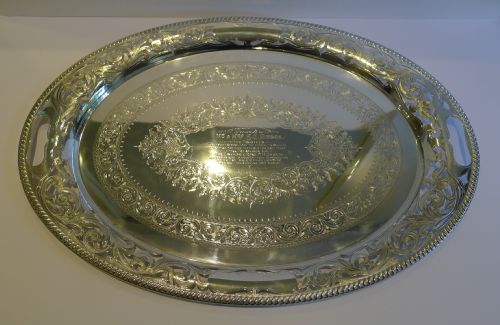
Epns Drinks Platter
An epns drinks platter provides a gleaming, silver-plated stage for glassware and bottles during formal service and entertaining.
Epns Drinks Platter
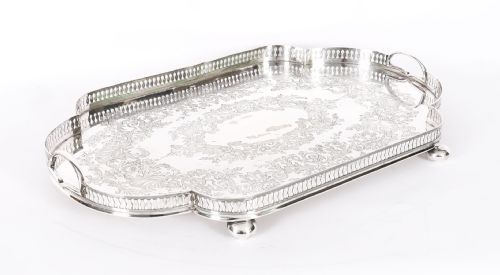
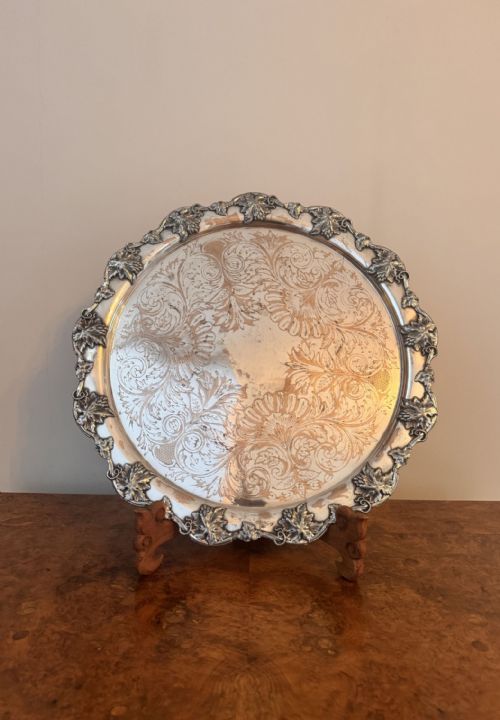
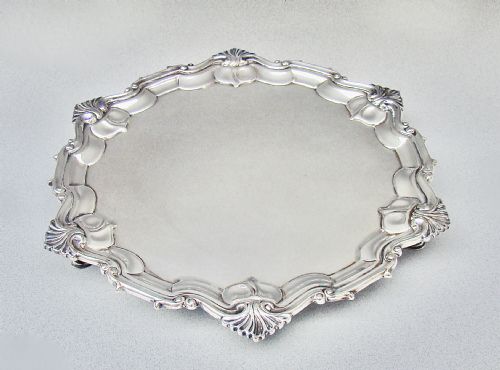
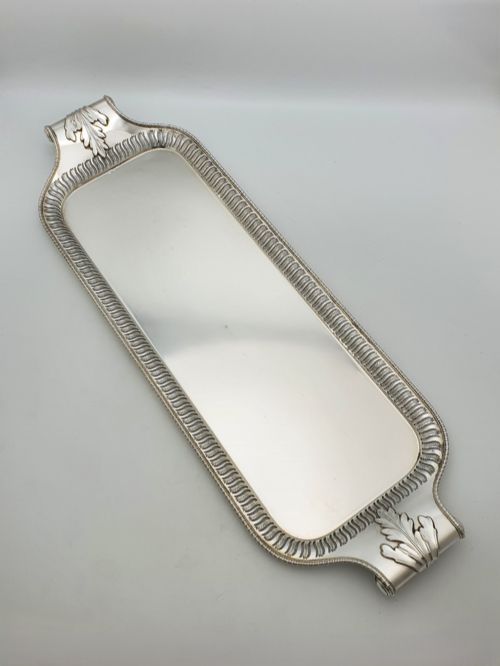
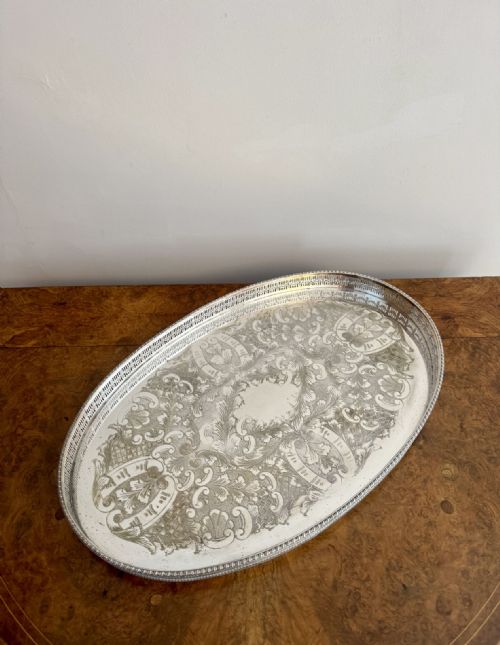
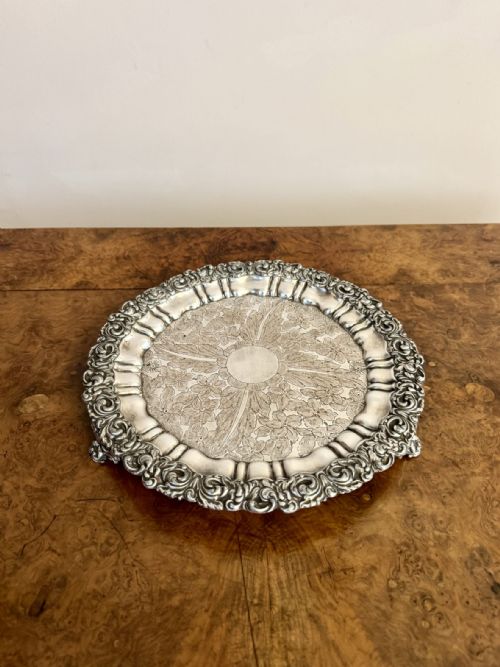
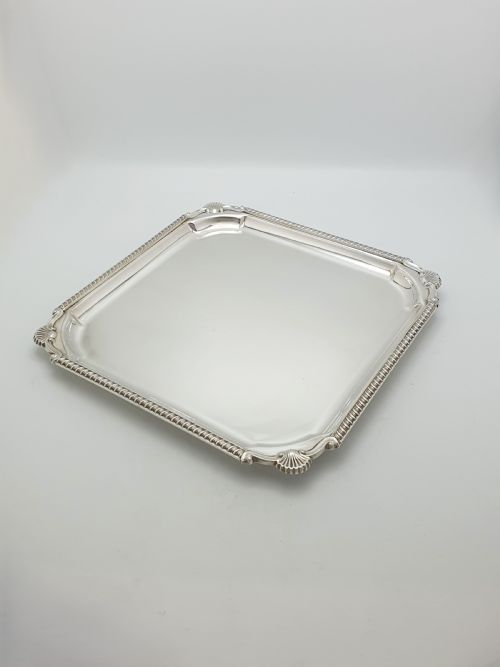
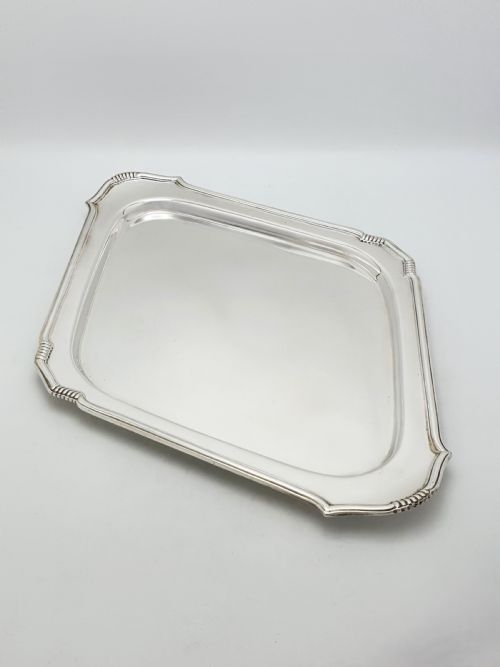
An epns drinks platter takes many forms across the Victorian, Edwardian, and Art Deco periods, ranging from large circular salvers to twin-handled serving trays. These pieces serve as the foundation for pouring spirits or presenting drinks, built from durable metal bases coated in a shining layer of silver.
What varies in quality
The thickness of the underlying nickel silver and the integrity of the silver plating dictate the longevity and wear resistance of each tray. Substantial weight, crispness in pierced gallery work, and solid handle attachment distinguish the finer workshops from standard production.
Design complexity and maker reputation separate standard utilitarian items from substantial presentation pieces. Master silversmiths and established firms invest greater care in edge finishing, chased surface details, and structural reinforcement.
Diamond-shaped cocktail trays from the 1920s required guests to develop entirely new angles of approach when reaching for a martini.
James Deakin·William Hutton & Sons·Mappin & Webb·Hukin & Heath·Atkin Brothers·Walker & Hall·Lee & Wigfull·J.H. Potter
The Epns Drinks Platter Glossary
- EPNS
- Electroplated Nickel Silver. This material forms the rigid base metal core before the silver coating is applied.
- Gallery tray
- A tray with a raised pierced or pierced-and-cast metal wall around the perimeter. This architectural rim keeps glassware secure during serving.
- Reticulated
- Decorated with an openwork network or net-like pattern. Artisans pierce the metal sheet to achieve this decorative border effect.
- Salver
- A flat serving tray, usually circular and supported on small feet. These pieces typically display formal chased engraving across the central field.
- Silver plate
- A thin layer of pure silver bonded to a base metal. This technique offers the appearance of solid silver at a different scale of production.
Epns Drinks Platter: Frequently Asked Questions
How do I clean my epns drinks platter?
Use a soft cloth and a gentle silver polish formulated for plated items to maintain the surface shine. Avoid harsh abrasive cleaners that can wear away the thin silver layer over time.
Wash the tray in warm soapy water after entertaining and dry it thoroughly with a lint-free cloth to prevent water spots on the plated surface.
Can I use an antique drinks tray daily?
These platters function well for regular serving if handled with reasonable care and protected from abrasive contact with heavy ceramics. Placing felt pads underneath heavy decanters protects the centre field from scratches.
Store the tray in a dry environment away from direct heat sources to preserve the electroplated finish over years of use.
How do I distinguish Victorian from Art Deco trays?
Victorian and Edwardian versions often display ornate pierced galleries, floral chasing, and traditional circular or oval outlines. They prioritize elaborate decorative borders and substantial handles.
Art Deco items embrace geometric forms, diamond shapes, and stylized shell motifs with cleaner lines. Their aesthetic reflects the modern design shifts of the 1920s and 1930s.
What is the difference between a salver and a tray?
A salver specifically refers to a flat serving platter raised on small feet, traditionally used for presenting letters, calling cards, or drinks. They are frequently circular with decorative borders.
Serving trays encompass a broader category that includes twin-handled rectangular, oval, and gallery designs intended primarily for carrying multiple glasses or bottles across a room.