




Antique Oval Jardiniere
These antique oval jardiniere pieces are substantial plant vessels shaped for floral displays, bringing historic horticulture indoors.
Antique Oval Jardiniere
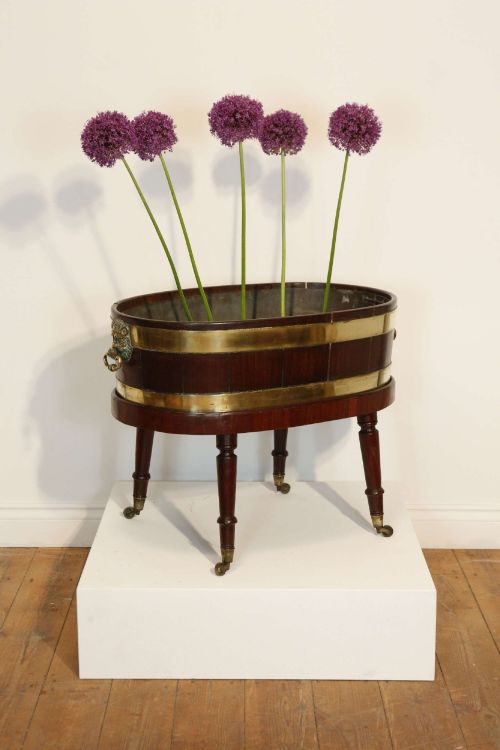
When you search for an antique oval jardiniere, you encounter vessels designed to hold potted plants and floral arrangements within domestic rooms. These pieces appear across several centuries, originating as dedicated plant containers or adapting from wine coolers and cisterns.
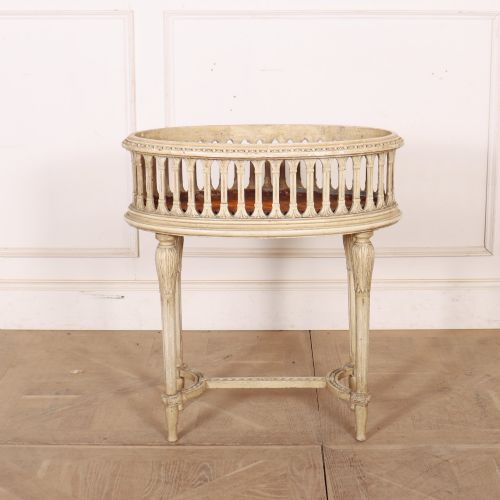
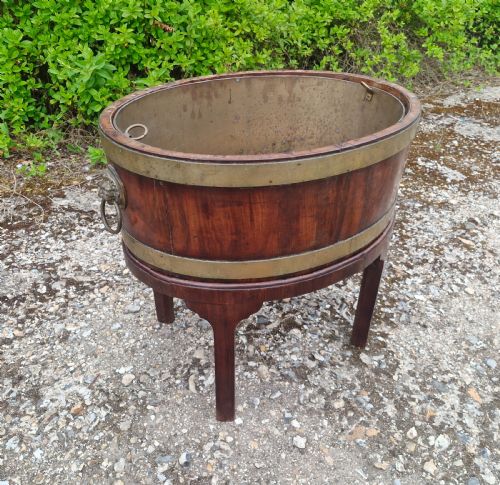
The versions most commonly met on this page span the 18th and 19th centuries, taking forms such as boat-shaped planters, side tables with inlaid surfaces, and grand brass-bound wooden receptacles. Their elongated oval profiles allow them to sit comfortably on sideboards, tables, or dedicated stands.
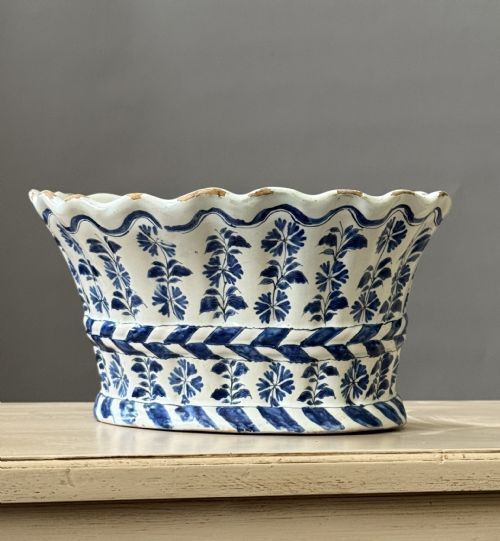
Makers utilised diverse materials to house greenery, ranging from rich mahogany and solid copper to tin-glazed earthenware and gilt metal. Styles shift from Georgian neoclassical severity and Regency faux marble to ornate French 19th-century bronze and fluid Art Nouveau lines.
How they were made
Coopers and cabinetmakers constructed wooden examples using timber such as mahogany, often reinforcing the oval bodies with heavy brass bands or incorporating ebonised wood and aboyna inlay. These methods ensured the wood could withstand damp soil and heavy watering over long periods.
Metalworkers cast bronze and solid copper into sweeping forms, sometimes applying intricate gilt metal mounts and marquetry. Ceramic pieces relied on tin-glazed earthenware traditions, painting pigments directly onto the unfired glaze before firing.
Antique Oval Jardiniere Retail Price Guide 2026
Typical asking prices for oval jardiniere among the pieces listed under this phrase on Sellingantiques today, from the lower quarter to the upper quarter. They describe what is for sale here now, not the wider market.
Styles include Georgian, Victorian, Delftware, Louis XVI style, Napoleon III, French 19th Century, Regency Neoclassical, and Art Nouveau.
What varies in quality
The caliber of an antique oval jardiniere rests upon the crispness of its metal mounts and the selection of timber veneers. Finely figured mahogany and robust brass bindings indicate workshop care, whereas simpler constructions rely on plain painted finishes.
Proportion and decorative ambition dictate the upper tier of these vessels. Grand scale pieces featuring neoclassical faux marble or intricate marquetry inlay distinguish themselves from straightforward utilitarian plant holders.
The Antique Oval Jardiniere Glossary
- Bough pot
- An early vessel designed to hold cut branches and floral displays inside the home. These often feature distinctive pierced lids.
- Wine cooler
- A large container originally intended for chilling bottles in ice, frequently adapted as a plant jardiniere due to its waterproof interior.
- Marquetry
- The art of applying decorative pieces of veneer to a structure to form intricate designs. This technique appears on French plant stands and tables.
- Aboyna
- A dense exotic timber used for decorative inlay work on nineteenth-century furniture and plant tables. Its rich grain adds visual depth to the surface.
Antique Oval Jardiniere: Frequently Asked Questions
What is an antique oval jardiniere used for?
These vessels serve primarily as indoor plant holders and decorative planters for floral arrangements. Historically, many also doubled as wine coolers or cisterns.
Today, they function effectively as table centerpieces or sculptural plant stands within reception rooms.
How do I care for wooden plant holders?
Wooden vessels require protection from standing water and damp soil to prevent timber warping and band corrosion. Using a removable inner liner safeguards the historic interior.
Applying appropriate wax maintains the polished finish of mahogany and ebonised surfaces over time.
Are these planters waterproof?
Metal and ceramic versions naturally contain moisture, though historic soldered seams require careful inspection. Wooden examples typically rely on metal linings to hold damp earth.
Lining the interior with a modern waterproof vessel prevents moisture damage to older timbers.
How can I tell the period of a jardiniere?
Dating relies on stylistic clues, construction methods, and material choices associated with specific eras like the Georgian or Edwardian periods. Neoclassical motifs point to the Regency era, while flowing floral shapes suggest Art Nouveau.
Examining the fixings, timber preparation, and decorative inlay helps narrow down the decade of manufacture.