


Antique Oriental Paintings
Antique oriental paintings bring centuries of distinct hand-painted artistry into a room, spanning delicate silk scrolls and vibrant reverse glass panels.
Antique Oriental Paintings
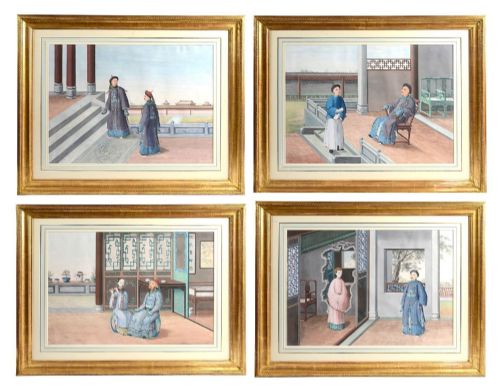
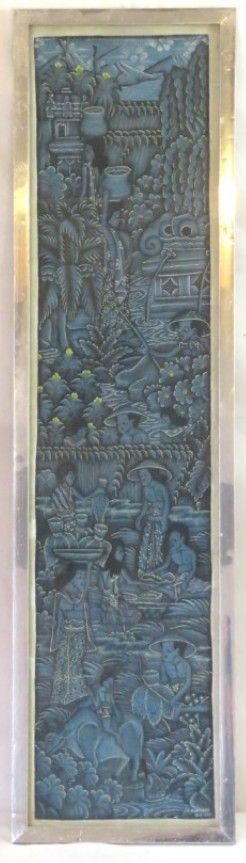
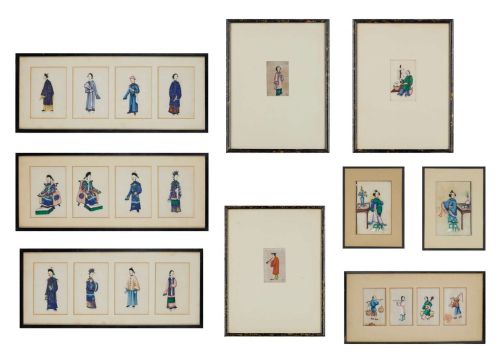
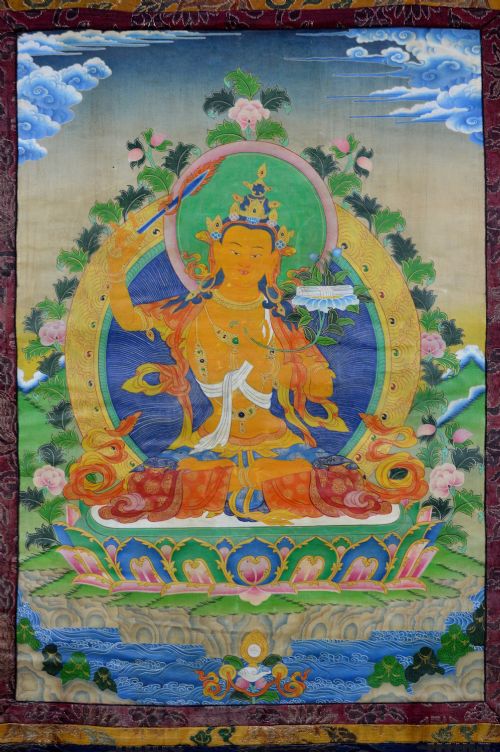
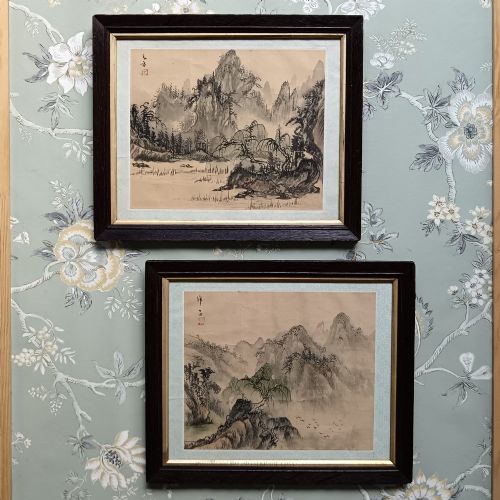
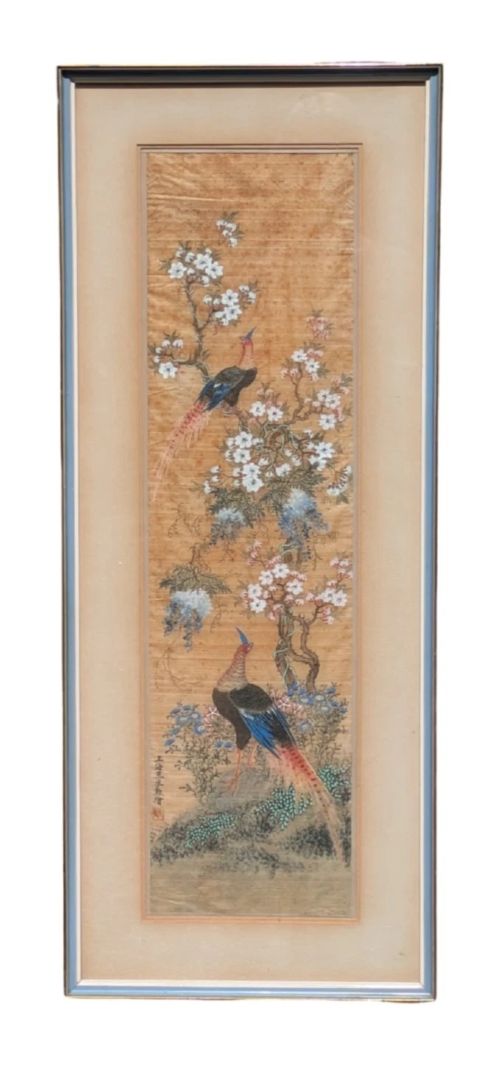
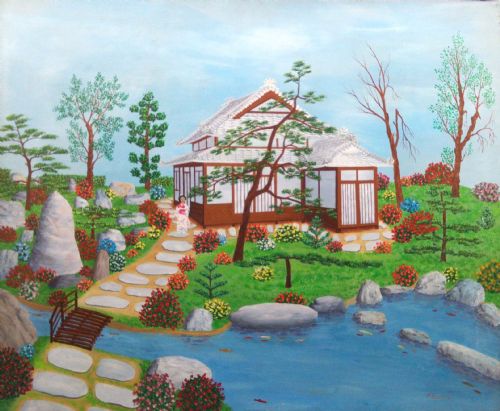
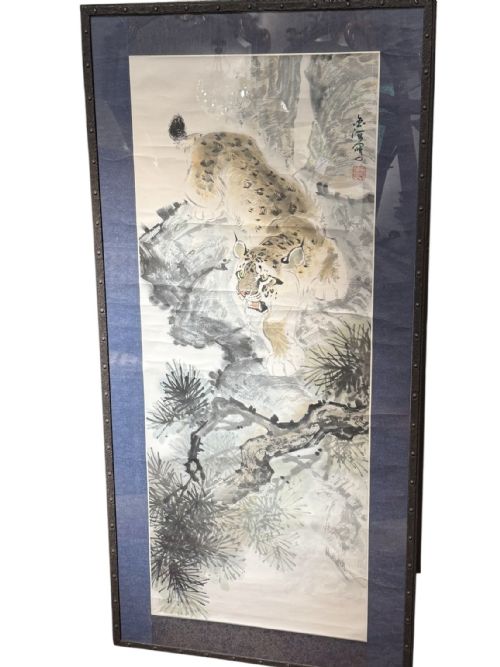
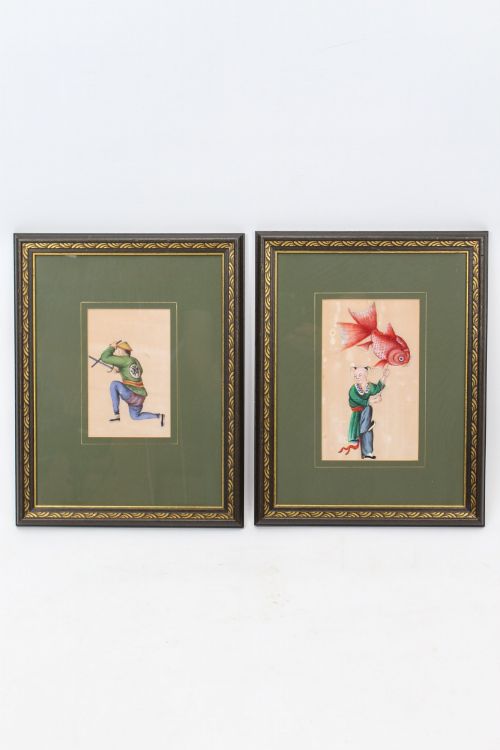
Chinese export works, traditional Chinese watercolours, and Japanese silk paintings form the core of what appears in this category. Subjects stretch from Buddhist deities and Daoist immortals to domestic figural groups and landscape watercolours.
Mughal miniatures and Indian school portraits also populate the selection, bringing distinct regional palettes and subjects into the mix. Wall mirrors and framed decorative artwork complete the grouping of items available to collectors.
How they were made
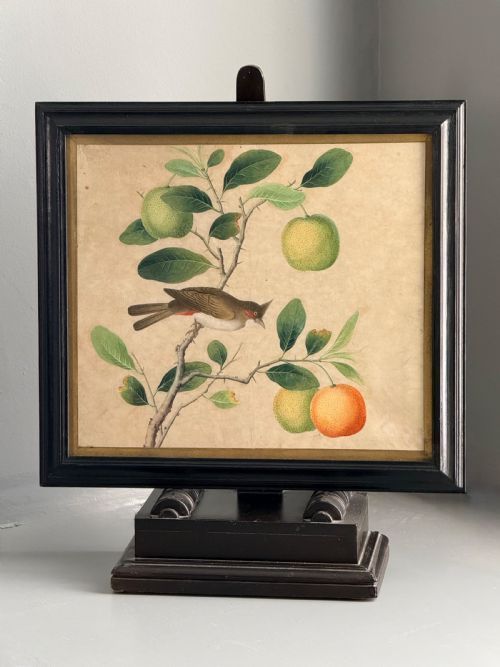
Artists painted on a variety of delicate organic supports including woven silk, fibrous pith paper, and standard paper. Pigments, gouache, ink, and watercolour were applied with fine brushes to achieve intricate detail in portraits and landscapes.
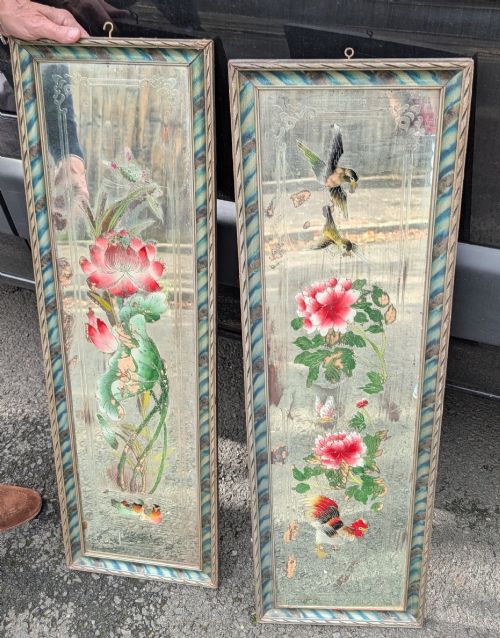
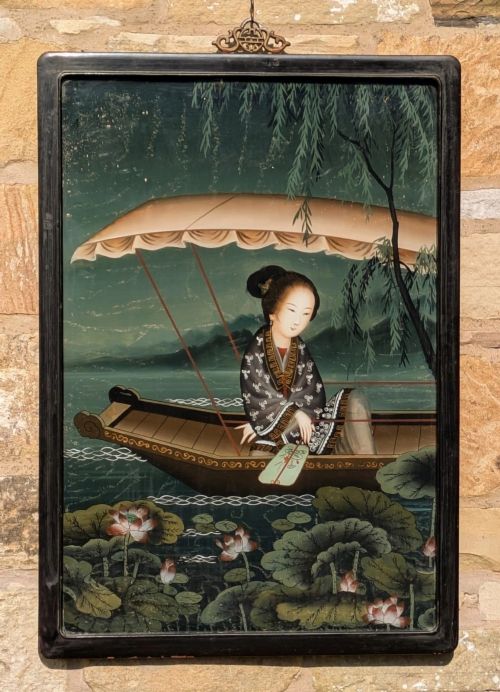
Glass panels received reverse painting techniques where artists worked backwards so the image displayed correctly through the transparent front. Wooden frames, often original to the pieces, housed these works alongside fabric scrolls.
Listings feature works created on silk, pith paper, and glass across the eighteenth, nineteenth, and early twentieth centuries.
What varies in quality
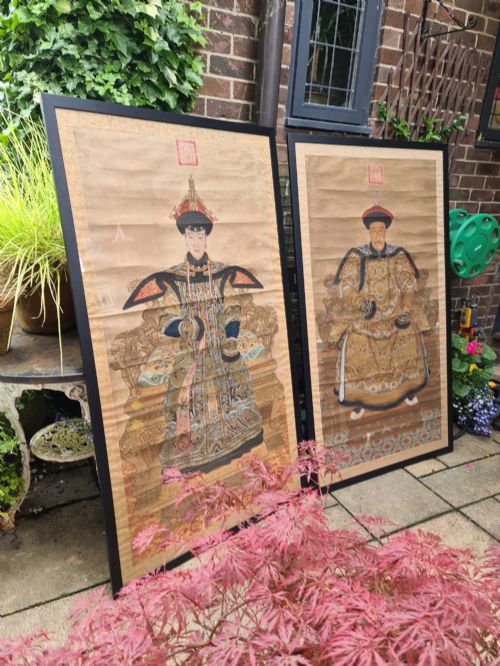
Brushwork precision and pigment preservation define the upper tier of these works, where fine lines remain sharp and colours retain their original vibrancy. The complexity of the composition, particularly in multi-figure ancestral scrolls or detailed court portraits, distinguishes master execution from standard trade production.
The integrity of the fragile ground material - whether silk, pith paper, or reverse glass - influences the overall standard of a piece. Original framing and mounting contribute further distinction, preserving the historic context of the artwork.
Frederick Goodall RA·Takabatake Kasho
The Antique Oriental Paintings Glossary
- Pith paper
- A delicate material formed from the pith of the Tetrapanax papyrifer plant, commonly used for nineteenth-century Chinese watercolours. It absorbs water-based pigments with a velvety finish.
- Reverse painting on glass
- A technique where the artist paints directly onto the rear surface of a glass pane, viewed from the unpainted front. This method creates a brilliant glossy surface sheen.
- Gouache
- An opaque water-based paint composed of pigment, water, and a binding agent such as gum arabic. It provides rich, solid colour blocks in miniature and scroll works.
- Ancestor scroll
- A hanging painting commissioned to honour family forebears, typically displayed during rituals. These formal portraits capture sitters in rigid, dignified poses.
- Shan Shui
- A traditional style of Chinese painting featuring natural scenery such as mountains and rivers. Brush and ink predominate in these contemplative landscapes.
Antique Oriental Paintings: Frequently Asked Questions
How should I hang antique silk paintings?
Silk paintings require careful placement away from direct sunlight to prevent the organic fibres and pigments from fading over time. Controlled indoor humidity helps preserve the textile ground.
Mounting them behind protective UV-filtering glass safeguards the delicate surface from airborne dust and moisture damage.
What is pith paper?
Pith paper is a fragile, spongy material sliced from the stem of a plant native to southern China. Nineteenth-century artists used it extensively for botanical and figural watercolours.
Because the material resembles rice paper in texture, older cataloguing sometimes mislabels it, but its unique cellular structure is distinct.
How do I identify reverse glass paintings?
Reverse glass paintings present a glossy, reflective surface where the imagery sits visibly behind clear glass. Looking closely reveals that the finest outline details were applied first before the background colours.
These pieces often feature trade frames from the nineteenth century that secure the glass panel directly against a backing board.
Are ancestor scrolls signed?
Ancestor scrolls were typically created by workshop artists as devotional or familial commissions rather than personal statements. Consequently, many lack artist signatures or dates.