




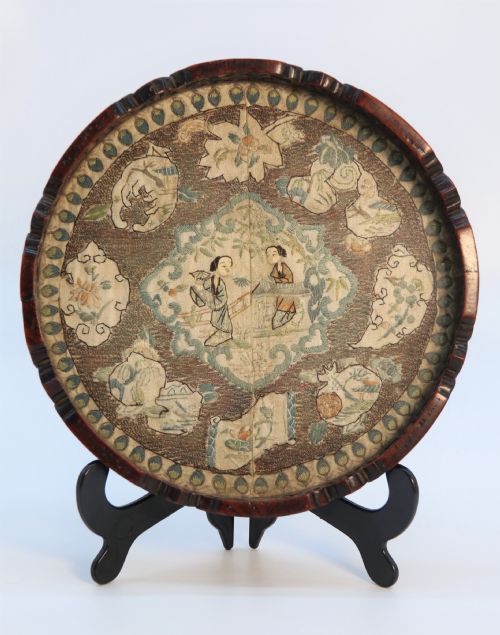


Antique Oriental Embroidery Panel
An antique oriental embroidery panel brings texture and narrative depth to a room, offering a tangible link to historical workshops across Asia.
Antique Oriental Embroidery Panel
An antique oriental embroidery panel encompasses textiles originating from regions such as China, Central Asia, Japan, and the Ottoman Empire. These works take the form of wall hangings, framed pieces, folding screens, and fragments designed for both decorative and domestic utility.
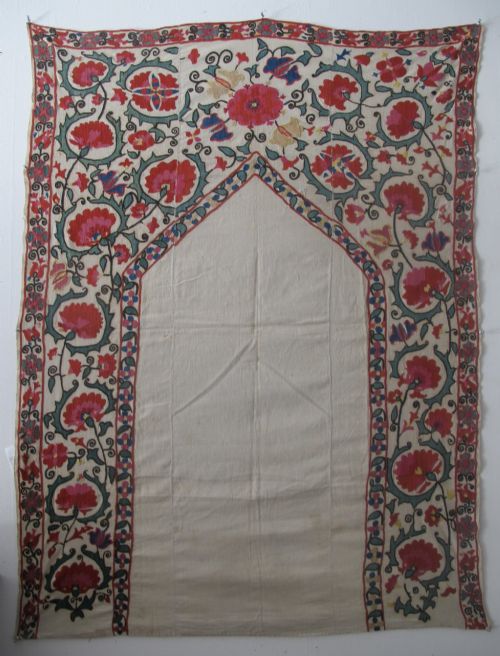
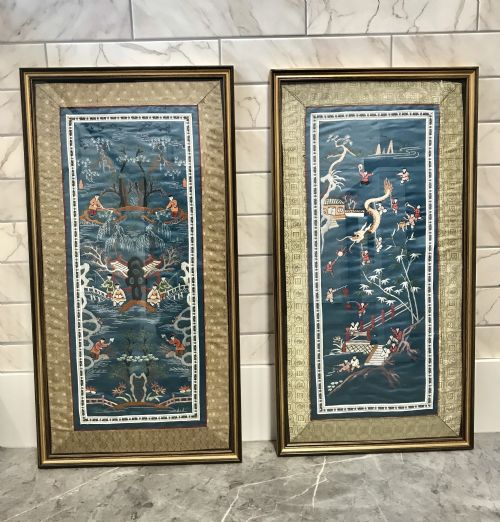
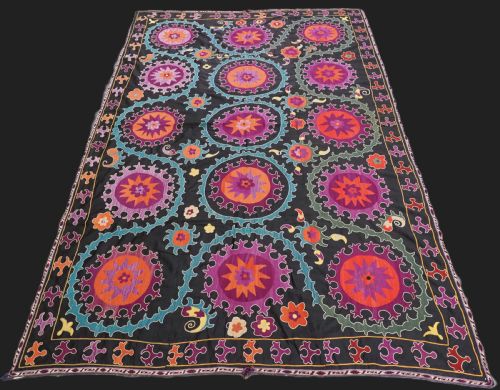
The most common examples on this page hail from the nineteenth century, including Uzbek suzanis, Chinese silk panels featuring figures and dragons, and Persian Rasht needlework. Buyers encounter various formats ranging from large architectural suzanis to small amulets and folding screens.
Geographic styles dictate the visual language, shifting from the dense floral motifs of Qing Dynasty silkwork to the bold geometric structures of Central Asian tribal pieces. Each region utilises specific compositional frameworks that define its distinct identity.
Materials and construction methods
Artisans constructed these textiles primarily using fine silk, cotton, and wool grounds, often embellished with metallic thread and felt applique work. Ground fabrics range from black and red cotton to sturdy hardwood frames and glass housings used for protection.
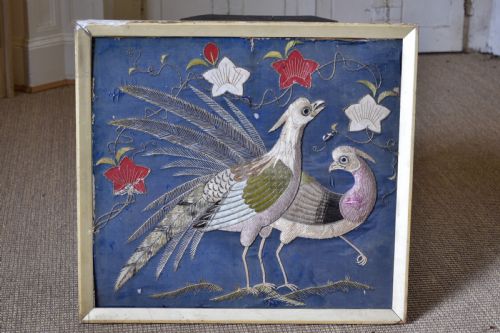
Needlework techniques relied on careful hand sewing, executed to high standards by skilled craftspeople across generations. Workshops in Persia and Uzbekistan applied silk and felt applique onto solid backings, while Chinese pieces utilised intricate threadwork to depict birds, trees, and figures.
A goose in flight demonstrates the surprising scale achievable by nineteenth-century textile artists working purely in silk.
Distinctions in execution and survival
Quality rests in the precision of the hand sewing and the complexity of the design layout, separating standard domestic work from master-level execution. Finer examples maintain structural integrity across their grounds, whether silk, cotton, or felt, despite centuries of age.
The preservation of original materials, including metallic threads and delicate silk dyes, determines the visual impact of the piece. Superior panels retain crisp iconography, from architectural suzani motifs to detailed avian and floral arrangements.
Iida Takashimaya Company
The Antique Oriental Embroidery Panel Glossary
- Suzani
- A type of embroidered tribal textile originating from Central Asia, typically worked in silk on a cotton or wool ground. These panels often feature large-scale floral or geometric designs.
- Rasht embroidery
- A traditional Persian form of textile art characterised by intricate silk and felt applique work. Artisans layer coloured wool and felt onto a backing fabric to create rich, textured patterns.
- Qing Dynasty
- The final imperial dynasty of China, spanning from the seventeenth to the early twentieth century. Pieces from this era frequently showcase dragons, garden birds, and floral symbolism.
- Applique
- A needlework technique where smaller pieces of fabric, such as felt or silk, are stitched onto a larger foundation ground. This method adds raised dimension and contrasting colour to the surface.
- Chinoiserie
- A European artistic style that reflects Chinese aesthetic influences. Items in this category adapt traditional Eastern motifs for Western interiors.
Antique Oriental Embroidery Panel: Frequently Asked Questions
What is a suzani?
A suzani is a decorative embroidered tribal textile created in Central Asia, traditionally worked in vibrant silk threads on a cotton or linen foundation.
These pieces were often made as part of a bride's dowry and served various domestic functions, including wall hangings and furniture covers.
How were Chinese embroidered panels displayed?
Chinese embroidered panels were frequently mounted under glass, framed as wall art, or incorporated into hardwood folding screens and firescreens.
This mounting protected the delicate silk threads and hand-sewn figures from dust and handling.
What materials are used in Persian Rasht embroidery?
Persian Rasht embroidery relies on a combination of silk stitching and felt applique work applied to a sturdy backing fabric.
Artisans layered coloured wool and felt to build up complex, tactile designs without relying entirely on surface needlework.
How do I care for an antique textile?
Antique textiles require protection from direct sunlight to prevent the fading of natural silk and cotton dyes.
Displaying pieces away from high humidity and mounting them securely behind UV-filtered glass helps preserve the fabric fibres.