




Gold Thread Embroidered Textile
These gold thread embroidered textile pieces carry centuries of glittering metallic work upon silk, velvet, and wool, bringing rich historic texture to your interior.
Gold Thread Embroidered Textile
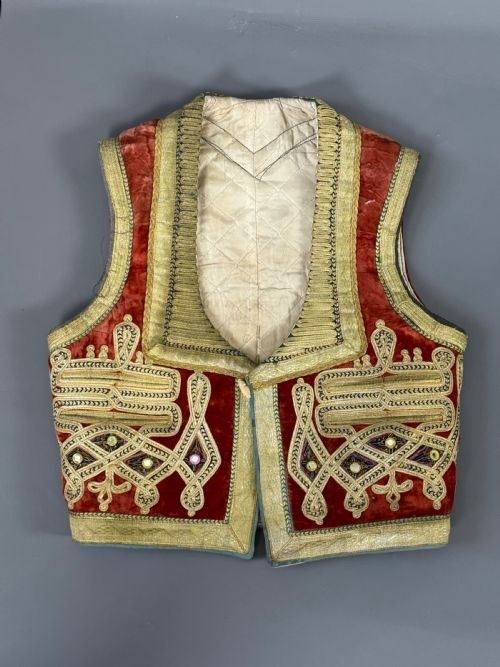
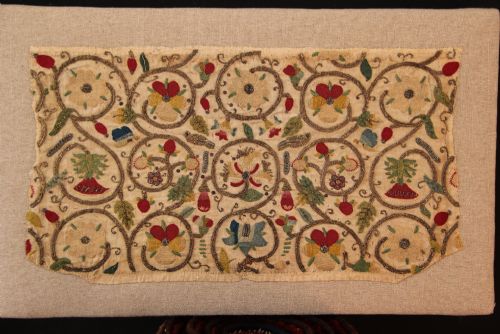
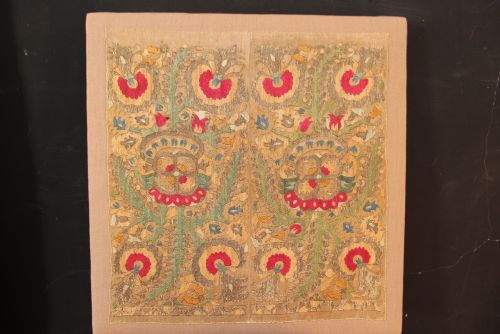
A gold thread embroidered textile brings together historic fragments, wall hangings, and framed panels worked in metallic threads across various international traditions. You will encounter nineteenth century Ottoman waistcoats, covers, and fragments alongside Indian silk panels depicting architectural scenes and wildlife. European pieces span sixteenth century Spanish velvet vestments and early seventeenth century English coifs, showing the wide geographic reach of metal thread needlework.
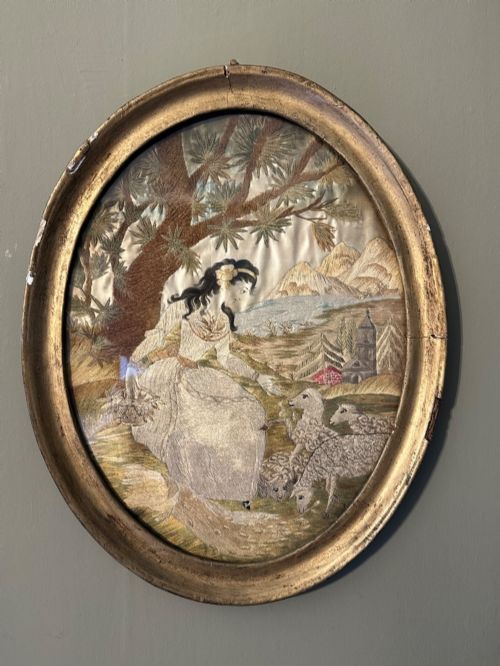
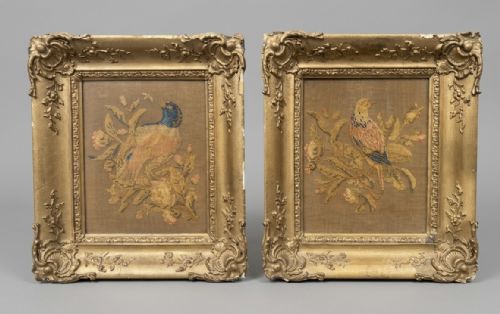
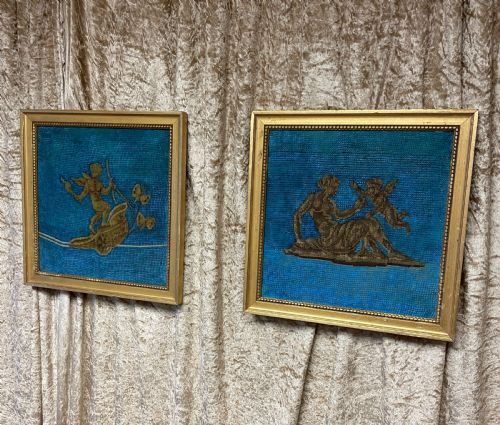
The forms vary from domestic items adapted for display to dedicated wall art and framed pictures. Panels, scarves, and longer hangings appear alongside pairs of framed bird embroideries and needlework pictures. These items function primarily as decorative focal points, often mounted behind glass or hung directly to showcase the interplay of light on metal and silk.
How they were made
The makers of these pieces worked primarily with silk, velvet, or wool grounds, applying metallic threads, silver elements, and occasionally sequins or glass beads by hand. Metal threads were couched down onto the surface or stitched directly through the heavy fabrics to form intricate patterns. Wooden frames and giltwood settings frequently support the panels that have survived in a framed format.
The techniques reflect distinct regional workshops, from Ottoman couched metal work on velvet and tülbent scarves to detailed pictorial silk embroidery from India and Qajar dynasty metal thread abayas. Early English examples utilise fine linen or canvas grounds for delicate coifs, while Spanish vestments employ heavy woven pile fabrics as a stable base for dense metallic ornament.
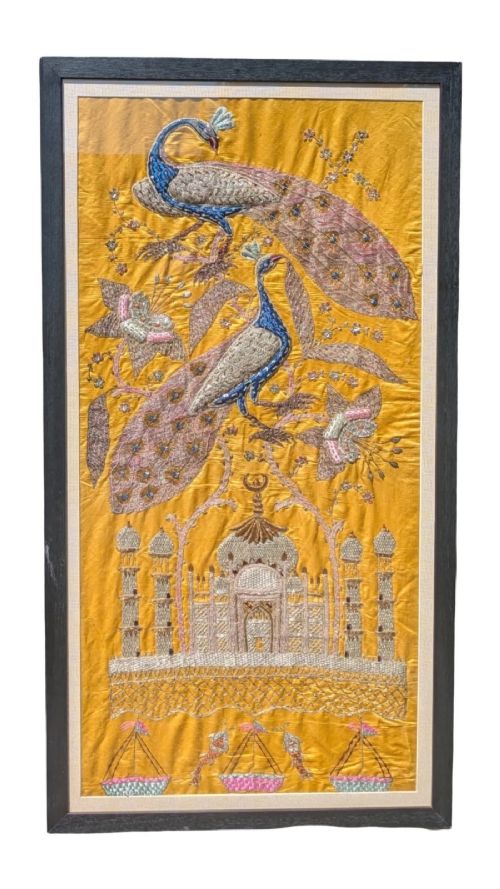
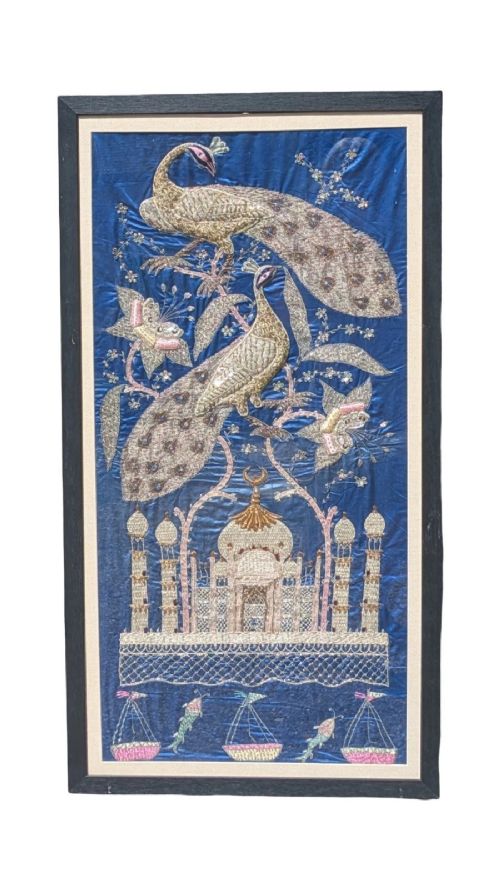
Peacocks strut across early twentieth century Indian silk panels, sharing space with the Taj Mahal in bright metallic thread.
What varies in quality
The quality of a gold thread embroidered textile rests upon the density of the metal work, the intricacy of the stitchery, and the overall survival of the delicate threads. Pieces with minimal losses to the metallic elements and stable ground fabrics represent the upper tier of craftsmanship. Finer execution shows in the precision of the pictorial details, such as architectural motifs or avian figures.
Condition and originality dictate much of the distinction between examples, particularly given the fragile nature of old silk and tarnished metal. Fragments and cut panels require sympathetic mounting, while complete garments or intact covers retain higher integrity of form. The depth of colour in the underlying velvet or silk enhances the brilliance of the gold and silver work above it.
The Gold Thread Embroidered Textile Glossary
- Coif
- A close-fitting cap worn in early modern England, frequently decorated with fine embroidery and metal threads. These small headwear pieces demonstrate domestic needlework skills of the period.
- Couching
- An embroidery technique where decorative threads are laid across the surface of the fabric and secured in place by small stitches of a finer thread. This method conserves costly metal thread by keeping the bulk of it on the face.
- Cope
- A long liturgical vestment resembling a cloak, worn by clergy during processions and ceremonies. They are often fashioned from rich velvet and heavily embellished with metallic embroidery.
- Tülbent
- A lightweight traditional Turkish scarf or headcovering, sometimes enhanced with delicate gold embroidery. These fine textiles offer a sheer ground for shimmering metallic pattern work.
- Abaya
- A traditional outer garment or long jacket, seen in Qajar examples featuring wool and metal thread decoration. Such garments combine robust textiles with ornate surface ornamentation.
Gold Thread Embroidered Textile: Frequently Asked Questions
How should I hang antique textiles?
Mount historic textiles behind protective glass with conservation-grade framing to prevent dust accumulation and physical snagging on the delicate metallic threads. Ensure pieces are kept away from direct sunlight to protect the underlying silk or velvet from fading.
Larger panels and hangings benefit from professional mounting on padded boards covered in neutral fabric. This distributes the weight evenly and prevents undue stress on the historic stitches.
What periods do these textiles cover?
The selection spans from the sixteenth century through the Regency era and into the nineteenth and early twentieth centuries. Pieces from the seventeenth century often include English coifs and velvet fragments, while nineteenth century examples frequently originate from Ottoman and Qajar workshops.
Each era brings distinct regional styles, ranging from Jacobean domestic needlework to grand Ottoman court textiles and nineteenth century Indian pictorial embroideries.
How do I identify Ottoman embroidery?
Ottoman embroideries typically feature characteristic floral motifs, rich metal-thread couching, and specific forms such as waistcoats, covers, and tülbent scarves. The use of dense gold and silver thread on heavy velvet or fine gauze is a common identifier.
Stylistic conventions often include symmetrical floral arrangements, stylized carnations, and tulips executed with vibrant silk threads alongside the metallic elements.
Are framed textiles original items?
Many framed textiles started life as garments, coverlets, or architectural hangings that were subsequently framed in later centuries to preserve and display them. Fragments and panel sections are frequently given new frames to make them suitable for wall mounting.
Checking the framing reveals whether the piece was intended as flat art from the beginning or adapted from a larger historic textile artefact.