


Antique Oriental Bedside Lamps
Antique oriental bedside lamps bring imported porcelain vases, cloisonné bronzes and carved lacquer vessels into domestic lighting schemes.
Antique Oriental Bedside Lamps
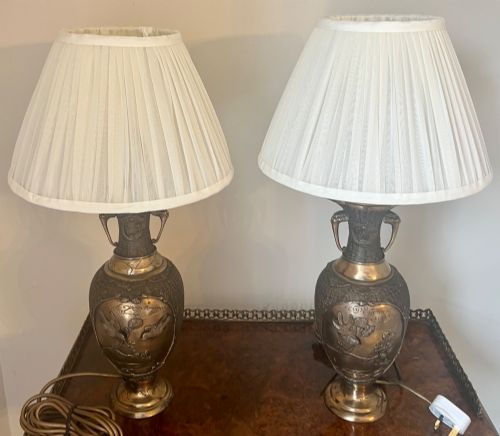
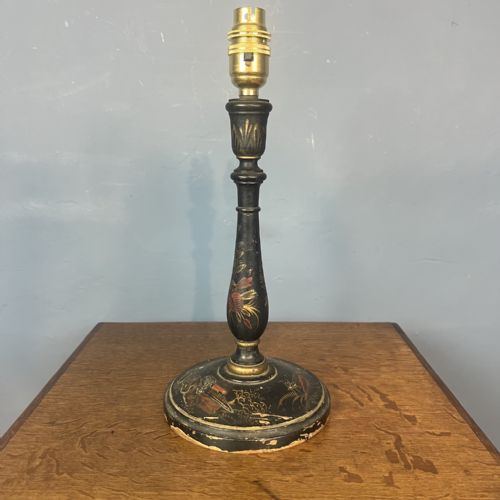
When buyers search for antique oriental bedside lamps, they encounter converted vessels originating from China, Japan, India and Southeast Asia, adapted during periods such as the Victorian and Edwardian eras or the early twentieth century. The selection consists largely of table lamps formed from ginger jars, vases, tea canisters and brush pots, alongside a smaller number of side cabinets designed in the chinoiserie style.
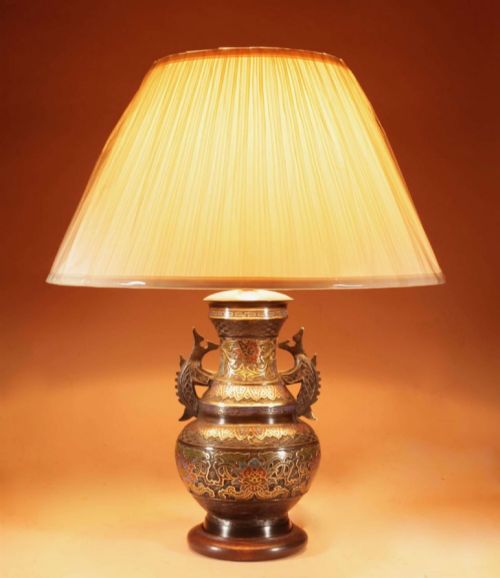
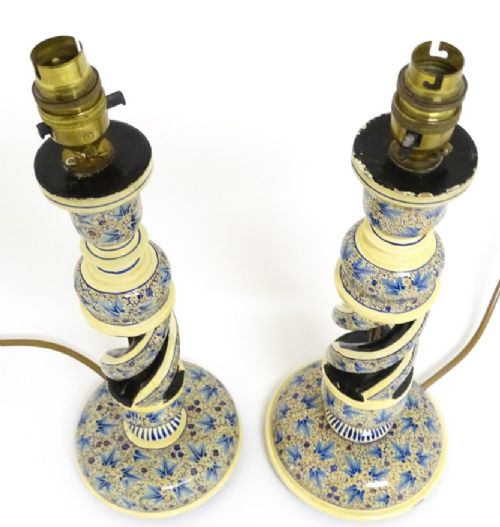
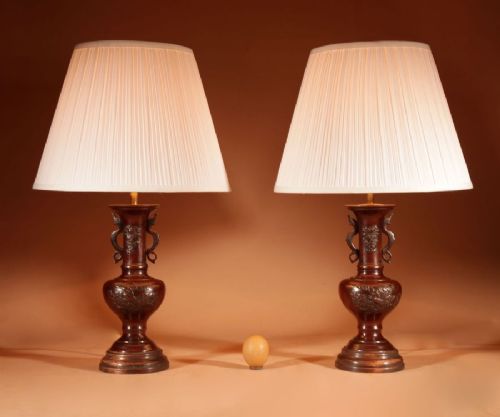
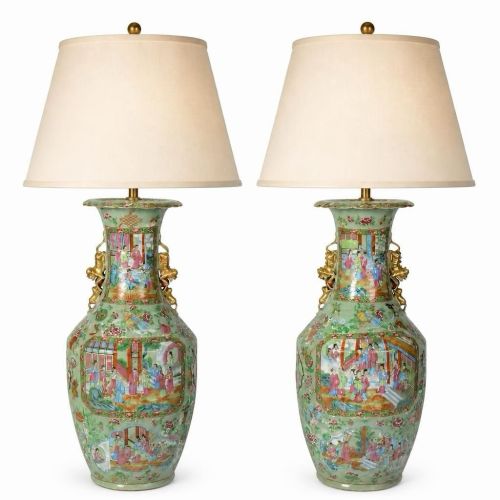
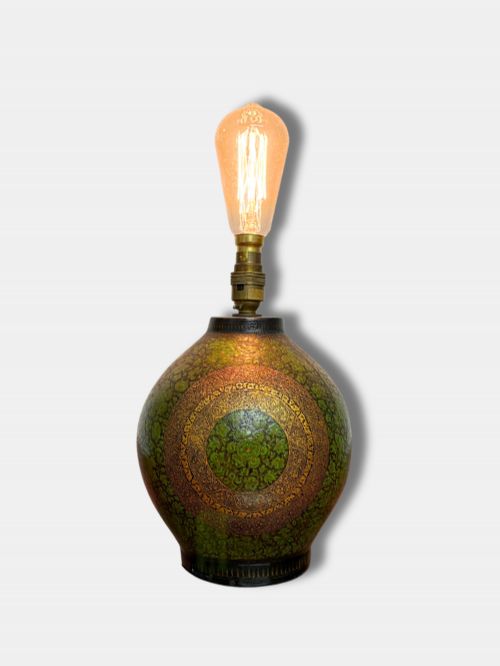
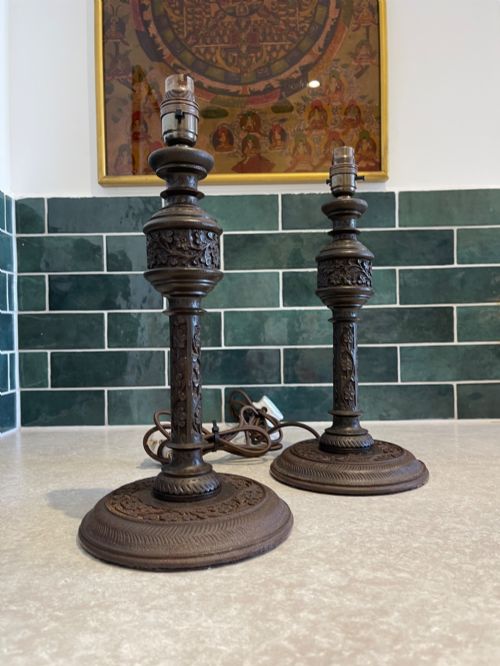
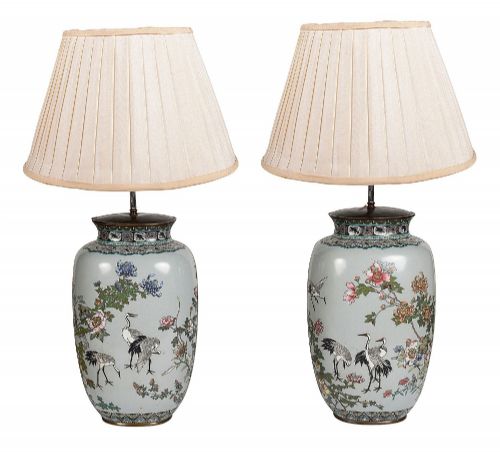
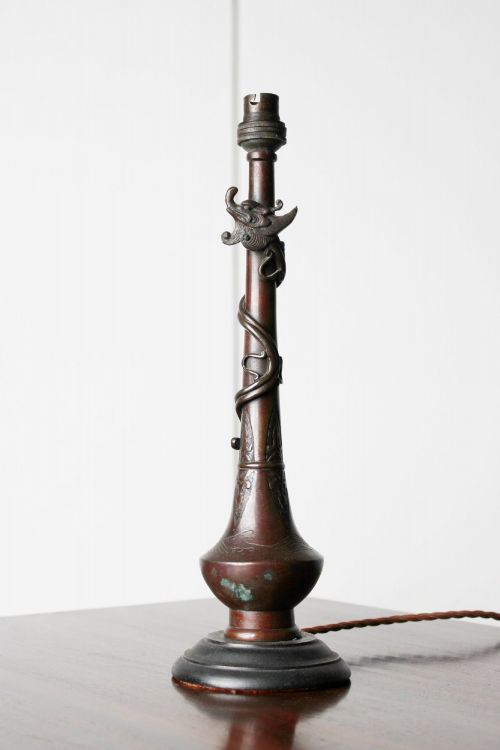
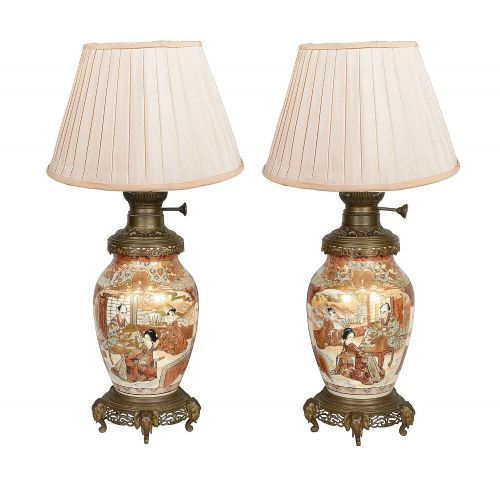
The objects stem from distinct decorative traditions, encompassing Chinese blue and white porcelain, famille verte and rose medallion wares, Japanese Satsuma, Kutani and Meiji period bronzes, and Kashmiri hand-painted woodwork. These pieces bridge Eastern craftsmanship and Western interior utility, utilising historical vessels mounted for electrical components.
Buyers meet pairs as frequently as single pieces, spanning styles from Chinoiserie and Qing dynasty aesthetics to Japanese Meiji period metalwork. The forms reflect both traditional export production and Western taste for exotic domestic furnishings during the late nineteenth and early twentieth centuries.
Materials and construction
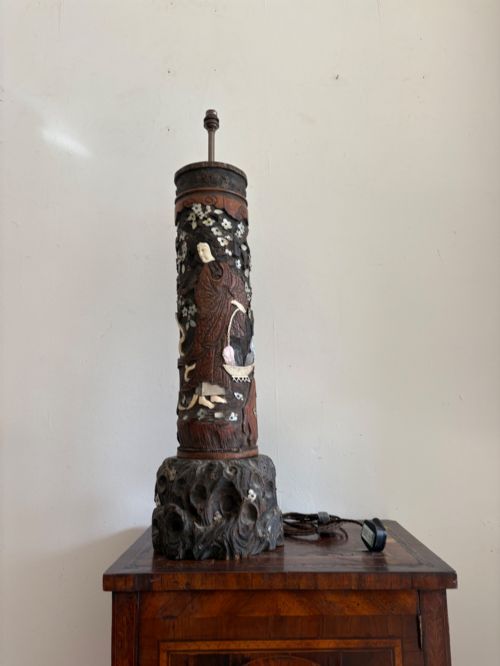
The construction relies on combining historical Asian vessels and decorative objects with contemporary or period lamp mountings. Makers utilised porcelain, bronze, brass, cloisonné enamel, lacquer, wood and fabric, drilling or mounting vessels to accommodate wiring and bulb fittings.
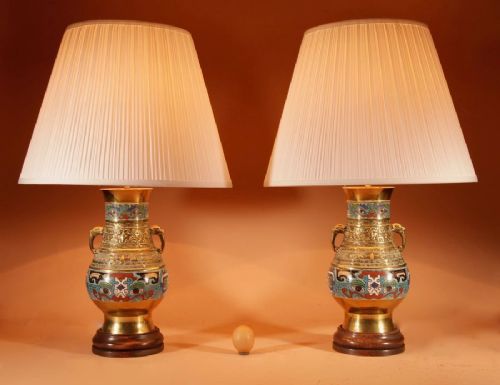
Porcelain bodies feature painted or crackleware glazes, including famille rose, famille verte, and blue and white designs created in kilns across China and Japan. Metal examples employ cast bronze and brass enriched with champlevé enamel or carved details, while wooden pieces display hand-painted or lacquered chinoiserie surfaces.
Listings span the 19th century, Edwardian era, Victorian period, and the 1920s and 1930s.
Variations in quality
Quality rests upon the original integrity of the vase, jar or bronze container utilised for the conversion, alongside the skill involved in mounting the piece without damaging the material. Fine examples preserve the depth of hand-painted enamel work, the crispness of bronze casting, or the richness of lacquer decoration.
The sophistication of the palette and the precision of the decorative motifs distinguish superior specimens from simpler decorative items. Additionally, the proportion and balance of the completed lamp determine its visual success within a room.
The Antique Oriental Bedside Lamps Glossary
- Chinoiserie
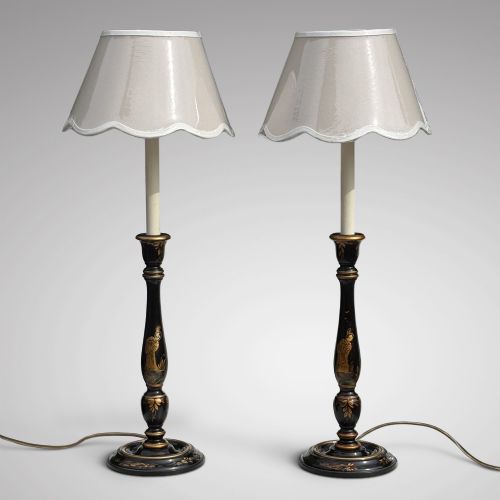
- European decorative style reflecting Chinese artistic influences. This aesthetic governed lacquerwork and painted furniture produced during the Victorian and Edwardian periods.
- Cloisonné
- Metalwork technique utilising soldered wire compartments filled with enamel paste. Craftsmen fired these vessels to produce colourful geometric and floral patterns.
- Satsuma
- Japanese pottery type featuring a crackled cream-coloured earthenware glaze. These wares typically display detailed polychrome and gilt decoration.
- Famille Verte
- Chinese porcelain palette dominated by green enamel overglaze colours. Artisans employed this scheme extensively during the nineteenth century.
- Champlevé
- Enamelling method where troughs or cells are hollowed out of a metal surface to hold coloured paste. Bronze lamps frequently display this technique.
Antique Oriental Bedside Lamps: Frequently Asked Questions
How do I choose the right height?
Consider the proportion of the lamp relative to your bedside table and headboard height. Taller ginger jar or vase lamps require adequate clearance for reading.
Ensure the lampshade proportions balance the volume of the ceramic or bronze base below.
Are these lamps converted from old vessels?
Most pieces originate as vases, ginger jars, tea canisters or brush pots produced in China, Japan or India. Craftsmen later adapted these historic vessels into functional lighting.
This conversion process preserves traditional craftsmanship while suiting modern domestic requirements.
How do I date these lamps?
Dating relies on the manufacturing period of the underlying ceramic, bronze or lacquer vessel rather than the electrical fittings. Evidence points to Victorian, Edwardian and early twentieth century periods.
Stall markers include Meiji period metalwork characteristics and nineteenth century porcelain palettes.
Can I find matching pairs?
The selection includes several matched pairs of vases and jars adapted as lamps, particularly in cloisonné, Satsuma and Kashmiri finishes.
Pairs provide symmetrical lighting for twin bedside tables or larger sleeping quarters.