











Antique Opaque Twist
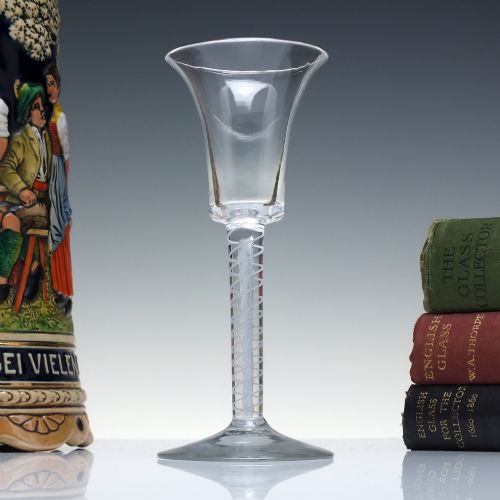
An antique opaque twist brings tactile depth to eighteenth-century drinking vessels through white enamel threads trapped inside clear glass stems.
Antique Opaque Twist
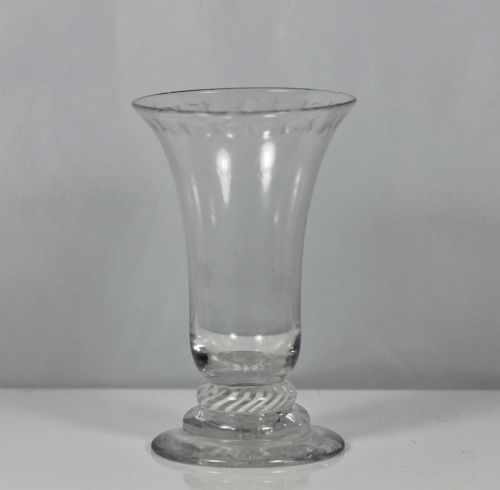
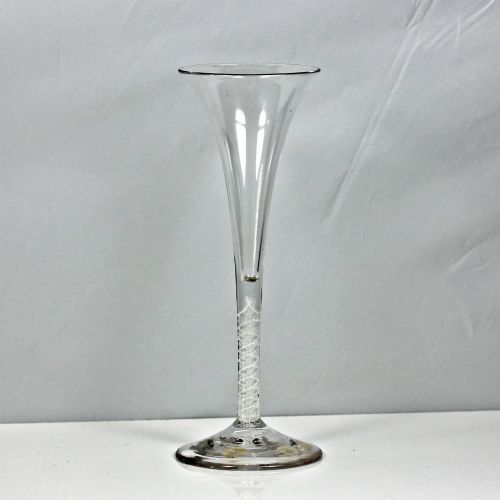
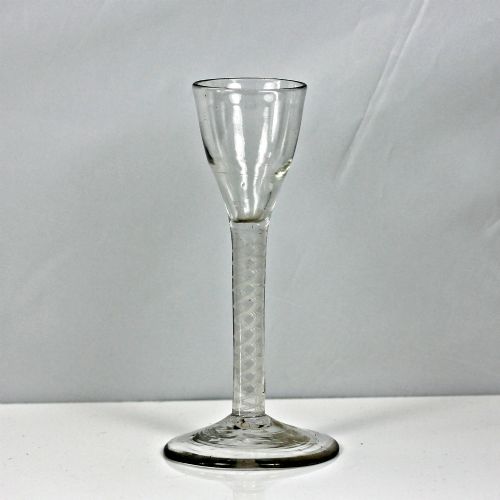
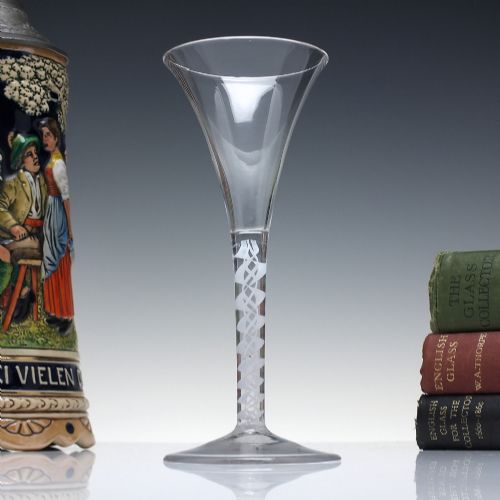
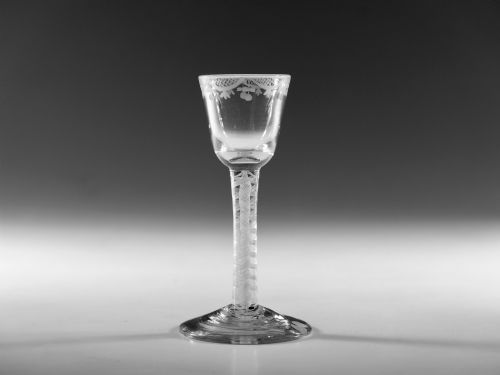
When you search for an antique opaque twist, you examine eighteenth-century glassware dominated by Georgian drinking vessels, specifically wine glasses and ale glasses. The forms vary from trumpet and ovoid bowls to ogee shapes, sometimes featuring flute-moulding, wrythen optical effects, or engraved hop and barley motifs.
Beyond standard wine glasses, the selection includes jelly glasses, sweetmeat glasses, champagne glasses, ratafia glasses, and sturdy ships glasses designed for stability. These pieces originate primarily from English glasshouses operating during the Georgian era, spanning the middle and latter decades of the eighteenth century into the Victorian period.
Materials and Technique
Makers utilised lead glass and lead crystal glass to form the heavy, clear body of each vessel, providing the necessary optical clarity to showcase the internal stem decoration. White enamel was drawn into fine rods and canes, which were then twisted together within the molten metal of the stem.
The internal patterns were shaped using single, double, or multi-spiral twists, sometimes incorporating corkscrew or mixed twist configurations alongside applied knops. Bowls were blown and shaped by hand, occasionally receiving detailed surface engraving or gilding before final cooling.
Antique Opaque Twist Retail Price Guide 2026
Typical asking prices for opaque twist among the pieces listed under this phrase on Sellingantiques today, from the lower quarter to the upper quarter. They describe what is for sale here now, not the wider market.
Listings span the eighteenth century and Victorian periods, utilising lead crystal glass and enamel to form wine and ale glasses.
Judging Quality
Quality rests upon the precision and complexity of the internal twist formation within the stem, where tightly drawn, symmetrical spiral threads demonstrate superior glasshouse skill. Simpler single series twists contrast with intricate multi-spiral or mixed twist configurations that demand advanced manipulation during manufacture.
The harmony between the stem structure and the bowl form dictates the overall refinement of the piece. Well-proportioned bowls, such as ribbed ogee or fluted shapes, combined with crisp engraving or balanced knops, elevate certain examples above standard domestic vessels.
The Antique Opaque Twist Glossary
- Single series opaque twist
- A stem containing a single pair of twisted opaque white enamel threads inside a clear glass column.
- Double series opaque twist
- A stem featuring two distinct pairs or sets of twisted enamel threads running concurrently, often combining a central gauze with outer threads.
- Ogee bowl
- A drinking vessel bowl with a distinctive S-curve profile, curving out at the rim and in towards the base.
- Wrythen
- A decorative optical twist moulded into the glass body or bowl, creating a spiralling ribbed effect.
- Sweetmeat glass
- A specialised small glass vessel with a wide bowl, utilised for serving preserved fruits or confections during formal dining.
Antique Opaque Twist: Frequently Asked Questions
What is an opaque twist glass?
An opaque twist glass is an eighteenth-century drinking vessel featuring a clear glass stem enclosing fine white enamel threads arranged in a spiral pattern.
These glasses were produced primarily in England during the Georgian period, serving as tablewares for wine, ale, and sweetmeats.
How do single and double series twists differ?
A single series twist contains one pair of enamel threads within the stem, whereas a double series incorporates two distinct sets of threads.
Double series examples often layer a central core of fine gauze threads inside an outer cable of spiral strands.
What bowl shapes appear on these glasses?
The listings show numerous bowl forms including trumpet, bell, ovoid, and ogee shapes, alongside specialised jelly and ratafia vessels.
Some bowls feature flute-moulding, wrythen ribs, or surface engravings depicting botanical motifs like hops and barley.
How can one date an opaque twist?
Dating relies on stylistic markers and manufacturing techniques associated with the Georgian era, typically falling between the mid-eighteenth century and around seventeen seventy.
Stem configurations, metal weight, and bowl profiles help distinguish these pieces from later Victorian revivals.