


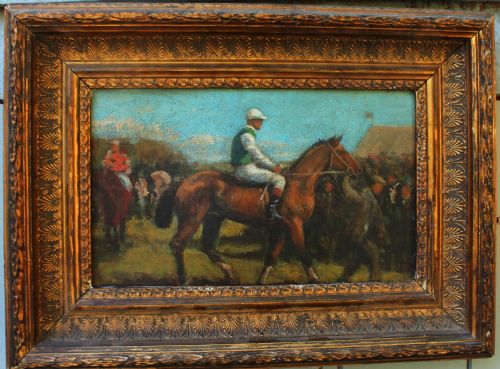


Antique Oil Picture Horses
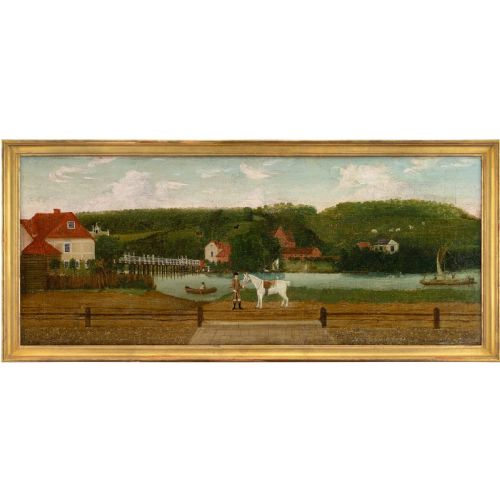
These antique oil picture horses capture the spirit of the Victorian and Edwardian sporting era through rich brushwork.
Antique Oil Picture Horses
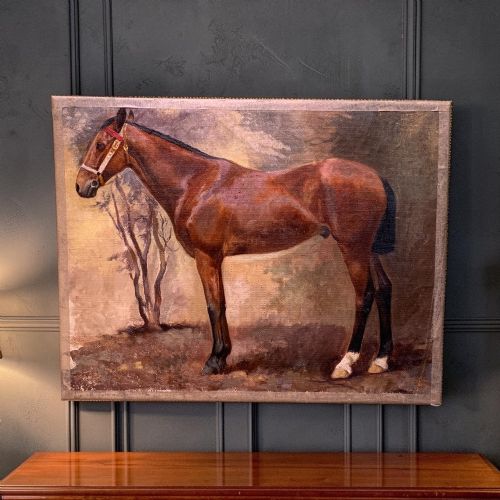
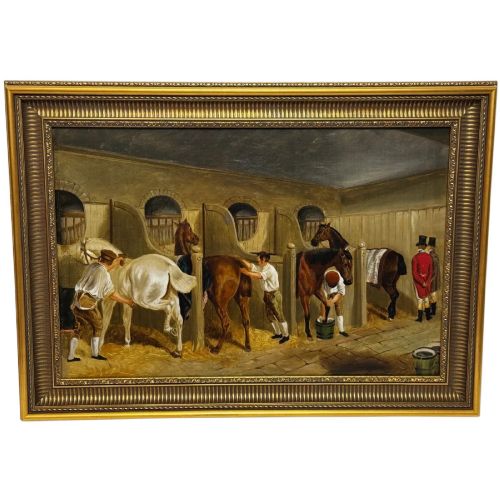
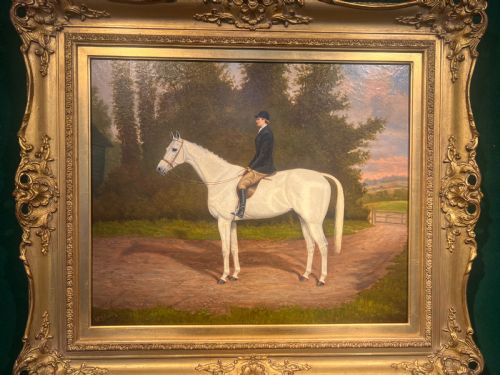
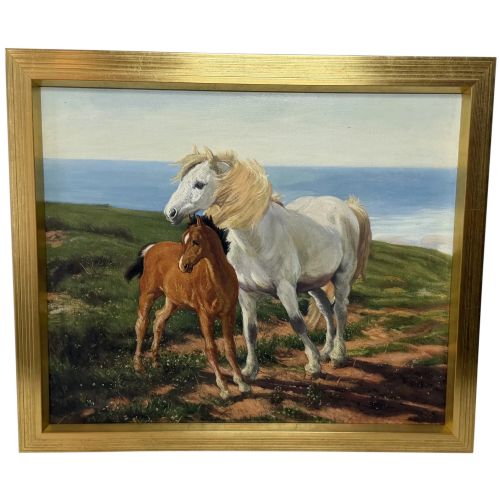
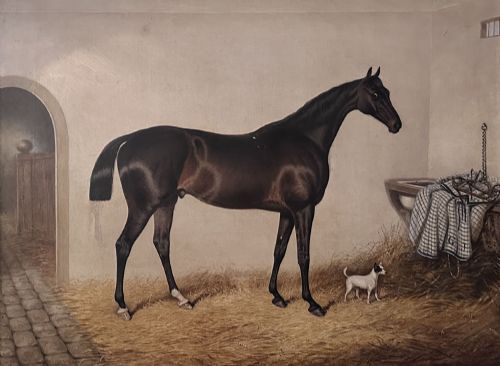
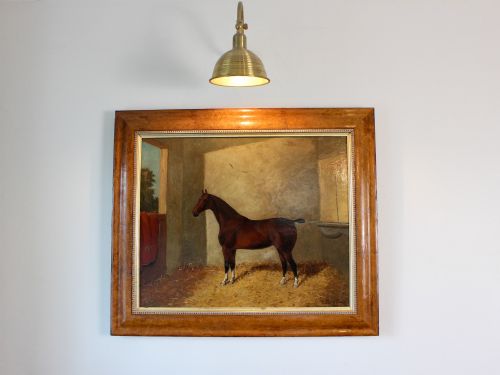
These works range from individual portraits of named thoroughbreds, hunters, and ponies to wider landscape scenes depicting the hunt, farmyards, and race paddocks. British sporting art forms the core of this tradition, recorded by notable painters of horses and hounds.
You will frequently find framed works representing specific historical animals, royal racehorses, and coaching scenes. The artistic styles vary from detailed British School portraits to freer impressions in the manner of established equine painters.
Materials and technique
The physical objects rely principally on oil paint applied to stretched canvas or pine panels, utilising the depth and blending qualities of the medium to render muscular definition and glossy coats. Artists built up layers of pigment to capture light on horseflesh, leather tack, and landscape backgrounds.
Framing plays a defining role in the presentation of these works, with many pieces housed in period giltwood or gesso frames. These surrounds often feature decorative swept moulding or ornate corners that complement the visual weight of the oil paintings.
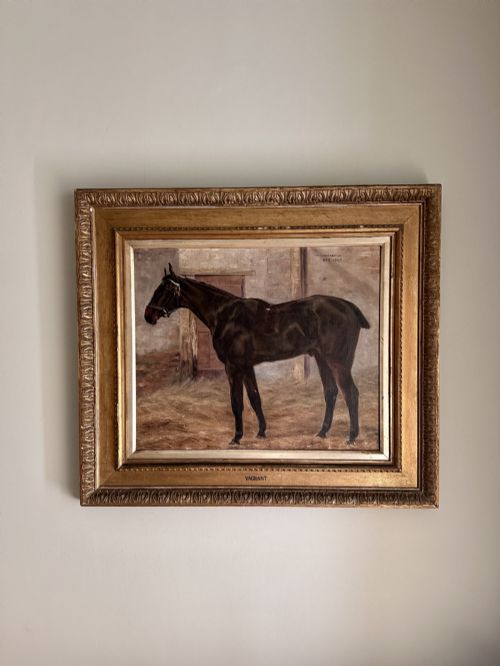
Several canvases immortalise horses with wonderfully grand names like Ferniehurst Frivolous and Vagrant.
Distinctions in quality
The distinction between ordinary and exceptional works rests on the artist's anatomical precision and ability to convey the energy of the animal. Superior pieces demonstrate an intimate understanding of equine movement, bone structure, and expression rather than mere mechanical rendering.
Provenance and documentation elevate certain works, particularly when the canvas identifies a specific champion racehorse, owner, or estate. The harmony between the painting and its original giltwood frame also contributes significantly to the integrity of the piece.
Fred Fitzpatrick·John Ferneley Senior·Alfred Munnings·Charles Walter Simpson·John Frederick Herring Jnr·William Williams·Edward Lloyd of Ellesmere·Charles Faulkner·Alfred Wheeler·Clifton Tomson·Gilbert Scott Wright·Abraham Cooper·Samuel Henry Alken·John Sanderson-Wells·Vernon Stokes·Charles Bilger Spalding·Isaac Cullin·Heywood Hardy·Guillaume Urban Régamey
The Antique Oil Picture Horses Glossary
- Equine portrait
- A painting dedicated primarily to the likeness of a specific horse, often commissioned by owners or breeders to record a prize animal.
- Giltwood
- Wood carved and coated with a thin layer of gold leaf or metallic gilt, commonly used for period picture frames.
- Sporting art
- Genre of painting depicting field sports, racing, hunting, and animals, which flourished in Britain during the eighteenth and nineteenth centuries.
- Pine panel
- A rigid wooden support used instead of canvas for early oil paintings, offering a smooth, stable surface for fine brushwork.
Antique Oil Picture Horses: Frequently Asked Questions
How do I identify the age of an oil painting?
Age is determined by examining the canvas weave, the stretcher construction, and the type of pigments used by the artist. Canvas texture and nails often reveal 19th-century or earlier manufacturing methods.
Signatures, dates, and biographical details of the painter provide further chronological markers. Historical inscriptions on the reverse of the canvas or frame frequently record the identity of the horse and the date of creation.
What is British sporting art?
British sporting art encompasses paintings that document equestrian pursuits, hunting scenes, and prized animals from the Georgian era onwards. These works served as records of wealth, estate life, and agricultural achievement.
Artists in this tradition focused heavily on accurate anatomical representation and the social context of the hunt. Many pieces celebrate specific race winners and renowned packs of hounds.
How should I hang an oil painting?
Oil paintings on canvas require stable wall environments away from direct sunlight and sudden temperature shifts. Proper picture hooks and reinforced wire corresponding to the weight of the giltwood frame ensure secure placement.
Maintaining moderate humidity prevents the canvas from slackening and protects the wooden stretcher. Position the artwork at eye level to best appreciate the detail of the brushwork.
Are these paintings signed by the artist?
Many of the listed works bear signatures, monograms, or studio attributions inscribed directly onto the canvas surface. These signatures often appear in the lower corners alongside legible dates.
Unsigned pieces are typically attributed to specific schools or periods based on technique, subject matter, and stylistic comparison. Archival research and provenance records frequently help identify the creator of unsigned works.