


Antique Oil Lamp Conversion
An antique oil lamp conversion turns nineteenth-century domestic lighting into wired lamps, bringing period weight and height to a modern room.
Antique Oil Lamp Conversion
An antique oil lamp conversion takes a nineteenth-century standard or table lamp and adapts it for electric light, retaining its original structure. The pieces seen here span the Victorian and Edwardian periods, stretching back through the nineteenth century to earlier decades.
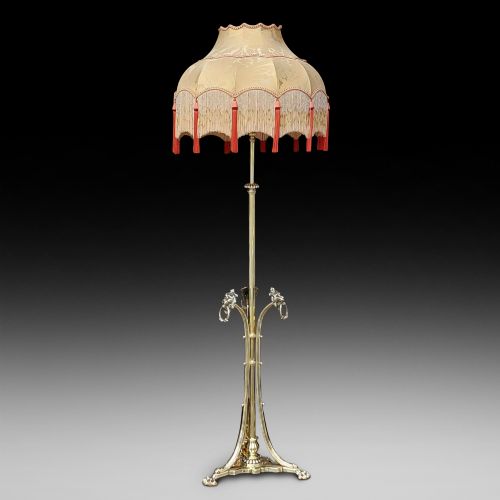
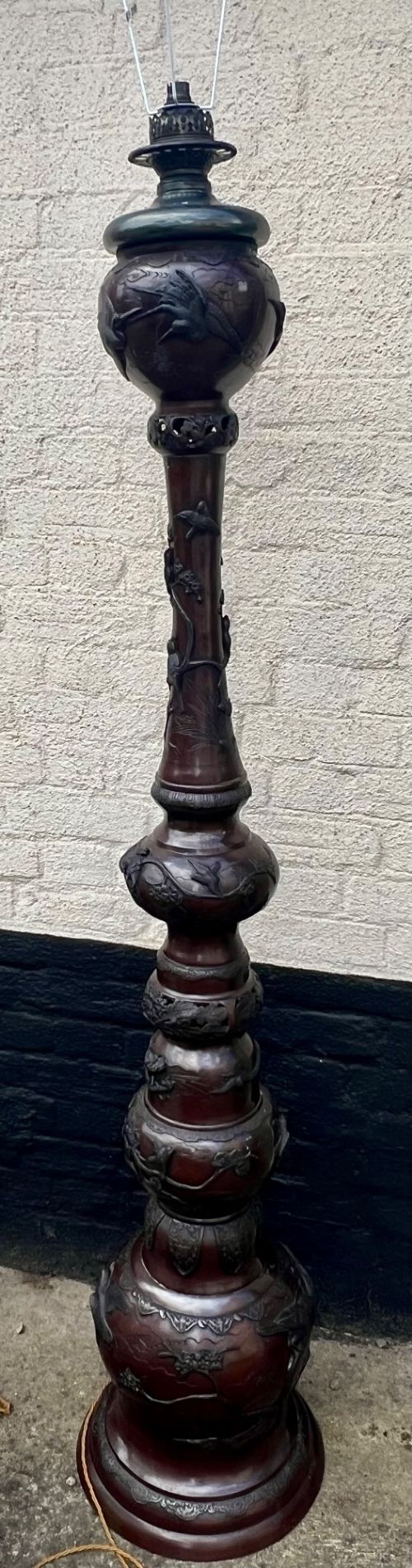
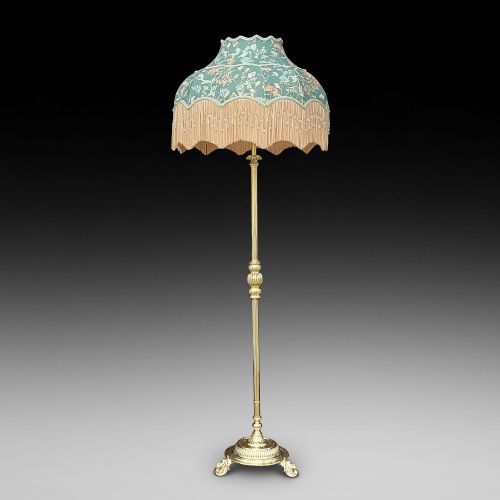
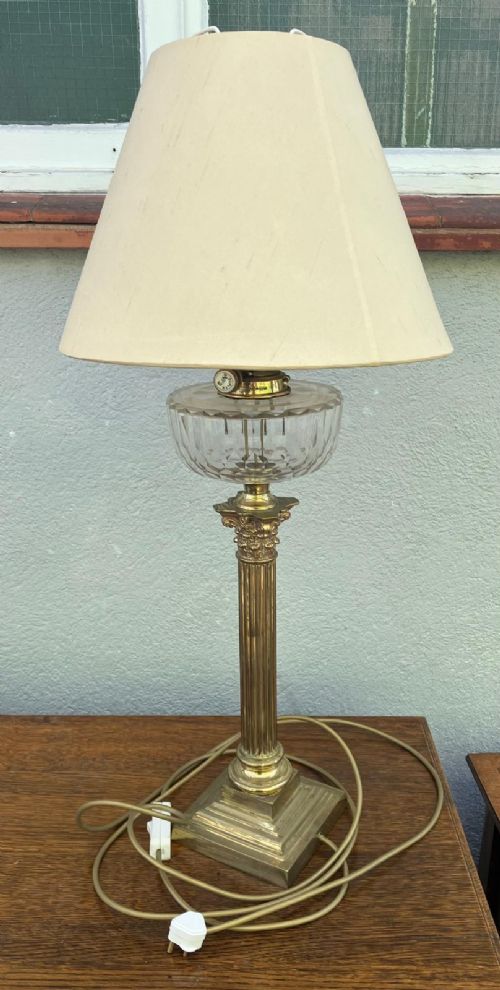
Table lamps and floor-standing standard lamps dominate the selection, often built with telescopic or adjustable heights. The forms draw on neoclassical revival columns, Japanese Meiji bronze casting, and art nouveau curves.
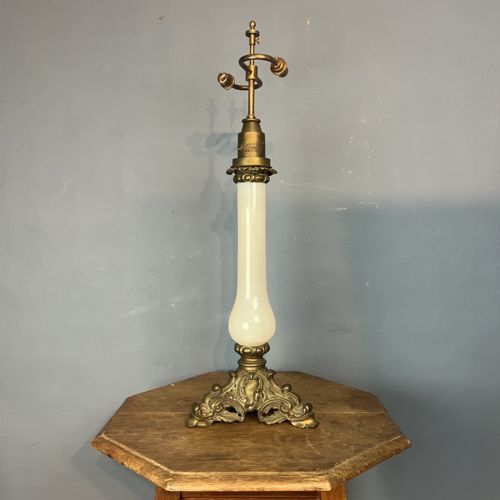
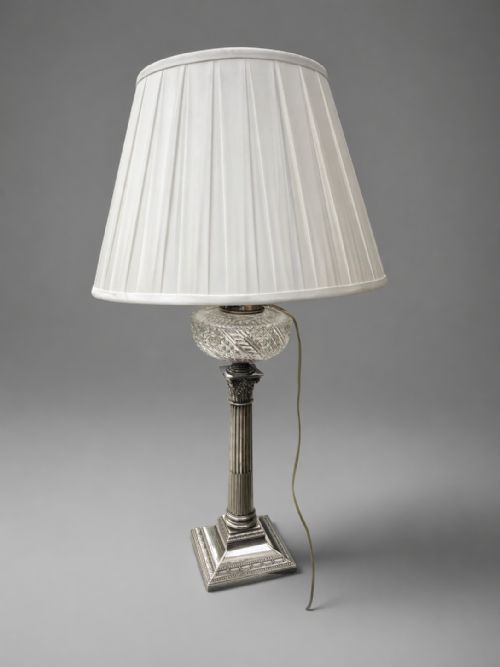
Brass, bronze, and silver plate form the structural metalwork, paired with opaline glass, cut glass, and faience reservoirs. Many retain their original fabric shades in silk or patterned cloth, or take new ones tailored to their proportions.
How they were made
Foundry casting and metal spinning produced the heavy brass and bronze columns, standard bases, and Corinthian capitals. Makers combined these metals with blown or moulded opaline, frosted, and cut glass reservoirs.
Decorative details such as cold painting, repousse work, and enamelling were applied by hand to the bronze and ceramic bodies. Patents governed the sliding telescopic mechanisms of the adjustable standards, allowing height control through internal ratchets or screw keys.
Antique Oil Lamp Conversion Retail Price Guide 2026
Typical asking prices for oil lamp conversion among the pieces listed under this phrase on Sellingantiques today, from the lower quarter to the upper quarter. They describe what is for sale here now, not the wider market.
Listings feature standard lamps and table lamps in brass, bronze, and wrought iron, paired with opaline glass, faience, and silk.
What varies in quality
The weight and gauge of the cast brass or bronze set the baseline for quality, separating solid structural integrity from lighter, thinner assemblies. Heavier standards provide stability, particularly on taller floor models.
The refinement of the decorative execution defines the upper tier of pieces, seen in crisp fluting on Corinthian columns, detailed cold painting, and fine opaline glass or cut crystal reservoirs. Maker attribution, such as Hinks, Messenger, or Mc Gary, further distinguishes the work.
Mc Gary·Joseph Hinks·Hinks·Messenger
The Antique Oil Lamp Conversion Glossary
- Standard lamp
- A tall floor-standing lamp designed to sit directly on the floor. These often feature adjustable telescopic shafts.
- Reservoir
- The container that once held paraffin or oil beneath the burner. In these pieces, it is typically made of glass, ceramic, or metal.
- Opaline glass
- An opaque, milky-white glass popular in the nineteenth century for lamp bodies and shades. It diffuses light softly.
- Corinthian column
- A classical architectural order featuring an ornate capital decorated with acanthus leaves. It was frequently used for Victorian table and standard lamp shafts.
- Cold painted
- A method of applying non-fired paint to bronze figures or mounts. This technique was used to add colour to metal details.
Antique Oil Lamp Conversion: Frequently Asked Questions
How do I choose between a table lamp and a floor lamp?
Table lamps suit sideboards, desks, and smaller tables where they provide concentrated task or ambient light. Floor lamps, or standard lamps, stand independently and cast light from a greater height.
Consider the scale of the room and the furniture placement. Tall telescopic standards require floor space and work well beside armchairs or sofas.
Are these lamps safe for modern electrical use?
These pieces have been adapted for electricity, replacing the old burner mechanisms with modern lamp holders and wiring. They are intended for contemporary domestic interiors.
It remains wise to have any vintage or converted lighting checked by a qualified electrician before daily use.
How can I tell the period of a converted lamp?
Dating relies on stylistic clues, materials, and mechanical patents. Victorian pieces frequently employ brass Corinthian columns or opaline glass, while later nineteenth-century examples may show art nouveau botanical motifs or Japanese Meiji bronze work.
Maker stamps and patent dates stamped onto the metal components provide precise chronological markers.
How do I care for brass and bronze bases?
Metal bases require gentle dusting with a soft cloth to prevent the accumulation of grit in crevices and cast ornament. Avoid harsh chemical polishes that can strip patination or damage cold-painted details.
Glass reservoirs and shades can be washed separately in warm soapy water once removed from the wired fitting.