


Antique Oil Lamp Base
An antique oil lamp base brings sculptural weight and warm material presence to a room, whether wired for modern lighting or kept in its original form.
Antique Oil Lamp Base
When you search for an antique oil lamp base, you are looking at domestic lighting foundations produced primarily during the Victorian and Edwardian periods. These pieces range from compact table lamps to substantial floor-standing standards and architectural column designs.
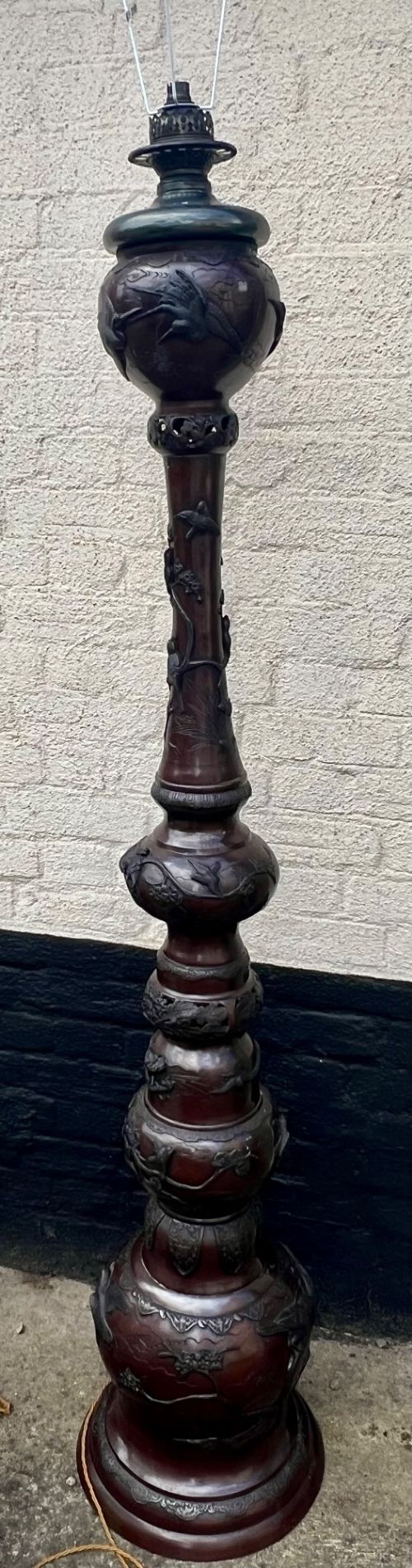
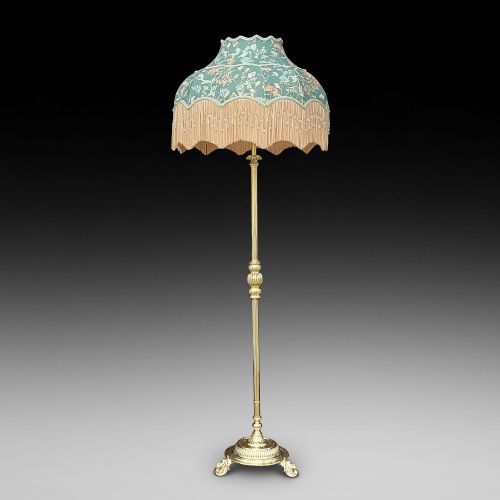
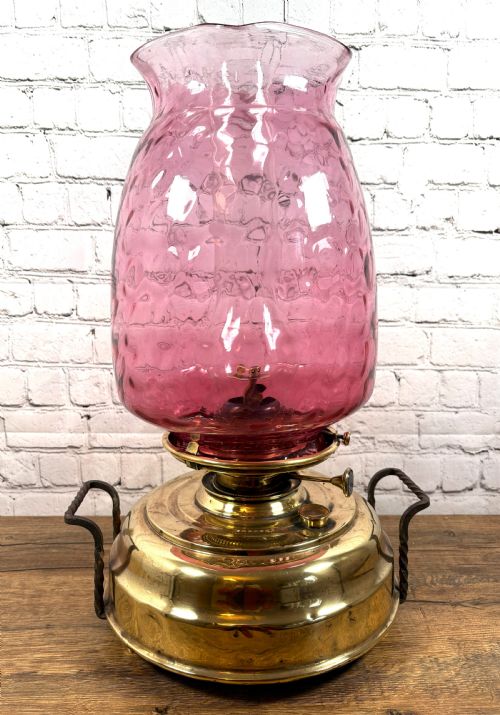
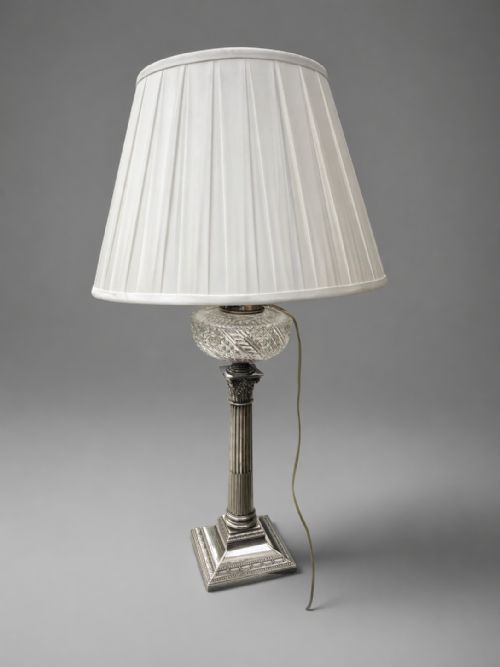
The version you are most likely to meet on this page is the Victorian brass column lamp, often featuring a ceramic or glass reservoir. Many of these sturdy standards have been thoughtfully converted to electric operation while retaining their original burners and stepped bases.
What varies in quality
Quality rests in the heaviness of the casting and the crispness of applied detail, such as fluted columns and Corinthian capitals. Heavy gauge brass and well-cast bronze command greater presence than lighter pressed metal alternatives.
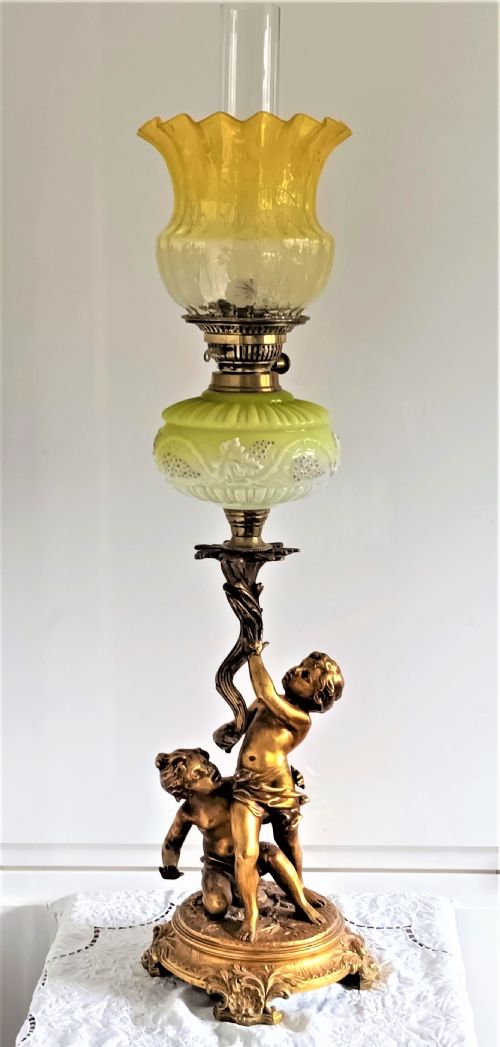
The fineness of the glasswork, from hand-cut crystal reservoirs to delicate opaline and cranberry vessels, distinguishes standard domestic examples from finer artistic pieces. Stamped maker marks and patented mechanisms also elevate the standing of a piece.
Several Victorian brass standards spent decades safely lighting parlour rooms before being quietly retired into electricity.
Goldsmiths and Silversmiths Company·Joseph Hinks
The Antique Oil Lamp Base Glossary
- Reservoir
- The vessel that held the paraffin or oil before it fed up through the burner. These are frequently formed from coloured glass, cut crystal, or glazed ceramic.
- Column lamp
- A lighting standard designed with a classical architectural column supporting the fuel vessel. They appear frequently in reeded, fluted, and Corinthian brass formats.
- Peg lamp
- A small oil lamp fitted with a tapered metal peg at the base designed to drop directly into a candlestick or separate stand. They often feature satin glass or silver plated elements.
- Opaline glass
- An opaque, milky glass often tinted in soft pinks or blues and used for lamp vessels. It diffuses light gently and adds solid colour to metal columns.
- Converted oil lamp
- A historic lamp adapted for modern electricity while preserving the original metalwork and reservoir. This allows safe interior use without altering the antique silhouette.
Antique Oil Lamp Base: Frequently Asked Questions
How do I identify a Victorian column lamp?
Victorian column lamps are typically characterised by heavy brass or bronze shafts resting on stepped square or triangular bases. They often emulate Doric, Ionic, or Corinthian architectural orders.
Look for heavy metal casting and patination that indicates genuine nineteenth century age rather than later reproduction work.
What is the difference between a table lamp and a floor lamp base?
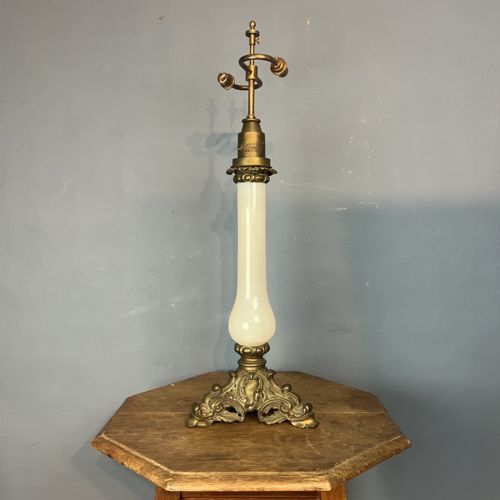
Table lamp bases are shorter and designed to sit upon sideboards, desks, or occasional tables, usually featuring a combined column and reservoir under twenty inches tall. Floor lamps are substantially taller standards meant to stand directly on the floor.
Floor versions often include heavy tripod bases or weighted pedestals to ensure stability at height.
Are glass reservoirs safe to handle?
Thick-walled nineteenth century glass reservoirs in opaline, cranberry, or cut glass are durable and stable within their brass collars. Normal daily dusting and careful handling during bulb changes present no issues.
Avoid using abrasive cleaning liquids on the glass or the delicate gilt highlights often found around the collar.